
TL;DR
Your dog isn’t blowing you off when it goes after a bike, that’s prey drive. You won’t train the instinct out of them and I wouldn’t try. Feed it on the flirt pole, teach a stop and a recall in the middle of the fun, and keep a leash and some distance until it holds up. Once a dog has a real outlet and real control a lot of times traffic just stops looking so interesting.
More on the drive itself is in how to train a high prey drive dog, and how to run the outlet is in the flirt pole training guide. When that same unspent drive also fuels restlessness, jumping, and attention-seeking at home, it could all be coming from the same place.
Who This Is For
- Your dog lunges at cars, bikes or runners
- You’ve got a herding dog or sighthound type with a lot of prey drive
- You’re scared to walk anywhere near traffic
- Your dog fixates on anything that moves fast
- You’ve tried scolding and it didn’t work
- Your dog chases livestock or wildlife
- You want real control, not just avoiding every trigger
Signs the Chase Drive Is Running the Show
- Locks on and lunges at cars or bikes going by
- Fixates on joggers, skateboards or scooters
- Lunges so hard on the leash you can barely hang on
- Tunes you out completely once something moves
- Goes after cats, squirrels or livestock the second they see them
- A hard, locked-in stare right before the lunge
- Won’t come back once the chase starts
Why Dogs Chase Fast Things
Chasing is prey drive, the old chase-and-catch instinct, going off on the wrong thing. A car or a bike sets off the same thing a rabbit running away does, so your dog isn’t being defiant, they’re just being a dog.
That’s why scolding usually doesn’t work. Punishing adds stress and doesn’t do anything about the instinct, and it can even wind your dog up more, which feeds the chase. Per the American Kennel Club, working with the drive beats trying to crush it.
Herders and sighthounds run hot
Some breeds just have more chase in them. Herding dogs and sighthounds lock onto movement hard, so if you’ve got one, you need an outlet and a plan more than most people do.
Give the Drive a Legal Target
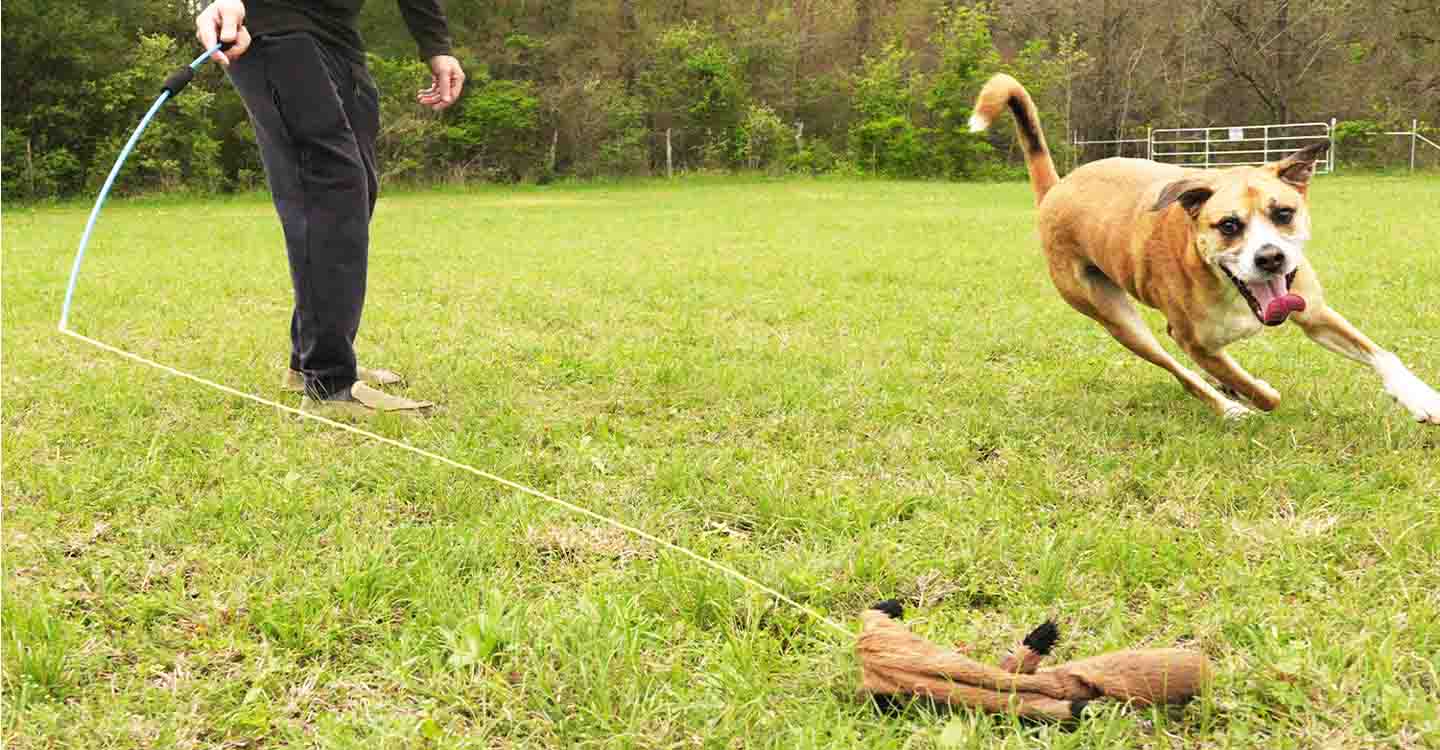
If the drive has nowhere it’s allowed to go, it goes where it isn’t allowed. Your dog needs to chase something, so you might as well be the one who picks what. A flirt pole lets your dog stalk and chase and catch when you say so, and that satisfies the instinct on your terms.
When the drive gets fed every day, there’s less pressure behind it. A dog that already got to chase and catch something isn’t nearly as desperate to launch at the next bike going by, and everything else in the control work sits on top of that.
Feed the drive, then train
I’d do the chase first and then train while your dog is satisfied instead of frantic, cause a tired dog can actually think, so what you teach has a better shot at sticking.
Build the Off-Switch
What you really want is to be able to switch the chase off. You can’t be watching every second, so your dog needs impulse control and a recall that holds up when they’re fired up. You build both with the same chase your dog already loves.
Use the flirt pole to train a drop and a wait, so your dog learns to stop in the middle of the chase when you ask. Keep the line about as long as the pole, cause if it’s a lot longer the lure comes back toward you. Then practice the recall with more and more going on, starting easy. Keep distance and a leash the whole time, cause one loose chase near traffic can kill a dog. Pair it with impulse control drills.
Distance is your friend
Train far enough back that your dog can still hear you, cause if you keep plenty of distance from cars and bikes early on you’re setting your dog up to get it right instead of fail.
Feed it, then control it
Legal Chase
Start with a flirt pole session so your dog gets to stalk and chase and catch when you say.
Drop and Wait
Train a stop in the middle of the chase on the pole and reward your dog every time they switch off.
Recall Under Drive
Practice the recall with a little more going on each time, and stay far enough back and on leash near traffic.
The chase isn’t going away, so give it something it’s allowed to chase and then build the off-switch, and use distance and a leash to keep your dog safe while you build the control.
A dog that chases traffic can be killed or cause a crash, so keep your dog leashed near roads and don’t ever have them off leash anywhere that isn’t fenced till the recall is rock solid, and keep your distance from traffic while the training is still coming along.
The Whimsy Stick: The Legal Chase Target
This whole plan starts with giving the drive a place it’s allowed to go. A flirt pole gives them that, and it’s also what you build the off-switch on.
Read These Next to Go Deeper
Want more of this in your Google results? Add Whimsy Stick as a preferred source.
Stopping a Chasing Dog: FAQ
How do I stop my dog chasing cars?
Punishing it rarely works so I’d go the other way. Let them chase a flirt pole, use that to teach a drop and a recall, and keep the leash on near roads while you’re still working on it.
Why does my dog chase cars and bikes?
It’s prey drive going off on the wrong thing, cause a fast car or bike sets off the same chase-and-catch instinct an animal running away does, so your dog is following instinct and not being defiant, and herding breeds and sighthounds tend to be the worst about it.
Can you train a dog to stop chasing?
You can build control you can count on, but the instinct isn’t going anywhere. With an outlet they’re allowed to use and some impulse control work and a recall you’ve practiced around distractions, a lot of dogs learn to break off when you ask, and distance and a leash keep everybody safe while you get there.
Does punishing a dog for chasing work?
Usually not, and it can make it worse, cause punishing adds stress and doesn’t satisfy the drive, and getting your dog more wound up can lead to more chasing. Feeding the drive with an outlet and rewarding them for switching off works a lot better the way I see it.
How do I redirect my dog’s prey drive?
Give it something they’re allowed to chase on a regular schedule. A flirt pole lets your dog stalk and chase and catch when you say, and that satisfies the instinct on your terms, so if you do it regularly there’s less pressure to chase whatever moves.
Is chasing a sign of aggression?
Usually no. It’s prey drive, not the dog wanting to hurt people. Still, a chaser near traffic is dangerous and it can knock down or scare a jogger or somebody on a bike, so treat it as a real safety problem.
How do I stop my dog chasing joggers?
Same deal as cars and bikes. Feed the drive, train the off-switch, leash on and keep some distance. Then pay your dog for looking at you instead of the runner, and start far enough away that they can still think.
My dog chases livestock. What do I do?
This one is high risk, cause in a lot of places a dog can be shot for going after livestock. Keep your dog leashed or fenced away from stock at all times and build a strong recall and off-switch along with an outlet they’re allowed to chase, and if the drive is intense I’d get a professional involved.


