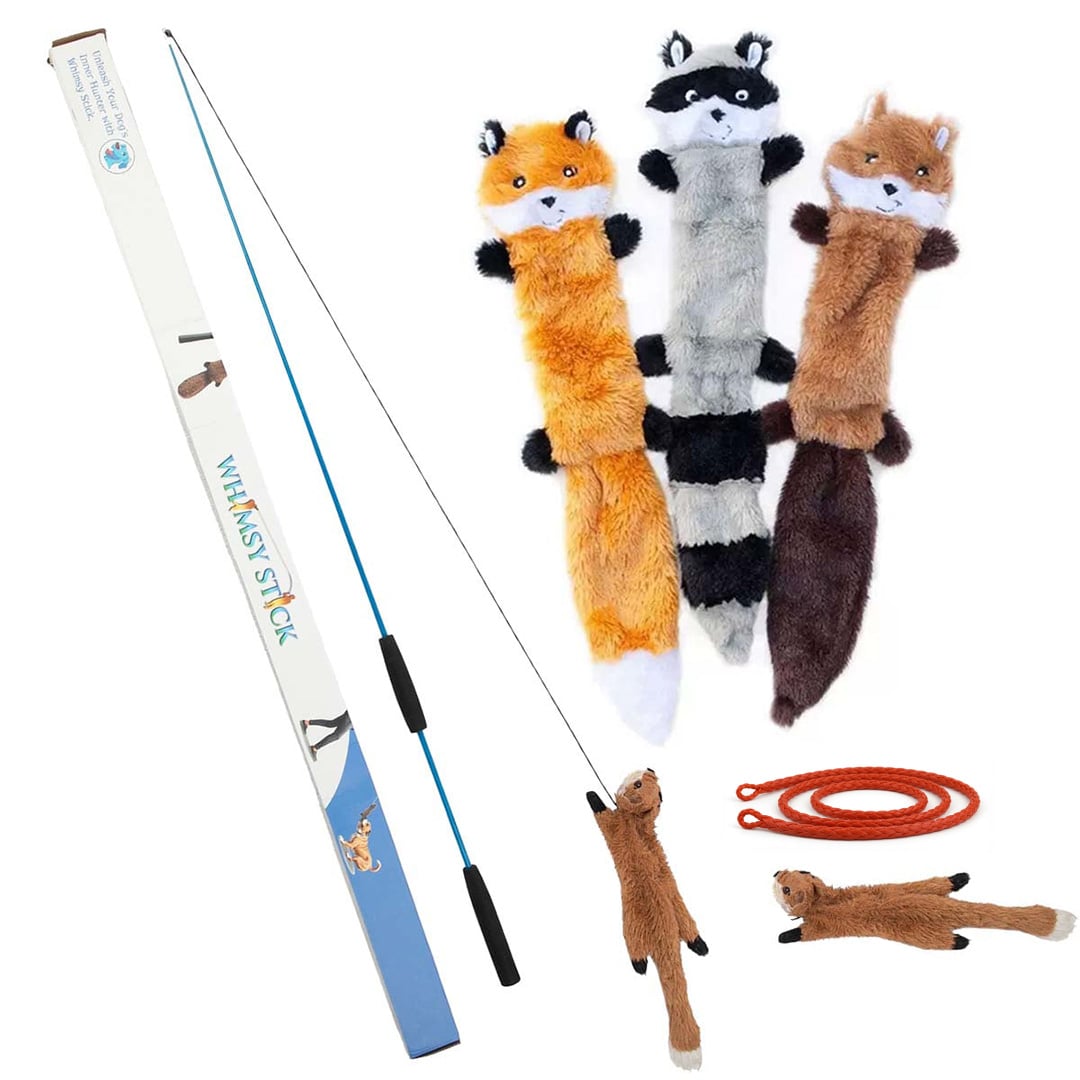
Whimsy Stick

4.9 across 289 verified reviews on 7 platforms / 30-day money-back guarantee / Free US shipping on Rugged XL
The Training Manual / Vol. 05 · Cluster 1 Pillar
By Christopher Lee Moran / Updated 05.17.2026
Predatory motor pattern, completed in 15 min Session length, 10 to 15 min Behavior shift, within 2 weeks Trainer-designed, 10 years client work Predatory motor pattern, completed in 15 min Session length, 10 to 15 min Behavior shift, within 2 weeks Trainer-designed, 10 years client work
Cluster 1 Pillar · The Training Manual

How to Use a Flirt Pole

A trainer’s complete protocol for turning a chase tool into a behavior modification system.

The Direct Answer

Drag the lure along the ground in wide arcs. Let your dog stalk, chase, and catch it. Of these give a sit and wait command between every chase cycle. End each session on a successful catch. Specifically, sessions run 10 to 15 minutes, three to five times per week. The Whimsy Stick is the trainer-designed tool built for this protocol.

2–3
Trainer Result · Field Data Weeks for measurable behavior change in most dogs running this protocol 3 to 5 times per week.
15
Min Session Length
4
Motor Pattern Stages
3-5x
Sessions Per Week
2 wk
To Visible Change
Pit bull chasing the Whimsy Stick flirt pole at full sprint during a structured training session

A short answer for impatient owners

TL;DR

Most dog owners exercise the wrong system. Walks burn physical energy but never complete the four-stage neurological sequence dogs are wired to run. Particularly, the flirt pole is one of the only tools that activates the full pattern: stalk, chase, capture, win.

This guide breaks down the predatory motor pattern, the exact 4-phase session structure, impulse control integration with the sit-wait-release cycle, and breed-specific protocols. For the cross-category buying framework, see the flirt pole buying guide. Indeed, for the full head-term reference, see the complete flirt pole reference. Most dogs show visible behavior change within two weeks.

Who This Guide Is For

If any of these describe you, you’re in the right place

  • Your dog is still hyper and restless after long walks or fetch sessions
  • Jumping, nipping, leash reactivity, or destruction has become a daily issue
  • You want a structured way to build impulse control without dry repetition
  • As a trainer, you need a flirt pole protocol you can hand to clients
  • Behavior change in weeks, not months, is what you are after
Signs Your Dog Needs This Protocol

When physical exercise alone is not solving the problem

  1. Still hyper and restless after a long walk or run
  2. Destroys furniture, shoes, or household items when left alone
  3. Jumps on guests or nips during play
  4. Pulls hard on leash and reacts to other dogs or squirrels
  5. Cannot settle down indoors even after exercise
  6. Obsessively chases cats, birds, or shadows
  7. Gets the zoomies at inconvenient times daily
  8. Barks excessively from frustration or boredom

If your dog shows two or three of those signs, the problem is rarely lack of exercise. The problem is the type of exercise. In fact, your dog’s brain runs a four-stage neurological sequence most activities never complete. A walk does not complete it. Fetch only triggers a partial version. Generally, the flirt pole runs the full cycle in a controlled outdoor session.

Why This Tool Works When Nothing Else Does

Every dog, from a Chihuahua to a German Shepherd, carries the predatory motor pattern encoded in their DNA. It is a neurological sequence inherited from wolves and runs in a specific order: orient, stalk, chase, grab-bite, kill-bite, dissect, consume. Domesticated dogs retain the early stages of this pattern even though most no longer hunt.

When a dog completes the sequence, the brain releases dopamine and serotonin. Additionally, the dog feels fulfilled, calm, satisfied. When the sequence gets interrupted or never triggered, the unspent neurological charge comes out as behavioral problems: destruction, anxiety, reactivity, hyperactivity.

The ASPCA confirms that many common behavior problems stem from unmet physical and mental needs. A flirt pole addresses both at once because the lure mimics prey movement, triggering the full stalk-chase-capture-win cycle in a controlled environment.

Four stages you can actually run with a flirt pole

1. Meanwhile, stalk
Pause the lure so the dog can fix on it, lower their head, and creep forward. The crouch posture is the visible signal. Of these skip this phase and you skip the most underrated part of the sequence.
2. Chase
Drag the lure in wide unpredictable arcs along the ground. Specifically, short bursts of 5 to 8 seconds. Change direction without warning. Particularly, most of the physical workout happens here.
3. Capture
Stop the lure dead. Indeed, let the dog catch, bite down, and hold. This phase delivers the neurochemical payoff. In fact, never end a session without one.
4. Win
Let the dog hold the lure, shake it, parade it. Generally, this is the dissect-and-consume substitute. Calm praise here. A drop-it cue, a sit, and the cycle resets.

The full framework lives in the Predatory Motor Pattern Explained deep dive. Additionally, for the broader prey-drive management protocol that runs alongside flirt pole work, see prey drive training for dogs.

Key Takeaway

Your dog is not misbehaving because they are bad. They are misbehaving because their brain runs a four-stage neurological sequence that walks and fetch never complete. The flirt pole completes the sequence in 15 minutes.

How the Flirt Pole Compares to Other Exercise

Not all exercise is equal. Here is how common methods stack up against flirt pole training across the metrics that actually drive behavioral change. Pay attention to the motor pattern column, that is the variable nothing else replicates.

Exercise Method Comparison, What Each Tool Actually Does
MethodMotor Pattern StagesMental StimulationImpulse ControlTime Required
Flirt poleAll four (stalk, chase, capture, win)HighHigh (with commands)10-15 min
WalkingNoneLowLow30-60 min
FetchChase + retrieve onlyLow-mediumLow20-30 min
Tug of warGrab-bite onlyMediumMedium10-15 min
Dog parkVariable, unstructuredMediumNone30-60 min
Puzzle toysNone (problem-solving only)HighMedium15-30 min

The flirt pole is the only common tool that activates all four stages of the predatory motor pattern in a controlled, repeatable format. That is why 15 minutes with a flirt pole produces a calmer dog than 60 minutes of walking. Of these for a deeper breakdown of why dogs stay wired after walks, read why your dog is hyper after walks.

The flirt pole is not a toy. It is the structured outlet for the neurological sequence your dog is wired to run, and once that sequence completes, the behavior problems start solving themselves.

, Christopher Lee Moran, Controlled Freedom Method
How much exercise a dog needs broken down by drive level and breed, the framework the session protocol fits into

How to Run a Session Step by Step

This is the exact session structure I use with clients. It works for any breed, any age with modifications, and any energy level. The phases run in this order every time. Specifically, the sequence takes 10 to 15 minutes from setup to cool-down.

Phase 1: The setup

1

Choose your space

Find a flat area with enough room for your dog to run 15 to 20 feet in any direction. Grass is the ideal surface. Particularly, avoid concrete and pavement, which stress joints during pivots.

2

Start with a calm dog

Do not begin while your dog is already in overdrive. Ask for a sit. Wait for stillness before the lure moves. This is the first impulse control checkpoint.

Phase 2: The chase cycle

3

Drag, do not wave

Keep the lure on the ground and drag in wide unpredictable arcs. In fact, ground movement triggers the stalk instinct. Waving the lure in the air teaches your dog to jump, which stresses joints and skips the stalk phase entirely.

4

Let them stalk

Occasionally pause the lure and let it rest. Watch your dog crouch, lower their head, and creep toward it. That crouch is the stalk phase. Do not rush past it.

5

Let them win

Every 3 to 5 chase sequences, let your dog catch the lure. Additionally, let them hold it, shake it, and parade it. That is the capture and win phase. Meanwhile, never letting your dog win builds frustration instead of satisfaction.

Phase 3: Impulse control integration

6

Command between cycles

After each win, ask for a drop it, a sit, and a wait. The next chase cycle becomes the reward for compliance. This is where the flirt pole transforms from exercise into training.

7

Increase duration gradually

Start the wait at 3 seconds. Over days and weeks, push it to 10 seconds, 20, and eventually 30. A dog that can hold a wait for 30 seconds while a lure dances in front of them has serious impulse control.

For a dedicated deep dive on impulse control drills with a flirt pole, see my impulse control drill guide.

Phase 4: The cool down

8

End on a win

Always end the session with a successful capture. Specifically, let your dog hold the lure while you calmly praise them. Then transition to calm structured behavior: a down-stay, a slow walk, or quiet time.

Key Takeaway

Session structure: calm start, chase, capture, command, repeat, end on a win. Every element serves a purpose. Skip the commands and you have a toy. Include them and you have a training tool.

Standard Model · $55.95 · 30-Day Money-Back Guarantee

Whimsy Stick. Built for dogs 30 lbs and under.

Kevlar line. Reinforced pole. Replaceable lures built for the grab-bite and shake sequence. Designed by a trainer for behavioral work, not a toy company chasing a margin. Shipping calculated at checkout.

Shop Standard, $55.95

Beyond the Basic Session Protocol

Directional control

Use the lure to guide your dog in specific directions. Sweep left, sweep right, change direction suddenly. Generally, dogs that develop directional control with a flirt pole tend to be more responsive on leash because they are learning to follow visual handler cues at speed.

The emergency stop

Mid-chase, give a sharp command to stop and reward the stop immediately. This drill is the most underused application for dogs with reactivity issues because it trains them to disengage from high-arousal pursuit on command. If your dog’s reactivity has escalated into consistent trigger responses on walks, the reactive dog training guide covers the broader intervention.

Multi-dog sessions

If you have multiple dogs, run one at a time while the others practice a structured down-stay nearby. Additionally, the waiting dog gets an incredible impulse control workout just by watching. Switching dogs every few minutes keeps everyone engaged.

Prey drive channeling

For dogs with excessive prey drive who chase squirrels, cats, or bikes, the flirt pole gives that drive a sanctioned outlet. Meanwhile, the dog gets to run the full sequence in a context you control, which reduces the dog’s need to seek it out in environments where the chase has real consequences.

What Two Weeks of Sessions Actually Looks Like

Client Case Study · Duke, 2-year-old German Shepherd

From three failed obedience programs to a different dog in four weeks

Duke’s owner came to me after two failed group obedience programs. Duke was jumping on every visitor, yanking her off-balance on leash every single walk, and destroying an average of one household item per week, a couch cushion, a shoe, a chair leg. He was getting 90 minutes of walks daily plus 30 minutes of fetch. Physically worn out. Mentally nowhere near satisfied.

I introduced structured flirt pole sessions three times per week at 12 minutes each. By the end of week one, destruction incidents dropped to zero, down from seven that month. In week two, leash pulling fell enough that she could walk him one-handed for the first time in eight months. By week four, her guests asked if she had gotten a new dog.

Total extra time added to her week: 36 minutes.

7→0
Destruction incidents, month 1
Wk 2
One-handed leash walk
36 min
Added per week
Wk 4
Guests noticed the change

Why this beats fetch and walking head to head

The big comparison table above covers every common exercise method. The head-to-head below strips it down to the three options most owners cycle through and shows exactly where the others fall short.

Flirt Pole vs Fetch vs Walking, Side by Side
ActivityPredatory Motor PatternNeural FatigueImpulse Control BuiltSession Length
Flirt poleFull sequence (stalk, chase, capture, win)Real neural calmBuilt via wait and release between cycles10–15 min
FetchPartial (chase only, no stalk, no capture, no possession)Light fatigue, no real calmNone built inRuns indefinitely
WalkingNo predatory motor patternPhysical fatigue onlyNone built in30+ min

Fetch looks similar on the surface. It is not. The chase phase fires, but the dog never gets to stalk, never gets to capture, never gets to possess the prize. Particularly, the sequence stays open. That is why a dog can fetch for an hour and still ricochet around the living room ten minutes later.

Trainer-designed flirt pole protocol in real-world use, the structured session that drains drive cleanly

Adjusting the Protocol For Your Breed

Every breed can benefit from flirt pole training, but not every breed should train the same way. The AVMA recommends tailoring exercise to your dog’s breed, age, and physical condition. The protocol below adjusts the four-phase session structure based on what each breed’s drive and physiology demand.

High-drive breeds: GSDs, Malinois, Border Collies

Start with strong impulse control foundations before pushing intensity. In fact, these breeds compound arousal fast, and a poorly structured session creates a more reactive dog, not a calmer one. For breed-specific protocols, see the GSD and Malinois guide and the Border Collie guide.

Herding breeds: Corgis, Shelties, ACDs

Herding breeds fixate on movement. Generally, shorter sessions with more frequent command breaks work best. The herding breed flirt pole guide covers specific session structures.

Power breeds: Pit Bulls, Rottweilers, Cane Corsos, Mastiffs

These dogs bring force. Additionally, use the Rugged XL built for dogs over 30 lbs. Keep chase paths in wide arcs to reduce joint stress. Meanwhile, for breed-specific protocols, see the pit bulls and power breeds guide, the Cane Corso guide for guardian-breed impulse control, and the Rottweiler guide for extended growth-plate considerations.

Sporting and athletic breeds: Labs, Dobermans, Boxers

Sporting and athletic breeds carry intense drive expressed differently than guardian or working breeds. Working-line Labs have a different protocol than show-line Labs. Dobermans need their velcro-dog tendency channeled, not suppressed. Boxers come with extended adolescence and brachycephalic accommodations. For breed-specific protocols, see the Labrador Retriever guide, the Doberman Pinscher guide, and the Boxer guide.

Small breeds under 30 lbs

Small dogs carry the same predatory motor pattern as large dogs. Use the Standard model and keep lure movements slower. Particularly, small breeds tire faster, so 8 to 10 minute sessions are usually sufficient.

Puppies

Puppies can start gentle introduction around 12 weeks. Keep sessions under 5 minutes, use slow movements, and let the puppy win frequently. The impulse control gates, sit, wait, drop-it, are more valuable for puppies than the physical exercise because they build foundational self-regulation during the critical learning period. For puppies who are mouthing everything in sight, the puppy biting guide covers age-appropriate redirection.

A do and do not list

Do

Run sessions correctly

  • Keep lure movements on the ground
  • Use wide sweeping arcs, not tight circles
  • Let your dog win every 3 to 5 chases
  • Command between every cycle
  • End sessions on a successful capture
  • Match intensity to your dog’s breed and age
  • Check paw pads and joints after sessions
Do Not

Common protocol mistakes

  • Wave the lure overhead (causes jumping)
  • Run tight circles (joint stress)
  • Play on concrete or hard surfaces
  • Run sessions longer than 15 minutes
  • Use with puppies under 12 weeks
  • Never let the dog win (creates frustration)
  • Skip the cool-down phase

For dogs dealing with separation anxiety, jumping, or nipping, the behavioral problems guide connects each issue to its flirt pole protocol.

Power Breed Model · $74.95 · Free US Shipping · 30-Day MBG

Rugged XL. Built for dogs over 30 lbs.

Reinforced fiberglass. 800-lb Dyneema line. Three-lure bundle option. Built for the lateral force working breeds and guardian breeds generate at capture. Free US shipping included.

Shop Rugged XL Bundle, $94.95

Five Mistakes That Make the Tool Useless

Mistake 1: Waving the lure in the air

Waving teaches your dog to jump, which stresses joints and skips the stalk phase entirely. Keep the lure on the ground. Additionally, always.

Mistake 2: Never letting the dog win

If your dog never catches the lure, you are building frustration instead of satisfaction. The capture and win phase is where the neurological payoff happens. No capture, no payoff.

Mistake 3: Skipping commands between cycles

Without impulse control checkpoints, you are just playing. The sit-wait-release cycle is what transforms this from a game into training.

Mistake 4: Sessions that run too long

More is not better. Sessions beyond 15 minutes lead to physical fatigue without additional mental benefit, and can stress joints in young or older dogs.

Mistake 5: Using it only to tire the dog out

The flirt pole is a behavior modification tool, not a tire-them-out shortcut. The structure is what makes it work. Without the commands, the stalk pause, the capture, and the cool-down, you are running a partial protocol.

The calm comes from completing the sequence, not exhaustion.

, Christopher Lee Moran
Pro Trainer Checklist

Every session should hit all of these

  • Started with a sit and a held wait before the lure moved
  • Lure stayed on the ground in wide arcs, not in the air
  • Paused the lure mid-cycle to let the dog stalk
  • Dog won the lure 3 to 5 times during the session
  • Drop-it, sit, and wait cues were given between every cycle
  • Wait duration grew across sessions to build impulse control
  • Session ended on a successful capture, not mid-chase
  • Transitioned the dog into calm structured behavior after
Safety Warning

Stop the session immediately if your dog shows hard panting beyond normal exertion, favors a limb, or refuses to engage. Specifically, overheating and joint stress are the two most common injuries from sessions run too long or on hard surfaces.

Never run flirt pole sessions on concrete or asphalt. Never allow tight circles at speed. Puppies under 12 months and dogs over 8 years need half-length sessions with lower lure intensity.

Picking a Flirt Pole That Survives Your Dog

Not every flirt pole is built for behavior modification work. Most retail options are toys, not tools. Indeed, the buying guide is the central reference for the cross-category framework that evaluates every flirt pole on the market. The flirt pole pillar page covers every flirt pole topic across the site as a head-term hub.

For head-to-head reviews of specific brands, the Whimsy Stick vs Squishy Face comparison and the DIY vs professional breakdown cover the most common decisions buyers face.

The Whimsy Stick Standard ($55.95) serves dogs 30 lbs and under. For power breeds and working breeds over 30 lbs, the Rugged XL ($94.95 bundle) handles the job.

Where This Tool Fits in The Bigger Picture

The flirt pole is not the only enrichment your dog needs, but it fills a gap nothing else does. It pairs well with mental stimulation toys for problem-solving and sniff walks for sensory enrichment.

For dogs destroying things out of boredom or overexcited and hard to manage, the flirt pole is the fastest path to improvement. Generally, for dogs still wired after long walks, the answer is almost always that walks alone are not completing the neurological sequence the dog needs.

Key Takeaway

The flirt pole fills a specific neurological gap that other enrichment cannot. It is the most time-efficient single addition to any dog’s routine for behavioral improvement.

The Bond Factor

Something happens during structured flirt pole sessions that I did not expect when I first started using them with clients. The relationship between dog and owner changes. Additionally, your dog starts looking to you for permission, direction, and engagement. You become the source of the most exciting activity in their week. Meanwhile, learn more in how to build a real bond with your dog.

Frequently Asked Questions

Flirt Pole Training, FAQ

Session length and frequency

How long should a flirt pole session last?

Generally, most dogs do best with 10 to 15 minute sessions. Puppies and senior dogs start at 5 minutes. The goal is mental satisfaction, not exhaustion. End the session while your dog is still engaged, not after they collapse.

How often should I use a flirt pole with my dog?

For most dogs, 3 to 5 sessions per week produces noticeable behavioral improvement within two weeks. Specifically, high-energy breeds can handle daily sessions. Rest days matter for joint recovery.

How is a flirt pole different from fetch?

Fetch only activates chase and retrieve. A flirt pole activates the full predatory motor pattern: stalk, chase, capture, and win. Particularly, this complete neurological sequence is why 15 minutes with a flirt pole can tire a dog out more effectively than 45 minutes of fetch.

Safety and joint health

Are flirt poles bad for dogs’ joints?

Additionally, not when used correctly. Avoid tight circles that stress joints. Indeed, use wide sweeping arcs and let your dog run in natural lines. For puppies under 12 months, keep sessions short and low-intensity to protect developing joints.

What age can a puppy start flirt pole training?

Puppies can start gentle introduction around 12 weeks. In fact, keep sessions under 5 minutes, use slow movements, and let the puppy win frequently. Avoid jumping and hard pivots until growth plates close, typically 12 to 18 months depending on breed.

Can I use a flirt pole indoors?

Meanwhile, flirt poles are designed for outdoor use where dogs have space to run, pivot, and chase safely. Generally, large indoor spaces with non-slip flooring can work for short controlled drills, but the full predatory motor pattern sequence benefits from open ground.

Behavior and prey drive

Will a flirt pole make my dog aggressive?

No. Flirt pole training satisfies prey drive through a structured outlet. Additionally, appropriate play does not increase aggression. Dogs with fulfilled instincts are calmer and less reactive because the neurological need driving the behavior has been met.

Do flirt poles work for low-energy breeds?

Yes. Meanwhile, even low-energy breeds carry the predatory motor pattern. Bulldogs, Basset Hounds, and other mellow breeds still benefit from short sessions. Of these adjust speed and intensity to your dog.

Can I combine flirt pole training with obedience commands?

Absolutely. Use sit, wait, and drop it between chase cycles. Specifically, the flirt pole becomes the reward, which makes obedience training feel like play. This builds impulse control in a way that treats alone cannot replicate.

Equipment

What makes the Whimsy Stick different from other flirt poles?

Specifically, it was designed by a professional dog trainer specifically for behavioral training, not as a play toy. Particularly, the Standard model serves dogs 30 lbs and under at $55.95. For power breeds over 30 lbs, the Rugged XL handles the load at $94.95 for the bundle.

Your dog is not bad. They are underemployed.

15 Minutes. Of these real Behavior Change.

The Whimsy Stick gives your dog a job that satisfies the deepest part of their wiring. Built by a trainer, for dogs that need more than a walk.

0
    0
    Your Cart
    Your cart is emptyReturn to Shop