
The 10-Second Summary
Sitting on the couch together doesn’t build much of a bond. Being the one your dog counts on for what they want most does. Play that you control, and a flirt pole used with some structure is a good example, tends to get you there faster than treats alone, because you’re the one running the hunt and not just the person handing out food.
Give it 2 to 4 weeks of daily 10-minute sessions and then start looking for the signs. Rescue dogs need time to decompress first, so follow the 3-3-3 rule before you bring out anything high energy. The clearest sign you’ve got a bonded dog is when they come back to you on their own, without being asked, when there’s other stuff going on around them.
Who This Guide Is For
- Your dog listens when you’ve got food and ignores you the rest of the time
- You just adopted a dog and want to start the relationship off right
- Your dog is friendly but doesn’t really seem connected to you
- You want the bonding work to help with training and behavior too
- Your rescue is still settling in and you want to know what to do, and what not to do, in the first 90 days
Signs Your Bond Needs Work
- Your dog doesn’t check in with you on walks or in new places
- Recall only works when they can see the treats
- Your dog would rather play alone than play with you
- When your dog is free to go wherever, they don’t pick being near you
- Your dog doesn’t seem to care much when you come home or try to get them going
- Training feels like you’re negotiating every single time
The Actual Mechanism Behind Bonding
The kind of bond that changes behavior comes from your dog learning that good things happen because you made them happen. Not just with you in the room, but actually through you. The chase starts when you say so, the game is happening because you started it, and the reward comes when you decide.

People talk about bonding like it just happens if you’re around enough and give enough affection, and it doesn’t work that way. A lot of dogs live with their people for years and stay pretty indifferent. They’re friendly and they get along fine, but there’s not the kind of bond that changes how they act.
Once you’re the one they can count on for what they want most, and I mean the chase and the win and getting to really let loose, not just kibble, they start to tie you to all the good stuff and that sticks. That’s also why the predatory motor pattern matters so much. When you’re the one running the stalk, the chase, the catch and the win, the bond gets built around something your dog really wants.
So bonding comes down to being the source of what your dog actually wants, more than the hours you put in. A dog with a satisfied animal instinct is a much better behaved dog, and for a lot of dogs the biggest one is hunting, which is why play that you run works so well.
Why Structured Play Beats Treats for Bonding
Treats are good for teaching, but play is what builds the relationship. Food works great for teaching a behavior, but it only goes so far for bonding cause it takes care of hunger and does nothing for prey drive.
A dog with a lot of prey drive and nowhere to put it isn’t gonna get real attached to somebody just because they hand out kibble. A lot of times they stay restless and distracted and keep looking for an outlet. Now give that same dog a person who runs the chase and the catch, somebody who’s in charge of the hunt, and the whole relationship changes.
Play that you run does something food can’t, because your dog gets to pick you as the most interesting thing around. Every time they leave a distraction to come back to your game, that’s a vote for you. Get enough of those votes and you’ve got a dog that’s really bonded to you.
Structured vs Unstructured Play
Some play builds a bond and some is just entertainment, and the structure is what decides it. The toy doesn’t matter near as much as whether you’re the one deciding when the game starts, what happens in it, and when it’s over.
Fun, but it doesn’t build much
- The dog starts and stops the game whenever it wants
- No cues in it, just running around
- The toy is out whenever the dog wants it
- The dog learns to entertain itself without you
- It doesn’t build focus on you or much trust
The relationship builder
- The game starts on your cue and ends when you say
- Wait, drop it and all done are in every session
- The toy gets put away after, so it’s special when it comes out
- The dog learns that the fun comes through you
- It builds focus on you, trust and a real bond
Structured play puts you in charge of the hunt, so you’re the one who controls what the dog wants most. That builds trust and a dog that listens, and you just don’t get that from leaving toys around or letting them go wild on their own.
How Long Does It Take to Bond with Your Dog
Give it 2 to 4 weeks of structured time every day and then look for the signs. That means at least one real play or training session a day, not just living in the same house.
The Four Stages of Bonding
Your dog is still taking in the new place, so they might seem a little quiet. I’d stick to a routine and keep things calm, and keep play short and easy, like 3 to 5 minutes. If they don’t seem all that into it yet, that doesn’t mean anything about where it’s going.
Now they start looking forward to the sessions. They’ll pay more attention to what you’re doing, hang around where the toy is kept and answer cues quicker. You’ll also start seeing the early signs, like them choosing to be near you and looking back to check on you.
During sessions your dog leaves distractions and comes back to you pretty reliably. They come find you on their own and settle down easier after play, and when you call them they come faster and happier than before.
By here you’re interesting to your dog all the time, not just during play. They listen better in training too, cause they care about keeping what they’ve got with you, and it just keeps building from there.
What my clients tell me most is their dogs are a lot more relaxed and calmer, they have less energy to burn, and they just seem more satisfied.
Bonding With a Rescue Dog: The 3-3-3 Rule
Rescue dogs need time to decompress before you push them. A lot of them show up shut down. Everything around them just changed, it’s a lot, and they might look uninterested or flat or like they’re avoiding you. That’s stress, and it doesn’t mean that’s who the dog is.
This is when they decompress, and you can expect some anxiety and hiding and not eating much, so give them space and hold off on play or training that asks a lot.
They’re learning the routine and you start seeing who they really are. Once they come to you on their own, you can start short, easy play sessions.
Now they feel at home and the real bonding signs show up. This is when structured play and training do the most for the relationship.
Don’t push structured play before the dog is ready. If you start high energy sessions while they’re still decompressing it’s gonna backfire. A shut-down dog that gets hit with too much won’t bond faster, it’ll just shut down harder. Wait until they start looking at you and coming to be near you on their own, that’s your green light, and until then keep everything easy and let the dog set the pace.
The biggest rule with a rescue dog is to let them come to you first. I wouldn’t follow them around or force it or pile on the affection before they’ve had time to decompress, just wait for them to come over and make every bit of it a good experience.
Once they’re past decompressing, a lot of the problems that show up in those first 90 days, like separation stress, attention-seeking, nipping and jumping, can have a lot to do with the bond not being there yet. The separation anxiety and attention-seeking guide goes into how giving that drive a job with some structure can help with those and build the bond at the same time.
Signs Your Dog Is Genuinely Bonded to You
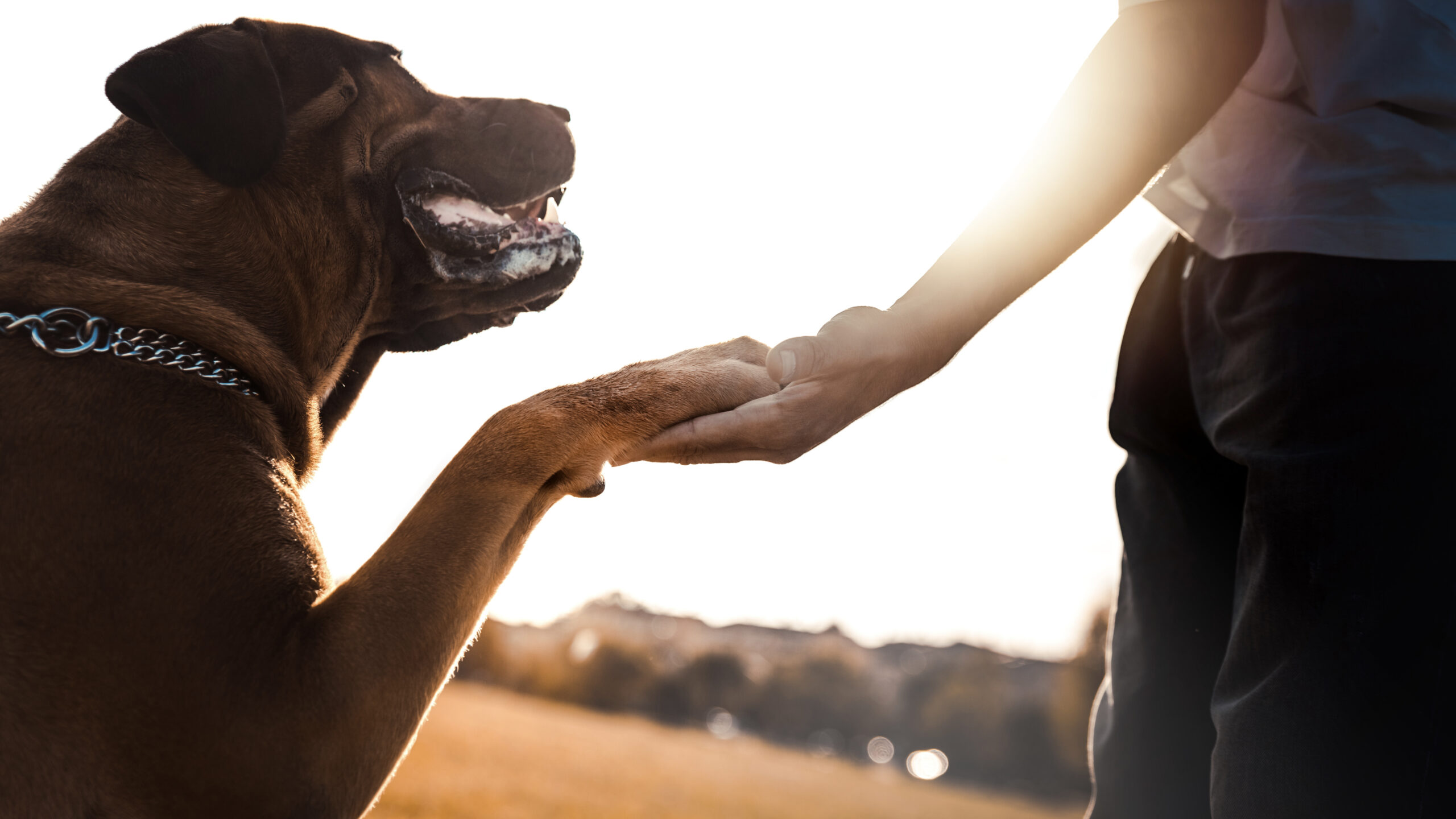
It’s not a yes or no thing, but there are some signs you can count on. Look for these during play and the rest of the day too:
Visual check-ins
Your dog looks back at you on walks or during play without you asking, cause they’re keeping track of you.
Re-engagement after distraction
Your dog spots a squirrel or another dog and then turns back to you on their own, and in training that’s about the best sign you can get.
Voluntary proximity
Your dog picks being near you when they don’t have to, so they lay down by you and follow you room to room and wait outside the bathroom door.
Anticipation of sessions
Your dog gets excited as soon as you reach for the toy, cause they know the game is coming and they know it comes from you.
Post-play settling
When the session’s over your dog settles down near you instead of getting more wound up. Calming down after being all fired up is a good bonding sign and a good training result too.
Eye contact during play
Your dog looks at your face and not just the toy, reading you and watching for the next cue, cause you’re the one running the game.
What Hurts Bonding (Even If It Feels Right)
Some pretty common habits hurt the bond even though they feel like the right thing to do:
Unpredictable rewards
If you say yes to something one day and ignore it the next, that wears down trust. The dog quits trying to read you cause your signals don’t mean the same thing twice.
Too much free play with no rules
The dog learns to have fun without you, so you end up with nothing to do with the best part of their day. A dog that has toys all day long and still chews the furniture doesn’t need more toys, they need more time with you.
Over-relying on food without structure
Treats with no clear rules turn you into a vending machine, and then the dog is working for the food and not for you.
Only interacting when correcting
If most of the attention your dog gets from you is when they’re in trouble, they learn that you paying attention is a bad thing. So flip it around and do a lot more structured play and a lot less correcting.
Skipping daily physical and mental work
It’s hard to bond with a dog that’s bouncing off the walls. A dog that’s still hyper after walks, or isn’t getting enough exercise for how much drive it has, can be harder to connect with cause it’s always looking for somewhere to put that energy. The right exercise prescription is a big part of getting the bond going.
Ignoring stress signals
If your dog turns away, licks their lips, freezes or yawns while you’re working with them and you keep pushing, you’re hurting the trust. Paying attention to those stress signs is a big part of building it.
Most people love their dog plenty, the thing that’s usually missing is structure. Dogs bond to the person they can predict and who gives them what they need most.
Why Bonding Changes Everything About Training
You really need the bond before training goes anywhere. A bonded dog listens better, puts up with your mistakes, comes off distractions quicker and will keep working when it gets hard.
That’s because a bonded dog cares about what it has with you, so it’s got something to lose if it ignores you. A dog without that bond doesn’t have anything riding on it and can blow off your recall cause you just aren’t that important to it. For a bonded dog, coming back to you is a reward all by itself.
That’s why it makes sense to work on the bond before you drill specific behaviors. You can force a behavior without a bond, but you won’t get obedience you can count on everywhere without one. Everything else gets built on top of it.
A bond doesn’t magically fix a behavior problem. But a bonded dog is paying attention to you, and a dog that’s paying attention can learn, so start there and the rest tends to go a lot smoother.
Christopher Lee Moran · Working Dog TrainerThe 5-Step Daily Bonding Protocol
Do this every day for four weeks, and doing it every day matters more than doing it hard. What you want is for your dog to start tying you to the best part of their day, and once they do, the bond comes along with it.
Five Steps, Run in Order Every Session
Figure out if your dog cares more about food or play. For a lot of high-drive dogs a chase you run does more for the bond than food, cause the game only happens when you’re there, and if your dog won’t even look at toys, start with food and work the lure in over the first week.
Start with 7 to 10 minute flirt pole sessions once a day, at the same time if you can. Short and steady does more than long every once in a while, cause you want your dog looking forward to you showing up.
Use wait before the release and get it to let them go, drop it to reset and all done to end, every session and every rep. Being predictable builds trust faster than mixing it up, cause when the dog knows what’s coming it relaxes and gets more into it.
Wins, transitions, and closing the session
Let them have the lure all the way every three to four reps, cause a dog that never wins gets frustrated and locks onto the toy instead of you. The wins keep them in the game, and the part that matters is you’re the one deciding when they happen.
Give your all-done cue and put the toy completely away, then ask for a settle or a place, and that teaches them the game will come back and it’s not gone for good. A dog that gets stopped cold a lot of times stays all wound up, so the wind down is part of the bonding too.
This only works if the toy isn’t lying around between sessions, so put it all the way up, cause if your dog can grab it any time they’ve got no reason to wait on you.
A Flirt Pole Built for This Protocol
When you’re ready to start, this is the pole I built for it. I bought the flirt poles I could find and handed them out to clients, watched what broke, and then built my own and tested it on high-drive client dogs for years before I sold it. For daily sessions you want something that holds up, fits your dog’s size and is easy to put away after. The bond does most of the work, the pole just helps you keep the structure.
Whimsy Stick Flirt Pole
A flirt pole you control, made for daily structured sessions. It comes in two sizes, the Standard for dogs under 30 lbs and the Rugged XL for dogs 30 lbs and up and hard grabbers.
How to Bond with Your Dog: FAQ
How do I bond with my dog through interactive play?
The way I see it, you want to be the source of what your dog wants most. Toys you run, like a flirt pole, do more for this than toys they play with alone, cause the game only happens when you’re there. Do a short 10-minute session every day with the same cues (wait, get it, drop it, all done) and your dog learns that good things come through you, and that’s really what bonding is.
How long does it take to bond with a new dog?
I’d give it 2 to 4 weeks of structured time every day and then look for the signs, and rescues with a rough past can take a lot longer, and the 3-3-3 rule is a good guide for them: 3 days to decompress, 3 weeks to learn the routine and 3 months to feel at home. Structured play can help it along, but I’d let the dog set the pace.
How do I know if my dog is bonded to me?
I’d look for a dog that’s relaxed around you and comes to be near you on its own, looks back to check on you on walks or in play, gets excited when you start something and will leave a distraction to come back to you. The clearest one is your dog picking you over everything else around without being asked.
Mechanism and timeline
Can I bond with my dog without using treats?
You can. Treats are good for teaching behaviors, but play builds the relationship in a way food a lot of times can’t, especially with high-drive dogs. When you’re the source of the chase and the game, the bond gets built on something bigger than hunger. A lot of working-line dogs and herding breeds will work harder for play you run than for food.
Does bonding actually change a dog’s behavior?
It can. A bonded dog is more likely to check in with you off leash and come off a distraction when you ask, and come when called even when there’s a lot going on, and actually care that you’re there. They’re easier to train and less likely to go find trouble on their own, cause they’d rather be doing something with you.
What is the best way to bond with a rescue dog?
I’d give them time to decompress before you push anything, and let them come to you instead of you going after them, and keep things easy with low-pressure enrichment while they settle. Once they start looking at you and coming to be near you on their own, start short and easy structured play and build up slow.
Practical questions
How does structured play differ from just playing with your dog?
Structured play means the game starts on your cue, there are cues all the way through it, and it ends when you say. That puts you in charge of the hunt. Play with no structure is fun but it doesn’t build the focus on you or the trust that makes the bond deeper, so at the least I’d put wait, drop it and all done in every session.
Edge cases
What if my dog does not seem interested in play at first?
That’s common with dogs that have never had structured play, and with shut-down rescues. Start real short, like 2 to 3 minutes, and move the lure slow and easy and let the dog set the pace. A lot of dogs that look like they don’t care just haven’t been shown how to play yet. Keep it easy and keep showing up, and I’d give it a week or two before you decide.
Can flirt pole play help with reactive or fearful dogs?
It can help. Structured flirt pole sessions build the bond and they also give your dog practice calming down from being fired up. Waiting before the release is practice holding it together while they’re excited, and that can help in other situations too. With a fearful dog I’d start real slow and let them build some confidence by catching it a bunch before you speed up or get tricky with it.


