
Toys for High-Energy Dogs: The Enrichment Toys That Actually Help
A lot of high-energy dogs need two kinds of toys. One kind works the nose and the brain, like snuffle mats and puzzle feeders and stuffable rubber toys and lick mats and chews. The other kind lets them chase and catch and pull with you, so a flirt pole or a tug toy. For a dog with real chase drive, puzzle toys by themselves usually aren’t gonna be enough. What I’d do is a short chase game with some rules first, then a sniffing or food toy to wind down.
By Christopher Lee Moran, working dog trainer, around 400 client dogs · Updated October 2026
Why the puzzle toy is empty in four minutes
He empties the puzzle feeder in a few minutes and goes right back to pacing. There’s nothing wrong with the toy, it just did a different job than the one you needed. Puzzle and sniffing toys work the brain and the nose, but a dog with a lot of chase drive also wants to run after something and catch it and hang on.
The ASPCA says pretty much the same thing about destructive chewing, give your dog ways to exercise his mind and his body. Their list has walks, tug and fetch, training, dog sports and food puzzle toys all together. So it’s a mix, and there’s no one perfect toy no matter what anybody tells you.
Choose by what your dog needs
| Your situation | Start with | Watch out for |
|---|---|---|
| No yard, or stuck indoors | Snuffle mat, scatter feeding, search games, frozen stuffable toy, short training | Hard floors for any running game |
| Smart dog that gets bored fast | Puzzle feeders (rotate them), search games, new tricks | Frustration: make puzzles easier at first |
| Chases squirrels, cats, anything that moves | Flirt pole with waits and catches, then tug | Sessions with no rules or no ending |
| Easily overstimulated or reactive | Sniffing and licking toys, calm search games, short low-key play | Fast games that tip into frantic; keep play short and stop early |
| Chews when left alone | Durable chew or frozen stuffable toy, plus a vet or trainer check for separation anxiety | Leaving any toy that breaks into pieces |
Every enrichment toy, and what it’s actually good for
| Toy | What it works | Best used | Limit for high-drive dogs |
|---|---|---|---|
| Snuffle mat | Nose, slow searching | Meals, wind-down, indoors | Calming, but doesn’t give chase drive an outlet |
| Puzzle feeder | Problem solving | Meals, rainy days | Fast dogs solve it in minutes |
| Stuffable rubber toy | Licking, chewing, patience | Crate time, after exercise | Freeze it so it lasts longer |
| Lick mat | Licking, settling | Grooming, vet-visit practice, evenings | Quiet only; no physical outlet |
| Chews | Jaw work | Settling after activity | Supervise; take away small pieces |
| Tug toy | Pulling, gripping, the “out” | With you, in short rounds | Starts at the grab, so there’s little chase |
| Ball / fetch | Running | Open space | Repeated throws can wind some dogs up |
| Flirt pole | Watch, chase, catch, hold, let go | Short structured sessions, outdoors | Needs rules: waits, catches, an ending |
The AKC recommends snuffle mats so your dog can hunt for his dinner by smell instead of eating out of a bowl. I like them too. With a high-energy dog though, I like it better later in the day, after his body has had its turn.
A daily routine to start with
- Morning: a structured chase game. Do rounds of 15 to 30 seconds with breaks in between, and your dog waits before every chase while the lure stays low. Every few rounds let him catch it and then ask for a drop it, and at the end give a clear all done. Ten minutes total is plenty for a lot of adult dogs, so I’d quit while he still wants more. The step-by-step flirt pole guide walks you through it.
- Midday: a sniff walk. 15 to 20 minutes where his nose gets to pick where you go. Sniffing counts as enrichment too, and a lot of people forget that.
- Evening: a food or sniffing toy. Put dinner in a snuffle mat or a puzzle feeder or give him a frozen stuffable toy, and after that a place cue or some crate time.
Keep it in that order. If you put a puzzle in front of a wired dog he’ll a lot of times get frustrated and quit, but give him that same puzzle after a chase session and plenty of dogs settle right in. This is just a place to start, so let your dog’s age and fitness and how he acts at home change it, and stop any game if he limps, pants a lot harder than normal or gets more frantic instead of more focused.
Tug and flirt poles: the toys you play together
Chase-and-catch toys only work if you’re on the other end of them, and I think that’s a big part of why they help. Every wait and every “out” is a little lesson in self-control too, so you’re training while you play.
Tug, done with rules: he grabs and pulls, then the game stops for an “out” on cue before you start the next round.
Impulse control drillsTug starts at the grab. A flirt pole gives you the part a lot of toys skip, the watching and stalking and chasing before the catch, so with a high-drive dog that’s the first toy I’d grab.
The chase toy I designed for high-energy dogs
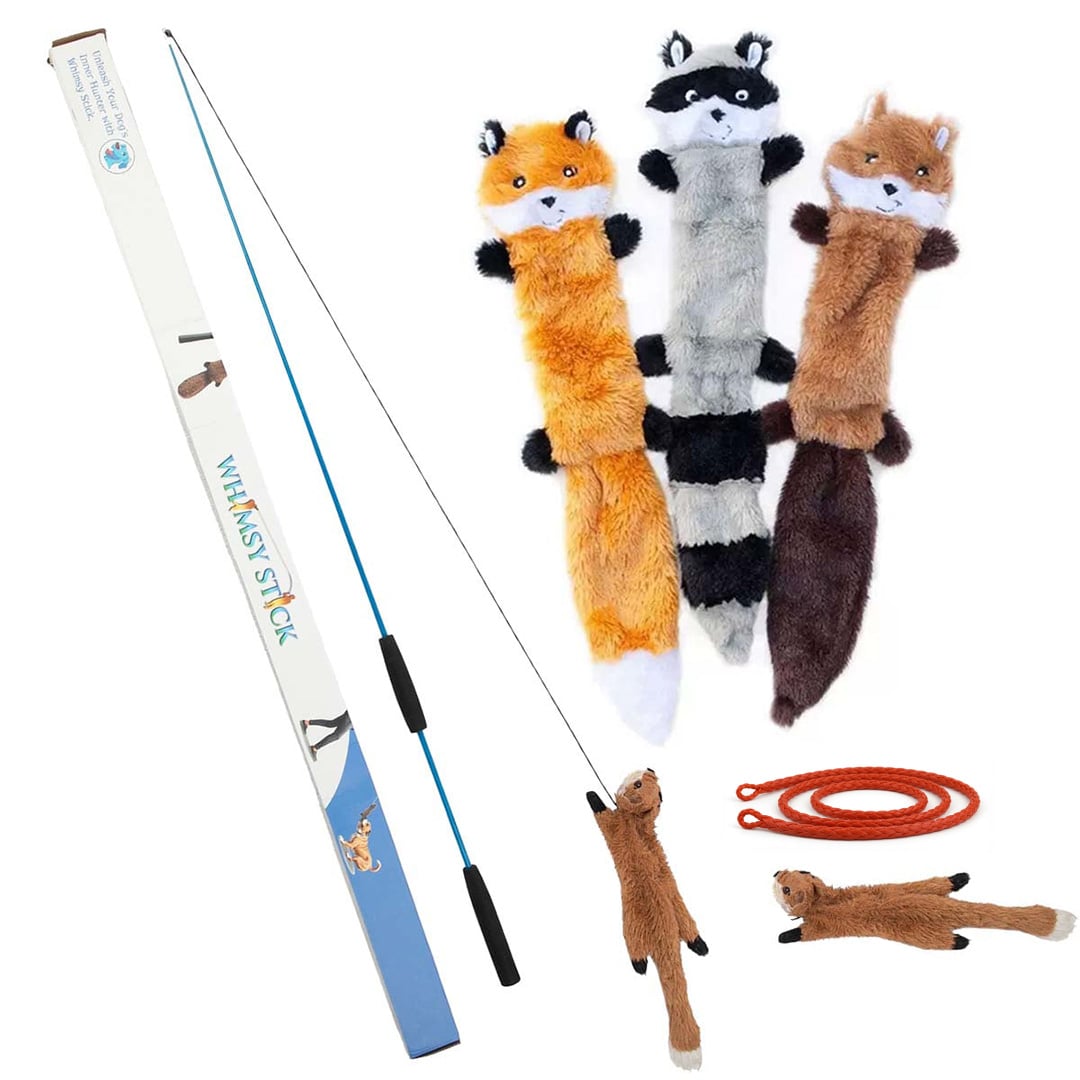
Rugged XL Pro Kit
- One-piece reinforced fiberglass pole, about 8 feet of reach
- Dyneema static line rated at 800 lbs, plus a spare line
- 5 lures for daily play · free US shipping
30-day money-back guarantee · usually ships within 2 days
Rated 4.9 stars across 38 product reviews. Lures wear out ($12.95 each), and a dog that plays every day is gonna go through them faster. Not sure on size? Check the best flirt poles for dogs.
Indoor toys for high-energy dogs
If it’s raining or too hot I’d use the quiet half of the list, so scatter kibble in a snuffle mat or an old towel, hide treats around a room and let him find them, or freeze a stuffable toy the night before. Short training sessions count too, cause five minutes of sits and downs and waits still works his brain.
For most homes the flirt pole stays outside though. It needs a decent field of chase for wide sweeps and ground he won’t slip on, so I’d skip it on hard floors.
Safety with enrichment toys
- Supervise new toys. Watch how he handles a toy before you ever leave him alone with it, and anything breaking into pieces he could swallow goes in the trash.
- Put the flirt pole away after play. It’s a toy you play together, not a chew toy, and lines and lures aren’t for a dog with nobody watching. A pole that gets chewed while he’s alone with it isn’t covered.
- Mind the heat and the joints. On hot days I’d play early and on grass, and keep the lure low.
- Puppies: wait until at least 6 months, and even then keep it easy with slow drags on the ground, no jumping and just a few minutes. Hard, fast chasing waits until your vet tells you his growth plates have closed.
Toys aren’t a treatment. If he mostly chews or panics when he’s left alone, the ASPCA notes that can be separation anxiety. A dog that lunges at people or dogs needs a training plan too. Either way talk to your vet or a qualified trainer, cause enrichment can help but it won’t fix either one by itself.
Quick answers
What are the best toys for high-energy dogs?
Honestly a mix. I’d start with a chase-and-catch toy you play together, like a flirt pole or a tug toy, so his body and his drive get an outlet, and then a snuffle mat or a puzzle feeder or a frozen stuffable toy while he winds down.
What are cognitive dog toys?
It’s anything that makes your dog think or search, like puzzle feeders, snuffle mats, treat-dispensing toys and hide-and-seek games, and they’re great for the brain and for calming down, but by themselves they don’t usually tire out a high-drive dog.
What toys are good for dogs with high prey drive?
I’d go with a flirt pole used with some structure, cause your dog gets to watch and chase and catch and you’re in control the whole time. Tug is a good second, and then add sniffing toys for the calm part of the day.
Why doesn’t my puzzle toy tire my dog out?
Cause it works the brain and not his legs or his chase drive, so try the puzzle after a short chase game instead of before one, and a lot of dogs settle into it a lot better that way.
Are enrichment toys good for reactive dogs?
They can be part of it, cause sniffing and licking help a lot of dogs settle and play with some structure builds self-control. Reactivity is a different job though, it takes distance and careful training and a lot of times professional help. See reactive dog training.
Give the body its turn first.
Try it for 30 days. If it’s not a fit for your dog, email me for a refund, and return shipping is on you unless the pole failed. I’m a one-man company and I want you happy with it, so I’ll work with you.
Get the Pro Kit, $129.95Smaller dog? See the Standard, $55.95
Based on my own experience training dogs. Not veterinary advice. Exercise disclaimer.


