
Standard Flirt Pole for Small Dogs
The Standard is the Whimsy Stick I make for dogs under 30 lbs. It’s a light fiberglass pole with two foam grips and a 450-lb Kevlar line that doesn’t stretch, and the whole thing weighs about 4 oz. The lure goes on a simple loop, so when one gets chewed up you just take it off and put a new one on. A small dog gets a lure it can actually catch, and you can keep the pace easy on them. If your dog is 30 lbs or more, or grabs hard and shakes, get the Rugged XL instead.
★ 5.0 across 15 reviews of the Standard · $20 US shipping · 30-day money-back guarantee · usually ships within 2 days
By Christopher Lee Moran, working dog trainer, about 10 years and around 400 client dogs. Just so you know, I designed this pole and I sell it. If you’re still deciding, the buying guide puts both sizes side by side.
Pick your bundle
The pole and line are the same in all three, the only thing that changes is how many lures you get in the box. More lures means you can swap out a chewed one in the middle of a session, or switch them around when your dog starts getting bored of one.
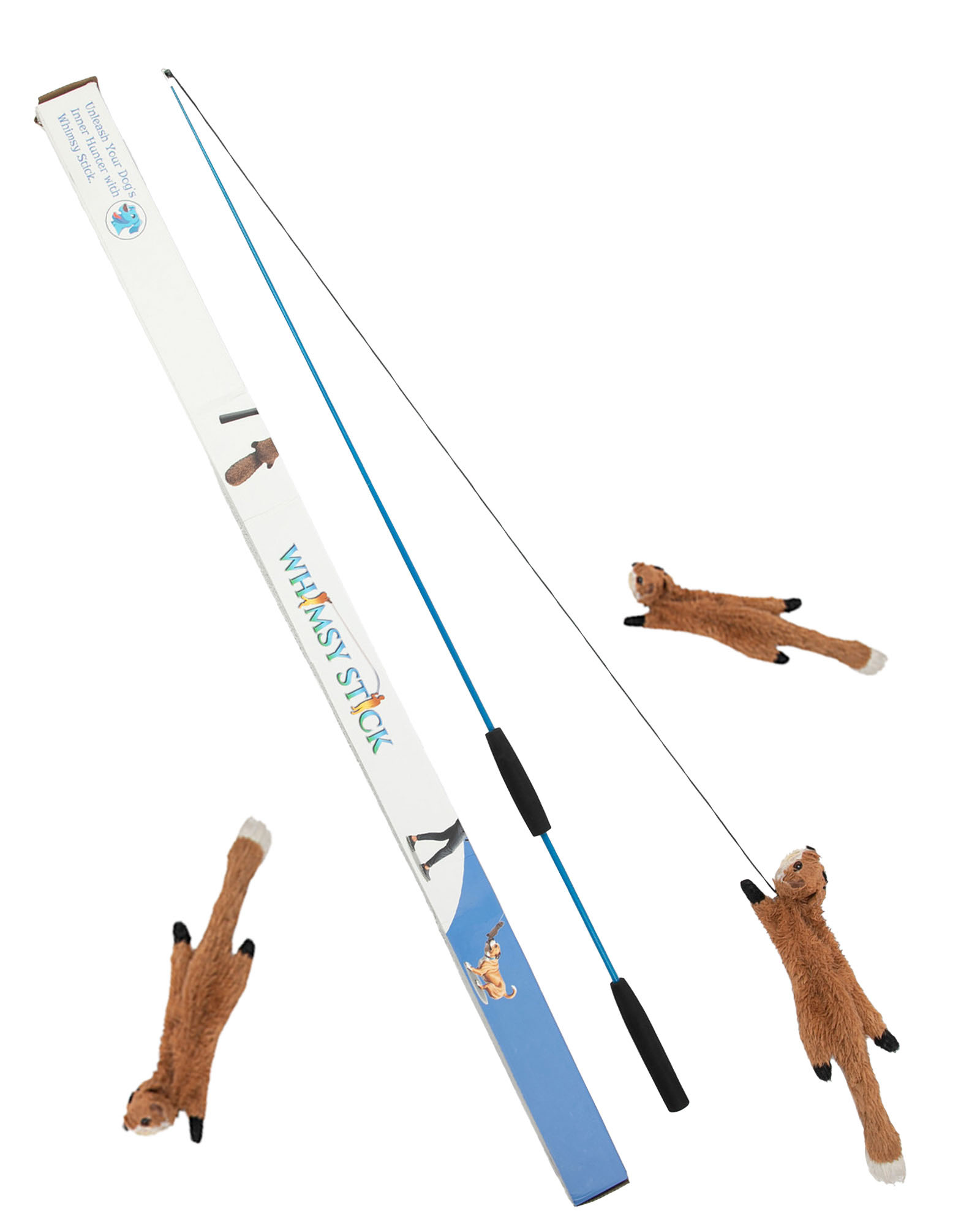
3-Lure Bundle
- Standard pole, Kevlar line already rigged
- 3 Unlucky Squirrel lures on the quick-swap loop
- For dogs under 30 lbs · $20 US shipping
Why three? The lure is the part that wears out, and a lot of times a fresh one gets a dog right back into it.
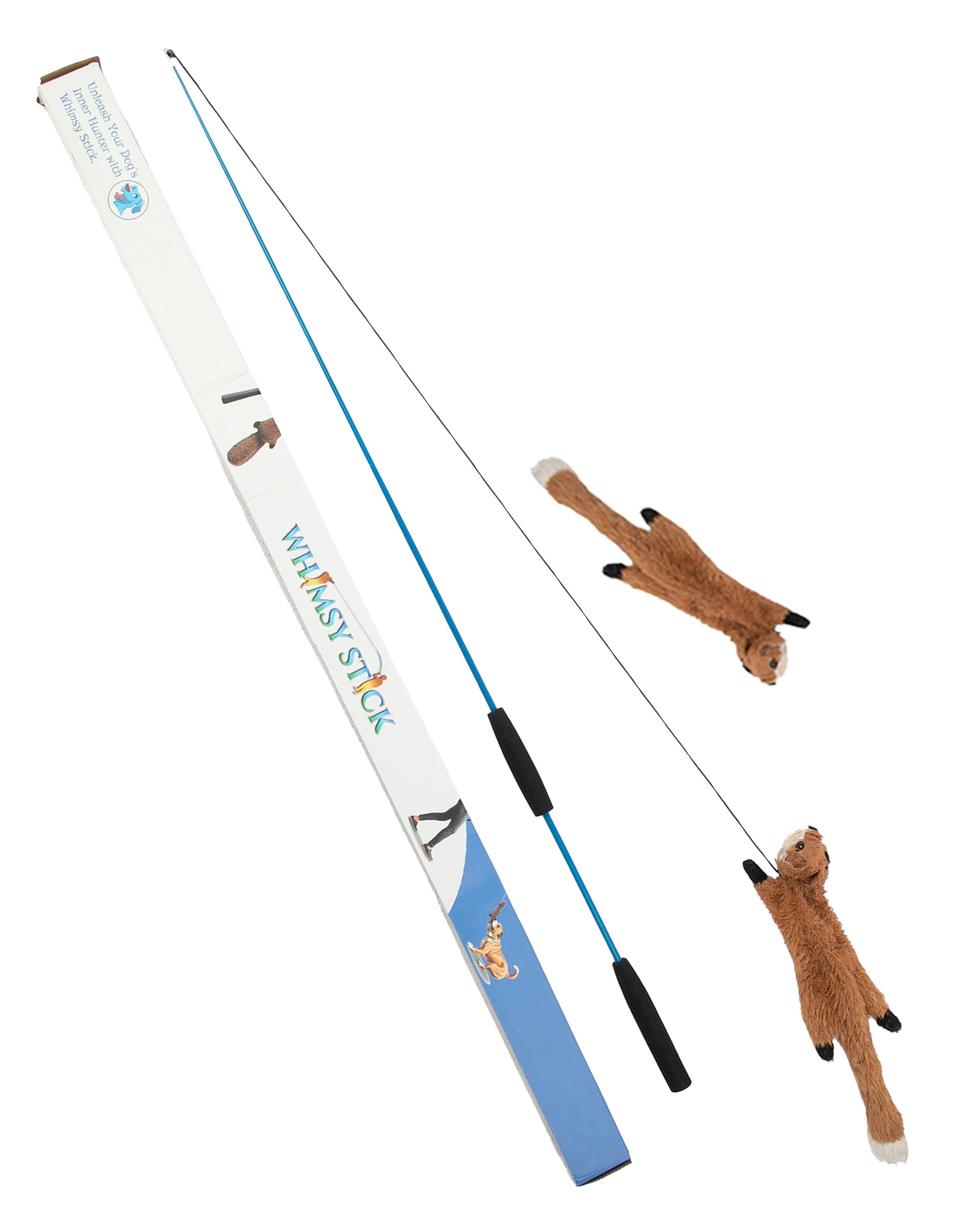
2-Lure Bundle
- Same pole and line, 2 lures
- A spare for the chewed one
| Bundle | Pole + line | Lures | Shipping | Price |
|---|---|---|---|---|
| 3-Lure Bundle | Yes | 3 | $20 (US) | $74.95 |
| 2-Lure Bundle | Yes | 2 | $20 (US) | $65.95 |
| Starter Kit | Yes | 1 | $20 (US) | $55.95 |
So why is it $20 to ship when the Rugged XL ships free? It’s because the Standard goes out in a longer box, and that label just costs more. Spare lures are also $12.95 each in the shop.
Who it’s for, and who it isn’t
A lot of times small dogs get handed big-dog gear, heavy poles and stretchy lines with a lure flying around in the air. That’s backwards. A small dog needs a light pole and a line that doesn’t snap back, and the lure should stay down on the ground cause that’s where real prey runs.
Get the Standard if
- Your dog is under 30 lbs, anywhere from a little Chihuahua up to a smaller Corgi or Beagle.
- You’ve got a terrier or some other little dog that has way more drive than lying on the couch is gonna burn off.
- You’re in an apartment and your dog gets walked, but never really gets to run.
- Your small dog has started making up its own bad habits cause it doesn’t have anything better to do.
Get the Rugged XL instead if
- Your dog is 30 lbs or more. At exactly 30, go XL.
- Your dog grabs and shakes hard no matter what it weighs, which a lot of bully mixes and working-line dogs do.
Getting the size right matters for safety too. And it’s not a toy you leave out, a dog left alone with any flirt pole is gonna chew it, and that isn’t covered.
Common breeds for the Standard: Chihuahua, Jack Russell, French Bulldog, Corgi, Dachshund, Yorkie, Mini Poodle, Cavalier, Boston Terrier, Pomeranian, Maltese, Shih Tzu, small Beagles, Toy Poodle and Min Pin.
How it’s built, and why
| Part | What it is |
|---|---|
| Pole | Lightweight blue fiberglass, stiff enough to steer the lure, light enough for one hand |
| Grips | Two black foam grips, spaced apart |
| Line | Kevlar, static (no bungee), rated at 450 lbs |
| Lure attachment | Quick-swap Kevlar loop, no metal clip at the dog’s mouth |
| Reach | Roughly 8 feet of working chase distance from your hand |
| Lures | 1 to 3 Unlucky Squirrel lures, depending on the bundle |
| Dog size | Under 30 lbs |
A line that doesn’t stretch
I won’t use a bungee line, ever. A bungee loads up when the dog grabs, and then it shoots the lure back at him when he lets go. Kevlar doesn’t stretch, so the lure goes where your hand sends it and a small dog can actually follow what it’s doing. That 450 lbs is what the line is rated for, it’s not a promise about the whole pole.
Light on purpose
A good flirt pole should be lightweight, and this one is about 4 oz, so you can run a whole session one-handed and your arm isn’t gonna give out. You steer the chase with it too, so it should feel light in your hand.
The right distance
Pole and line together get you roughly 8 feet of reach. That usually keeps the lure a few steps ahead of a small dog running full speed. Too short and he runs right into your legs, too long and the lure stops feeling like something he can actually catch.
A simple lure swap
Each lure goes on a Kevlar loop with no metal on it, so there’s nothing for the dog to bite down on. You don’t need any tools to swap one, so you can change lures in the middle of a session or replace a chewed one and keep going.
Low and flat. A Corgi going after a lure that stays on the grass. That’s what you want to see with a small or long-backed dog.
Flirt pole tips for apartment dogsHow to run a small-dog session
A 9-lb dog isn’t just a small Lab, so the session has to be different too, shorter and lower and easier on them. The AKC has a good piece on channeling prey drive with structured play. This is the loop I’d run.
- Settle first. Ask for a sit or a down, and don’t move the lure until your dog holds still for a second.
- Stalk and chase. Drag the lure in long low arcs along the ground a few steps ahead of your dog, 3 or 4 rounds.
- Catch and win. Every 3 or 4 rounds let them catch it and hang on to it for a few seconds, then trade it for a treat.
- End on your cue. Say all done and put the pole away where your dog can see you do it, then give them a chew or a puzzle.
Most small dogs do fine with 5 to 8 minutes, and flat-faced breeds in warm weather are better off with 4 to 6. Those are just starting points, so adjust for your dog. The introduction guide goes over the first few sessions.
Keep it low and soft
Keep the lure flat on the ground and then sweep it in long arcs. I’d skip the jumping and the hard 180 turns with a small dog, and if you’re not sure what your dog’s body can handle, ask your vet. You can stand pretty much still with your elbow down around your hip, and the pole does the moving while the dog does the running.
Stop the session if a flat-faced dog (Frenchie, Pug, Boston, Cavalier) starts panting harder, its tongue goes flat or it looks glassy-eyed. Then get them in the shade and give them water. Stay off slick floors like hardwood and tile cause dogs slide around on them, and don’t ever play on stairs. If you want to read up on flat-faced breeds, see Cornell’s canine health topics.
Breed notes
These are some common small breeds and roughly how I’d start each one. Every dog is different though, so treat it as a starting point.
| Breed | What to watch | Where I’d start |
|---|---|---|
| Jack Russells | Drive that rarely switches off; use the catch to finish each round | Daily, about 8 minutes |
| French Bulldogs | Heat and breathing; grass and cool weather only | Daily, about 5 minutes |
| Chihuahuas | More drive than people expect; keep everything low | Daily, 4 to 6 minutes |
| Corgis | Long back: wide arcs, no tight turns, no jumping | Daily, 6 to 8 minutes |
| Mini Poodles | Busy brains; mix in waits and cues | Daily, about 6 minutes |
| Beagles and Dachshunds | Ground-chasers by nature; watch the back on Doxies | Daily, 5 to 7 minutes |
What my clients tell me most is their dogs are a lot more relaxed and calmer, and they just seem more satisfied. If you’ve got a herding breed there’s more in the herding dog guide.
What Standard owners say
The Standard has 15 reviews and they’re all five stars. These are six of them word for word, from people who bought on whimsystick.com, and there are more on the reviews page.
Written reviews
“This thing is a lifesaver. We have an extremely active working dog mix 6 month old puppy and 5 minutes of this tires him out. Highly recommend this. I evaluated other options and this by far is the best as it is lightweight, longer (pole and line) and feels like it is made well. So far no issues.”
Ken R. · Working-dog mix puppy · Website review · Apr 2025
“It’s truly amazing! Life changing since our dog doesn’t fetch. She is also not good with other dogs so now we can get some exercise in our backyard. My dog is a pit mix, strong girl and when she grabs the toy, I stop pulling and she let it go to start all again!”
Flavia G. · Pit mix · Website review · Apr 2025
“This thing is a game changer for playing with our dog. He’s a border collie, so lots of energy. He loves this thing, and it wears him out. The look on his face every time we bring it out is pure happiness and excitement. Great dog toy!”
David M. · Border Collie · Website review · Nov 2025
More from owners
“This was a great purchase! It works great for my boyfriend’s pittie lab mix – she’s constantly overflowing with energy and this is one of the only toys that tires her out 👍”
Molly R. · Pittie-Lab mix · Website review · Apr 2025
“This has been a great outlet for our dog. It keeps him engaged, excited, and is one of the few things that can actually tire him out. It’s also been a great training tool.”
Ben R. · Standard owner · Website review · Apr 2025
“I love how much more streamlined this is, compared to other flirt poles I’ve used.”
Jennifer H. · Standard owner · Website review · Feb 2026
A note on bigger dogs
A few of these owners have bigger dogs. If yours is 30 lbs or more, or grabs hard, the Rugged XL is the safer one to get.
Shipping, returns, and breakage
Orders usually ship within 2 days. Shipping on the Standard is a flat $20 in the US.
Lures and line are wear parts, they get chewed and they fray and that’s normal. A new lure is $12.95.
The pole is different. If it breaks while you’re playing with your dog, I’ll work with you to fix it, replace it or refund it. A dog that got hold of it alone and chewed it up isn’t covered, though.
If it’s not working out you have 30 days for a refund, and you pay the return shipping unless the pole failed. Email me first though. I’m a one-man company and I want you happy with it, so I’ll work with you.
Questions people ask before they buy
What size dog is the Standard built for?
Dogs under 30 lbs, so things like Chihuahuas, Yorkies, Mini Poodles, Dachshunds, Jack Russells, French Bulldogs, Pomeranians, smaller Corgis, Bostons and Cavaliers. If your dog is 30 lbs and up, or grabs hard at any weight, go with the Rugged XL.
My dog is exactly 30 lbs. Which one?
The Rugged XL. The Standard is for dogs under 30 lbs.
Is the line bungee or static?
Static. It’s a 450-lb Kevlar line, so it doesn’t stretch and snap back when your dog catches the lure or when you change direction, and your dog can actually follow where it’s going.
Why a 450-lb line on a small-dog pole?
A small dog hitting the end of the line running full speed pulls a lot harder than you’d think, so I want a strong line on there that doesn’t stretch. The 450 lbs is what the line is rated for, it’s not a promise about the whole pole.
How do the lures work?
Each Unlucky Squirrel lure goes on a Kevlar loop. There’s no metal swivel or plastic clip for the dog to bite down on, and you don’t need tools to swap one. Spare lures are $12.95.
How long should a session run?
Five to eight minutes for most small dogs, and four to six for flat-faced breeds when it’s warm out. How you run it matters more than how long, so have them wait, then chase, catch and let go, and do that again till you give a clear all done.
How is shipping handled?
It’s a flat $20 in the US, and it usually ships within 2 days.
What’s the return policy?
You’ve got 30 days for a refund on orders from whimsystick.com, and you pay the return shipping unless the pole failed. Normal wear on the lure and line isn’t a defect.
Can a puppy use it?
I’d wait till 6 months. After that keep it short and easy with the lure on the ground, and let your vet tell you when your puppy can go full speed.
Can I leave it out for my dog?
No. It’s a game you play with your dog, and a dog left alone with it is gonna chew it, and chewing isn’t covered.
Try the Standard on your small dog
You’ve got 30 days to try it. If the pole breaks in play I’ll work with you on it, and if it isn’t working you can email me, it’s just me on the other end.
Add the 3-Lure Bundle to cart, $74.95Or start with the Starter Kit, $55.95 · Dog 30 lbs or more? See the Rugged XL
Based on my own experience training dogs. Not veterinary advice. Exercise disclaimer.


