
The short version
Flirt poles are safe for most healthy adult dogs when you use them right. When a dog does get hurt, a lot of times it comes back to the lure flying up in the air so the dog is jumping, a session that goes way too long, the wrong size gear, no real ending, or playing on a hard surface. You can avoid every one of those. Puppies whose growth plates haven’t closed, dogs with joint problems, and older dogs with arthritis or heart problems shouldn’t be doing hard sessions, so ask your vet. Most other dogs, high-drive ones included, do fine with short sessions that have some rules. If your dog is reactive, work with a trainer on that too.
Who This Safety Guide Is For
- People checking whether flirt poles are safe before they buy one
- People with reactive or anxious or really wound-up dogs who are worried it’ll make things worse
- Anybody with an older dog or a dog with joint problems
- People already using a flirt pole who aren’t sure they’re doing it right
- Trainers looking at flirt poles to recommend to clients
Signs Your Dog Needs Structured Flirt Pole Work
- Tears up toys in minutes, the drive has nowhere to go
- Goes nuts on leash at dogs or bikes or squirrels
- Gets the zoomies after dinner every night
- Pulls hard on every walk like it wants to run something down
- Barks nonstop at the fence line
- Still bouncing off the walls after a long walk
Are Flirt Poles Actually Safe?
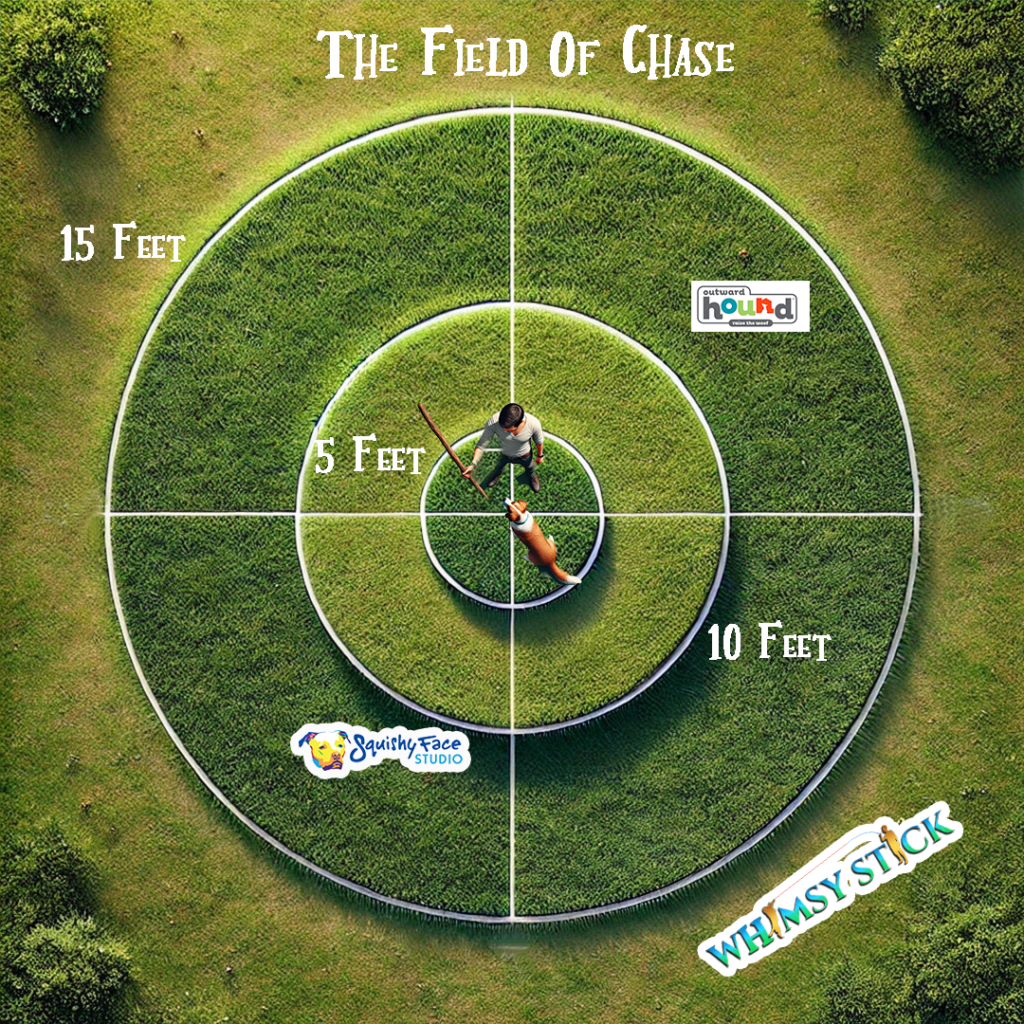
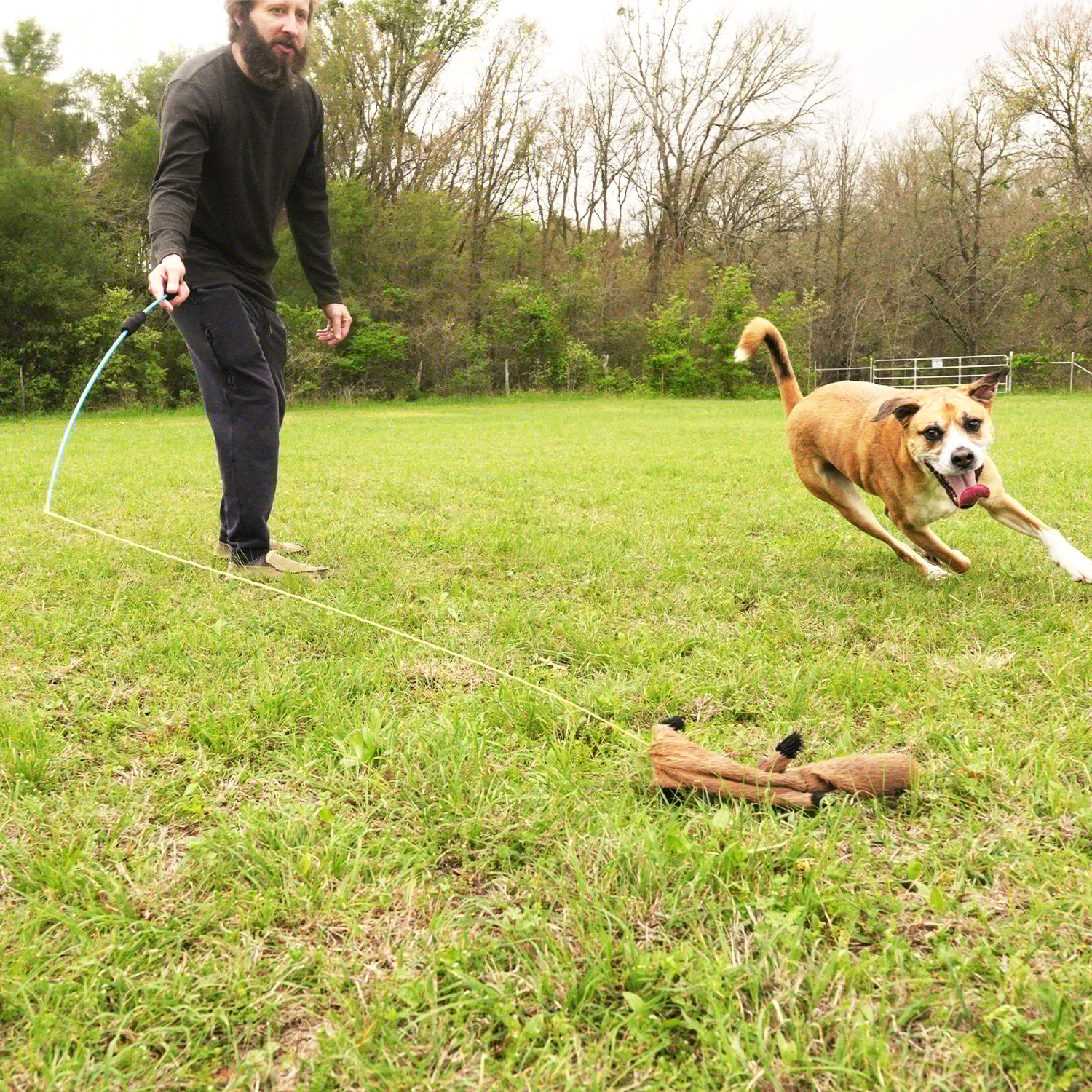
For most dogs yes, but there are some things that matter. Used right, on grass, with good gear, a flirt pole is a pretty safe way to let a high-drive dog run. Used wrong with bad gear on a hard surface it can hurt a dog, and honestly that goes for just about any kind of dog exercise. How you do it matters a lot more than what you’re doing.
Lure Stays at Ground Level
Move the lure in arcs on the ground, never up over your head. Jumping and landing over and over is hard on a dog’s joints. And mice and rabbits don’t fly, so keep the lure where prey actually runs.
Ground arcs only, no jumpsStructured Rounds With Rest
Do about 30 seconds of chase and then a wait, 4 to 6 rounds all together, and keep the whole thing to 10 minutes or less with the rest included. A lot of dogs won’t stop on their own even when they’re getting too hot, so you have to be the one who stops it.
30s on, 30s off, 6 rounds maxRight-Sized Gear for the Dog
Dogs under 30 lbs use the Standard and dogs 30 lbs and up use the Rugged XL, and if your dog is right at 30, go XL. The wrong size is a safety problem, cause a pole made for a small dog isn’t made to take a big dog grabbing and shaking it.
Standard or Rugged XL by weightDeliberate Session Ending
Say all done, put the lure away and get your dog in a down or on its place with a chew. If a session just kind of trails off your dog is still wired, so the ending matters as much as anything else.
All-done cue, lure away, settleAll four rules work together. Skip one, even just the ending, and you can end up with a dog that’s still wired after. Do all four every time.
What Safe Use Looks Like vs What Does Not
The difference between using it safe and not safe is pretty easy to see. These are the common ways it goes wrong, and each one comes from breaking one of the four rules up there. The American Kennel Club has a good piece on channeling prey drive with structured play, and the structure is the part that keeps it safe.
Joint stress from overhead lure
Letting the lure fly up in the air so your dog is jumping over and over is hard on their joints. Keep it in arcs on the ground every session.
Soft tissue strain from no rest
A lot of dogs will keep going till they’re overheated or sore, so long sessions with no breaks are a problem. Watch your dog. If the tongue gets real wide, they’re slow to catch their breath, or they lie down on their own, you’re done.
Impact injury on hard surfaces
Concrete and pavement are hard on joints, and tile and hardwood are slick. Play outside on grass or dirt, not on hard floors.
The Variables That Determine Safety
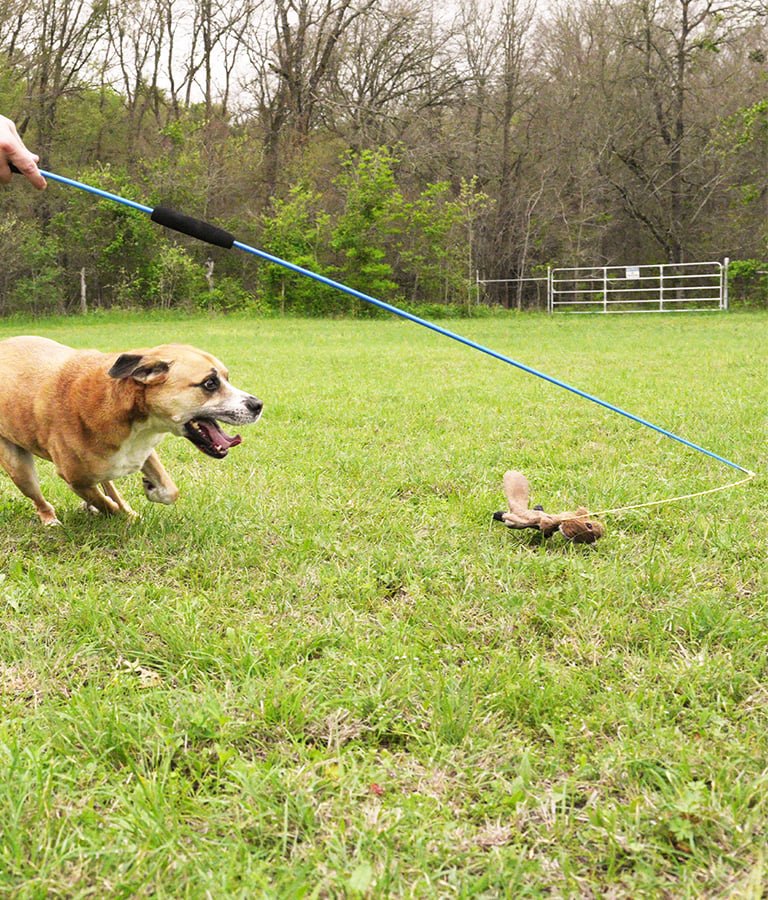
These are the things that decide whether a session is safe. Get them right and you’ve taken care of most of the risk. Check your own setup against the table.
The catch phase matters. If your dog can never catch the lure it just gets frustrated. Let them catch it every 3 or 4 rounds so they get to finish, stalk and chase and catch and win, or they can stay wound up after.
Dogs That Should Not Run High-Intensity Flirt Pole Sessions

Not every dog should do the full thing. Some need easier sessions and some should skip it till a vet says okay. These are health reasons, so talk to your vet about them. For more on this, see are flirt poles cruel.
Diagnosed orthopedic conditions, veterinary clearance required
Hip or elbow dysplasia, a bad kneecap, a knee injury, or arthritis. Quick turns and sprinting are hard on joints, so talk to your vet before any flirt pole work. Things like sniffing games or easy tug might be a better fit, but ask your vet.
Vet ClearancePuppies before growth plate closure, modified protocol only
Small dogs usually finish growing sooner than big ones and giant breeds take the longest. Till then, slow easy sessions are fine for teaching wait and drop it, but the full-speed running and hard turns should wait. Ask your vet when your dog’s growth plates are closed.
Age GatingSeniors and dogs with cardiovascular issues, veterinary clearance required
A healthy older dog with good joints can do short easy sessions. An older dog with arthritis or heart or breathing problems shouldn’t do any hard chasing without talking to the vet first. For those dogs keep it gentle.
Vet ClearanceDogs recovering from injury or surgery, temporary contraindication
If your dog is getting over surgery, an injury or a serious illness, get your vet’s okay before any hard exercise. Your vet will tell you what’s okay in the meantime. For more on why I built the pole the way I did, see why we recommend the Whimsy Stick.
TemporaryWhy Gear Quality Is a Safety Issue
Most of staying safe is how you use it, but the gear matters too. A pole that breaks in the middle of a session isn’t safe. A lot of the poles I tried had a violent bungee cord, and a bungee can snap the lure back at you. When a pole comes apart in 2 pieces or collapses, you lose strength and pole integrity, and that joint is a weak spot. What makes a pole hold up is pretty much what makes it safe, so get the right size for your dog.
For dogs under 30 lbs. It’s about 4 oz with a 450-lb Kevlar line that doesn’t stretch, and the lures are easy to swap.
For dogs 30 lbs and up. It’s a one-piece 46-inch reinforced fiberglass pole with an 800-lb Dyneema static line, $74.95 with 1 lure or $94.95 with 3, and it ships free in the US.
The Safe Session Protocol, Step by Step
This is how I’d run a session, from getting set up to settling down at the end. Do it in this order every time, cause skipping steps is where a lot of sessions go wrong.
Do Not Start Without Reading This
Never run a flirt pole session on concrete, tile, or hardwood. Hard ground is rough on joints and slick floors make dogs slide, and one bad slide can hurt a dog. For full speed sessions, play outside on grass.
Make sure you’re on grass or dirt with plenty of clear room around you, and move anything that’s in the way. Check the lure is on good before you start.
Pre-sessionHave your dog hold a wait or a sit before every round. Don’t skip it, that wait is where a lot of the training happens.
Wait cueKeep it on the ground with sweeps and figure-eights and some changes of direction. Don’t take the lure over your head and don’t let the dog jump for it. Move it like real prey moves, low and fast so your dog can’t guess where it’s going.
Chase phaseCatch, rest, and the deliberate close
Let your dog catch the lure and shake it while you hold still, so they get to finish, stalk and chase and catch and win. Then ask for a drop it before the next round.
Drop-it cueGet your dog in a sit or a down and hold the pole still. If the tongue gets real wide, they’re slow to catch their breath, or they lie down on their own, stop. Don’t go more than 6 rounds.
Rest phaseSay all done and put the lure out of sight, then send your dog to its place or a mat or give it a chew. If a session just trails off your dog stays wound up, so end it on purpose.
All-done cueThe wait cue before each round is the most underused part of this protocol. A lot of people skip it and go straight to the chase. Holding still when they really want to go, and then getting released, is the kind of thing that helps at the door and on the leash too. Don’t skip it.
Flirt Pole Use for Senior Dogs and Post-Op Recovery
Most flirt pole advice is written for a healthy young adult dog with good joints. A lot of dogs aren’t that, they’re older, or they’ve had surgery, or they’re missing a leg. The basic idea can still work for some of them, but how you run it has to change, and your vet should be part of that call.
Senior dogs (8+ years)
A lot of older dogs still want to chase, but their bodies can’t take what they used to. So keep them playing and just take it way down. Make it shorter and slower, keep the lure on the ground in wide slow arcs with no hard cuts or spinning, and let them catch it sooner and more often. Check with your vet first, especially if there’s any arthritis.
Post-surgery modifications
This is your vet’s call, not mine. I’m a trainer, not a vet, so don’t go by a website on this one.
Soft tissue surgery No chasing, sprinting, jumping or twisting till everything has healed and your vet clears your dog for it.
Orthopedic surgery (knee, hip, spine or a broken bone). Wait till your vet or rehab vet signs off, and ask them what kind of play is okay after that. Slow lure drags, mat work and wait games can give your dog something to do without the running, if your vet is good with it.
Three-legged dogs
A three-legged dog is putting more on the legs it has, so I’d stay away from hard cuts and sprinting. Keep the lure on straight lines or easy curves, let them catch it early, and keep it short. Ask your vet what’s okay for your dog.
The drive-without-impact pattern
For any of these dogs the idea is to let them hunt without pounding their joints. Drag the lure real slow so the dog is stalking more than chasing, put a wait in between everything, let them settle on a mat between rounds, and let them catch it a lot. They still get to stalk and catch and win, just without the hard running.
Flirt Pole Safety FAQ
Core safety questions
Is a flirt pole safe for dogs?
For most healthy adult dogs, yes, if you use it right with the right pole. Keep the lure on the ground, do short rounds with rest, end it on purpose with an all done, and get the right size for your dog. How it’s used is what gets dogs hurt, a lot more than the pole itself.
Can a flirt pole hurt my dog?
It can if you use it wrong. The things to watch for are jumping when the lure goes up in the air, sessions that go too long with no breaks, and overheating when it’s hot out or with breeds that don’t handle heat well. Keeping it low and short with a good pole takes care of most of that.
Age and senior dog questions
At what age can a dog use a flirt pole?
Wait till your vet says the growth plates are closed before you do full speed sessions. Small dogs usually get there sooner than big dogs. Before that, slow easy sessions are fine, but save the fast chasing.
Is a flirt pole safe for senior dogs?
It depends on the dog. A healthy older dog with no arthritis can do easier sessions, shorter rounds and fewer of them, no quick turns, and more rest in between. Older dogs with arthritis, joint problems or heart problems should see the vet before any hard chasing.
Reactivity and joint questions
Will a flirt pole make my dog more aggressive or reactive?
Run with rules, it gives prey drive a place to go, and what my clients tell me most is their dogs are a lot calmer and more relaxed after. Chasing with no rules can wind a dog up though, so keep the waits and the drop its and a clear ending. A flirt pole isn’t a fix for reactivity or aggression, so if that’s what you’re dealing with, get a qualified trainer involved.
Can a flirt pole cause joint injury?
It can, and a lot of times it comes from jumping when the lure goes up in the air, or going too long with no breaks. Keep the lure on the ground so they’re not jumping, and do short rounds with rest in between.
Is a flirt pole safe for reactive dogs?
It can be part of the plan, run with waits and drop its and not flat-out chasing. Play away from whatever sets your dog off, and work with a qualified trainer on the reactivity itself, cause a flirt pole isn’t gonna fix that by itself.
Mistakes and gear questions
Can dogs with hip dysplasia use a flirt pole?
I wouldn’t do hard sessions with a dog that has hip dysplasia, the quick turns and sprinting are hard on the hips. Ask your vet what’s okay instead, maybe sniffing games or easy tug. Same goes for elbow dysplasia, bad kneecaps or any other joint problem.
What are the most common flirt pole mistakes that cause injury?
The big ones are letting the lure fly up so your dog keeps jumping, going longer than 10 minutes with no rest, using a pole that’s too small for your dog, not ending the session on purpose, and playing on concrete or slick tile. You can avoid all of them pretty easy.
What size flirt pole is safe for my dog?
Use the Standard for dogs under 30 lbs and the Rugged XL for dogs 30 lbs and up, and if your dog is right at 30, go XL. The wrong size is a safety problem, cause a pole made for a small dog isn’t made for a big dog grabbing and shaking it, and if the gear breaks mid-session somebody can get hurt.


