
Heavy-Duty Flirt Poles for High-Energy, High-Drive Dogs: What Actually Matters
If your dog has a lot of energy and the drive to go with it, the pole has to hold up to hard grabs and the session needs some rules. I’d want one piece with no joints, a static line with a high rating and lures you can swap out, cause they’re gonna get shredded. For dogs 30 lbs and up that’s the Rugged XL. Then keep it short with waits and a real ending, because chasing with no end to it just winds these dogs up more.
By Christopher Lee Moran, working dog trainer, around 400 client dogs · I bought the flirt poles I could find, handed them out to clients and watched what broke, then built the Whimsy Stick and tested it on high-drive client dogs for years. I also sell it, so keep that in mind.
High energy or high drive?
They’re not quite the same thing. Energy is how much running your dog has in the tank, and drive is how bad it wants to chase something, catch it and hang on to it. A long walk or a run burns the energy but it might not touch the drive at all, and that’s why a lot of working-line shepherds and Malinois, cattle dogs and pit bull types come back in the door still wired.
A flirt pole gives that drive something to do. Your dog gets a real chase and a real catch, and then it’s over. Most exercise skips that last part, and I think it’s the part a lot of people miss. What I have found is a dog with a satisfied animal instinct is a much better behaved dog, and hunting is the biggest one. If walks alone aren’t doing it, read why dogs get zoomies after a walk.
Where cheap flirt poles fail with high-drive dogs
Put a strong dog on a cheap pole and you can usually guess where it’s gonna give out. A lot of the poles I tried were too short or bulky, had a violent bungee cord or were just too heavy, and these are the spots I’d worry about.
- The shaft. These dogs cut and turn hard so the line pulls from every direction. When a pole comes apart in pieces or collapses you lose strength, the joints work loose, and a thin shaft can just crack.
- The line attachment. The dog grabs and shakes and does it again, and all of that lands right where the line meets the pole.
- The lure. A dog that grabs and shakes hard can tear up a soft toy in one session.
And when the gear quits in the middle of the chase there’s no catch and no finish, so you can end up with a dog that’s more wound up than when you started. That’s the opposite of what you wanted.
What I use with high-drive dogs
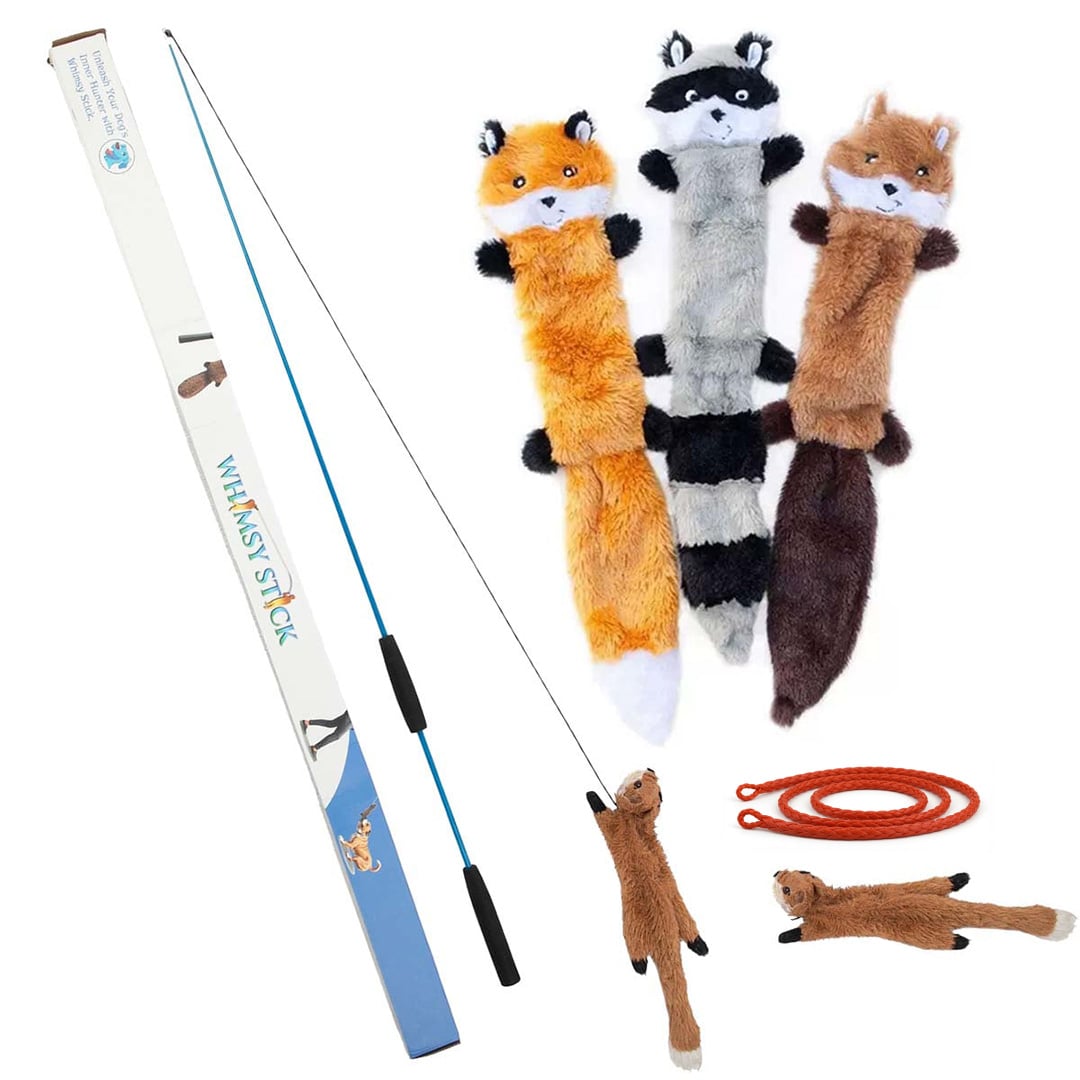
Rugged XL Pro Kit
- One-piece reinforced fiberglass pole: no joint to work loose
- Dyneema static line rated at 800 lbs, plus a spare line
- 5 lures, because high-drive dogs wear lures out fastest · free US shipping
30-day money-back guarantee · usually ships within 2 days
If you want every design compared, see the best flirt poles for dogs, ranked.
How to run a session with a wired dog
Speed isn’t the hard part with these dogs, the rules are. This is how I’d change the basic routine when your dog is already buzzing.
- Start calm. Don’t pull the pole out while your dog is spinning in circles. Wait till you get one still moment, even a short one.
- Use more waits, not fewer. Put a wait before every chase, every single one. Self-control is what these dogs are shortest on, so that’s what you work on.
- Keep bursts short and low. Do 15 to 30 seconds of fast chase with the lure on the ground and wide turns. That’s plenty for one burst.
- Give the catch. Every 3 or 4 rounds let your dog grab the lure and hang on to it. If you skip the catch, as far as your dog is concerned the chase never finished.
- End before they’re frantic. About 10 minutes is enough. Say your all done word, put the pole out of sight and give them something calm to chew.
A high-drive chase: full speed, down low and turning hard. Every one of those turns pulls on the pole, and that’s what it has to hold up to.
The full step-by-step routineFlirt pole or lure stick?
Same thing, different name. Some people say lure stick or flirt stick, but it’s still a pole with a line and a lure on the end, so call it whatever you want. What it needs to be built like doesn’t change for a high-drive dog.
Watch a hunting dog work the lure

Safety for high-drive dogs: play on grass, not concrete, and keep your turns wide. Stop if your dog is panting a lot harder than normal or favoring a leg, and on hot days play early. Puppies should wait till at least 6 months, with your vet’s okay on growth plates. And just so it’s clear, a flirt pole gives drive an outlet, but it’s not gonna fix reactivity or aggression.
Quick answers
What is the best flirt pole for high-energy dogs?
Look for one built for hard grabs, so a one-piece pole with a static line that has a high rating, and lures you can replace. For high-drive dogs 30 lbs and up I’d go with the Whimsy Stick Rugged XL, and in my own use it holds up to a 120-lb power breed. Smaller high-drive dogs get the Standard.
Why is my high-energy dog still wired after a long walk?
Cause a walk burns energy but might not give the drive anywhere to go. Drive is the urge to chase and catch, and a short flirt pole session with waits and catches and a clear ending gives it something to do.
Will a flirt pole make a high-energy dog more hyper?
Chasing with no rules and no end to it can, yes. What fixes that is a wait before every chase, letting them catch it a lot, and ending it on purpose. If your dog gets more frantic as you go, make the session shorter and slow the lure down.
Is a lure stick the same as a flirt pole?
Yes. Lure stick, flirt stick and flirt pole all mean a pole with a line and a lure on the end that your dog chases and catches.
How many lures do I need for a high-drive dog?
More than one. Dogs that grab hard go through lures the fastest, that’s why the Rugged XL Pro Kit comes with five lures and a spare line. One replacement lure is $12.95.
Let your dog hunt
You’ve got 30 days to try it. If it isn’t working for your dog, email me for a refund, and you cover the return shipping unless the pole failed. I’m a one-man company and I want you happy with it, so I’ll work with you.
Get the Pro Kit, $129.95Smaller dog? See the Standard, $55.95
Based on my own experience training dogs. Not veterinary advice. Exercise disclaimer.


