
The 10-Second Summary
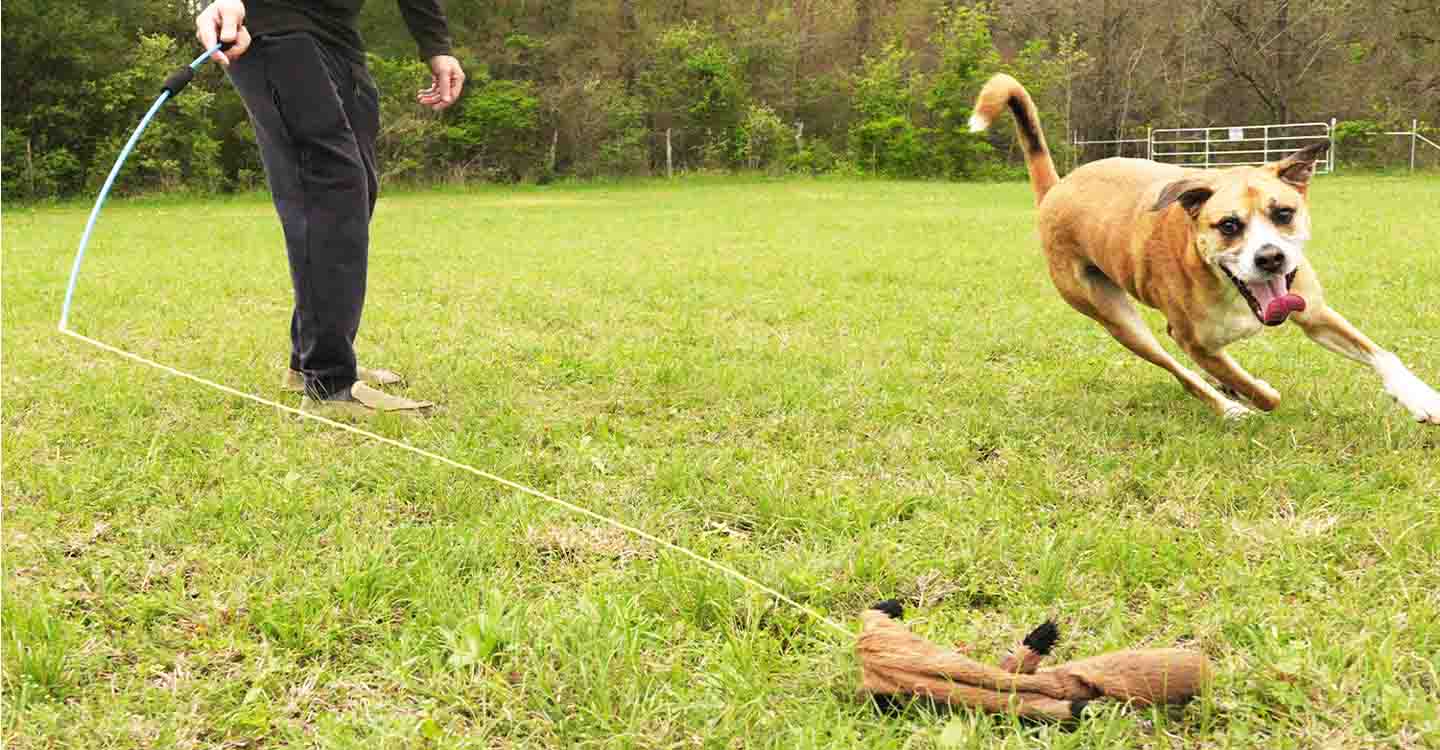
Normal exercise advice doesn’t work great on Huskies, cause they were bred to outlast it. They were bred to pull sleds for hours, so a walk doesn’t wear them out. What I’d do is 10 to 15 minutes of flirt pole with structure, plus some free running, some brain work, and a real cool-down at the end. Clients tell me in general their dogs are a lot more relaxed and calmer and seem more satisfied after using the flirt pole.
Skip ahead to the 12-minute routine if you just want the routine. Or start with the best flirt pole for high-energy dogs page for the bigger picture.
Who This Routine Is For
- You’re worn out from walks that don’t wear your Husky out
- You’re new to Huskies and finding out normal exercise advice doesn’t cut it
- You’ve got a Malamute, an Alaskan Husky or another northern breed (same idea)
- Your Husky digs, gets out, howls a lot, or tears stuff up
- You tried “just walk them more” and it didn’t work
Signs Your Dog Needs This
- Your Husky gets back from a long walk and goes right to tearing through the house
- Chews up baseboards, furniture or drywall, even on days with a lot of exercise
- Tries to get out, digging under the fence, jumping the gate, bolting out the door
- Howls, screams or cries a lot when left alone or bored
- Locks onto birds, squirrels or anything that moves outside and lunges
- Can’t settle inside for long no matter how much exercise they get
Why Walks Fail With This Breed
The Siberian Husky is a sled dog, bred to pull light loads a long, long way. Sled dogs still run huge distances today. They were bred for a long time to do one thing, keep going and not get tired.
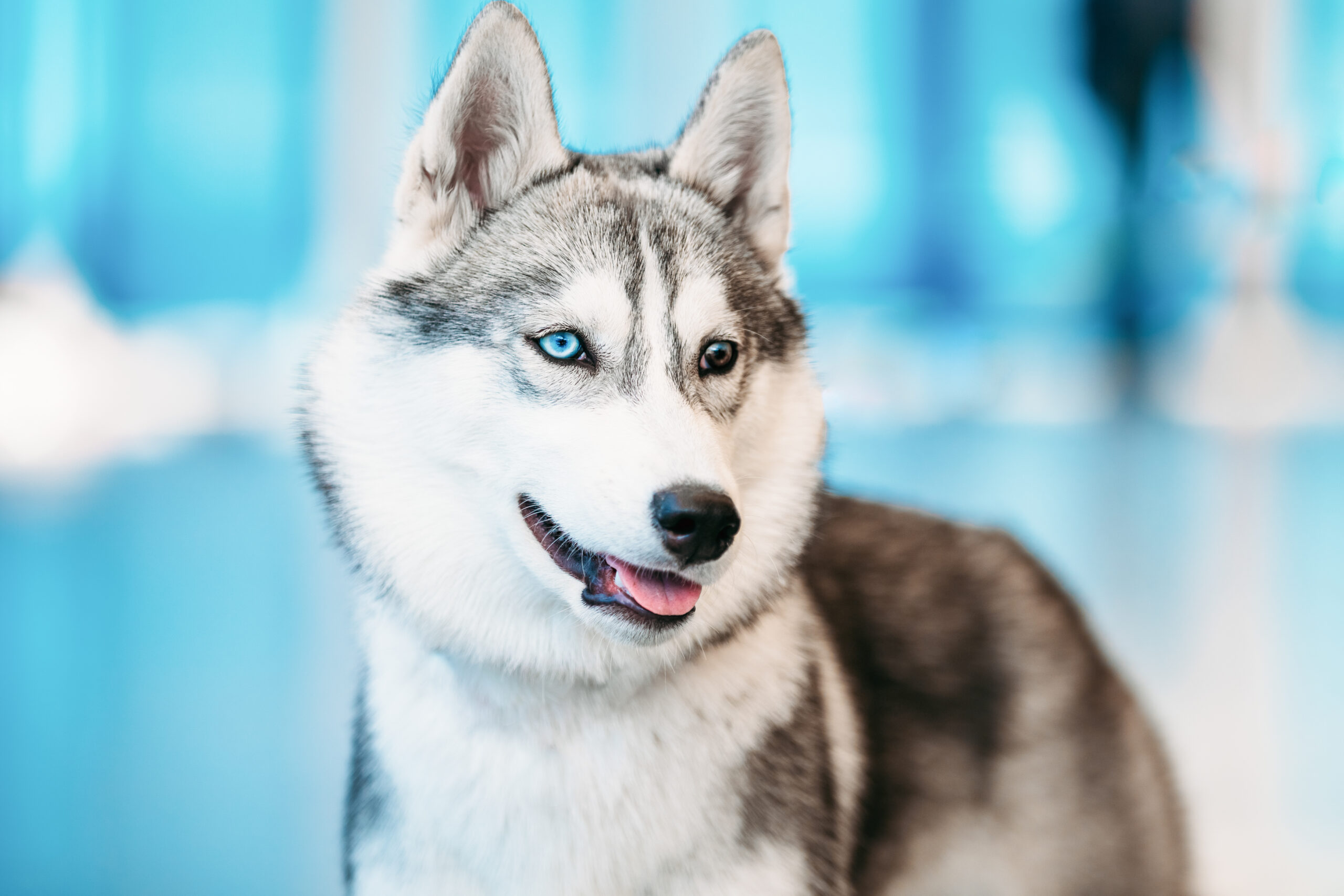
So a Husky’s gas tank isn’t like most pet dogs. A long walk is a warm-up to them, and a long hike barely counts. A lot of them will trot next to you all day and want more when you stop. The AKC describes the Siberian Husky as friendly, fastidious and dignified, and their breed page says they need a lot of exercise every day.
So if walking doesn’t work, what does? Short and intense, not long. The long steady stuff is what they were built for, so it doesn’t wear them down. Short bursts of chasing and catching are a different thing, and that’s where a flirt pole comes in.
The Two Drives Every Husky Carries
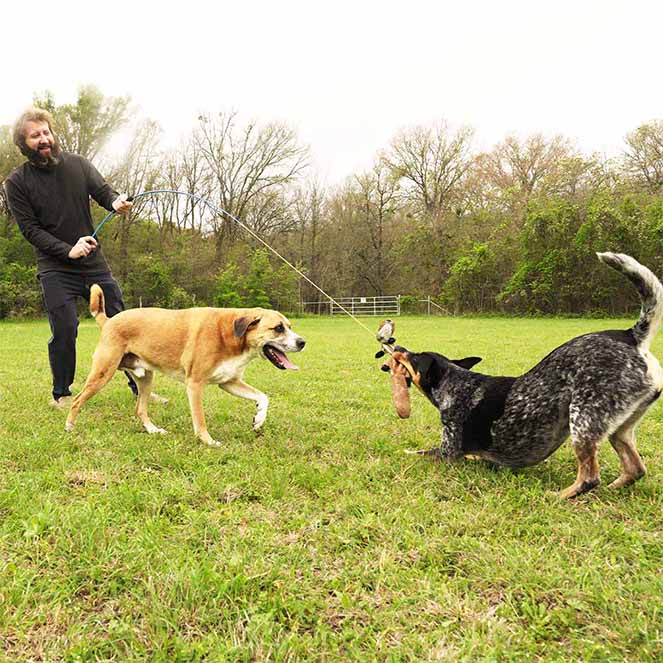
The way I see it a Husky has two drives, and most owners only feed one of them. The run-forever part gets fed by walks, hikes and bikejoring, and that’s the part everybody notices. But a lot of Huskies also have a strong urge to chase. Watch a Husky take off after a squirrel and ignore you calling it back, that’s the second drive.
That chase drive sits under the running one, and a lot of owners never notice it cause walks, the dog park and fetch don’t really bring it out. So it just sits there with nowhere to go. A working breed that’s bored a lot of times finds its own outlets, like chewing, digging under the fence, trying to escape, and that famous Husky screaming at 6am.
A flirt pole session with some structure hits both. The chase feeds the urge to chase, the short hard bursts actually tire them out, and the catch lets them finish, and that’s the part a walk never gives them. I have found that a dog with a satisfied animal instinct is much better behaved. For more on working with that drive instead of fighting it, see how to train a high prey drive dog.
A Husky needs both drives taken care of every day. Walks alone leave half the dog hungry, and that’s the half that tears up your house.
The 12-Minute Husky Flirt Pole Routine
Here’s the daily routine. It’s about 12 minutes of flirt pole broken into parts, so they get to chase, they practice some self-control, and you end with a real wind-down. Do it once a day with an adult Husky, or split it into two shorter sessions for a teenage Husky that’s still building up.
Warm-up (2 min)
Drag the lure slow along the ground in wide circles and let your dog watch it and start following it with their eyes, but don’t release them yet, cause this just gets them interested without getting them all wound up.
Cue: none yet, silence builds anticipationSuccess looks like: your dog following the lure with their eyes with the body low, leaning forward but not going yet.
Wait and Release (2 min)
Ask for a wait and move the lure so they’ve got something to look at, then say the release word, and they shouldn’t go before you say it. I’d do that 3 or 4 times, cause this is where the self-control starts while they’re only a little worked up.
Cue: “wait” → pause → release wordSuccess looks like: your dog staying put until you say the word, then going hard after the lure.
The chase and impulse work
Full Chase Sequences (5 min)
This is the main part, so run wide circles and change direction on purpose and let your dog catch the lure every half minute or so. Don’t skip the catch, cause a Husky that chases and never wins just gets more frustrated, and take a short break after each catch before you reset and go again.
Cue: release word → chase → allow captureSuccess looks like: a full speed chase and a real catch, then a second of holding still with the lure before you reset and go again.
Impulse Control Layer (2 min)
Slow the lure almost to a stop and ask for a wait, and hold it several seconds while they stare at the lure, then release them into one last chase. This is the hardest wait cause they’re the most fired up, and that’s why it builds the most self-control.
Cue: “wait” at peak drive → hold → releaseSuccess looks like: your dog shaking with excitement but holding still the whole time until you release them.
All-Done and Cool-Down (1 min)
After the last catch let them hold it a bit, then trade the lure for a plain treat and say “all done,” and walk your dog in slow loops for about a minute so they can come down before you go inside. Skipping the cool-down is a big mistake. That’s a lot of times where the zoomies after a session come from, and people think “the flirt pole hyped my dog up.”
Cue: “all done” → trade → slow walkSuccess looks like: your dog lets go of the lure for the trade without guarding it and then walks with you at your pace on the cool-down.
The cool-down is not optional. A minute of slow walking after the last catch can be the difference between a calm dog and a dog with the zoomies. Skip it and it can look like the flirt pole made your dog more hyper, when really they just never got to shut the engine off.
Husky-Specific Do’s and Don’ts
Huskies are athletic, but there are a few things about them that change how I’d run this. Get these right and it works, but get them wrong and you can end up with a hurt dog or a more wound-up one.
Run sessions outdoors only
- Use a fenced yard, a big park or an open field, cause Huskies cover ground fast.
- Do it when it’s cool out, cause a Husky can overheat on a day that doesn’t feel hot to you.
- Use the Rugged XL, since most adult Huskies are over 30 lbs.
- Let them catch it, cause finishing the chase is the whole point.
- Always end with a slow cool-down walk before you go inside.
Skip the cool-down
- Do it inside, a Husky going full speed is gonna hit a wall or the couch.
- Do it when it’s hot, that thick coat holds the heat in.
- Use the Standard on an adult Husky, it’s made for dogs under 30 lbs.
- Do it right before or right after a meal (ask your vet about bloat).
- Go longer than about 15 minutes, cause more isn’t better here.
Don’t do a flirt pole session with a Husky on a hot day. That thick double coat is made for the cold and in warm weather it holds the heat in, so hard running in the heat can get a dog in trouble fast.
In the summer, do it early in the morning or after the sun goes down, and skip it on hot or humid days. If your dog starts dragging, looking for shade or panting really hard, I’d stop right then and get them in the shade with water and call your vet if they don’t come around, cause you can always do it tomorrow.
What Equipment Actually Matters
With a Husky, the pole you pick matters. I bought the flirt poles I could find and handed them out to clients, and a lot of them were too short, bulky, had a violent bungee cord, or were just too heavy. A lot of cheap ones just aren’t made for a strong dog using it every day, so the line snaps, the pole cracks, or the lure comes off.
I built the Rugged XL for dogs 30 lbs and up. It’s a one-piece reinforced fiberglass rod with a Dyneema line rated at 800 lbs, and the lure gets out about 8 feet from your hand. That reach matters with a Husky, cause the field of chase is important for a dog that covers ground this fast, and a lure that stays close to you just isn’t much of a chase. The bundle comes with 3 lures so you’ve got a spare when your dog wrecks one, and they’re gonna. For the same pole with the biggest, strongest dogs, see best flirt pole for pit bulls and power breeds.
Standard ($55.95): For a Husky under 30 lbs, which isn’t many, but some small females are. It’s lighter, about 4 ounces, and ships for $20 cause it goes in a longer box.
Rugged XL Base ($74.95): Most adult Huskies, cause most of them are over 30 lbs. Reinforced pole and a Dyneema line made for a strong dog that grabs and runs.
Rugged XL Bundle ($94.95): The one I’d get for a Husky. Switching between a few lures keeps a high-drive dog from getting bored with the same one. 3 lures and free US shipping.
Reinforced fiberglass pole, about 8 feet of reach, and a Dyneema line rated at 800 lbs. Made to hold up to a Husky every day.
The bundle vs base decision
Same reinforced fiberglass pole and 800-lb Dyneema line, but with 3 lures so you’ve always got a fresh one when your Husky tears up the first. Free US shipping.
If your Husky is under 30 lbs, like a puppy or a small one, the Standard works for now. Once they hit 30 lbs, move up to the XL. For more on picking the right size, see the complete buying guide.
For a puppy still growing. Move up to the Rugged XL once they hit 30 lbs.
Which model is right for your Husky?

How to Pair the Routine With the Rest of the Day
The flirt pole session is the main thing, but it’s not all the exercise they need. Huskies still need to move, use their brain, and get some time with other dogs or off leash. The flirt pole takes care of the chase and tires them out for real, and that makes everything else work better. Without it, walks and the dog park a lot of times wind a Husky up more instead of settling them.
This is how I’d lay out the day.
Morning (45 min total)
The 12-minute structured flirt pole session goes first, then some easy time like a slow sniff walk, off-leash time somewhere safe or just poking around the backyard. Since they already got their chase in, that easy time actually calms them down instead of winding them up.
Midday (15 to 30 min)
Brain work, like puzzles, scent games, some obedience or tricks, cause Huskies are smart and a bored smart dog finds trouble, so I wouldn’t skip this one.
Evening (30 to 60 min)
A normal walk or a hike, and without the flirt pole in the morning a lot of times this walk is a frustrated one. With the chase already taken care of, it can be a calm walk where you two actually enjoy it. A dog that already got to chase usually has less reason to drag you down the street. For more on the tool itself, see the canine flirt pole.
If you want the same kind of routine for other high-drive breeds, the Pit Bull and power breed guide does it for the biggest, strongest dogs.
The order matters more than the total time, so it’s flirt pole first, easy decompression time second, mental work midday and the leash walk last, and in that order every part works better. Flip it around and you’re trying to calm down a dog that hasn’t had its chase yet.
Read These Next to Build the Full System
Husky Flirt Pole Routine: FAQ
Why walks fail questions
Why is my Husky always hyper, even after long walks?
Huskies were bred to pull sleds for hours, so a long walk barely touches them, and what a walk is missing is intensity. A lot of Huskies need short bursts of chasing where they actually get to catch something, not more of the steady stuff they were built to do all day.
How much exercise does a Husky actually need?
A lot. The AKC says they need a lot of exercise every day, but the kind matters more than how much, and hours of leash walking won’t get you a calm Husky. What I’d do is a short flirt pole session with structure, plus some brain work and some free running. For a Husky, short and intense with a real chase beats long and steady.
Husky exercise basics
Is a flirt pole safe for a Husky?
It can be if you do it right. I’d keep sessions to about 10 to 12 minutes with the lure low and flat so there’s not a lot of jumping, ask for a wait before every release, and end with all-done and a slow wind-down. Skip it around mealtime and skip it completely when it’s hot, and check with your vet first if your dog has any health issues.
What flirt pole is best for a Husky?
I’d go with the Rugged XL, cause most adult Huskies are over 30 lbs and the Standard is too light for them. The XL is reinforced fiberglass with about 8 feet of reach, which matters for a dog that wants to cover ground, and a Dyneema line rated at 800 lbs, and if you get the bundle you get 3 lures. Huskies hit hard and run hard, so a strong pole matters.
Equipment and arousal questions
Will a flirt pole make my Husky too aroused or hyper?
Not if you run it with structure. If you just use it to hype them up, nonstop chasing with no waits and no real ending, yeah, it can wind them up. But a session with waits, a release word, catches and a slow wind-down at the end builds self-control, and a lot of times you get a calmer dog.
Can I use a flirt pole indoors with a Husky?
I wouldn’t, cause a Husky at full speed covers way too much ground for inside. Use a fenced yard, a big park or an open field where there’s room for wide circles, since tight spaces mean sharp turns and landing on hard floors and that’s rough on joints.
Husky behavior and drive questions
How does flirt pole work help with Husky destructiveness or escape attempts?
A lot of times chewing stuff up and trying to escape are signs of a Husky that isn’t getting what it needs. These dogs were bred to run and work, and with no outlet that energy goes into the drywall and under the fence. A flirt pole session with structure gives the drive somewhere to go, and that can take a lot of the pressure off.
What if my Husky has no prey drive interest in a flirt pole?
Some Huskies take a while to get into it, especially adults that never had anything like this, so I’d drag the lure slow while they watch, build it up a little at a time and keep the first sessions short and easy. A lot of them come around once they get the idea. If your Husky still isn’t interested after a while, I’d look at whether they’re tired or stressed before deciding they just don’t have the drive.


