
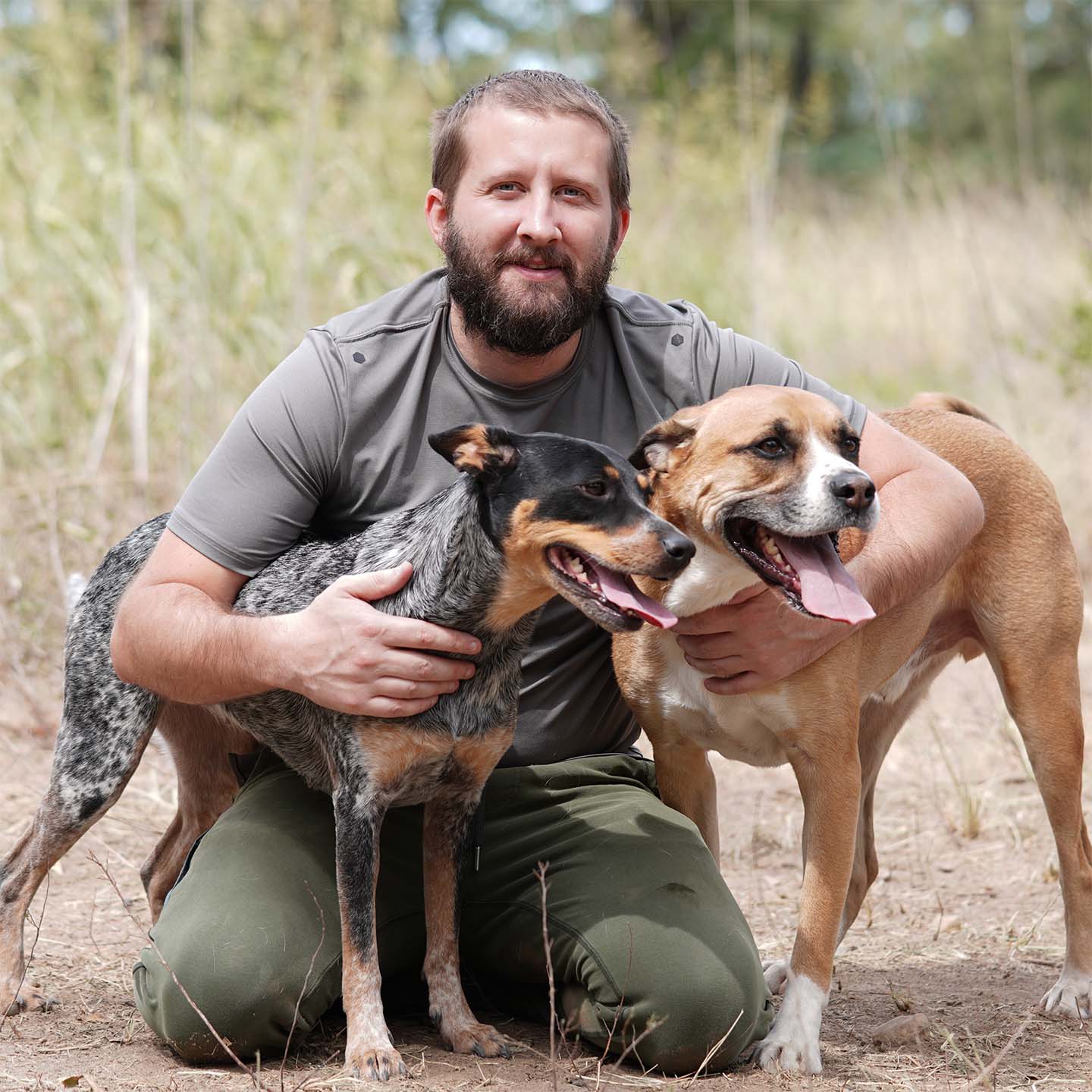
Pit Bulls, Staffies, Amstaffs and bully mixes are hard on flirt poles cause of how hard they bite down and how hard they shake. A pole that does fine with a Border Collie can still break with a pit bull, cause the catch is a whole different thing.
The spec that survives
I’d want a strong static line, a one-piece fiberglass pole and a lure that stays on when the dog shakes it. Run 5 to 8 minute sessions with some rules four or five times a week and you give all that drive somewhere to go. What my clients tell me most is their dogs are a lot more relaxed and calmer after, and they seem more satisfied. It’s the Controlled Freedom method I use in my training, about 10 years and around 400 client dogs. See the flirt pole training guide for how to run a full session.
Who This Guide Is For
- People with American Pit Bull Terriers, Amstaffs, Staffies and bully breeds
- People with pit bull mixes and bully mixes 30 lbs and up
- Anybody whose dog has torn up a bunch of flirt poles or chase toys
- People dealing with chewing things up, pulling and reacting on leash, or pacing after a walk
- People with American Bulldogs, Cane Corsos and other power breeds
Why Light-Duty Flirt Poles Fail Pit Bulls and Power Breeds

A pit bull doesn’t chase a flirt pole like a Border Collie. Herding dogs are quick and agile and they stalk it and go after it real precise. Power breeds see it, sprint, catch it and start shaking it right away, and that shake is what a light-duty pole isn’t made for. For more on prey drive, see prey drive training for dogs.
Static Dyneema Line
A bungee loads up when the dog grabs and shakes and then snaps back. I won’t use one. The Rugged XL has an 800-lb Dyneema static line, it doesn’t stretch, so the lure goes where your hand goes.
800-lb Dyneema static lineOne-Piece Fiberglass Pole
The way I see it, a joint is the weak spot on any pole. When a pit bull pulls sideways on the catch, all of that lands right on the joint. If you break a pole down into 2 pieces or make it collapse you lose strength and pole integrity, so I went with one piece of fiberglass with no joint at all.
Reinforced fiberglass, 46 inReinforced Lure Attachment
Cheap clips and stitched fleece can tear loose when the dog shakes, and then your dog runs off with the lure and you’re stuck trying to get it back. You want the lure to stay on so you can ask for the drop and keep going.
Replaceable reinforced luresPower Breed Sizing
A pole made for a 25-lb dog isn’t made for a 60-lb staffy. The Standard is for dogs under 30 lbs, and the Rugged XL is for dogs 30 lbs and up, pit bulls and amstaffs and the rest of the power breeds included.
Rugged XL: rated 30+ lbsThree Failure Points That Wreck Power Breed Sessions

These are the three places I’d expect a pole to give out with a power breed. It’s not that the owner did something wrong, the gear just wasn’t made for that dog. For the behavior side of it, see dog destroying things when bored.
Bungee elastic failure
A bungee loads up. When a power breed locks on and shakes, it can snap back at you or break where the line ties on. That’s why I won’t put a power breed on a bungee.
Telescoping joint shear
Telescoping poles bend at the joint when they get twisted. A pit bull pulling sideways on the catch puts all of that on the joint, and that’s where I’d expect it to give out.
Lure attachment tear
Cheap clips and stitched fleece lures can tear loose when the dog shakes. Then the dog has the lure, the line is just hanging there, and you’re trying to get it back instead of asking for a drop.
Five non-negotiables for power breed poles
- One-piece fiberglass pole, cause telescoping sections are the first place I’d expect a pole to give when a 60-lb dog grabs and shakes
- Static Dyneema or equivalent 800-lb line, cause paracord stretches and twists and the line is how you steer the whole session
- Replaceable lures, cause power breeds shred lures and you don’t want to throw out the whole pole
- Minimum 30-lb rated weight class, cause a pole that’s too small isn’t made for a big dog turning hard at full speed
- Grass or turf surface only, cause hard ground is rough on joints every time your dog turns
One more thing for power breed owners. A pole that says heavy-duty on it doesn’t fix this by itself. A lot of poles sold for pit bulls are screw-together pieces, and threads are still a joint, so pulling sideways over and over can work it loose. And if you try to build that strength back with metal fittings it gets heavy and not user friendly. Once a joint has some play in it the lure gets sloppy even before the pole breaks. I go over how a pole is built in what makes a flirt pole durable.
The Breeds That Need Power-Breed Grade Gear

It’s not just pit bulls. A lot of breeds bite down hard, have a lot of drive and grab and shake, and that’s what wrecks light-duty flirt poles. If you’ve got one of these, the same pole is gonna fit your dog. The table puts power-breed gear next to light-duty and multi-section poles. For working breeds, see flirt pole training for GSDs and Malinois.
The Structured 5 to 8 Minute Session That Works


The right pole only matters if you run the session right. If you let a power breed go all out for ten minutes, a lot of times you end up with an overheated dog and a torn-up lure, or a dog that’s more wired than when you started. The session below lets your dog do the whole hunt with rest built in. For the behavior side of it, see dog hyper after walks. If you want to compare how lines behave on different poles (the wait and release part works better when the line does what you expect), flirt pole designs ranked goes over why a bungee makes the wait harder even on a decent pole.
Before your first session
Heat load, the real ceiling on pit bull sessions. Pit bulls and staffies and amstaffs and bullies are heavy muscled, and some have shorter muzzles, so a lot of them don’t handle heat well. I’d stop as soon as the tongue gets wide and flat or your dog starts gulping air, or they’re slow to catch their breath between rounds. Play on grass when it’s cool out and never in the middle of a hot or humid day, and keep water around.
Growth plates, under 12 months, no full sessions. Under 6 months I’d just let them check out a lure that isn’t moving, with no chasing. From 6 to 12 months it’s short sweeps on the ground, 2 or 3 minutes at most with no hard turns, and I’d wait on full sessions till your vet says the growth plates are closed. The young puppy in the clip up top isn’t doing a full session.
Prey drive is not aggression. Chasing a lure is the dog using its prey drive, and that’s a different thing from aggression. If your dog is really aggressive toward people or other dogs, you need a qualified behaviorist for that, a flirt pole isn’t gonna fix it. The protection-dog clip lower on this page is testing the gear, it’s not teaching protection work.
The four phases, in order
Leave the lure still on the ground and have your dog hold their spot for 5 to 10 seconds before you let them go, cause this is where they practice self-control, and with a power breed I think it’s the most important part of the whole session.
Impulse ControlLet them go and move the lure in arcs on the ground with some cuts and pauses they can’t guess, and keep it low. That gets them sprinting without jumping, and power breeds aren’t built for jumping over and over.
Chase PhaseStop the lure and let your dog catch it and hang on for 3 to 5 seconds, and with a power breed this part matters a lot, cause if they never get to catch and shake it you’re just winding them up with no finish. For more on why, see predatory motor pattern explained.
Catch PhaseThe grab-and-shake protocol
Activate the chase
Drag the lure around so they can’t guess where it’s going, and let them chase it 3 to 5 times before they get to catch it
Allow the capture
Let the line go slack and let them get a full bite on the lure
Let them shake it
Give them 5 to 10 seconds of shaking and holding on, cause that’s their win
Cue the out
Ask for the drop, and the second they let go you start the chase right back up
Cooldown and locking in change
Say all done and put the lure away where they can’t see it, and get them in a down or on their place with a calm reward, then give them a chew or a puzzle feeder for a while. Ending it on purpose teaches your dog that after the hunt comes rest, and a lot of people skip this part, but I think it’s one of the most important.
Session End
The Tool Built for Power Breeds

For pit bulls, staffies, amstaffs, bullies and any dog 30 lbs and up, get the Rugged XL. The Standard is for dogs under 30 lbs. The wrong size is a safety problem, not just a question of how long it lasts. For more on how it compares, see the best flirt pole for dogs page.
If your pit bull mix is under 30 lbs, or you’ve got a smaller terrier type, the Standard is the right size. It’s about 4 oz with a 450-lb Kevlar static line and the Unlucky Squirrel lure, and it’s $20 to ship cause it goes in a longer box.
One-piece 46-inch fiberglass pole with an 800-lb Dyneema static line, and kits come with 1, 3 or 5 lures. It’s made for the catch and shake that breaks light-duty poles, and in my own use it holds up to a 120-lb power breed. Every Rugged XL kit ships free in the US.
I bought the flirt poles I could find, handed them out to clients and watched what broke. Then I built my own and tested it on high-drive client dogs for years before I ever sold one.

Pit Bull Flirt Pole FAQ
Gear and safety basics
What is the best flirt pole for pit bulls?
I’d look for a strong static line, not a bungee, a one-piece fiberglass pole with no joint to give out, and a lure that stays on when the dog shakes it. The Whimsy Stick Rugged XL is for dogs 30 lbs and up, with an 800-lb Dyneema static line and a one-piece 46-inch fiberglass rod, and in my own use it holds up to a 120-lb power breed.
Are flirt poles safe for pit bulls?
They can be, if you use the right pole and run it right. I’d get a pole made for your dog’s size and keep the lure on the ground so they’re not jumping, and put a wait and a catch and a drop in every round instead of letting them run all out for ten minutes. Pit bulls bite down hard and shake hard, so how well the pole is built matters even more.
Session length and durability
How long should a flirt pole session be for a pit bull?
For most pit bulls I’d go 5 to 8 minutes with rest breaks. A lot of pit bulls don’t handle heat as well cause they’re heavy muscled and some have shorter muzzles, so watching the heat matters more than the clock. So stop early if the tongue gets wide and floppy or they’re slow to catch their breath between rounds.
Why do regular flirt poles break with pit bulls?
A lot of the poles I tried had a violent bungee cord, and some were too short or bulky or heavy. With a pit bull, the bungee snaps back on the catch, a telescoping joint bends when it gets twisted, and a cheap lure can tear right off when they shake it. Pit bulls don’t just chase, they catch and shake hard, so a pole that’s fine with a Border Collie can still break with a pit bull.
Behavior and sizing
Can a flirt pole help with pit bull behavioral issues?
It can help a pit bull that doesn’t have enough to do, cause getting to chase and catch and hang on gives that drive somewhere to go besides your couch. It won’t fix guarding or reactivity by itself though, so work with a trainer on those. For more on reactivity, see reactive dog training.
What size flirt pole does a pit bull need?
A pit bull or any dog 30 lbs and up needs a pole long enough to give a decent field of chase. A big dog covers more ground every stride, so if the pole is too short the lure stays too close and the dog runs into you. The Rugged XL is 46 inches with a line about the same length, so you get about 8 feet of reach, and the line matching the pole is what I call pole balance. It’s for dogs 30 lbs and up, pit bulls and staffies and amstaffs and bullies included.
Will a flirt pole make my pit bull more aggressive?
Chasing a lure is prey drive, which is different from aggression, and run with rules it gives that drive somewhere to go. What my clients tell me most is their dogs are a lot more relaxed and calmer after. But if your dog is already aggressive toward people or dogs, a flirt pole isn’t the fix, so get a qualified behaviorist involved.
Routine and getting started
What other exercise do pit bulls need besides walks?
A walk is good for sniffing and moving, but it doesn’t let a dog hunt. The way I’d lay out a good week is a walk every day and a 5 to 8 minute flirt pole session four or five times, plus some sniffing games or puzzle feeders and a rest day. The flirt pole is the part that lets them chase and catch something.
How do I introduce a pit bull to a flirt pole?
I’d start with short 2 or 3 minute sessions on grass or dirt. Leave the lure still at first to work on the wait, then do short sweeps on the ground and let them catch it a lot, and build up to 5 to 8 minutes over a week or two. A lot of pit bulls get into it pretty quick. For the whole thing, see the flirt pole training guide.
Picking the right model
Which Whimsy Stick is best for a pit bull?
For pit bulls, staffies, amstaffs, bullies and any dog 30 lbs and up, I’d get the Rugged XL. The Standard is for dogs under 30 lbs and isn’t made for how hard power breeds bite and shake, and the wrong size is a safety problem.
What if my pit bull has zero prey drive or has never chased anything?
Some dogs just need to ease into it. If your pit bull has never chased anything, go through the 5-session ramp, short sessions where they just check it out first, then slow drags before any real chasing. Some dogs take longer than others, and if your dog seems scared of it or nothing gets them going, it might be worth having a trainer take a look before you push the chase.

One more, just for fun. This is a power breed being a power breed, with nothing edited out.


