Quick summary
Flirt pole impulse control drills train wait, drop-it, and recall at the exact arousal level where those behaviors need to work in real life. Most impulse control training happens at low arousal, which is why it does not transfer. The five drills here build on each other-start with Drill 1 and do not advance until it is clean.
Four to five sessions per week, 5 to 8 minutes each. Most dogs show meaningful real-world transfer within two weeks of consistent work. The full training guide covers the foundational sequencing these drills layer on top of.
Who These Drills Are For
- Your dog has been through class, knows sit and down, and blows past every cue the moment something interesting happens.
- High-drive breeds with no off-switch-once arousal climbs, the trained dog disappears and a different animal shows up.
- Dogs whose recall is perfect in the yard and nonexistent the moment a squirrel moves across the trail.
- Reactive dogs who lock onto a trigger and cannot be verbally redirected no matter how many times you call their name.
- Anyone who has done the obedience work and watched it evaporate the instant the real world got exciting.
Signs Your Dog Needs Impulse Control Work
- The dog holds a sit in the kitchen but loses it the moment a guest walks in.
- Explodes through doorways, fences, or car doors without a pause.
- Recall works in the yard but fails completely on the trail.
- The dog fixates on a trigger and cannot be redirected verbally.
- Goes from calm to maximum drive in under a second with no transition state.
- Trained behaviors evaporate the moment something exciting happens.
Why Flirt Pole Impulse Control Drills Work When Other Training Does Not
A dog who holds a sit in the kitchen when nothing interesting is happening does not have impulse control. That dog has a conditioned behavior in a low-arousal environment. Ask the same dog to hold a sit while a guest walks through the front door and the training reveals exactly how shallow it is.
Impulse control exists on a spectrum that corresponds directly to arousal level. The higher the arousal, the harder it is to access learned behavior. Most training builds behavior at low arousal and assumes it will transfer upward. It often does not. The gap between low-arousal obedience and real-world trigger response is where every other method falls apart-particularly for high-drive and over-aroused dogs.
Why this approach actually transfers
Flirt pole impulse control drills solve this because they train the exact behaviors at controlled high arousal from the start. The dog genuinely wants the chase. That drive is real and matches the intensity the dog actually experiences in the real world. Building wait, drop-it, and recall inside that drive state is what produces behaviors that hold when it matters. The American Kennel Club’s guidance on impulse control confirms the principle: teaching self-regulation under arousal requires practicing under arousal, not around it. The underlying mechanism is the predatory motor pattern: every drill below is a deliberate interruption or pause inserted into that sequence, which is what builds genuine control instead of suppression. For the full professional reference, see the canine flirt pole.
Impulse control is not about suppressing drive. It is about teaching a dog that arousal is permission-based and that permission comes from you. The flirt pole gives you the highest-value permission in the dog’s brain to work with.
Christopher Lee Moran · Working Dog Trainer
Before Your First Drill: What You Need in Place
A functional drop-it at low arousal
Not competition-level. Just reliable enough that the dog will release on cue within a few seconds when not at peak drive. If you do not have this yet, build it through possession play first. Let the dog hold a toy, go neutral, wait for the voluntary release, mark it, and immediately give the toy back. Repeat until consistent. Add the verbal cue once the pattern is solid. None of the five drills below work reliably without this foundation. The full possession-to-drop-it protocol is covered in the foundational training guide.
With that in place, here is the progression. Work each drill until clean before adding the next one. AVMA behavioral guidance emphasizes the same point: skill layering produces durable behavior change while skipping foundational stages produces inconsistent results.
Chase
Drop-it
Wait
From Drive
Interrupt
Transfer
The Five Flirt Pole Impulse Control Drills
Each drill below is a discrete exercise with its own purpose, cue, and success criteria. Scan the cards, pick the drill that matches where your dog is, then jump to the full protocol for that drill. Run them in order. Drill 1 is the foundation that every other drill depends on.
The Wait Drill: Wait → Chase → Drop-It
The base every other drill builds from. Dog holds wait with the lure still, releases into chase, gets possession, drops on cue. Five to eight clean reps before moving on.
View full protocol →Duration Wait: Randomized Hold Times
Run Drill 1 with unpredictable wait durations: 3s, then 8s, then 2s, then 12s, then 5s. Variable timing forces real self-regulation instead of pattern-prediction.
View full protocol →Recall From Drive: Come Off the Catch
Release into a chase, allow 2–3 seconds of tug, cue recall. The dog turns toward you from peak arousal and the reward is immediate restart of the chase.
View full protocol →Mid-Chase Interruption: Stop in Full Drive
The dog is in active chase and you stop the lure cold. Cue out. Wait without repeating. The dog has to voluntarily abort the chase without catching anything.
View full protocol →Real-World Transfer Protocol: Prime Then Apply
Identify your dog’s three hardest real-world moments. Run a 3 to 5 minute structured session (Drills 1–3) immediately before each one for two consecutive weeks. The session primes the nervous system for trained behavior at the threshold.
View full protocol →Full protocols, drill by drill
The cards above are the scan. Below is the work-every step, every cue, every common point of failure. Read the full protocol for the drill you are about to run.
Wait → Chase → Drop-It
This is the base of every flirt pole impulse control drill in this guide. Every other exercise is a variation or extension of this one. The goal is 5 to 8 reps that feel routine. Do not move to Drill 2 until this is consistent.
- 01Put the dog in sit or stand. Leash on if needed for early sessions. Lure completely still on the ground.
- 02Cue the wait. Wait Hold for 5 to 10 seconds. The dog should be fixed on the lure but holding position without shaking or creeping forward.
- 03Release into the chase. Get it Move the lure in a wide arc, low to the ground. Let the dog chase and catch.
- 04Allow 3 to 5 seconds of possession. Do not immediately ask for the drop-it. Let the dog actually hold it. This completes the prey drive management sequence neurologically.
- 05Cue the drop-it. Out Go neutral if needed: stop moving, drop eye contact, let your body language go completely flat. This removes the social pressure that makes some dogs grip harder. Mark the release the moment it happens.
- 06Restart immediately. The restart is the reward. Move directly into the next wait cue. The loop should feel continuous and rewarding.
When the dog breaks the wait
If the dog breaks the wait before the release cue, reset calmly. Breaking position is information: either the duration was too long, the lure moved, or more repetitions at shorter durations are needed before extending.
Duration Wait
Once Drill 1 is clean, this drill extends and randomizes the wait duration. Predictable wait duration is easy. Variable duration requires actual self-regulation-which is exactly the capacity that fails when a dog blows through a doorway or ignores a recall mid-chase.
- 01Run Drill 1 as normal, but randomize the wait duration: 3 seconds, then 8, then 2, then 12, then 5. Never establish a predictable pattern.
- 02Occasionally hold the wait long enough that the dog visibly relaxes slightly. Release into the chase from that calmer state. Get it
- 03If the dog breaks position during a long wait, reset without emotion, shorten the next wait, and build back up gradually over multiple sessions.
This drill is especially useful for dogs who explode through thresholds. The variable wait mimics the unpredictable timing of those real-world moments and builds the patience to hold without knowing when release is coming.
Recall From Drive
Most recall training happens at low distraction, which is precisely why it fails when it matters. This drill builds recall under maximum self-generated distraction. The dog chooses to return to you from peak arousal, and the reward for that return is immediate restart of the chase. It fundamentally reverses the most common recall failure: the association that coming to the handler ends the fun.
- 01Release into a normal chase rep. Let the dog catch and begin possession. Get it
- 02Allow 2 to 3 seconds of tug, then cue recall in a confident, upbeat tone. Come
- 03Gently reel the pole toward you. Do not yank. The movement of the lure toward you guides the dog’s orientation back naturally.
- 04The moment the dog releases the lure and orients toward you, mark immediately and restart the chase. Coming to you from drive produces more drive.
Reinforcement history under distraction
Build this over 10 to 20 reps across multiple sessions before relying on it in the real world. Reinforcement history under distraction is what determines real-world reliability.
Mid-Chase Interruption
This is the most advanced drill here. The dog is in full active chase and you interrupt it mid-drive with an out or leave-it cue. The dog has to voluntarily abort an active chase sequence without catching anything. This is the skill that transfers most directly to introducing the tool the right way, stopping fixation on another dog, interrupting fence running, and breaking environmental locking mid-walk.
- 01Run a normal chase rep. While the dog is actively pursuing the lure, suddenly stop all lure movement.
- 02Cue the out or leave-it. Out Wait. Do not move the lure. Do not repeat the cue. Let the dog work through the frustration.
- 03The moment the dog disengages from the lure, mark immediately and release into another full chase. Get it
- 04Vary when in the chase sequence you interrupt. Sometimes early, sometimes just before the catch. The unpredictability builds generalized interrupt capacity.
Do not introduce Drill 4 until Drills 1 through 3 are clean. A dog without a reliable drop-it at the catch cannot disengage mid-chase-the sequence requires that foundation. Skipping ahead does not accelerate progress; it produces frustration and rehearsal of the wrong pattern. For dogs with serious reactivity, layer this drill inside a structured behavior modification framework.
Real-World Transfer Protocol
Flirt pole impulse control drills are worthless if they never leave the yard. Drill 5 is how you apply everything from Drills 1 through 4 to the actual situations that prompted you to do this work. It is not a new exercise. It is an application protocol that uses your structured sessions as a primer for real-world behavior.
The application steps
- 01Identify your dog’s three hardest real-world moments: the front door when guests arrive, car exits, the leash at the sight of other dogs, mealtime, or whatever actually causes problems.
- 02Run a 3 to 5 minute structured session (Drills 1 through 3) immediately before each of those events for two consecutive weeks. Not an hour before. Immediately before.
- 03The session primes the dog’s nervous system for the wait-and-release pattern. Arousal that would normally spike explosively at the door now routes through a trained sequence instead.
- 04Track the difference. Two weeks of this protocol produces visible change in the majority of dogs. The goal is a dog who has a trained behavior to perform when arousal rises.
For dogs whose arousal expresses as overexcitement on walks and in greetings, the broader how often to use the tool guide covers how to time these drills to each specific trigger.
The drills are a progression, not a buffet. Drill 1 must be clean before Drill 2. Drill 4 will not work without Drill 3. Owners who skip ahead are the ones who report it does not work. Owners who run the sequence in order report real-world transfer within two weeks.
Skip the full chase protocol. Growth plates don’t close until 12 to 18 months in most breeds (later in giant breeds). Walk-only drags and the 5-session ramp are OK; sprint sessions are not.
Flirt pole impulse control drills vs. standard obedience
| What you’re training | Standard obedience class | Flirt pole impulse control drills |
|---|---|---|
| Arousal level during training | ×Low to moderate | ✓High-matches real triggers |
| Wait behavior under excitement | ×Built at low arousal, transfers poorly | ✓Built inside drive-transfers directly |
| Recall reliability off a moving target | ×Rarely tested against moving prey | ✓Core of Drill 3 |
| Mid-chase interrupt capacity | ×Not addressed | ✓Directly built in Drill 4 |
| Session length & frequency | ×60-min class, once a week | ✓5–8 min daily, 4–5× per week |
| Real-world transfer timeline | ×Months, if it transfers at all | ✓Visible change within two weeks |
What Changes and When
Most owners ask how long before the drills produce visible change in the real world. Here is what to expect. Research on canine inhibitory control published in Applied Animal Behaviour Science found that dogs practicing self-regulation tasks under appetitive arousal showed faster acquisition and greater generalization than dogs trained in neutral-arousal conditions-which is exactly what these drills replicate in practice.
Door manners
The dog holds position before threshold instead of exploding through. Usually visible within one week.
Leash reactivity
Larger threshold space and faster response to disengage cue. Two to three weeks for meaningful change.
Car exits
The dog holds wait at the open car door rather than launching out. One of the fastest transfers from these drills.
Guest greetings
The dog holds position under novel-person arousal instead of jumping. It pairs well with a sit cue before release.
Off-leash recall
The dog returns from active chase with reliability that calm-environment practice never produced. The strongest output from Drill 3.
General settling
Default arousal gradually lowers over weeks of consistent sessions. Drive-to-calm becomes the dog’s baseline state.
Transfer does not happen on a schedule-it happens through repetition at the right arousal level. Door manners typically appear within one week. Leash reactivity improvement takes two to three weeks. Off-leash recall reliability from active chase requires 10 to 20 reinforced reps across multiple sessions before it is trustworthy in the real world. Track the change week by week.
Case Study: Belgian Malinois, 3 Years Old
This was a working breed-a population where impulse control failures show up fast and hard. The protocol mechanics are identical for retrievers, shepherds, and mixed breeds; the timeline simply differs by baseline arousal threshold.
From 4 false starts per session to zero in 11 days
This dog came in unable to hold a wait longer than 2 seconds before breaking toward the lure. Door exits required a leash at all times. Recall off a squirrel: zero percent. Reactivity on leash: lunging at dogs within 30 feet with no response to verbal cues.
Week 1 (Drill 1 only): Session 1 averaged 4 false starts per 8-rep set and a wait duration of 1.8 seconds before break. By session 5, false starts dropped to 1 per set and average clean wait held at 6.2 seconds. Drop-it latency on catch: 4.1 seconds average at session 1, 1.6 seconds by session 5.
Week 2 (Drills 1–3): Duration wait introduced. Dog held randomized waits up to 14 seconds clean by session 8. Recall-from-drive drill introduced session 9: first 3 reps required lure guidance, reps 4–8 were handler-oriented without guidance. Real-world door exit test on day 11: zero breaks across 6 consecutive exits. Pre-session priming applied before guest arrival on day 13: dog held sit through door open and guest entry without jumping-first time owner had seen that behavior.
Real-world transfer phase
Week 3 (Drills 1–4 + transfer protocol): Mid-chase interruption introduced. Leash reactivity threshold expanded from 30 feet to 55 feet. Verbal disengage cue worked on 7 of 10 real-world trigger exposures by end of week 3, up from 0 of 10 at intake.
Three weeks. Wait duration: 1.8 seconds → 14 seconds clean. False starts per session: 4 → 0. Drop-it latency: 4.1s → 1.6s. Reactivity disengage rate: 0% → 70%. None of that came from low-arousal repetition. It came from drilling the exact behaviors at the exact arousal level where they need to work. Same mechanics work on jumping, nipping, restlessness, and attention-seeking, displacement behaviors that show up when drive has no control gate.
The Right Equipment for These Drills
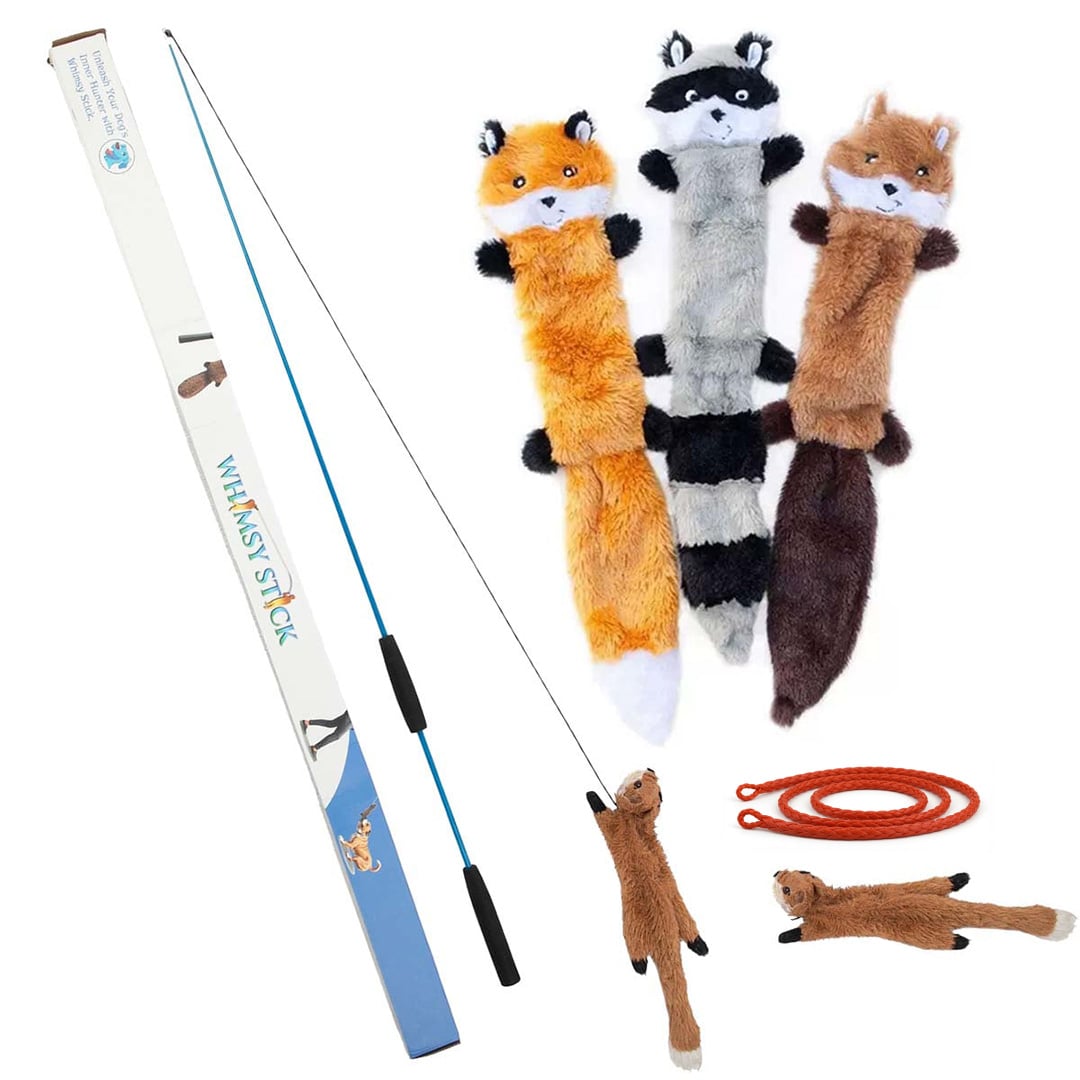
The mid-chase interruption drill and the recall-from-drive drill both require a line that transmits your movement cleanly. Elastic or bungee lines make the stopped-lure moment ambiguous. That ambiguity is precisely what you do not want when cueing a dog to disengage from an active chase. For working breeds and high-drive dogs over 30 lbs, the Rugged XL is built to hold up under the tension loads these drills generate across hundreds of repetitions.
Reinforced for working breeds and power dogs. Clean line transmission for mid-drill interruptions. Built for the structured impulse control work that produces real behavioral change.
For the broader case on why a trainer-designed flirt pole produces better behavioral outcomes than a generic chase toy, see how to train a high prey drive dog. When you are ready to take the work further, the training resources on the blog cover the full library of breed-specific protocols and behavioral applications.