

TL;DR
Ball-crazy doesn’t mean something’s wrong. Trouble starts when he can’t quit, can’t rest, won’t eat with a ball around. With that dog I’d hide the ball for a bit, teach him a go word, a drop and a settle, throw some other games in there, then let fetch come back with rules. If it’s taking over his day, see your vet first. A flirt pole is one other game you can use, not a cure.
You’ll find the off-switch work in the flirt pole impulse control drills, and how to run the chase is in the flirt pole training guide.
Who This Is For
- Your dog can’t relax if there’s a ball around
- Your dog whines and paces waiting for the next throw
- You’re worried fetch has turned compulsive
- Your dog ignores food and water for the ball
- Your dog comes out of fetch more wound up, not calmer
- You’ve got a high-drive retriever or herding dog
- You’re not sure if it’s normal or a problem
Signs Fetch Has Become an Obsession
- They ignore food, water and rest when a ball is out
- They whine or pace or tremble waiting for the next throw
- They drop the ball on you nonstop and demand another throw
- They get more wound up after fetch instead of calmer
- They guard the ball or won’t let go of it
- They fixate on anything round they can find
- Once fetch starts they can’t settle at all
Ball Obsession in Dogs: Normal, Fixated or Compulsive?
The AKC’s line is simple: it’s not what the dog does, it’s how much and whether he can stop. Lots of dogs retrieve a ball over and over and that’s fine. Where it gets worrying is when it goes on for hours, crowds out everything else, and he can’t stop. This is roughly how I break it down.
Three levels
- Loves fetch: plays hard, then quits when you do, eats fine, naps fine, still listens. Nothing to fix here, just keep a couple rules on it.
- Hooked: keeps dropping the ball on you, whines and paces, can’t settle while it’s out. Put the ball up for a while and work on the off-switch below.
- Can’t stop: won’t eat or rest, trembles, guards the ball, or it’s eating up his whole day. That’s a vet visit. VCA says pain, neurologic and skin problems can look like compulsive behavior, so get him checked before you call it training.
This isn’t just trainer talk. A 2025 study in Scientific Reports tested 105 highly play-motivated dogs and found 33 of them showed addiction-like traits around toys: fixating on them, not responding much to other things, and working hard to get to the toy. The owners saw the same thing at home.
Why the Ball Takes Over
Most dogs love fetch, and I get why. He gets to run, grab it and you’re in the game too, so for him it’s a jackpot every throw. When the ball’s always there and you throw every time he asks, he learns asking works, and some dogs get stuck asking.
Doing it over and over can make it worse, cause the same throw again and again keeps a dog fired up and the habit gets stronger. VCA says repetitive behavior can start out serving a purpose and then get harder and harder for the dog to stop. I’d break it up before it sets in.
Arousal is not the same as tired
A wound up dog can look like it got plenty of exercise when really it’s just amped up, and a lot of times a dog that’s hooked on fetch is worn out and frantic at the same time, which is the worst of both.
Why Obsession Is a Problem
An obsessed dog is usually a stressed dog, cause it can’t switch off and anything round keeps it on edge, and at some point the ball stops being fun and starts running the dog.
It pushes out the good stuff too, since when the ball is all that matters, training and rest and the other outlets kind of fall away. VCA describes a compulsive disorder as a behavior repeated enough to disrupt a dog’s daily routine, done almost automatically, like he has no control over it.
This is fixable
Now none of this means fetch is evil or your dog is broken. With some structure and a better outlet, a lot of dogs get back to enjoying a ball without losing their minds over it.
Structure Beats More Throwing
Rules beat reps every time in my book. First put the ball away between games so it’s not sitting there all day. Then give the game a clear on and off. What the AKC OCD article suggests is teaching him something to do instead, like a sit when he’s wound up, and VCA talks about a quiet settle on a mat you can ask for the second the repeat stuff kicks in.
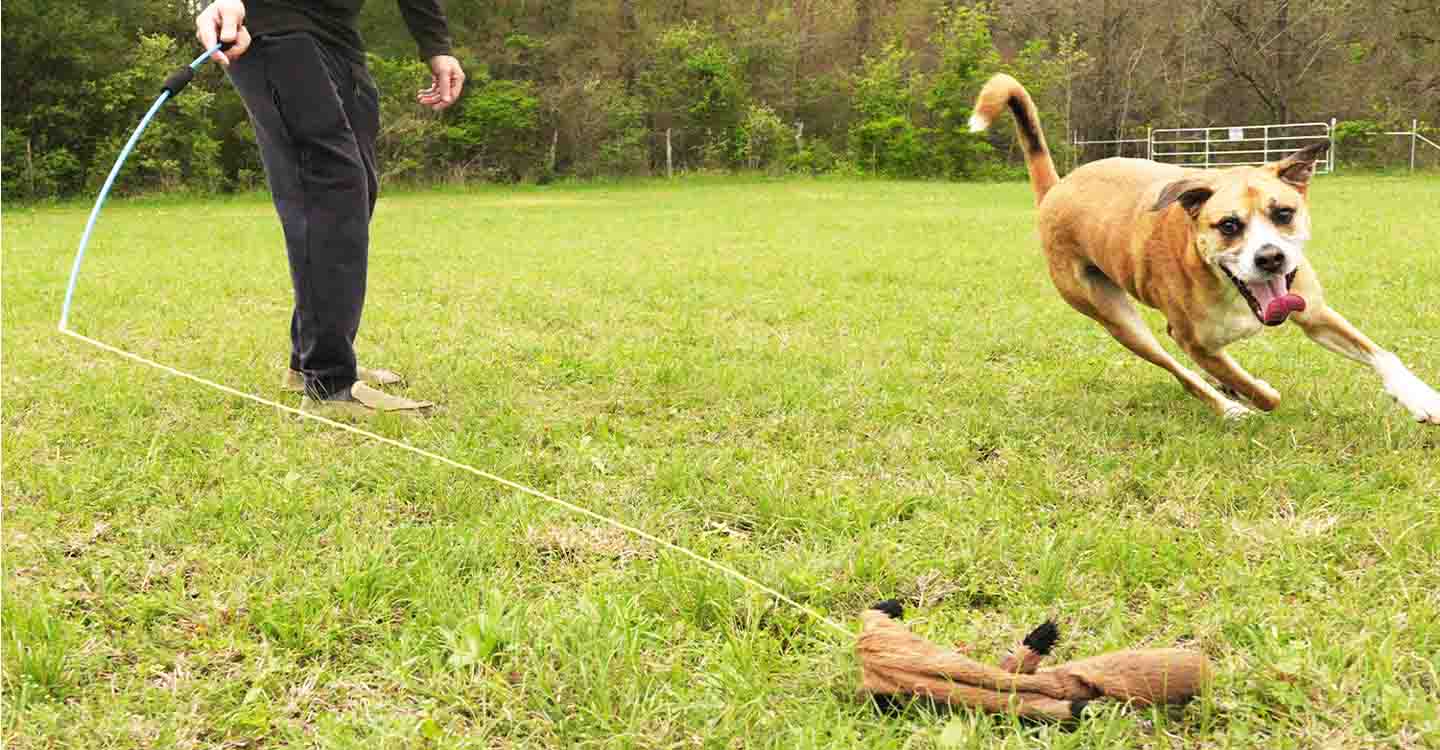
Then the game needs a hard on and off. Sit before every throw. Clean drop when he brings it. Settle when you’re done. Once a dog learns the game starts and stops when you say so, it usually gets a lot less frantic. Don’t make the ball his only fun either. Sniffing games, tug, a little training, or a flirt pole chase where you’re running the lure. Using a flirt pole is an art on its own, but you don’t need to be good at it to start. Lure low, smooth turns, that’s what the AKC says, and if it cranks him up worse, quit using it.
End on calm, every time
Finish with some sniffing or a chew so he comes down instead of bouncing right back up. When play always ends calm, the ball’s got a lot less hold on him.
Start, play, then settle
Ask First
Sit first, then your go word. Play starts when you say, not when he drops the ball on you.
Play With Pauses
A few throws or a few flirt pole chases with a sit between each one. Stop while he can still listen.
Settle Down
Finish with a drop and a settle cue and some scent work so your dog comes down calm.
Throwing more just feeds it. Rules for starting and stopping, a drop, a settle and some other games give your dog an off-switch.
A bad obsession with trembling or guarding or not eating needs your vet first, VCA says pain and other medical problems can look like compulsive behavior, and treatment can include a veterinary behaviorist and sometimes medication. Don’t scold him for it. VCA says these dogs can’t stop on their own, and punishment just adds fear and frustration. If he guards the ball, don’t chase him for it either, the AKC tug article says chasing teaches a dog not to listen and can make him possessive.
If You Want Another Game: The Flirt Pole I Make
A flirt pole is a different kind of chase, you hold it, you keep the lure low, he catches it and lets go on cue. I have found that a dog with a satisfied animal instinct is much better behaved, and for some ball-crazy dogs it’s a good second game. For others it’s just more excitement, so watch yours.
Read These Next to Go Deeper
Dog Ball Obsession: FAQ
Why is my dog obsessed with the ball?
Fetch pays off big for a lot of dogs, the chase, the grab and you, and if the ball’s always out and you throw every time he asks, he learns to keep asking. That’s normal up to a point. The AKC says what matters is whether he can stop and still rest and eat normally.
Is ball obsession bad for dogs?
Not by itself. The AKC says there’s nothing abnormal about a dog who retrieves a ball over and over. It’s a problem when he can’t switch off and the ball’s pushing out eating, resting and everything else. A 2025 study found about a third of highly play-motivated dogs it tested showed addiction-like signs around toys, so it does happen.
How do I stop my dog’s fetch obsession?
Put the ball up between games, give fetch a clear start and stop, teach a drop and a settle, and add other games so the ball isn’t the only fun. If he can’t eat or rest around it, or it keeps getting worse, see your vet, they can rule out other problems and point you to a behaviorist.
Should I stop playing fetch with my dog?
Not forever, but a break helps a lot. Put the ball away while you build an off-switch and a better outlet, and then bring it back with some rules, cause fetch on cue with clear stops is a whole lot different than chucking a ball all day.
Why is my dog more hyper after fetch?
A lot of repeated sprints can get a dog more wound up instead of tired. Try shorter rounds with a sit between throws, end with a settle and a chew or some sniffing, and watch whether he comes down. If he never does, cut the game shorter.
Can a flirt pole help with ball obsession?
It can for some dogs, as another game with rules. You hold it, keep the lure low and he lets go on cue, so you’re the one deciding when it starts and stops. I have found that a dog with a satisfied animal instinct is much better behaved. But if it winds him up more, skip it and stick with sniffing, training and short games.
Is my dog’s ball obsession a compulsive disorder?
Sometimes. VCA describes a compulsive disorder as a behavior repeated enough to disrupt the dog’s day, done almost automatically. If he won’t eat or rest, trembles or guards the ball, see your vet. They’ll check for pain and other problems first, since those can look the same, and may send you to a veterinary behaviorist.
Is it normal for a dog to love fetch this much?
Usually, yeah. The AKC says there’s nothing abnormal about a dog who retrieves a ball over and over. The question is whether he can stop when you’re done and still eat, rest and listen. If he can, keep enjoying it.
What if my dog guards the ball?
Don’t grab it and don’t chase him for it. Trade for it with something good, and keep balls out of sight between games. If he stiffens, growls or snaps, get a vet or a qualified behavior pro involved before you push it.
How do I get my dog to give up the ball?
Trade for it. Teach a clean drop by swapping the ball for something good and make the game start and stop when you say so, cause when letting go always gets the dog another turn or a treat it lets go a lot easier. Then pair it with a settle cue so play ends calm every time.
Sources I used
- AKC, OCD in Dogs: Can it Happen?: normal vs a problem, interrupt and redirect
- VCA, Compulsive Disorders in Dogs: definition, medical look-alikes, no scolding, settle cue
- Mazzini et al. 2025, Scientific Reports: addiction-like toy behavior in 33 of 105 dogs
- AKC, Fast CAT article: flirt pole handling
- AKC, tug-of-war article: don’t chase a dog with a toy
I make and sell the Whimsy Stick, so weigh my flirt pole notes with that in mind. This comes from training dogs, it is not vet advice.


