

TL;DR
You’ll see it in how your dog acts and you’ll see it in their body. Tearing stuff up, being restless, barking, bouncing off the walls, pestering you and trying to get out are usually energy that never got burned off, and putting on weight, getting stiff or just moping around usually means they’re not moving enough. So a lot of times the behavior problem is really an exercise problem, and correcting the dog won’t touch it. Figure out what the sign is pointing at and give them that outlet every day.
The dog exercise guide has the full picture, how much exercise does my dog need helps you figure out how much each day, and the flirt pole training guide shows you how to build the outlet.
Who This Is For
- You’re not sure your dog is getting enough exercise
- You’ve been chalking it up to your dog being stubborn or spiteful
- Your dog tears stuff up, can’t settle, or barks a lot
- Your dog seems anxious or starved for attention
- Your dog is putting on weight or getting stiff
- You want to get at the cause, not just the symptom
- You don’t really know how much exercise your dog needs
The 10 Signs at a Glance
- Chewing, digging or tearing things up at home
- Restless and can’t settle
- Barking, whining or howling for no clear reason
- Hyper and jumping on everybody
- Always wanting attention and following you everywhere
- Putting on weight from not moving enough
- Stiff, down, or sleeping all day
- Trying to get out, pacing, or doing the same thing over and over
The Behavior Tells
Plenty of so-called behavior problems are just a dog that’s short on exercise and handling it the only way it knows. The energy’s gotta go somewhere and it comes out as chewing, barking or tearing around the house. I’d look at it like your dog’s trying to tell you something, not like it’s got a bad character.
Tearing things up, being restless, barking, being hyper and hounding you for attention are the big ones. When your dog destroys things when bored or stays wired all evening, take it as them asking for a real outlet. Per the American Kennel Club, exercise needs vary a lot by breed and age.
Escape and repetition
Pacing, spinning and trying to get out are on the serious end, so when you see those I’d treat the missing exercise like it’s urgent and get your vet involved too.
The Physical Tells
Your dog’s body will tell you too. Not moving enough adds weight and stiffness, so a soft, heavy dog that’s slow to get up a lot of times just isn’t getting enough exercise. The scale and the way your dog moves are worth paying attention to.
A low mood counts too. When a dog sleeps all day and just seems flat, boredom and not moving enough are common reasons, but a medical cause can be too. The Cornell Riney Canine Health Center links inactivity to weight and welfare problems.
Rule out medical first
Some of these signs overlap with being sick, so if the change is sudden or severe I’d see your vet before deciding it’s just a lack of exercise.
Match the Outlet to the Sign
Correcting the dog usually won’t fix this but the right kind of exercise will. For a high-drive dog a slow walk barely does anything, cause how hard they work and how much they gotta think matter more than how many miles they put in. So give them whatever it is they’re actually missing.
For a wired dog that tears things up or barks a lot, a structured chase uses up the physical energy and enrichment handles the mental side. If your dog’s heavy or stiff, build the movement up slow. Once the thing that was missing gets taken care of, the symptom a lot of times calms down right along with it.
Consistency over heroics
A short session every day beats one big push on the weekend, so stick with it and give it some time.
Keep an eye on how your dog’s acting and how its body looks, and if you give it the outlet that fits, a lot of the time you won’t ever need to correct it.
Some of these can also be medical or anxiety stuff, so if there’s sudden weight gain, no energy or some new repetitive behavior, get a vet check. I’d rule out pain and illness before you chalk it up to not enough exercise.
The Whimsy Stick: The Outlet Behind the Fix
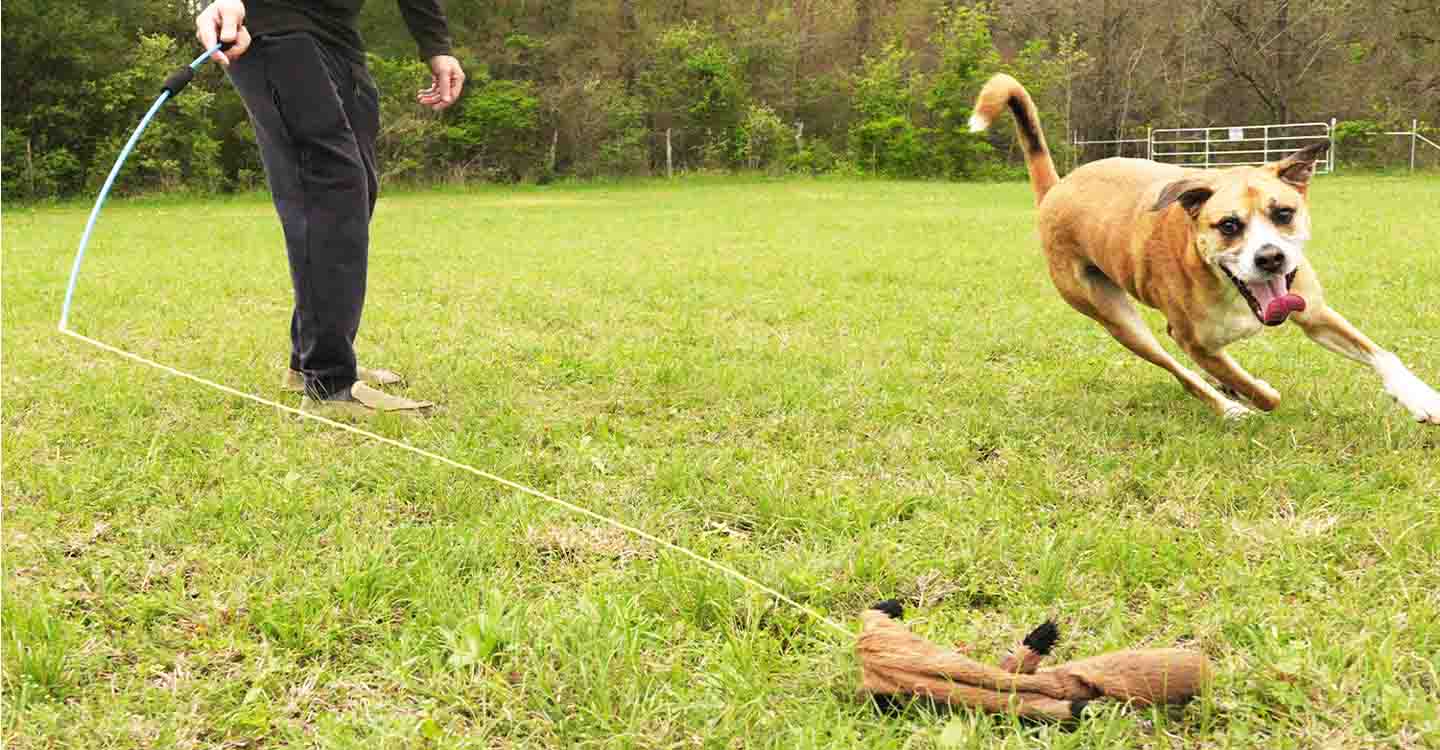
A lot of these signs come from energy that never gets used up, and a flirt pole uses it up fast.
Read These Next to Go Deeper
Want more of this in your Google results? Add Whimsy Stick as a preferred source.
Signs of an Under-Exercised Dog: FAQ
What are the signs a dog needs more exercise?
Some of them show up in how your dog acts and some show up in their body. Tearing things up, restlessness, barking, hyperactivity, attention-seeking and trying to get out usually point to energy that never got used, and weight gain, stiffness and a low mood point to not moving enough. A lot of behavior problems are really an exercise problem, so the right outlet goes a long way.
How do I know if my dog is getting enough exercise?
I’d watch how they act and watch their body. A dog that’s getting enough usually settles down at home, stays at a healthy weight and moves easy, and a dog that’s tearing things up or restless or barky or putting on weight is pretty much asking for more of the right kind of activity.
Can lack of exercise cause behavior problems?
Yeah it can, and it’s a common one. Energy that doesn’t get used comes out as chewing and barking and pacing and hyperactivity cause it’s got nowhere else to go, and a lot of times just meeting the exercise need helps the behavior without any correction at all.
How much exercise does a dog really need?
It’s different for every dog depending on breed and age and drive. A laid-back companion dog may do fine on a couple of walks, but a working breed can need a lot more than that plus some brain work, so I’d go by the dog in front of you and not some general rule.
Is my dog bored or badly behaved?
A lot of times it’s boredom, especially if the trouble starts when your dog hasn’t had enough exercise or has been left alone, and calling a dog badly behaved usually just means their needs aren’t being met. Add a real outlet and some brain work and see how much of it was boredom all along.
Does mental exercise count?
It does, and a dog that’s short on exercise is usually short on that too. Puzzle feeders and scent games and training all wear out the brain and that helps a dog settle, so I’d pair something physical with something mental.
My dog is destructive. Is it an exercise problem?
A lot of times it is, cause tearing things up is a classic sign of boredom and energy that never got used. Before you decide it’s spite or bad training I’d add a real outlet every day plus some enrichment and see how much of the chewing stops.
Can too little exercise make a dog gain weight?
Yeah, not moving enough plus extra calories is usually what’s behind it, cause a dog that moves too little burns too little and the weight creeps on. More of the right exercise and measured food helps, and I’d let your vet guide it.


