
TL;DR
Getting weight off a dog is mostly about food, exercise comes second. Portions and treats do the heavy lifting and movement does the rest, so sort the diet out with your vet first and then add the short harder stuff. You’re shooting for 1 to 2 percent of body weight a week. And a slow flat walk barely moves the needle, the exercise that actually helps is short and harder instead of long and boring.
For the full plan, look at the dog exercise guide. Once your vet clears the dog, structured chase intervals get more work done per minute than a march and they help with the boredom eating too. The full technique is in the flirt pole training guide.
Who This Is For
- Your vet just told you your dog is overweight or obese
- You walk your dog every day and still can’t get the weight off
- Your dog is heavy and out of shape and you need a safe place to start
- You’re not sure how much to feed a dog that needs to slim down
- Your high-drive dog eats out of boredom and begs all the time
- You want the weight off without being hard on an older dog’s joints
- You want a real plan instead of “walk more and feed less”
Signs Your Dog Is Carrying Too Much Weight
- You can’t feel the ribs without pressing hard through a layer of fat
- No waist when you look down at your dog from above
- No tuck-up at the belly when you look from the side
- Gets winded quick on short walks and lags behind
- Struggles with stairs or jumping on the couch, or is slow getting up
- Begs at every meal and goes after any food that hits the floor
- A rounded, slab-sided back instead of an hourglass shape
Why Dogs Get Overweight in the First Place
Pretty much every overweight dog is just eating more calories than it burns, and it usually doesn’t take a big gap. Couple extra treats, a heaping scoop when it should’ve been measured, some table scraps, and on a dog that adds up quick. Your dog’s not broken, the math just went the wrong way.
As dogs get older or get fixed, the amount of food they need can change, so the same bowl that kept a young dog lean can start adding weight. Ask your vet about that. And a bored dog eats out of boredom, cause food turns into the only interesting thing in a boring day. That’s a behavior problem hiding inside a weight problem, and exercise helps with that one directly.
The part owners get wrong
A lot of people try to fix weight with just exercise and leave the bowl alone, and that hardly ever works cause you can’t out-walk a bad diet. Per the American Kennel Club’s guidance on safe canine weight loss, diet does most of the work. Exercise still matters, but it’s the helper here.
Diet: Where Most of the Loss Comes From
If you only do one thing, measure the food. Diet does most of the work, so this section carries most of the weight, literally. Your vet sets a target weight and a daily calorie number and everything else goes off that.
Get a real calorie number
A rough starting estimate for daily calories is target weight in pounds times 15, plus 70. That’s just a ballpark though, it’s not a prescription. A crash diet isn’t safe for a dog, so have your vet confirm the number, and for a lot of dogs they’ll recommend a weight-loss food that keeps the dog full on fewer calories. The Cornell Riney Canine Health Center’s weight-management guidance is a good thing to bring to that conversation.
Measure, do not eyeball
I’d use a kitchen gram scale and not a scoop, cause a “cup” changes a lot depending on who’s pouring and a little extra every day is exactly how the weight got there. Split the day’s food into set meals, give the dog 15 minutes to eat and then pick the bowl up.
The treat problem
Treats should stay under 10 percent of daily calories and it’s real easy to blow past that without noticing, so swap the biscuits for green beans, carrot slices or a few pieces of the dog’s own measured kibble. Whenever you hand over food, take it out of the daily total instead of adding it on top.
Diet is the big one, so measure every meal with a gram scale, cap treats at 10 percent and let your vet set the target. Exercise speeds it up but the bowl is what decides it.
Exercise: Why Intensity Beats Duration
A slow flat walk is easy work, so it doesn’t burn a lot for the time you put in. Walking is still worth doing cause it’s easy on joints and gives your dog sniffing and decompression time you can’t get anywhere else. But to get the weight moving faster you want short bursts of harder work, not a longer march.
Short harder intervals get more work done in less time, so a few minutes of chase can do more than a slow hour. It helps with the boredom eating too, cause a dog that gets to run and figure things out stops treating the bowl like the best part of the day. For more options, see how to exercise a dog without walking.
Why chase work fits weight loss
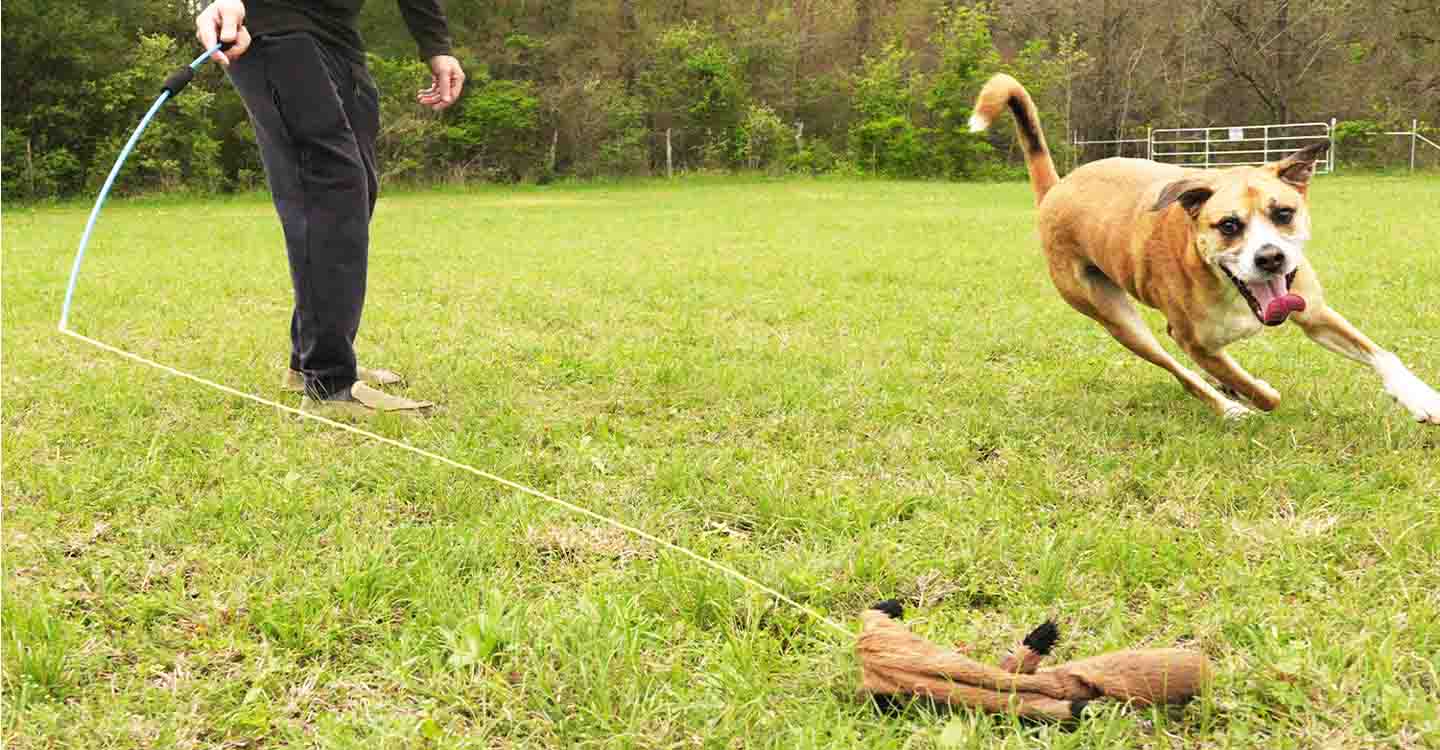
Structured chase with a flirt pole runs those intervals without needing a lot of room. The dog sprints, turns, catches and resets, then rests, over and over, and that’s interval training. Fetch doesn’t let the dog finish, but this completes the predatory motor pattern, so the dog ends up satisfied instead of wound up and hungry. For how much by breed, how much exercise does my dog need breaks it down.
The 15-Minute Fat-Burn Session
This session starts easy and builds up, cause an overweight dog is also an out-of-shape dog. Don’t throw a heavy dog straight into hard turns. Get a vet check first, then build the intervals up over weeks as the dog gets lighter and fitter.
Easy in, hard middle, easy out
Easy Walk
Some easy walking on soft ground to get the dog warmed up before anything hard.
Short Chase Bursts
Eight rounds of 20 to 30 seconds of easy chase with a full rest in between each one, and keep the lure low and the turns wide so an out-of-shape dog isn’t slamming into hard cuts.
Walk and Water
Slow walking and some water while you watch the breathing come back down, and stop early if the dog gets too hot or runs out of gas fast.
Do this once or twice a day depending on what your dog can recover from, and if the dog is sore, still panting hard a long time after, or limping, you went too far so back it off. As the weight comes off you can add a round or two and let the intervals get a little longer.
What Actually Burns Fat, Ranked Honestly
Here’s how I’d rank the usual options for a dog that’s gotta lose some weight. Start with the low-impact stuff cause it’s the safe bet, and once your vet clears the dog, interval chase gets you the most done per minute.
| Method | Burn Per Minute | Joint Impact | Kills Boredom |
|---|---|---|---|
| Slow flat walk | Low | Very low | Barely |
| Swimming | High | Very low | Some |
| Fetch | Medium | High | Some |
| Flirt pole intervals | High | Medium | Yes |
| Long stair sprints | High | Very high | Some |
Swimming and interval chase get a lot of work in without beating up the joints. The high-impact stuff can wait till the weight’s off and the dog’s body can take it.
Exercising a Heavy Dog Without Hurting It
A heavy dog has extra load on every joint, so hard exercise on the wrong dog gets it hurt instead of getting the weight off. Stick to these limits while the weight is still up.
I’d get a vet check before any harder exercise, cause heavy dogs, flat-faced breeds, seniors and dogs with joint problems need to be cleared first. Heat is the biggest danger, so skip hard outdoor work when it’s above 85 degrees and stop right away if you see heavy panting, a brick-red tongue or the dog getting wobbly.
Puppies under 12 months skip the high-impact stuff entirely, cause their growth plates are still open and hard impact over and over can hurt joints that are still growing. Keep young dogs on easy movement and diet till they’re grown and ask your vet when it’s ok to do more.
Go by how the dog’s doing and not some set target. A dog that recovers good and moves better every week is ready for a little more, but if it’s stiff, sore or slow to recover it needs less, so back off and let the diet carry it for a while.
The Whimsy Stick: Built for Interval Chase
Short chase intervals need a pole that runs them clean. I bought the flirt poles I could find and watched what broke, then built this one and tested it on high-drive client dogs for years before I ever sold it. It’s what I’d use for the routine above once your vet clears the dog for harder work.
Read These Next to Go Deeper
Want more of this in your Google results? Add Whimsy Stick as a preferred source.
Overweight Dog Weight Loss: FAQ
How much should I feed my dog to lose weight?
Your vet sets the number cause it goes off the target weight and not the weight your dog is now, and a rough starting estimate for daily calories is target weight in pounds times 15, plus 70. I’d honestly rather you get a real weight-loss food and an exact gram amount from your vet than eyeball scoops, and then measure it out on a gram scale.
How much exercise does an overweight dog need?
I’d start with what your dog can recover from and not some set target. With an out-of-shape dog that’s a lot of times two short 10 to 15 minute sessions a day of easy walking and a few short chase intervals, and you build it up over weeks. How hard it works matters more than how long, and your vet can tell you what’s safe for your dog.
Can I just walk my dog to lose weight?
Walking helps, but a slow flat walk is easy work and doesn’t burn a whole lot. I’d still do it for the sniffing and cause it’s easy on the joints, but throw in some short harder bursts if you want the weight moving faster. And the diet’s doing most of the work anyway.
How do I know if my dog is overweight?
Vets go by a body condition score, but you can get a decent idea at home. You oughta feel ribs pretty easy when you run your hands down the side, and from above there should be a waist and from the side a little tuck-up at the belly. Digging for ribs with a rounded-looking back usually means extra weight, so get your vet to confirm it.
How fast should a dog lose weight?
Slower than people usually want it to. About 1 to 2 percent of body weight a week is the range for most dogs, so call it roughly 3 to 5 percent a month, and crash diets aren’t safe. Weigh your dog every two weeks and adjust with your vet.
My dog is too heavy to run. Where do I start?
Portions come first, plus short easy walks on soft ground, and no session should leave your dog panting heavy or sore the next day. Once some weight comes off it’ll be fitter, and when your vet gives you the all-clear that’s when easy chase intervals can come in.
Does boredom make dogs overeat?
A lot of times it does, cause a bored dog begs and scavenges and treats food like the best part of the day. Structured exercise and enrichment give the dog a job, so it goes looking for food less and the diet gets a lot easier to stick to.
Can a flirt pole help my dog lose weight?
For a healthy dog your vet has cleared, yeah it can. It runs short chase intervals that are harder work per minute than a flat walk and it satisfies the drive too, but I’d use it alongside a diet your vet sets up, never instead of fixing the food, and build it up slow for a heavy or out-of-shape dog.


