
TL;DR
Yeah, they still need it, it just has to be gentler on them. I’d do a couple short walks, a few slow flirt pole sweeps on soft ground and a little brain work every day, and that’s usually enough to keep an old dog moving and happy without beating up the joints. A lot of old dogs still want to go long after the body says no, and that’s where scent games and calm training come in. If there’s a diagnosis, go with what your vet says, but just letting them lay around all day isn’t the safe choice either.
The dog exercise guide has the big picture and enrichment and mental stimulation covers the brain side. I’d save the harder drills in the flirt pole training guide for dogs that are sound and cleared by the vet.
Who This Is For
- Your dog is going gray and you’re not sure how much to do
- Your senior is losing muscle or slowing down
- Your dog has arthritis but still has plenty of drive
- You’re worried about overdoing it with an old dog
- You want to keep your senior sharp and into things
- You’re trying to keep the weight off an older dog that moves less
- Your old dog is bored but not fragile
Signs Your Senior Needs Gentle Work
- They’re losing muscle over the hips, thighs or back
- They’re slower to get up and stiff after resting
- They sleep more but they’re still restless or whiny
- They’re putting on weight as they move less
- They seem bored or clingy or a little down
- They hesitate at stairs or don’t want to jump up
- They’re still bright-eyed and asking for something to do
Movement Is Medicine for Seniors
Use it or lose it applies to old dogs too. An old dog that quits moving loses muscle and stiffens up. A little gentle activity every day keeps it stronger and steadier, and I wouldn’t count on rest alone to fix anything.
And don’t forget the brain, cause a bored old dog tends to get heavy and stiff and kind of low, while one that has something to do usually stays a lot brighter. Per the American Kennel Club, older dogs benefit from consistent low-impact exercise.
Read the dog, not the calendar
I would go by how your dog moves and how it recovers the next day, and let that tell you how much to do instead of the number of birthdays.
Low-Impact, High-Frequency
With a senior I would keep it low impact and do it often, cause a few short gentle sessions a day beat one long haul, and whatever the body can’t do anymore you can let brain work fill in.
Short, gentle movement
I’d split it into two or three short easy walks instead of one long one, and if your old dog still loves to chase, throw in a few slow flirt pole sweeps out on soft grass.
Lean on the brain
Once the body can only do so much, let the nose and the brain carry more of it. Scent games, a puzzle feeder or a little calm training can wear an old dog out without one hard step, and honestly a gray-muzzled dog can get a real workout right there in the living room.
Warm up and soft ground
Old muscles are tight. Walk a few minutes first to warm up, ease into anything faster, and stay on grass, not pavement.
Gentle Chase Still Has a Place
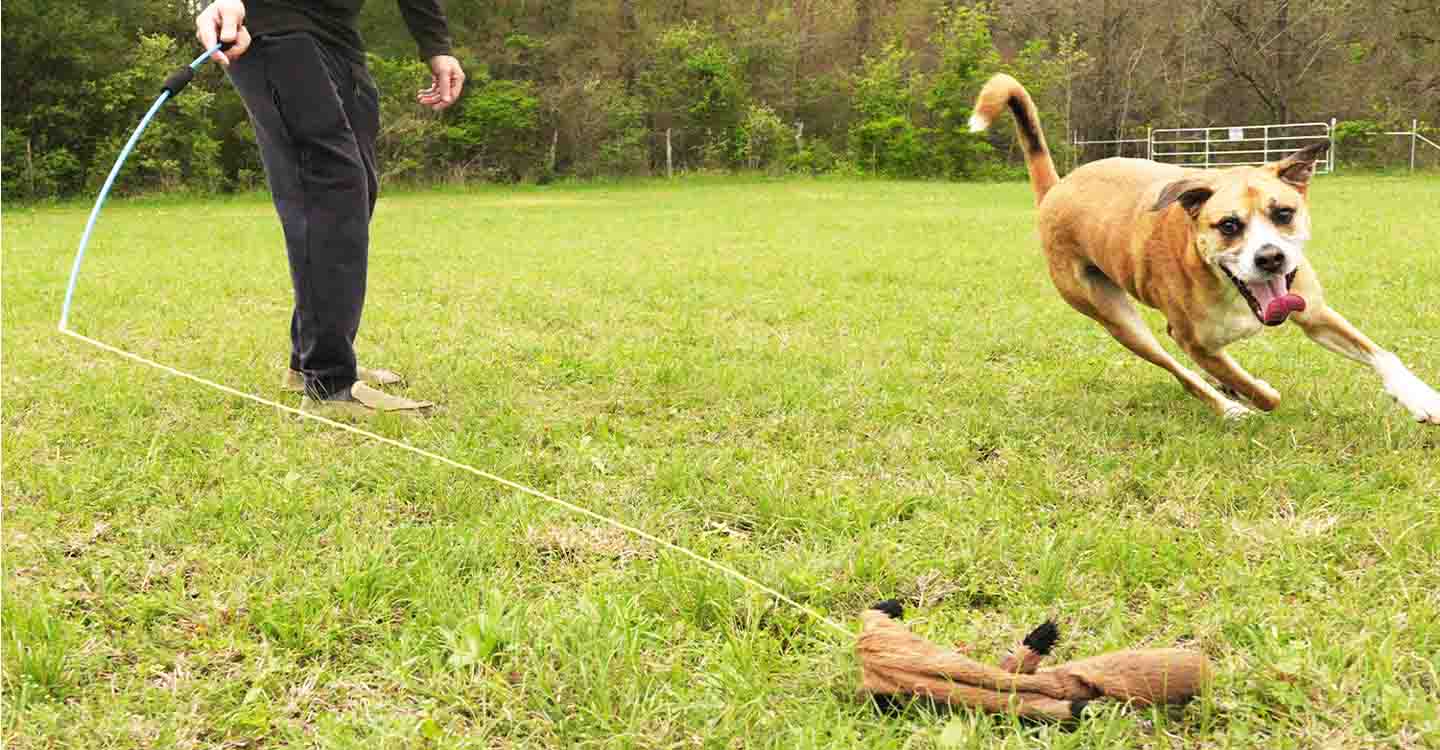
People think a flirt pole is only for young athletes but that’s not how I see it. If you slow it down and keep it low, an old dog with drive still gets to stalk and catch, cause that instinct doesn’t go away with age.
Slow arcs, wide turns, short sessions. No hard cutting and no jumping. If your dog is sound and the vet has cleared it, a gentle chase gives it something a slow walk can’t, but stop the second it stiffens up.
When to hold back
If your dog has arthritis or a heart condition or any diagnosis, check with your vet before doing chase work, and when in doubt I’d go gentler and drop back to walks and nose games on the sore days.
Getting old doesn’t mean stopping. It just means going gentler and going more often, and a few short bits of movement plus some real brain work will go a long way for a senior.
If your senior has any diagnosis, get your vet’s ok first, because arthritis and heart issues and old injuries all change what’s safe, so check before you add anything harder. And if you see new limping or heavy breathing or a dog that just doesn’t want to go, back off.
I would skip anything high impact with a senior, since old joints don’t handle the pounding well. That means no jumping, no hard cutting and no long flights of stairs, and any chase stays slow and on soft ground.
The Whimsy Stick: Gentle Enough for a Senior
If you slow it down, a flirt pole lets an older dog keep stalking and catching without the pounding of a run, and this is the one I designed.
Read These Next to Go Deeper
Senior Dog Exercise: FAQ
How do you exercise a senior dog?
Gentle, low impact, and often. That’s how I’d do it. Short easy walks, a few slow sweeps of the flirt pole on soft ground and a little brain work every day keeps a senior moving without being rough on old joints. The drive a lot of times outlasts the body, so scent games and calm training help a bunch too.
How much exercise does an older dog need?
Enough to keep it strong and interested. That’s gonna be different for every dog, but with a senior I’d do two or three short sessions a day before one long one. Watch how it recovers and go from there. If it’s stiff and sore the next day, back off. If it’s eager and bouncing around, it can probably handle a bit more.
Is it safe to exercise an arthritic dog?
Only gently, and only with your vet in the loop. Ask them what kind of movement and how much is right for those joints. I’d stay away from jumping and hard cutting, keep it on soft ground, and go by whatever plan your vet gives you on meds and limits.
Should senior dogs still play?
Yeah, old dogs still like to play. A slow, low chase, some gentle tug with rules, nose games, all of that’s fun for them without the pounding. I’d just keep it short and quit before your dog gets tired or stiff.
Can a senior dog use a flirt pole?
A sound senior that your vet has cleared can, as long as you slow it way down. Keep the arcs low and the turns wide and the sessions short so there’s no hard cutting or jumping, cause the urge to chase is still there in an old dog and this gives it somewhere to go.
How do I keep my senior dog mentally sharp?
I’d give an old dog something to figure out every single day. Hide some treats for a scent game, feed out of a puzzle, teach an easy new trick, that kind of stuff keeps them into it and tires them out without one hard step.
My senior dog is losing muscle. What can I do?
I would talk to your vet first, and about diet too. Ask your vet first, but if they say it’s ok, slow sit-to-stands and short easy hill walks are good gentle strength work, and a little light movement every day keeps the rest of the body going.
Is it bad to stop exercising an old dog?
Usually, yeah. An old dog that stops moving tends to lose muscle and get stiffer, and a lot of them get kind of down, so gentle activity done often, with your vet’s ok, is one of the best things you can do for them.


