
Exercise a Dog With Limited Mobility
Your Dog Sprints.
Your Dog Sprints.
What dog owners say.
Already know which one you need?
The dog needs sprints. Your knees might not.
You didn’t fail your dog. Most of the exercise advice out there just assumes you’ve got good knees and a lot of free time, and pushing through the pain isn’t gonna fix that. The whole method is in the flirt pole training guide, and the version you can do standing in one spot is right below.
Every fix bills your joints.
People tell you to walk farther or start jogging or join a hiking group, and every one of those assumes your knees are up for it. A high-drive dog will take every mile you’ve got and still want more.
Guilt doesn’t tire a dog.
You watch him pace and patrol the windows and it feels like it’s on you. But feeling bad about it doesn’t burn any of his energy, so tomorrow it all starts over again.
Slowing down wasn’t the plan.
Maybe it’s a surgery, or getting older, or pain that doesn’t go away, or a schedule that leaves you with nothing at the end of the day. You still love the dog. The old way of exercising him just doesn’t fit you anymore.
Ten minutes. You barely move.
The pole works like a lever, so a little flick of your wrist turns into a lot of movement out at the lure. You steer and the lure does the running.
Pick a spot. Stand in the middle of about an 8-foot circle, and that’s really all the room you need, so a backyard or a garage works fine.
Use your wrist. Small wrist movements send the lure around in arcs and then stop it dead, and you let the line do the work.
The dog does the running. Your dog does the stalking and sprinting and cutting around you while your feet stay put on flat ground.
Then trade and go again. Let him win and trade him for the lure nice and calm, then go again, and I’d stop while he still wants more cause ten minutes is plenty for a lot of dogs.
Dog exercise, priced in your steps.
Most healthy dogs need a good amount of exercise every day, and the AKC’s breakdown of how much is worth a read. The usual ways of getting it all cost your body first, so here’s how they stack up.
| Method | Your effort | Wear on you | What the dog gets |
|---|---|---|---|
| Jogging together | You run every mile the dog runs | Knees and hips take every stride | A steady trot, rarely a real sprint |
| Long walks | An hour or more on your feet | Miles add up, weather doesn’t care | Good sniffing, mild cardio, no ceiling |
| Bike-joring | Balance, gear, and nerve | One squirrel away from a crash | Real speed with real risk attached |
| Standing-still session | A wrist flick from one spot | You stand on flat ground | All-out sprints, cuts, and a finished hunt |
“I love this light weight Flirt Pole! Our dog is super hyper and this pole wears him out in 5 minutes! Easy for me to handle even at my age, 74.”
“Neagley loves it. Engaging, exciting, fast-paced play that wears her out. She gets so excited just to see us pull out the pole. Highly recommend for high energy play.”
An honest fit check before you spend a dollar.
Built for you if…
- Your knees or hips or back won’t let you jog
- You’re older and living with a young dog that never stops
- Your doctor’s OK with standing and turning, just not jogging
- You just don’t like running, and that’s fine too
- The space you’ve got is a yard or a garage
Skip it for now if…
- You want the dog exercised without you being part of it. You still have to run the game with your wrist and pay attention
- Standing for ten minutes isn’t comfortable yet. Your doctor knows that timeline a lot better than I do
- Your vet has your dog on movement restrictions
- You’re not gonna stick with the catch and trade that keeps it structured
Nobody out-walks their dog. So don’t try to.
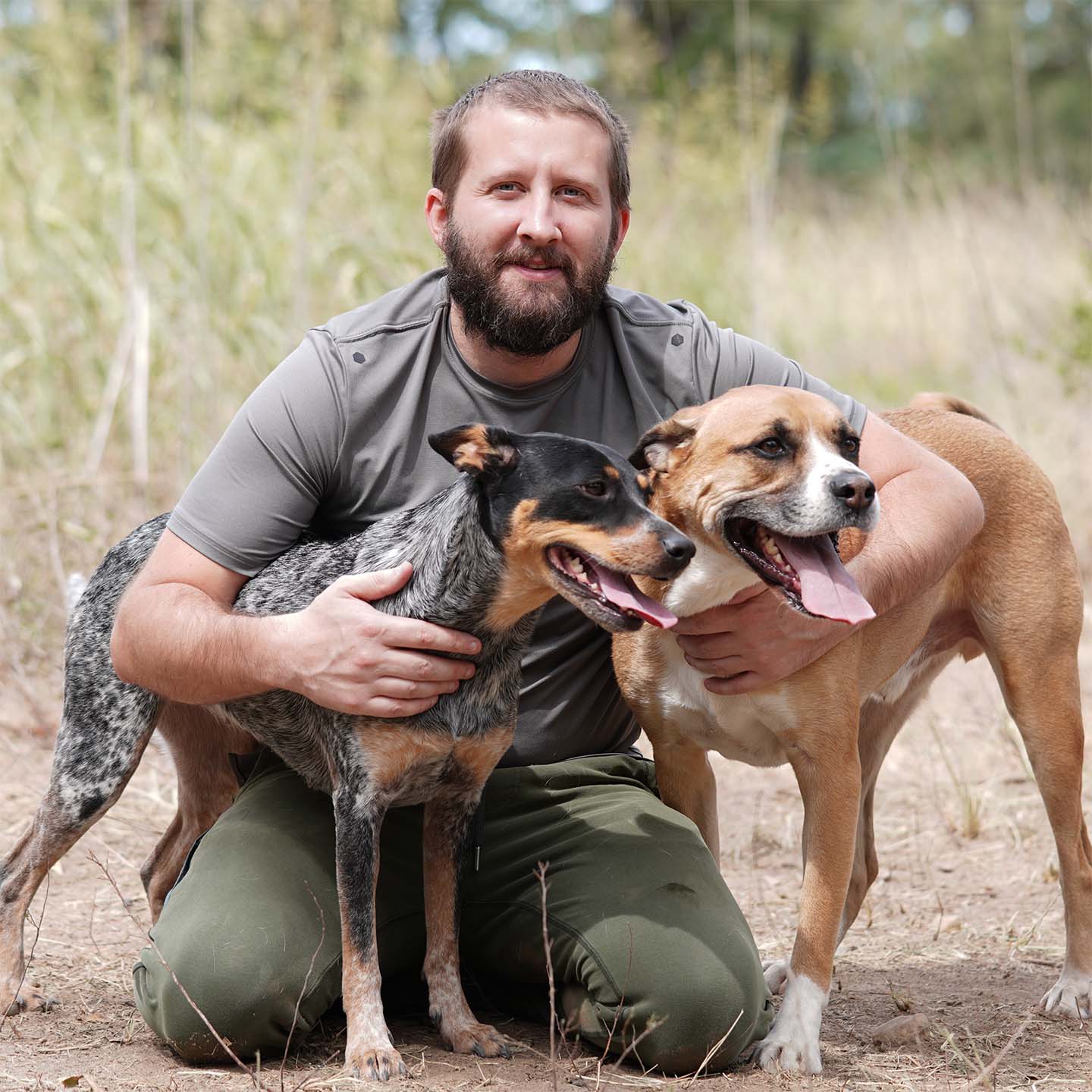
I’m Chris. I’ve been working with dogs for about 10 years and around 400 client dogs, and I don’t have any certifications or vet credentials. I bought the flirt poles I could find and handed them out to clients, and a lot of them were too short, bulky, had a violent bungee cord, or were just too heavy. So I built my own.
A lot of owners can’t out-walk their dog, and honestly nobody really can. A good flirt pole should be lightweight and somewhat flexible but not too flexible, so you’re not fighting it, and that matters a lot more when your own body has limits.
Your dog doesn’t care if you’re running or standing still, he only cares about the lure. What clients tell me in general is their dogs are a lot more relaxed and calmer after, and seem more satisfied.
Three kits. One standing spot.
Pick by how big your dog is and how hard he bites. Either way the pole in your hand is light.
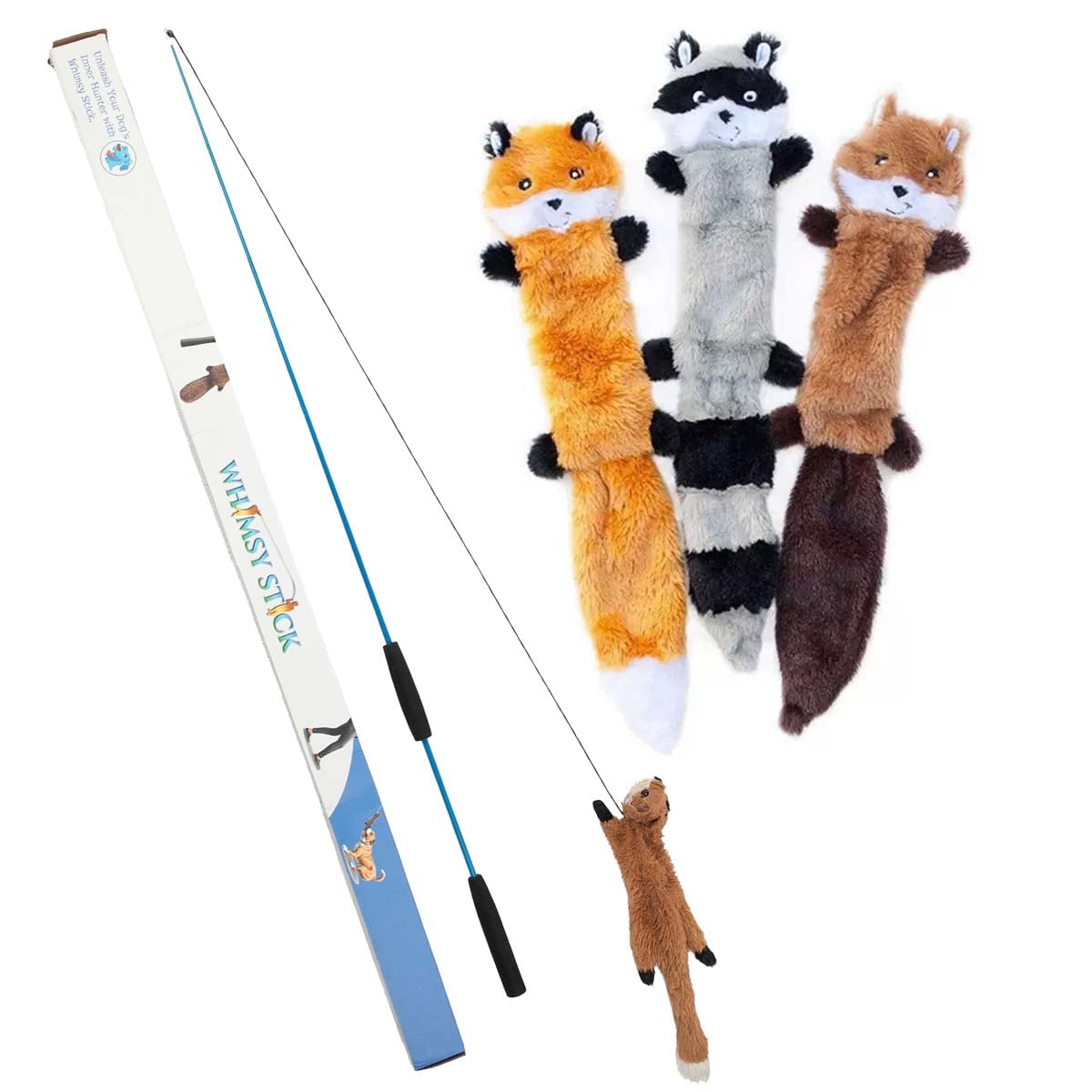
- Lightweight springy fiberglass pole
- 1 prey lure, Unlucky the Squirrel
- 450-lb Kevlar braided cord, no bungee
- 8-foot play radius
- 30-day money-back guarantee
- One-piece heavy-duty fiberglass, no bungee
- 3 prey lures: squirrel, fox, raccoon
- 800-lb test Dyneema lure loop
- Built for pits, shepherds, malinois, huskies
- 30-day money-back guarantee
- Everything in the Rugged XL Bundle
- 5 prey lures total
- Spare 800-lb Dyneema line included
- A frayed line won’t end the session
- 30-day money-back guarantee
What you read here reflects my own experience training dogs. Not veterinary or behavioral medical advice. See the full exercise disclaimer →
30-Day Standing-Still Workout or Your Money Back.
Give it 30 days from one spot. If your dog isn’t finishing sessions tired and settling down quicker after, email me and I’ll refund you. The only thing on you is return shipping, unless the pole failed. I’m a one-man company and I want you happy with it, so I’ll work with you.
Real questions from owners who can’t run.
How do I exercise a dog with limited mobility?
I’d bring it into about an 8-foot circle instead of trying to cover the whole neighborhood, cause with a flirt pole you stand in one spot and the lure runs your dog around you in arcs. For a lot of dogs ten minutes of stalk, chase and catch does more than the walk you’ve been forcing yourself through.
What can I do for my dog while I recover from surgery?
Once your doctor says you’re OK to be up and turning around for ten minutes, a standing session can cover his hard exercise, since you steer with your wrist and your feet stay put. Until then I’d hand it off to a friend or someone in the family, cause it only takes a minute to show them.
I’m a senior with a young high-energy dog. What actually helps?
One of the reviews on this page is from a 74-year-old owner who says the pole wears her hyper dog out in 5 minutes and it’s easy for her to handle. The pole does a lot of the work since a small flick turns into a lot of speed out at the lure, so short sessions most days can keep a young dog satisfied without you putting in the miles.
Is a flirt pole heavy or hard to handle?
Not really. The pole is light fiberglass and it’s mostly your wrist, you’re not swinging your whole arm, and if you’re sore after you’re probably working too hard, so let the line do it. The Standard is the lighter one and it’s for dogs under 30 lbs.
My dog pulls hard on walks. Does this help?
It can, cause a dog that already got to sprint and catch something a lot of times has less to spend on the leash, so I’d try a session before the walk and see if it’s calmer. And you’re never holding the dog while you play, just the pole, so his strength isn’t on your shoulder.
What if my dog is stronger than I am?
Honestly it doesn’t matter as much as you’d think. He’s chasing the lure and not pulling on you, so you’re steering instead of playing tug-of-war, and if you trade him calmly for the lure after every catch even a big strong dog is manageable from one spot.
How long is a standing-still session?
Ten minutes is plenty for a lot of healthy adult dogs, or you can do two five-minute rounds if that’s easier on you. I’d always end on a catch so he gets to finish the hunt, cause that’s what settles him more than the minutes do.
Do I still need to walk my dog?
Yeah you do, just for different reasons, like sniffing and bathroom breaks and getting out to see the world. The AVMA’s walking guidance goes over what those walks do for a dog. The pole handles the tiring-out part, so the walks can be as short as you need them to be.
The miles were never yours to run. Hand them to the dog.
It’s ten minutes on flat ground and you don’t have to go anywhere. You’ve got 30 days to try it on your own dog, and if it’s not working you can send it back for your money.


