
TL;DR
You can exercise a dog without leaving the house or yard, and for high-drive dogs it a lot of times works better than walking. I ranked the 12 methods by how well they tire a dog out. Structured chase with a flirt pole is first cause it lets the dog finish the chase, and a walk never does that. The 15-minute routine further down does more for a lot of dogs than a long walk. Scent work, puzzle feeders and training games take care of the brain.
If you’ve got a high-drive dog, an injury that keeps you home, weather that makes walking miserable, or an apartment with no easy way outside, this page is for you.
Who This Is For
- You can’t walk your dog right now cause of an injury, surgery, illness or trouble getting around
- Your dog is recovering from surgery or the vet has them off walks for a while
- You’re stuck inside cause of cold, heat, storms or smoke
- You live in an apartment and getting outside isn’t easy
- Your high-drive dog is still wired after a long walk
- You want to add to your walks with stuff that gives your dog more to do
- You feel guilty you don’t walk your dog enough and want something that actually works
Signs Your Dog Needs This
- Still bouncing off the walls not long after a long walk
- Tearing up furniture, digging, or chewing stuff they know they shouldn’t
- Barking or whining at home for no reason you can see
- Following you room to room looking for something to do
- Getting worse on leash even though you’re walking more
- Pacing, spinning or doing the same thing over and over inside
- Pulling so hard that walks have gotten miserable
Why Walks Are Not Always Enough
Walks aren’t the gold standard a lot of people think they are. A walk is pretty low effort, so you get a little tired body, some sniffing and some time together. For an easygoing low-drive dog that’s fine. For a lot of other dogs it comes up short, and the stuff below covers what’s missing.
A walk never lets the dog finish the chase. Dogs inherited a hunting sequence (orient, eye-stalk, chase, grab-bite, kill-bite), and a lot of them seem to find acting it out satisfying. A walk doesn’t give them any of that. So a dog can walk for an hour and move their body plenty, but the chase never happened, and that’s a big reason high-drive dogs are still wired after a long walk. It’s also why your dog is still hyper after walks with all that exercise.
Sniffing and breed drive: why walks miss the mark
Sniffing on a walk is easy, it doesn’t wear them out much. It keeps the brain busy some, but the dog isn’t figuring anything out. What really tires a dog’s brain is having to solve something, like a puzzle feeder, or a scent game where they have to work out where to search, or training games where they have to make decisions. In my opinion a short stretch of that does more than a long sniffy walk on a leash.
Walks just don’t cut it for a lot of high-drive breeds. A Husky was bred to pull sleds for long distances, and an hour around the block isn’t gonna do it. A Border Collie was bred to herd sheep all day and a stroll on a leash won’t satisfy that either. As the AKC puts it, for active breeds “a walk on a leash may not do the trick.” What I’d do instead is in how to tire out a high-energy dog.
The 12 Methods, Ranked Honestly
I looked at each one for how much it works the body, how much it works the brain, and what gear you need. This list is actually in order. The top 4 do most of the work and everything below #6 is extra.
This lets the dog run the whole chase, which a walk never does, and for a lot of dogs a short session of it does more than a long walk.
All-out sprints back and forth between two people. You practice recall and burn energy at the same time, and all you need is treats.
Food and scents that get harder to find as you go. Making the dog work it out tires the brain a lot more than casual sniffing on a walk.
Between those three you’ve got the chase, the running and the brain work. Put any two of them together in one session and for a lot of dogs that does more than a long walk.
Structured Flirt Pole Work
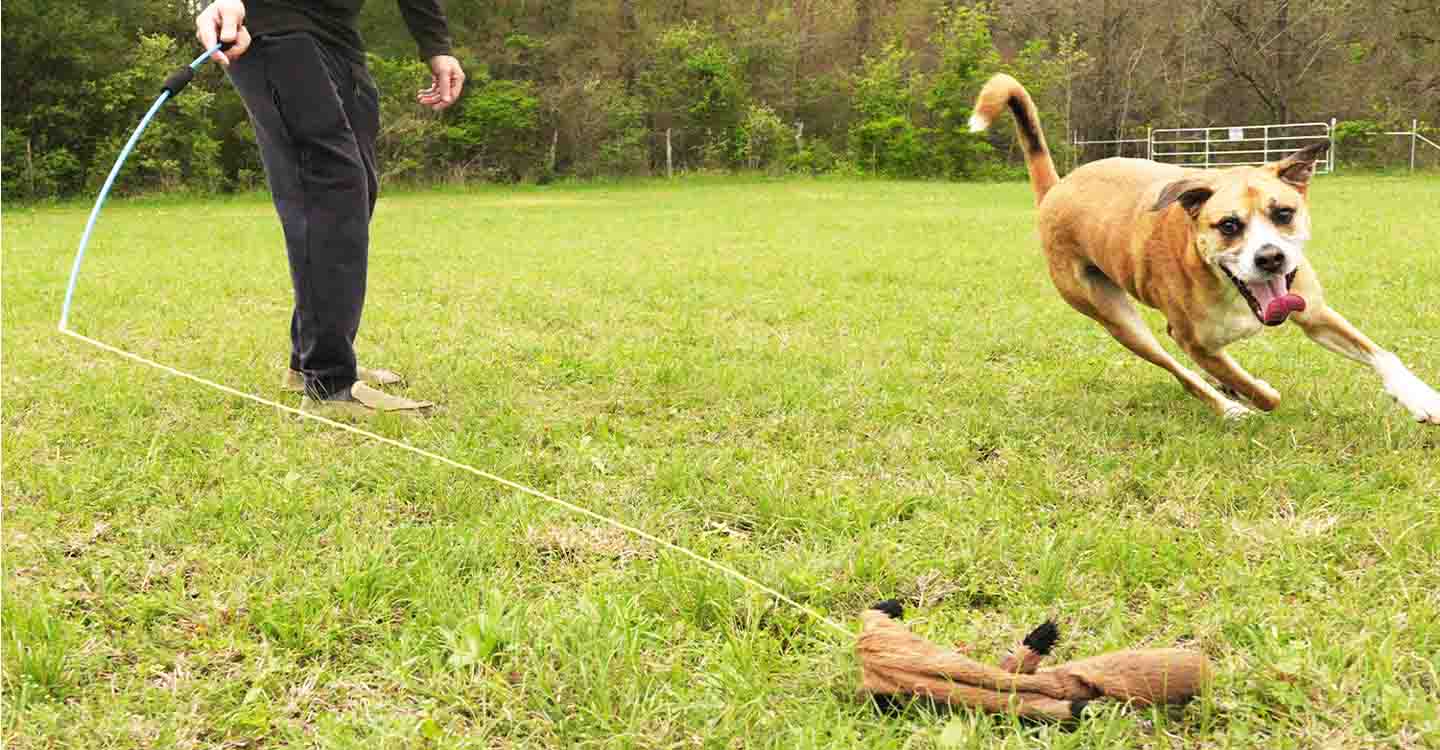
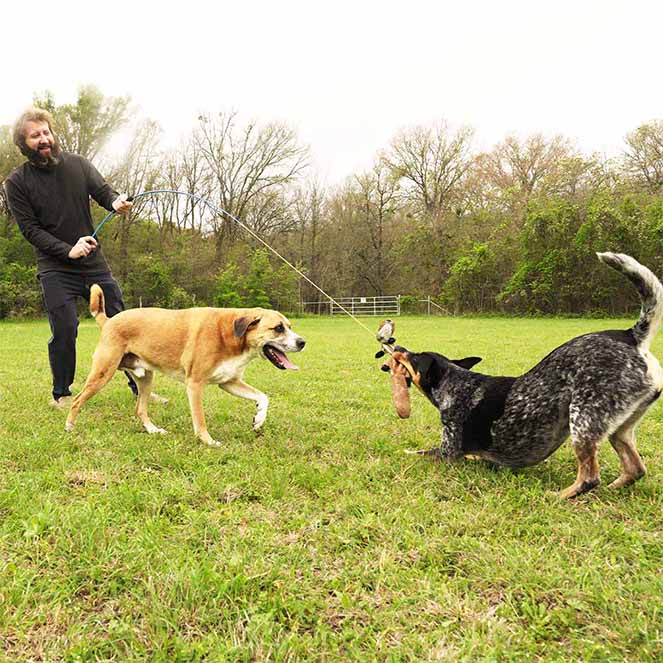
A flirt pole is a long pole with a line and a lure on the end, kind of like a fishing rod with no eyelets or reel, cause let’s not lie, you ain’t reeling in a dog. It lets your dog chase and catch and finish the whole thing in a pretty small space, so for a lot of dogs it’s one of the best ways to tire them out without a walk. For more on it, see the canine flirt pole.
A 10-minute session can tire a lot of dogs out more than a long walk. The dog runs and cuts and catches and lets go and resets, over and over, and the length of the pole gives them a decent field of chase without needing much room. A backyard works, or a courtyard, or a quiet parking lot when nobody’s around. For how to do it, see the flirt pole training guide.
Hallway Recall Sprints
Put two people at opposite ends of a hallway or a big room, and one calls the dog by name and pays them big with a treat or a quick tug when they get there, then the other one calls. I’d keep it going for 5 to 10 minutes. You’re practicing recall and the dog is sprinting all out over and over, so it tires them out pretty quick.
If you’re by yourself, toss a treat down the hallway, send the dog after it, then call them back. It’s about the same running as fetch but you get recall practice in too.
Scent Work and Nose Games
Hide treats around the house or yard and make it harder as you go, starting where they can see it, then half hidden, and then all the way hidden in cushions or under towels or behind furniture or up on a shelf. The dog has to work it out with their nose, and that tires the brain out a lot more than sniffing along on a walk.
Once they get good at it, teach them to look for one thing, like a certain toy or a certain treat, and only pay when they find the right one. That’s how scent detection work starts and you can keep making it harder as they get better.
Puzzle Feeders and Meal Enrichment
Swap the food bowl for a puzzle feeder, a slow feeder, a snuffle mat, a frozen stuffed toy, or just scatter the meal. The dog has to work for it instead of inhaling it, and every meal turns into brain work without you doing much.
This is the easiest one on the list cause it takes none of your time, you just set it up and hand it over and the dog gets fed and works their brain at the same time. See enrichment toys and mental stimulation for the full breakdown.
Impulse Control Drills
This is waits, place, leave-it and release work, and they tire a dog out by making them hold back instead of by running.
And it sticks around after the session’s over. A dog that’s practiced waiting a lot tends to be calmer at the door, around food, around company, and on the walks you do take.
Tug Work With Rules
Tug with rules is one of the best ways to bond and burn energy, even with that old idea floating around that tug makes dogs aggressive. The rules are what matter, so you have a clear cue to start, a clear cue to let go, and the dog drops it when you ask. Done right it builds focus and self-control and burns a lot of energy in a short time.
I’d use a real tug toy and not an old sock, let the dog win sometimes, and you’re the one that decides when it’s over, not them.
Stair Sprints
If you’ve got stairs you’ve got a little workout. Toss a treat or toy up the stairs, send the dog after it and let them come back down, and do that 10 to 20 times. Going up is harder than walking flat, so it tires them out pretty quick. I wouldn’t do it with puppies, older dogs with joint problems, or long-backed breeds like Dachshunds and Corgis.
For a healthy adult dog it works pretty well, but puppies should skip it cause their growth plates are still open, so ask your vet when it’s OK to start.
Indoor Fetch
A soft toy and a long hallway or big room, you throw and they bring it back. It works for a lot of dogs, but I put it lower cause some dogs get obsessed with the ball and fetch gets them all wound up with no real ending. If your dog doesn’t get obsessive about it, indoor fetch is fine. For a high-drive dog I’d go with structured chase.
I’d add some rules to it, so the dog sits and you throw, then you release them and they bring it back and drop it, and you go again. That turns fetch into something with self-control in it instead of just chasing.
New Trick Training
Teaching something new tires a dog’s brain out a lot. Spin, roll over, weaving through your legs, touching your hand with a paw, settling on a mat, or putting a few together. Learning something new is hard work for a dog, and you end up with a dog that knows more stuff. I’d keep it to about 10 minutes before they get too tired to learn.
It’s best with something physical after it, like 10 minutes of training then some chase work, so you get the brain and the body both.
Dog Treadmill
There are treadmills made for dogs and they work for some dogs, but getting a dog used to one takes a while. Start with the dog just standing on it while it’s turned off, treats only and no pressure, then slowly add a little movement, and never tie the dog to it or push the speed.
I put it in the middle cause they’re expensive, it’s slow to get going, and a lot of dogs never really take to it. If you have trouble getting around it might be worth it for you. For everybody else the ones above are easier.
Kiddie Pool Water Work
A cheap kiddie pool in the backyard when it’s warm out. A lot of dogs love water, and moving around in it is easy on the joints. Toss in floating toys, hide treats around it or just let them splash, but not every dog likes water so it depends on your dog.
For dogs with joint problems or coming back from surgery, easy water work can be a good option, but get your vet’s OK first. Low-impact stuff like swimming can suit older dogs and dogs in recovery.
Hide and Seek With You
You hide somewhere in the house and the dog finds you, and you make a big deal when they do and then go again. It’s more for bonding than real exercise, but the searching works their brain and it helps their recall too. Do it along with the bonding work.
I’d use it as an extra and not the main thing, and it goes good with something harder earlier in the day.
The 15-Minute Indoor Routine for Days You Can’t Walk
This is the combo I’d use, and for a lot of dogs it does more in 15 minutes than a whole walk.
3 + 8 + 4 = One Tired Dog
Warm-Up Obedience
Place, sit-stays or some basic obedience, just to get the dog focused and a little calmer before the harder stuff.
Structured Chase
Flirt pole work in the yard or a chase game inside, and let them catch it every 30 to 45 seconds so they get to finish the chase over and over.
Cooldown Scent Work
Then hide treats around the room or use a puzzle feeder or scatter some food, so it brings them back down and ends on brain work.
This is for dogs that a walk alone doesn’t tire out. It’s a big part of what I call Controlled Freedom, you give the dog a structured outlet for the drives they were bred with, cause a dog with a satisfied animal instinct is much better behaved. It works cause it mixes training with a structured chase and then scent work.
For a lot of adult dogs, 15 minutes of structured work like this does more than a long walk. It has to be structured though, cause random play or random sniffing won’t tire them out the same way.
Mental and Physical Fatigue Are Not the Same Thing
A lot of people don’t realize that working a dog’s brain can tire them out more than running them. A dog can run for an hour without ever having to think and be bouncing off the walls again not long after, while a dog that had to work out a hard puzzle feeder might be out cold on the couch.
The list splits two ways. Methods 1, 2, 7, 8, 10 and 11 are mostly physical, and 3, 4, 5, 9 and 12 are mostly brain work. The best sessions have both, and that’s why the 15-minute routine above has both in it.
For a high-drive dog with reactivity or self-control problems, the brain work is a lot of times more important than the running. The routine gives them both in one session.
A tired body with a wired brain is still a wired dog. Brain work is the part a lot of people skip, and it’s what helps a dog settle at home.
| Method | Physical Fatigue | Mental Fatigue | Predatory Seq. | Equipment Cost |
|---|---|---|---|---|
| Flirt pole (structured chase) | High | High | Yes | $55–$95 |
| 60-minute walk | Medium | Low | No | $0 |
| Hallway recall sprints | High | Medium | No | $0 |
| Scent work / nose games | Low | High | No | $0 |
| Puzzle feeders | None | High | No | $10–$40 |
| Structured tug | Medium | Medium | No | $10–$20 |
| 15-min trainer routine (combined) | High | High | Yes | $55–$95 |
When Walking Is Genuinely Necessary
I’m not against walks, I just don’t think they should be the only thing. There’s some stuff walks do that you can’t really get inside.
Puppy socialization. Young puppies need to see different places and smell new stuff and meet different people and hear traffic and be around other dogs where it’s safe. You can’t do that inside, so if you’ve got a young puppy I’d make walks a priority even if they’re short. Ask your vet what’s safe before their shots are done.
Getting out for adult dogs. Even a dog that gets all its exercise at home should get out sometimes so the outside world doesn’t get weird to them. If what you do at home is structured, a walk every few days is usually enough.
Being around other dogs. If your dog has good manners with other dogs and likes meeting them, walks are a good chance for that. (If your dog is reactive or doesn’t like other dogs, skipping walks is a lot of times the kinder choice.)
Going to the bathroom. A backyard covers most of that. Apartment dogs with no yard really do need walks for the bathroom, exercise or not.
For the rest, the stuff above isn’t settling for less. A lot of times it’s the better choice, especially for high-drive dogs that walks don’t satisfy.
Special Situations: Specific Cases, Specific Methods
Recovering from Surgery or Injury (Yours or the Dog’s)
I’d stick to easy brain stuff like puzzle feeders, scent work, scattering food and teaching something new while you sit, and skip the stairs, the flirt pole, the treadmill, tug and the hallway sprints, cause you’re just keeping their brain busy while the body heals. If it’s your dog that’s recovering, follow what your vet says. If it’s you that’s hurt and somebody else can run the active stuff, you can watch from a chair.
Extreme Weather (Heat, Cold, Storms, Smoke)
Keep it all inside, cause the 15-minute routine works fine indoors. Heat is the one I worry about most, so when it’s hot out I’d skip flirt pole work outside and do the early morning or move it all in, and ask your vet if you’re not sure. Cold-weather breeds handle cold OK but thin-coated dogs don’t, and if you wouldn’t go out in shorts, your Greyhound probably feels the same.
Apartment Living Without a Yard
Methods 2, 3, 4, 5, 6, 8, 9 and 12 all work in an apartment. If you have no outdoor space, hallway recall sprints (method 2) can stand in for the flirt pole. For more on apartments, see apartment dog exercise.
Senior Dogs With Joint Issues
Keep it easy, so scent work, puzzle feeders, gentle hide-and-seek, the kiddie pool and shorter trick sessions. Skip the stairs, hard chasing and jumping, and check with your vet. Brain work is a lot of times worth more than running at that age anyway.
High-Drive Working Breeds
You need the big ones, like the flirt pole, structured chase, harder scent work and impulse control drills, and a lot of times you need them twice a day. One 15-minute session might not be enough, so I’d plan on morning and evening for Huskies, Border Collies, Malinois and other high-drive dogs.
The Whimsy Stick: Built for the #1 Method on This List
Structured chase is number one on this page cause it lets the dog finish the chase, and you need the right pole to do it. I tried a lot of flirt poles that were too short or bulky or had a violent bungee cord, so I built my own and tested it on high-drive client dogs for years before I sold it.
Read These Next to Go Deeper
Exercise Without Walking: FAQ
Can a dog be exercised without walking?
Yes, you can. Structured chase, scent work, puzzle feeders, training games inside and other stuff that works the body and the brain will all do it, and for high-drive dogs anything that lets them finish the chase, like flirt pole work, can satisfy them in a way a walk alone just doesn’t.
How long should I exercise a dog without walking?
For a lot of adult dogs 15 to 20 minutes of structured work does as much as a long walk or more, and the routine I’d use is 3 minutes of easy obedience, 8 minutes of structured chase and 4 minutes of scent work to cool down. High-drive dogs might need that twice a day, and older or mellow dogs usually do fine with one shorter session.
Is exercising a dog without walking enough?
For the exercise part yes, if it’s structured, but walks give a dog new smells and new places and other dogs and people that you can’t really get at home, and walking matters a lot for young puppies that are still getting socialized. For an adult dog that’s past that, structured exercise at home can cover what they need.
Indoor speed & apartment specifics
What is the fastest way to exercise a dog indoors?
I’d say structured chase, with a flirt pole in the backyard or a hallway game inside, tires them out the fastest. A short flirt pole session gives a dog the chase and the catch that a walk doesn’t, so for a lot of high-drive dogs it goes good with walking, and scent work and puzzle feeders are slower but they work the brain more.
Can I exercise my dog in an apartment without walking them?
Yes. Hallway recall games, scent work, puzzle feeders, place, tug, indoor fetch with a soft toy and stairs if you have them all work in an apartment, but for flirt pole work you need a backyard, a courtyard or a quiet spot outside like an empty parking lot. There’s more on apartments in section 06 above.
Walk skipping & substitutes
Is it bad to never walk a dog?
For young puppies that are still getting socialized, yes, they need to get out and see the world and nothing else really replaces that. For adult dogs it depends, and if your dog’s body and brain and social needs are taken care of some other way, skipping walks isn’t gonna hurt them. The problem is a lot of people skip walks and don’t replace them with anything, and then the dog doesn’t get enough.
What exercise replaces a walk for a dog?
No one thing replaces a walk cause a walk is movement and sniffing and getting out all at once. What I’d do is 10 to 15 minutes of flirt pole for the running and the chase, then 5 to 10 minutes of scent work for the brain and the exploring. For a lot of adult dogs those two together do as much as a long walk or more.
Injured or sick owner
How do I exercise a dog when I am injured or sick?
Go easy on yourself. I’d scatter their meal across the floor so they have to nose it out, use a puzzle feeder for meals, teach short tricks while you sit and toss treats for find-it games, and if you have a partner or a roommate have them run a flirt pole session in the yard while you watch from a chair. That keeps your dog going till you’re back on your feet.


