
Why Your Dog Gets Zoomies or Gets Hyper After a Walk
For a lot of high-drive dogs a walk is just a long line of things to chase, squirrels and bikes and other dogs, and they never get to catch any of it. So they come home wound up, and it comes out as zoomies or pacing or mouthing or grabbing stuff. A longer walk usually isn’t the answer for those dogs. What I’d do is a short chase-and-catch session right after the walk, with some structure to it and a clear ending.
Normal or not? A minute or two of zoomies after a walk is normal and usually nothing to worry about. Pacing and mouthing and grabbing for half an hour every day is a pattern, and that one’s worth fixing. Snapping, growling or limping is a whole different problem, so start here instead.
By Christopher Lee Moran, working dog trainer, around 400 client dogs · Updated October 2026
Signs the walk is winding your dog up
These are just things to watch for, they don’t diagnose anything. If you’re seeing them it usually means the walk is adding energy instead of using it up.
- Pacing, whining or not settling for 20 minutes or more after you get home
- Zoomies that go on and on, well past a quick lap of the yard
- Grabbing shoes, pillows or anything in reach right after the walk
- Jumping, mouthing or nipping as you come through the door
- Getting more wound up after longer walks, not less
- Reacting more and more as the walk goes on
The 7-minute post-walk finisher
I’d do this right when you walk in the door, before your dog finds their own way to get it out, and it’s really for the dogs that come back from a long walk more wired than when they left. The times I give are just where I’d start, so adjust them for your dog.
- Pause at the door. Keep the leash on, ask for a sit and wait till you get one calm breath out of them. That lets your dog know something’s about to start.
- Wait before every chase. Hold the lure still and ask for a sit or a down for about 5 to 10 seconds, then let them go with a word. This is where they learn to hold it together when they’re all fired up.
- Chase in short, low bursts. Give them about 15 to 30 seconds of fast movement with the lure on the ground, going in wide arcs away from your dog, and throw in a few sudden stops and turns.
- Let them catch it every 3 or 4 rounds. Stop the lure and let your dog hang onto it for a few seconds. The catch is the part a walk never gives them, and it’s the part people skip the most.
- Trade for a drop-it, then restart. Swap the lure for a treat and go back to the wait. Do 4 to 6 rounds, about 5 to 7 minutes total.
- End on purpose. Say your all-done word, put the lure up where they can’t see it and ask for a down or place, and then I like giving them a chew or a snuffle mat for about 15 minutes.
Step 2 in real life: holding position before the chase starts. That little pause is where an excited dog learns to wait on you.
Watch more sessions on YouTubeThis is what you’re going for, dogs that lay down on their own instead of looking for something to get into.
The kit I use for this routine
Just so you know, I make these poles, so I’m not neutral here. Whatever you end up using, get a one-piece pole with a static line that doesn’t stretch and snap back, and a lure you can keep low on the ground.
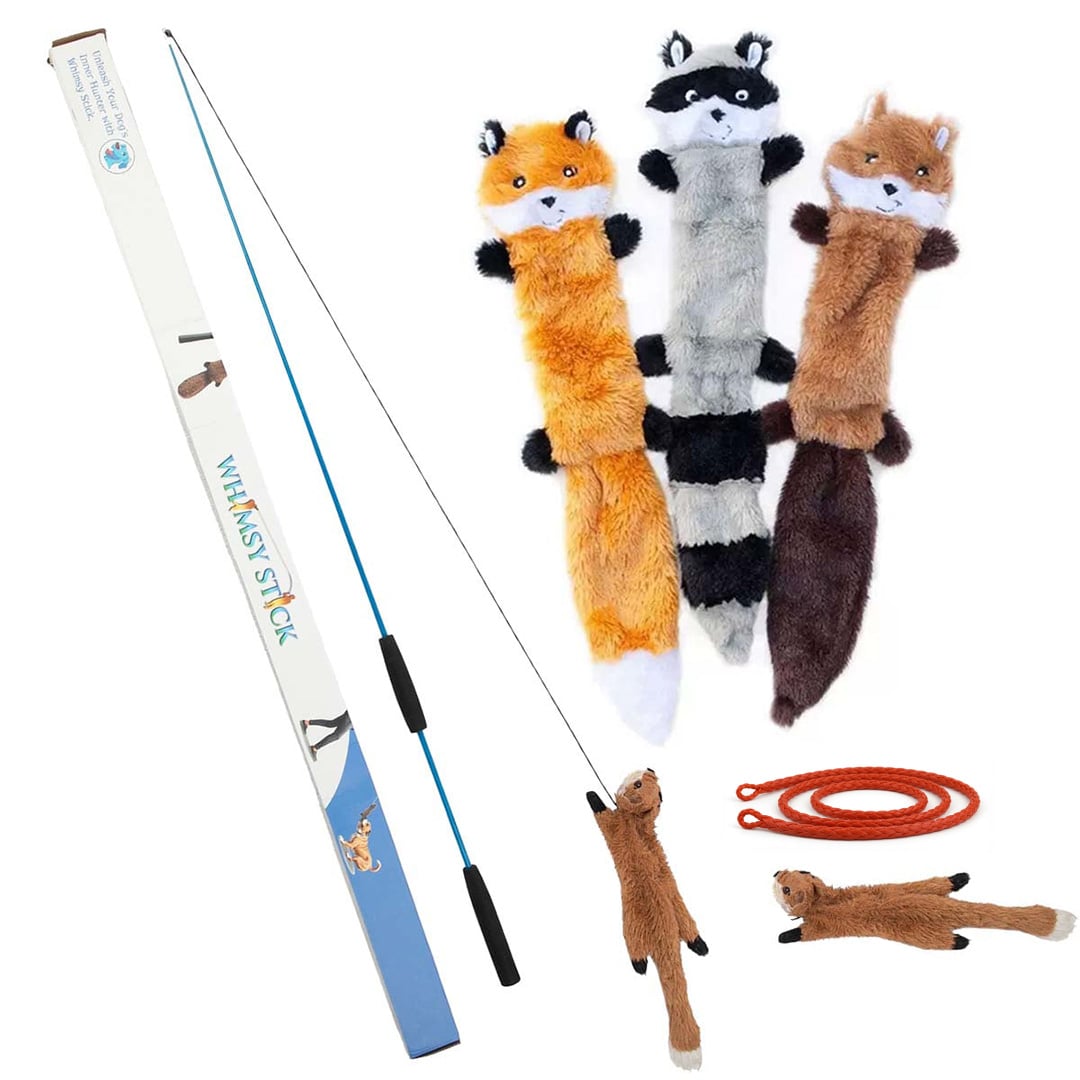
Rugged XL Pro Kit
- One-piece fiberglass pole, about 4 ft, with an 800-lb Dyneema line
- 5 lures and a spare line, because daily sessions wear lures out
- For dogs 30 lbs and up · free US shipping
30-day money-back guarantee · usually ships within 2 days
Rugged XL + 3 Lures
- Same pole and line, 3 lures, no spare line
- Dogs 30 lbs and up · free shipping
Why a walk winds some dogs up
A chase goes in an order, the dog spots it, stalks it, chases it and then catches it. Now think about what happens on a walk. Your dog spots a squirrel and locks on and pulls, and you walk them right on past it, and ten minutes later it’s a bike, and then it’s some dog barking behind a fence. All those starts and stops add up on them, and trainers call that trigger stacking.
So the dog that walks back in your door isn’t tired, it’s full of chases that never got finished. That’s why the AKC points to games that let a dog “mimic the parts of the predatory sequence” safely, rather than just more walking.
Are zoomies after a walk normal?
Usually, yes. The science name for them is frenetic random activity periods, or FRAPs. According to Cornell’s vet school, there’s no known specific cause, but zoomies seem to release pent-up energy or stress, and they’re most common in young dogs. Cornell also notes that frequent zoomies can mean a dog needs more exercise and mental stimulation. For more on zoomies in general, see why dogs get the zoomies.
A quick lap around the yard after a walk is fine. But 20 to 45 minutes of pacing and mouthing and grabbing every single day is a pattern, and that’s what the finisher is for.
Why longer walks aren’t always the answer
More walking just means more squirrels and bikes and more chases that never finish. A dog that’s wired after a one-hour walk can be just as wired after two. These are four mistakes that come up a lot.
- Adding distance. That just builds a fitter dog with the same problem.
- Endless fetch. Fetch with no wait, no catch and no ending can wind a dog up the same way a walk does.
- Letting the session fade out. If there’s no clear all-done, the dog keeps looking for the next round.
- Skipping days. A few missed days in a row is usually when the old pattern creeps back in. Try for every day, even if some days are short.
This is how the two usually compare the way I train, but every dog is different.
| Walk alone | Walk + finisher | |
|---|---|---|
| The chase urge | Switched on again and again, never finished | Switched on, then finished with a catch |
| At home afterward | Often still wound up | Usually ready to settle once the session ends |
| Exercise | Steady, low-intensity walking | A few short sprints on top of the walk |
| Thinking | Very little asked of the dog | Waits and drop-its while excited |
Walk first or play first?
If your schedule lets you, try doing the flirt pole before the walk. That way your dog heads out calmer and isn’t as worked up about everything it passes. If the walk has to come first that’s fine, just do the finisher as soon as you get home. Honestly doing it every day matters more than which one comes first.
Which dogs need it most
This shows up the most with high-drive and working breeds, like Border Collies, Malinois, German Shepherds, Huskies, Australian Shepherds, pit bull types, terriers, Weimaraners and Vizslas, and mixes of any of them. Lower-drive dogs a lot of times settle fine after a normal walk.
What to look for, week by week
Every dog goes at their own pace, so don’t hold me to a schedule here, these are just things you might start to notice.
What my clients tell me most is their dogs are a lot more relaxed and calmer, and just seem more satisfied, once this is part of the day.
When it’s more than extra energy
Talk to your vet or a trainer if your dog snaps, growls or gets aggressive after walks, can’t settle even after a calm day, or starts limping or trembling. That’s not a flirt pole problem. For dogs that react on walks, start with reactive dog training.
Hot days and puppies
After a hot walk, wait till your dog’s breathing is back to normal and give them water before any chasing. With puppies wait till at least 6 months and ask your vet about growth plates first. From 6 to 12 months keep it to 3 to 5 minutes with the lure low.
Want more of this in your Google results? Add Whimsy Stick as a preferred source.
Quick answers
Why does my dog get zoomies after a walk?
Nobody knows one single cause. Cornell’s vet school says zoomies seem to let out pent-up energy or stress. For a lot of high-drive dogs a walk full of things to chase that never get caught adds to that, and zoomies are one way it comes out at home.
Is it normal for a dog to be hyper after a walk?
A short burst is normal, especially with young dogs and high-drive dogs. Long stretches of pacing, mouthing or grabbing things every day usually means the walk is winding your dog up more than it’s tiring them out.
How do I calm my dog down after a walk?
Give that energy something to do with a clear ending. Do 5 to 7 minutes of flirt pole with a wait before each chase, a catch every few rounds and a drop-it. Then say all done, put the lure away and give them a chew or a snuffle mat.
Should I walk my dog before or after play?
With high-drive dogs I like play first and the walk second, cause the dog heads out calmer. If the walk has to come first, do a short session as soon as you get home.
Why does my dog get more hyper after exercise?
Exercise works the body, but a walk full of things to chase also turns the chase urge on over and over without ever finishing it. A fit dog on a busy walk can come home tired and wound up at the same time. A short session with a catch and a clear ending gives that urge somewhere to go.
Will my dog grow out of being hyper after walks?
Drive can soften a little with age, but I wouldn’t count on it with high-drive breeds, they can keep this up for years. A daily outlet is something you can start today.
What if I can’t walk my dog today?
Do the flirt pole session on its own, then add a nose game like a scatter feed or a snuffle mat. The guide to exercising a dog without walking has more ideas.
Why does my dog get aggressive after a walk?
Stress from a walk full of triggers can stack up and make some dogs snappy after. But aggression isn’t something you fix with play alone. Talk to your vet to rule out pain, and work with a trainer on the triggers themselves. The AVMA’s bite-prevention guidance is a good place to start.
Finish the walk the right way
Try it for 30 days. If it isn’t a fit for your dog, email me for a refund, and you pay return shipping unless the pole failed. I’m a one-man company and I want you happy with it, so I’ll work with you.
Get the Pro Kit, $129.95Smaller dog? See the Standard, $55.95
Related reading
- Why is my dog so hyper?
- Why dogs get hyper at night
- How to exercise a dog without walking
- Flirt pole training: the full guide
- Why dogs get the zoomies
- Flirt pole play for overexcited dogs
- Signs your dog needs more exercise
- The complete dog exercise guide
- Stop dog jumping
- Enrichment for high-energy dogs
Based on my own experience training dogs. Not veterinary advice. Exercise disclaimer.


