
Quick summary
How to calm a hyper dog is the wrong question. The right question is how to train an off-switch. Hyper dogs are not failing because they need more exercise. They are failing because exercise without regulation builds a fitter, more activated dog.
The protocol: 10 minutes daily, five steps that complete the full predatory sequence rather than interrupting it. A mandatory wait cue trains sitting with arousal. Drop-it on cue trains releasing arousal on command. An all-done sequence at the end closes the neurological loop. Most hyper dogs show measurable behavioral change in 2 to 3 weeks. This sits inside the broader behavior problems pillar.
- Owners of dogs who never wind down regardless of exercise.
- People exhausted from walking their dog two hours a day with no improvement.
- Dogs that vibrate through every transition: meals, leashing, guests, doorbells.
- Anyone whose vet, family, or trainer said “just exercise them more” and it did not work.
- Owners of high-drive working breeds blaming the breed for the hyperness.
- Cannot self-settle within an hour of returning from a walk or run.
- Will not hold a sit or down when something interesting is happening.
- Jumps, mouths, nips, or grabs leashes and clothing when excited.
- Goes harder rather than calmer with more exercise.
- Cannot transition between activities without protest, demand barking, or pacing.
- Sleeps eventually only from total exhaustion, never from genuine calm.
Why “Just Walk Them More” Fails Hyper Dogs
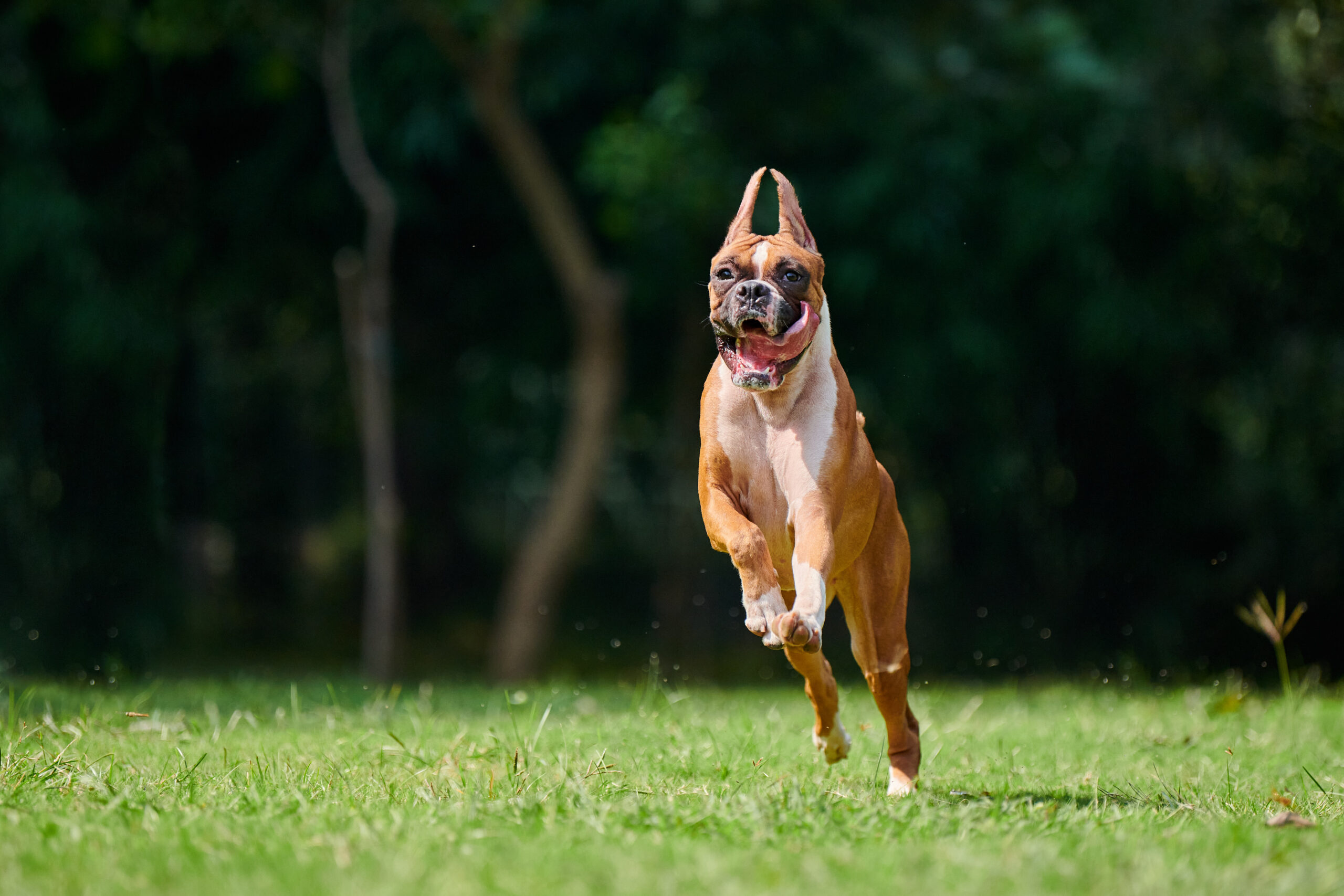
Standard exercise burns physical energy without resolving neurological activation. A 90-minute walk uses up the legs but does not finish the predatory sequence. The dog returns home physically tired and neurologically still wired, and that is the state most owners describe when they say their dog is hyper after exercise.
In fact, hyper dogs evolved from predators. Specifically, the brain runs on a five-part motor pattern: stalk, chase, capture, win, release. That sequence has a built-in resolution point at the end where cortisol drops and the system downshifts. However, walks activate parts of the sequence (the stalk and the scan), but they never complete it. The dog ends every walk in the middle of an unfinished arousal loop. Still, you can repeat this for years and it will not produce calm. Per AKC guidance on calming a hyper dog, structured engagement that addresses the underlying drive consistently outperforms volume-based exercise. ASPCA behavior guidance echoes the point: mental engagement and impulse work matter more than miles.
What more exercise actually builds
More walking with no regulation produces a fitter dog with the same arousal problem. Fitness is fine. Fitness without an off-switch is the worst combination because the dog now has greater capacity to express the hyperness you were trying to fix. This is most obvious in high-drive working breeds. A Belgian Malinois who walks 5 miles a day with no structure work is not a calm Malinois. That is a Malinois with better cardio.
What walking and fetch produce in hyper dogs
- Physical fatigue without neurological resolution
- Predatory sequence activated, never completed
- Better cardiovascular fitness, same arousal problem
- Dog gets harder to settle, not easier
- No impulse control trained at any point
- Hyperness blamed on the breed, not the protocol
What the protocol produces in hyper dogs
- Full predatory sequence completes every session
- Wait cue trains sitting with arousal, the core skill
- Drop-it on cue at peak arousal trains the off-switch
- All-done sequence closes the loop neurologically
- Genuine calm follows every session, not exhaustion
- Progressively more regulated dog over 2 to 3 weeks
Exhaustion is not calm. Regulation is calm. A hyper dog who has been walked into exhaustion is not calm. They are physically too spent to express the hyperness, which looks like calm for an hour. The moment they recover, the activation returns because the underlying regulation skill was never trained. Structured sessions train calm itself, not just temporary depletion.
If you’re reading this and feeling guilty for not knowing sooner, stop. Nobody taught us this. The dog walking industry never mentioned the predatory motor pattern. You showed up. That’s what dogs need.
Outcome by outcome: long walk vs structured session
Put the two side by side and the picture clarifies fast. Same dog, same week, two completely different neurological outcomes. The numbers below come from working with high-arousal dogs in real households, not lab conditions.
| Outcome | Long Walk (45+ min) | Structured Flirt Pole Session (10–15 min) |
|---|---|---|
| Physical fatigue | Yes, but inconsistent and dependent on pace | Yes, intense and fast through the predatory sprint |
| Neural fatigue (real settle) | No, often elevates arousal instead of resolving it | Yes, completes the predatory sequence and downshifts the system |
| Impulse control built | No, the dog is reacting to environment the entire time | Yes, every wait and release cue is a high-arousal impulse rep |
| Cortisol after session | Often stays elevated 1–2 hours post-walk | Drops within 4–10 minutes once settle cue lands |
| Time investment | 45+ minutes, often twice daily | 10–15 minutes, once daily for most dogs |
| Joint impact | Cumulative over months and years on pavement | Controlled when run ground-level with deliberate lure movement |
A structured 10-minute session beats a 45-minute walk on every outcome that matters for hyper dogs, fatigue, regulation, and post-session calm. Volume was never the variable. Structure was.
Why Your Dog Is Hyper: The Real Cause
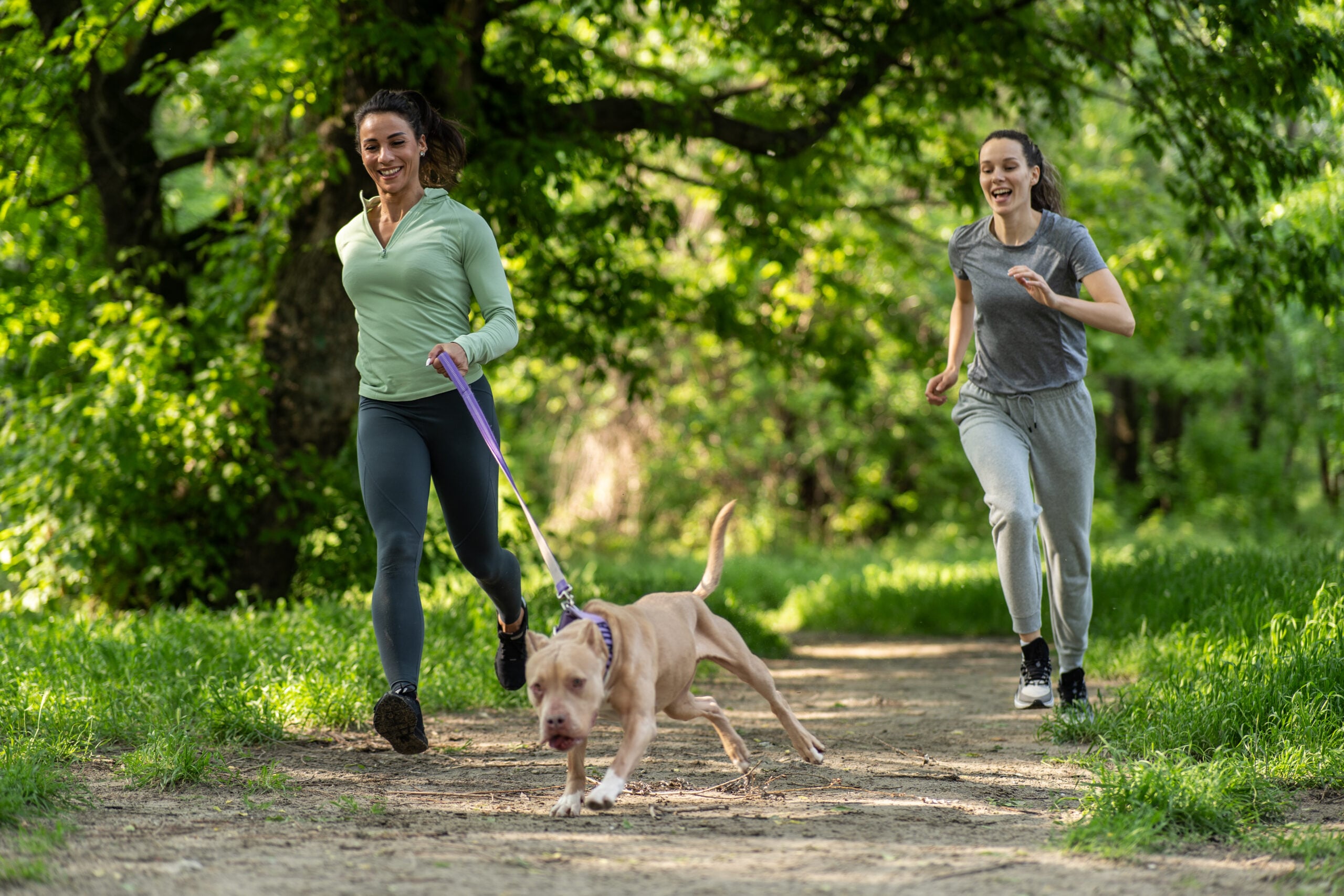
In practice, most dogs labeled hyper are running an arousal loop that never closes. The dog’s brain evolved from predators that completed a specific sequence to resolve activation. Specifically, that sequence is stalk, chase, capture, win, release. Specifically, completion produces a cortisol drop and a dopamine release that downshifts the system. In contrast, interruption leaves the dog in mid-pattern, with the activation still elevated and the resolution still pending. For the underlying neurology, see predatory motor pattern explained.
Walks activate parts of the sequence (the stalk and environmental scan) but never complete it. There is no catch, no possession, no clean release. Fetch is closer but skips the stalk and the structured release, so the dog stays in pure-sprint repetition with no resolution. Both produce physical fatigue. Neither completes the neurological pattern. Per AKC educational content on predatory drive, the predatory motor pattern is a deeply rooted sequence that requires completion for genuine arousal resolution.
Why this matters more than exercise volume
The arousal does not get tired. The body gets tired while the arousal stays active. This is the gap most owners cannot see directly because tiredness and calm look similar from the outside. They are different states.
A tired aroused dog still cannot transition. A regulated dog can transition even when fully rested. The missing variable is not depletion. It is sequence completion. Two dogs can have the exact same energy level, but only one settles after activity. What separates them is not energy. It is whether the off-switch was trained.
What unfinished arousal looks like daily
- Activation builds without ever resolving
- Physical fatigue does not equal neurological calm
- Cortisol stays elevated through transitions
- Dog seeks more stimulation to chase the missing close
- More walks adds activation, not regulation
- Pattern continues for years without change
What structured resolution changes
- Full sequence completes: stalk through release
- Cortisol drops, dopamine releases at the close
- Off-switch trains directly through the all-done step
- Dog learns activation has an ending built in
- Carry-over into walks and household transitions
- Visible behavioral change in 2 to 3 weeks
Hyper is not an energy state. It is a regulation state. Once you stop measuring exercise volume and start measuring regulation skill, the entire problem becomes solvable.
The 3 Real Causes of a Chronically Hyper Dog
Over 95% of hyper dogs fall into three diagnostic categories. Identifying which one explains your dog tells you exactly which lever to pull first. All three respond to the same core protocol, but the framing matters because owners who misdiagnose the cause usually pick the wrong intervention.
The most common cause. The dog has normal drive levels but no structured outlet that completes the predatory sequence. Walks and fetch do not count. This category explains most Lab mixes, terriers, retrievers, and pit-type dogs labeled hyper. Drive is fine. Fulfillment is missing. The structured flirt pole protocol below resolves this category fastest.
Most commonSecond most common. The dog has been allowed to self-arouse through play, demand behaviors, or environmental triggers without ever being taught a structured exit. This dog escalates fast and cannot downshift on cue because the cue was never taught. The all-done settle sequence covered in Step 5 below is the missing piece.
Second most commonThird category, and the most misdiagnosed. Working breeds (Malinois, Border Collie, GSD, Aussie, Heeler, Husky, Vizsla) were bred for genetically amplified drive expressed through structured work. Suburban life provides almost no structured work. The drive is normal for the breed. The lack of outlet is the problem. These dogs need the protocol twice daily for life, not just during the build-up phase.
High-drive breedsThe rare medical or developmental category
The remaining 5% of hyper dogs have an actual medical or developmental driver. Thyroid imbalances. Specific neurological conditions. Certain medications. True canine hyperkinesis, which is diagnosed by veterinary behaviorist response test, not by symptom recognition.
Get a vet check if the hyperness appeared suddenly without a behavioral trigger, escalated rapidly, or fails to improve at all after 3 weeks of consistent structured work. AVMA behavioral guidance reinforces that ruling out medical causes is appropriate when behavioral interventions show no measurable progress.
The Diagnostic Test: Which Category Is Your Dog
Specifically, run this 5-question test before picking a fix. The answers determine whether structured sessions alone will resolve it or whether you also need to layer in something specific.
Yes = unfulfilled predatory drive (Category 1). The dog completes some activity, partially downshifts, then the unresolved arousal pulls them back up. This is the classic walk-then-zoom pattern. The fix is sequence completion, not more activity.
No = untrained off-switch (Category 2). The dog has drive they cannot voluntarily downshift on cue. The wait cue and drop-it under arousal are the missing skills. Exercise volume will not produce these skills. Structured sessions will.
Yes = Category 3 applies even if Category 1 or 2 also fits. Malinois, Border Collie, GSD, Aussie, Heeler, Husky, and high-drive mixes need structured work as a permanent daily input, not just a fix. Same protocol, higher frequency, for life.
If yes, vet check first. Sudden onset hyperness in a previously regulated dog often has a medical driver. Thyroid imbalances and certain medications can produce this. Behavioral intervention without ruling out medical causes wastes weeks.
That signal points to veterinary behaviorist consultation. The protocol works on the vast majority of hyper dogs within 2 to 3 weeks. No measurable change after 3 weeks of consistent daily work suggests a less common driver. That is when behavioral medication consultation becomes appropriate, paired with continued training.
What this looks like in practice
For example, I have seen owners spend two years trying to walk their way out of a regulation problem. In practice, their dog just became a much fitter dog with the same arousal issue. When they switched to structured 10-minute sessions, the calm appeared in 18 days. The dog did not change. What they were asking the dog to do changed.
Case study: 4-year-old Husky mix
4-year-old Husky mix, diagnosed Category 1 + Category 3
The owner had been told the dog was hyper because of the breed and that nothing would fix it. Daily walks were 2 hours. The dog still demand-barked, jumped on guests, and pulled aggressively on leash. The owner was on the verge of behavioral medication.
Diagnostic indicated unfulfilled predatory drive (Category 1) plus breed-amplified drive (Category 3). The recommendation: twice-daily 10-minute structured sessions plus one decompression walk for sniffing. Total exercise time dropped 70%. Structure went up.
By day 12, the dog could hold a place cue through the doorbell. By week 3, leash behavior improved without any leash-specific training because the underlying arousal was lower. The medication consult was canceled. Same dog. Same breed. Structure was the only variable that changed.
Common Misdiagnoses That Keep Dogs Hyper
In fact, most chronically hyper dogs have been hyper for years because they kept receiving the wrong diagnosis. Here are the five most common ones and why each fails.
1. Assuming exercise volume is the problem
In practice, this is the default conventional advice and it produces a fitter hyper dog. For example, if 60 minutes did not work, 90 will not, and 120 makes it measurably worse. The variable is sequence completion, not duration. Usually, most owners default to adding time because that is the only lever they know exists.
2. Assuming it’s the breed and unfixable
Breed is the multiplier, never the explanation. For example, a Malinois with the protocol is a calm Malinois. In contrast, a Lab without the protocol is a hyper Lab. Breed sets the daily input requirement. It does not set whether the dog can learn regulation.
3. Assuming the dog will grow out of it
Most dogs settle some between 2 and 3 years as adolescence ends. However, an adult hyper dog who never learned regulation will not develop it through aging. In short, waiting for natural settling in a dog past 2 is waiting on an outcome that statistically will not arrive without intervention.
4. Calling it canine ADHD without veterinary diagnosis
Genuine canine hyperkinesis is rare and diagnosed by a veterinary behaviorist through a controlled response test. The symptom set looks identical to under-regulated high drive in a normal dog. Label hyperkinesis after 3 weeks of failed structured work, not before.
5. Blaming food, supplements, or environment
Diet and environment can amplify hyperness. They are rarely the root. If your dog has always been hyper, the regulation skill is the variable, not the food bowl. Worth investigating only if the hyperness appeared without a behavioral trigger, escalated suddenly, or fails to respond to structured work.
End the protocol experiment after 3 weeks of consistent daily structured sessions if you see zero measurable change. That is the trigger for veterinary behavioral consultation, not for adding more exercise or trying a third trainer. Behavioral medication consultation is appropriate in those cases, paired with continued training. This is a small minority of hyper dogs, but the option exists when the structured work does not produce results.
Before You Start: One Non-Negotiable
Your hyper dog needs a functional drop-it cue before running the full protocol. Not a perfect competition-style out, just a reliable enough release that the dog will give up the lure within a few seconds when asked, even when activated. Without this, the all-done transition becomes a wrestling match that spikes arousal instead of resolving it, and the entire protocol fails at the most important step.
Build drop-it through the possession game. Let the dog catch the lure and hold it. Go completely still and neutral. Wait for the voluntary release. Mark and immediately restart the chase. The restart is the reward. Do this 10 to 15 times over two or three short sessions and most hyper dogs have the concept. Add the verbal cue once the behavior is happening reliably. Build the drop-it first, then run the full protocol. The full progression lives in the impulse control drills guide.
The 5-Step Protocol for Calming a Hyper Dog
For hyper dogs specifically, the wait and all-done steps are where most of the behavioral work happens. Neither is optional. Skipping either step turns the tool into the problem instead of the solution.
Skip the full chase protocol. Growth plates don’t close until 12 to 18 months in most breeds (later in giant breeds). Walk-only drags and the 5-session ramp are OK; sprint sessions are not.
Lure still on the ground. The dog orients and locks on. Ask for a sit or stand-wait and hold it for a full 5 to 10 seconds before releasing. This is not a warm-up formality. The wait phase is the work. For hyper dogs, expect the first week to feel like most of the session is spent on this step. That is correct. Do not shorten it to get to the chase faster.
Cue: WaitRelease cue, then move the lure deliberately. Low, smooth, with direction changes and occasional brief pauses. The pauses re-engage the stalk drive. They interrupt the pure-sprint state with a brief orienting moment. Avoid frantic unpredictable lure movement, it amplifies arousal rather than channeling it. Your movement tone sets the entire session tone.
Cue: Get itThe catch, release, and all-done
Every three to four reps, stop moving and let the dog catch the lure. Allow 3 to 5 seconds of full possession before cueing the out. This step matters neurologically. Possession is part of the predatory sequence, and denying it entirely creates frustrated hyper dogs who escalate rather than resolve. The neurological resolution happens at the release, not the chase.
Ask for the out, reward the release, then immediately restart from step 1. This is the loop. For hyper dogs, the drop-it under drive is the highest-value impulse control training available, harder than any obedience exercise because the arousal level is at its peak. A dog who can release a prey item on cue at maximum arousal can do almost anything you ask in calmer contexts. The skill transfers directly to reactive dog training.
Cue: OutClosing the session
After 8 to 10 minutes of reps, end with one final catch and drop-it. Say all-done and put the toy completely out of sight. Immediately cue place or down and reward calm. Do not walk away and leave the dog to come down on its own. The settle cue bridges the transition from activated to calm. After three to five minutes of settled behavior, release with your release word. This is how you build a genuine off-switch and the entire reason this protocol works.
Cue: All done → PlaceThe session ending is where most owners lose all the ground they built. They did everything right for 8 minutes, then put the toy away and walked off. The dog stayed activated, carried that arousal into the evening, and the owner concluded the protocol did not work. It worked fine. The ending did not.
Case study: 3-year-old Lab mix on the verge of rehoming
3-year-old Lab mix, hyper through every life stage
The owner had been walking the dog 90 minutes daily for over a year. The dog was still bouncing off the walls in the evening, demand-barking through dinner, and unable to hold a down for more than 4 seconds. Three different sources had told the owner to walk more. She was on the verge of rehoming.
We replaced one daily walk with a 10-minute structured session: wait, chase, catch, drop-it, all-done into place. No other changes to the routine. The second walk stayed in the schedule for decompression sniffing, not as the regulation tool.
By day 8, the dog was settling within 6 minutes of the all-done cue. By week 3, evening calm lasted 3 hours. The dog was easier to leash, less reactive at the door, and stopped demand-barking through meals for the first time since adoption. Same dog. Same household. Structure was the only variable.
The Daily Schedule for a Hyper Dog
The structure that actually produces calm sits inside three daily blocks. Run it consistently for 2 to 3 weeks and the off-switch installs itself.
Morning structured session
10 minutes of the full protocol within an hour of waking. This sets the regulatory baseline for the day. The dog learns the day begins with structure, not chaos.
Mid-day decompression walk
A normal 30 to 45 minute leash walk for sniffing and environmental exposure. This is not the regulation tool. It is enrichment. The structured session already produced the calm, so the walk does not need to.
Evening reset session (first two weeks)
Another 5 to 10 minute structured session if the dog is starting to escalate in the late afternoon. Not always needed once week three has produced consistent baseline regulation. For the first two weeks, run two sessions daily. For dogs hyper after walks specifically, an evening session resolves the post-walk activation problem entirely.
What about high-drive working breeds
High-drive breeds (Malinois, Border Collie, GSD, Aussie, Heeler) need the same protocol with one adjustment: two structured sessions daily for life, not just during the build-up phase. Working dogs were bred to express drive through structured work. Suburban life provides almost no structured work, so you have to build it in.
The session length stays at 10 minutes maximum. Longer sessions for working breeds is the most common mistake. What they need is more frequent short sessions, not longer ones. Two 8-minute sessions consistently outperform one 20-minute session for arousal regulation, regardless of breed.
Two 10-minute structured sessions plus one decompression walk produces calmer dogs than any all-day walking schedule ever will. Frequency and structure beat duration.
The Mistakes That Keep Dogs Hyper
Most hyper dogs have stayed hyper for years because their owners kept making one of these six mistakes. Each one breaks the protocol in a specific way.
1. Treating exercise volume as the variable
If 60 minutes of walking did not work, 90 minutes will not work, and 120 minutes will produce a fitter hyper dog. The variable is structure, not duration. Most owners default to adding more time because that is the only lever they know exists. This is the single most common reason hyper dogs stay hyper for years.
2. Ending without resolution (the highest-cost error)
Stopping abruptly, leaving the dog activated and walking away, breaks the loop and trains the dog to stay aroused after stimulation ends. The all-done sequence is not a finish. It is the step that closes the neurological loop. Skipping it is the single most common reason owners conclude the protocol did not work.
3. Skipping the wait because “the dog can’t hold it”
This is backwards. The wait is harder for hyper dogs, which is exactly why they need to do it. Skipping it removes the one moment in the session where the dog practices sitting with arousal rather than discharging it. Lower the duration if needed (even 2 seconds is a valid rep) but never eliminate the step entirely.
4. Matching the dog’s energy with chaotic movement
The handler’s movement tone sets the session tone. Fast, jerky, unpredictable lure movement tells the dog’s nervous system to escalate. Deliberate, smooth, controlled movement with brief pauses produces a different behavioral state in the same dog. You are not trying to match arousal. You are trying to channel it. Slow the lure down when the dog gets frantic, not up.
5. Using the wrong tool for the job
Tennis balls and fetch toys keep the dog in pure-sprint mode without any of the structured phases that train regulation. Flirt poles with elastic or bungee line create startle-spikes that go the wrong direction. The right tool is a non-elastic line and a deliberate, predictable lure path. This matters more for hyper dogs than for any other profile. For the full professional reference, see the canine flirt pole.
6. Never letting the dog win
Constantly denying possession produces frustrated, more frantic hyper dogs who fixate harder rather than engaging with the handler. Every three to four reps, let the dog catch and hold. The possession phase is what makes the release meaningful. Without it, the drop-it has nothing to reinforce and frustration escalates instead of resolving.
The dog can no longer hold the wait cue for even 2 to 3 seconds. Drop-it is gone entirely. Movement is frantic and unfocused with no tracking behavior. If you see these signs, end the session immediately with all-done and settle, not with more reps. For the next session, cut duration in half and reduce lure speed until impulse control holds throughout.
The Right Tool for Calming a Hyper Dog
For hyper dogs specifically, elastic-cord flirt poles and bungee-based tools are a poor choice. The snap-back when the dog catches the lure produces a startle-spike in arousal that goes the wrong direction entirely. Unpredictable rebound movement makes the lure harder for the dog to track deliberately. It is reacting to chaotic motion rather than stalking controlled prey, which is a neurologically different and less productive state for arousal regulation.
The Whimsy Stick uses a Kevlar line that transmits movement cleanly from your hand to the lure with no rebound. What you do with the pole is precisely what the lure does. When you slow down and pause, the lure slows down and pauses. It does not bounce unpredictably. That precision matters when you are actively managing arousal through movement. The responsive rod also gives you tactile feedback. You can read when a hyper dog is tracking versus in uncontrolled sprint mode, which lets you adjust the session in real time. For broader equipment guidance, see the buying guide.
Whimsy Stick Standard
Kevlar line, no snap-back. The clean movement control structured arousal sessions need with smaller hyper dogs. Built for the protocol, not for casual play. Shipping calculated at checkout.
Shop Standard, $55.95Whimsy Stick Rugged XL Base
I built this after watching cheap flirt poles snap on Malinois clients. Reinforced fiberglass rod, Dyneema line with zero snap-back, lure attachment that survives the catch phase on working-breed dogs. This is the one I use in my own practice. One lure included. Free US shipping included.
Add Rugged XL to Cart, $74.95Whimsy Stick Rugged XL Bundle
Same Rugged XL pole plus two extra lures. Hyper working breeds shred lures during high-intensity sessions. The bundle is what most clients actually need. Free US shipping included.
Add XL Bundle to Cart, $94.95Engage-Disengage and Pattern Games for the Dog That Locks On
In practice, the flirt pole does its work on dogs that can be drained. However, a subset of hyper dogs are not energy-driven. They are stimulus-driven. Specifically, they lock onto something in the environment, a leaf, a jogger, a dog across the street, and they cannot disengage. For that profile, drive fulfillment is only half the answer. The other half is the engage-disengage protocol and pattern games.
Engage-disengage is a deceptively simple drill. The dog notices the stimulus. You mark the moment of orientation (a click or a verbal marker) and pay. The dog looks back at you. You pay again. Repeat. The dog learns that noticing the stimulus is the cue to check in with you, not the cue to escalate. Done at sub-threshold distance, repeatedly, the lock-on stops being the default response. It becomes a brief glance followed by a turn back to the handler. This is the missing piece for dogs whose hyperness shows up specifically around triggers rather than at baseline.
Pattern games for triggered hyperness
Pattern games are Leslie McDevitt’s contribution to the field via her Control Unleashed work. The three I use most often with hyper dogs are 1-2-3, Up-Down, and Find-It. 1-2-3 is a rhythmic walking pattern where the dog gets a treat on every third step. Up-Down has the dog touch the ground, eat a treat, then look back up at you. Find-It is a scatter feed in the grass. All three give the dog a predictable, low-arousal cognitive job that pulls them out of a locked-on state and back into a working relationship with you.
When pattern games beat flirt pole work. If your dog is over threshold in the environment, you cannot run a structured flirt pole session. The dog will not regulate enough to honor the wait cue or release the lure on command. That is when pattern games earn their keep. They give you a tool for the threshold-crossing situations where the bigger protocol cannot run. The everyday split looks like this: pattern games for in-the-moment regulation when you are out in the world, flirt pole at home for drive fulfillment and impulse control. Both feed each other. A drained dog is easier to pattern-game with. A dog who can pattern-game is easier to get back under threshold so a flirt pole session can actually run. For the full reactivity application, see reactive dog training at the root.
Calming a Hyper Dog, FAQ
The basics
Why is my dog so hyper no matter how much I exercise them?
Most hyper dogs aren’t under-exercised, they’re under-regulated. Walking and fetch burn physical energy but don’t satisfy the predatory motor pattern: stalk, chase, capture, win, release. Without that resolution, the dog stays activated regardless of physical fatigue. The fix is structure during exercise, not more exercise.
How do I calm a hyper dog quickly?
No quick fix lasts. The fastest reliable approach is a 10-minute structured session that completes the full predatory sequence: wait, controlled chase, catch and possess, drop-it, all-done into settle. Most hyper dogs show measurable calm within 2 to 3 weeks. Skip the all-done settle and the protocol breaks.
Will walking my hyper dog more help calm them down?
Usually no, often the opposite. More walks in stimulating environments without regulation training build a fitter, more aroused dog. The walk adds stimulation: smells, sounds, other dogs, leash tension. Calm is built through structured sessions that train an off-switch, then carried into walks.
Why is my dog hyper even after a long walk?
Walks add stimulation without completing the predatory sequence. The dog comes home physically tired but still in mid-arousal. For some dogs the walk itself is the stimulant. Two hours of unstructured walking produces a fitter hyper dog, not a calmer one.
Why does my dog get more hyper when I try to calm them down?
Suppressing arousal directly (loud commands, restraint, repeating settle) spikes it because the dog reads your activation as engagement. Hyper dogs need a structured downshift, not suppression. The all-done into place is how you exit arousal cleanly. Forcing calm without the structured exit is why owners feel the dog is fighting them.
Age, breed, and temperament
What age does a hyper dog calm down?
Most dogs settle some between 2 and 3 years as adolescence ends, but high-drive working breeds and dogs never taught regulation can stay hyper their entire lives. Calm is a trained skill, not just a developmental stage. A 7-year-old hyper dog who’s never had an off-switch won’t develop one through aging alone.
Is my dog hyper because of their breed?
Breed is the multiplier, not the cause. Border Collies, Malinois, GSDs, Aussies, Heelers were bred to express drive through structured work. Suburban life provides almost no structured work. Drive is normal, fulfillment is missing. The same protocol that calms a low-drive Lab calms a Malinois, just more consistently.
Why is my puppy so hyper?
Puppy hyper is normal developmental behavior. The brain is still building regulation circuitry through 18 to 24 months. Same protocol scaled down: shorter sessions, lower intensity, frequent breaks. Start early. A puppy who learns the off-switch at 6 months becomes an adult with the skill. Wait it out and you get a hyper adult.
Energy vs hyperness, and crate role
Is my dog hyper or just energetic?
Energetic dogs have high activity but can settle on cue. Hyper dogs can’t. The differentiator is the off-switch. An energetic Border Collie can run 5 miles and sleep on the porch. A hyper dog of any breed can’t transition out of activation regardless of fatigue. Energy plus off-switch = energetic. Energy plus no off-switch = regulation problem.
Does crate training help calm a hyper dog?
Crate training helps by providing forced downtime that hyper dogs cannot self-regulate into. It is not a fix on its own. The crate enforces rest while you build the regulation skill through structured sessions. Use the crate for recovery periods after sessions and during transitions. Pair it with the structured protocol for actual behavioral change.
Medical, diet, and supplements
Is my dog hyper or does my dog have ADHD?
Most dogs labeled with canine ADHD are actually under-regulated dogs with high drive. Genuine canine hyperkinesis is rare, diagnosed by a veterinary behaviorist through a controlled response test, not symptom recognition. The structured protocol resolves most cases that look like ADHD. If three weeks of consistent sessions produce no change, then a veterinary behavioral consult is worthwhile.
Medical and supplement considerations
Could my dog be hyper because of food or medical issues?
Diet and medical issues can amplify hyperness (thyroid imbalances, allergens, high-glycemic food, certain medications), but rarely the root cause. Get a vet check if hyperness appeared suddenly or escalated rapidly. For the chronic hyper dog who’s always been hyper, the regulation skill is the variable, not the food bowl.
Should I use calming treats or CBD for a hyper dog?
Calming supplements address symptoms, not the underlying problem. The neurological off-switch was never trained. Suppressing arousal pharmacologically without building the regulation skill produces a temporarily sedated hyper dog, not a calm one. For lasting change, train the off-switch through structured sessions. Supplements are a supportive tool, not a replacement.
Long-term outlook
How long until I see changes in a hyper dog?
Measurable change within 2 to 3 weeks of daily 10-minute sessions. Week one feels like most of it is spent on the wait cue, that’s correct. By week two, wait holds reliably and post-session settle happens faster. After three weeks, calm carries into walks, guest arrivals, and household transitions. Daily consistency is the variable.
Can a hyper dog ever learn to be calm?
Yes, regardless of age or breed, with one condition: someone has to actively teach the regulation skill. Calm isn’t the absence of stimulation. It’s a trained ability to downshift on cue. The full predatory sequence ending with a settle cue is the most efficient way to install that skill.


