
Prey Drive Training for Dogs.
Prey drive is the instinct dogs are born with to chase, catch and mess with things that move. It’s part of the predatory motor pattern, it isn’t aggression, and every dog has some. The problems start when it has nowhere to go. Prey drive training isn’t about shutting the drive down, it’s about giving it an outlet you control, and what I’d do is a 15 to 20 minute routine every day: a structured flirt pole session where the dog gets to finish the chase, then a scent cool-down, then a calm settle.
By Christopher Lee Moran, working dog trainer, about 10 years and around 400 client dogs. No certifications or vet credentials, and I make the Whimsy Stick, so I’m not neutral about flirt poles. The full session is in the training guide.
Who this guide is for
- Your high-drive dog paces, tears up furniture, nips or won’t settle
- Your dog is reactive and you want a structured outlet for all that drive
- You’ve got a herding, working or terrier breed and walks and fetch aren’t enough
- You’ve tried a bunch of toys and your dog is still wired
The short version
A lot of dogs act “feral” cause they never get to finish the chase, and the leftover drive turns into tearing stuff up, reacting, nipping and obsessing over things. What I’d do is structured prey drive work with you running it, where the dog gets the whole chase every day. Trying to shut the drive down usually doesn’t work, and neither does adding more walks, puzzle toys on their own, or gadgets that leave you out of it.
What is prey drive in dogs?
Prey drive is a natural instinct to chase, catch and mess with things that move. It isn’t aggression and it isn’t bad behavior, it’s the same hunting behavior wolves have, and it’s still there in dogs that don’t need to hunt anymore. The AKC calls predation “an instinctive, natural behavior” that’s found in all dogs to some extent, and notes that breeds bred for hunting, like hounds, terriers, sporting and herding breeds, “commonly have strong prey drives.”
How much a dog has depends on the breed and the dog, but they all have it. The trouble starts when it has nowhere to go, cause the dog stays wound up and that energy ends up in your couch or your shoes or your neighbor’s cat or your guests’ ankles. So prey drive isn’t the problem, the way I see it. A chase that never gets finished is. For the full plan for a dog with a lot of it, see how to train a high prey drive dog.
The predatory motor pattern, the root of the behavior
The predatory motor pattern is a built-in hunting sequence all canines have. Biologists Raymond and Lorna Coppinger described it, and the AKC lists the same steps: search (eye, orient), stalk, chase, grab-bite, kill-bite, dissect and consume. Breeding changed it from breed to breed. Herding dogs tend to have a big eye-stalk and chase with the grab turned down, retrievers chase and grab but don’t kill-bite, and the AKC says terriers “can have quite strong predatory instincts all the way through the sequence.”
Here’s the key point for training. When a dog never gets to finish the chase, that energy has to go somewhere, and that’s the pacing and nipping and tearing stuff up and reacting that no amount of walking seems to fix. A long walk moves the body, but it doesn’t give the dog any of the chase. A structured flirt pole session gives the stalk, the chase, the catch and a real win, and that finish is what gives the session a clear ending. There’s more in the predatory motor pattern explained and the overexcited dog guide.
Signs your dog’s prey drive has nowhere to go
None of this means your dog is bad. If your dog does three or more of these regularly, I’d start with prey drive work instead of saving it for last.
- Locks onto anything that moves, like bikes, skateboards, runners, squirrels, leaves or shadows
- Still wired after a long walk or run, pacing right after you get home
- Chews and shreds stuff, especially soft things like pillows, shoes and plush toys
- Nips at heels, hands or kids, a herding dog with no job
- Lunges, barks and locks onto other dogs or animals on walks
- Can’t settle inside, follows you room to room, whines and pants
- Obsessed with a ball or toy, can’t let it go and gets worse if you take it away
- Digs a lot
If your dog is still hyper after walks or tearing stuff up when you leave, a lot of times what’s missing is a chase he gets to finish, not more exercise. These behaviors can have other causes too, like pain, anxiety or a medical issue, so if something seems off, check with your vet. See why dogs get hyper after walks.
The daily prey drive routine
This is a routine you can do every day, not just a list of ideas. It takes 15 to 20 minutes, and I’d do it once or twice a day depending on how much drive your dog has.
1. Structured chase (5 to 10 minutes)
Run a flirt pole session with a wait built into every part. Cue a sit or a down and wait till he’s still, then release him to chase. Let him catch the lure 3 or 4 times and get a real win each time, and end with a clear “all done.” That gives him the whole stalk, chase, catch and win, so he gets a finished game and not just tired legs, and it teaches him that listening to you is what turns the fun on. For more on the pole itself, see what a flirt pole is.
2. Scent cool-down (about 5 minutes)
Scatter treats in the grass, use a snuffle mat or play “find it” around the yard. It takes him from all-out chasing to calm sniffing without just cutting him off, and a lot of dogs come down pretty easy with their nose in the grass.
The cool-down. A dog nosing through a pile of fabric strips and pulling out a hidden toy. Calm searching after the chase.
3. Impulse control settle (about 5 minutes)
Give him a long-lasting chew or a lick mat while he holds a place cue. This isn’t free time, he’s practicing being calm on his own with something easy to keep him there, and that’s how he learns that calm comes after the chase.
Each step covers a different piece. The chase takes care of the drive, the scent work gives some searching, and the settle is where the calm gets practiced, so if you skip one you leave something out.
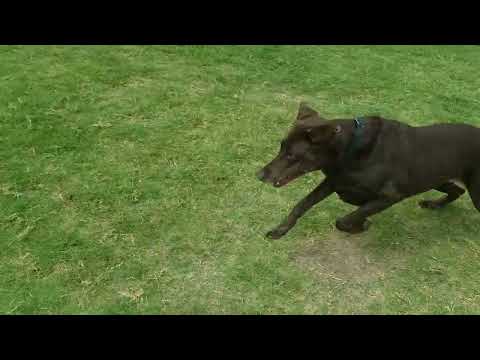
3 prey drive drills you can start today
The 5-minute flirt cycle
Cue a sit and hold the wait for 3 seconds, then release to chase. Let him catch it after 2 or 3 loops and cue the drop, then do that 4 or 5 times and end on a catch and “all done.” It’s about 5 minutes, which is a good place to start.
Scatter search cool-down
Right after the flirt pole, scatter 10 to 15 treats over a patch of grass about 10 feet across and let him hunt them up with no commands. It brings a lot of dogs back down pretty naturally.
Recall with the lure in sight
Let him see the lure on the ground so he’s good and interested. Then before you release, call “come” away from the lure, and when he comes, pay him big with a quick chase. Coming to you turns into the way he gets the thing he wants most, and for a lot of dogs that builds a really strong recall.
Don’t skip the rules. If you run a flirt pole with no sit before the chase, no drop and no clear ending, it doesn’t let the dog finish anything. It just pumps him up, and a dog that chases with no stops can come out more wired, not calmer. That’s a common reason people say a flirt pole “didn’t work.” And keep the lure low the whole time so he isn’t jumping, skip the hard twisting turns, play on grass, and stop if he gets too worked up. The safety guide has the rest.
What most owners get wrong
These are common, and a lot of times it’s not the owner’s fault. The advice they got just doesn’t get at why the dog is doing it.
| The mistake | What I’d do instead |
|---|---|
| Trying to train the drive out with obedience alone | Give the drive an outlet first, training usually goes smoother after |
| Adding more walks when he’s still wired | Put a structured chase session before the walk, cause a walk moves the body but doesn’t give him the chase |
| Buying six different toys hoping one works | Use one right tool every day |
| Running a flirt pole with no rules | Sit before the chase, a release cue, a drop after the catch and a clear end |
| Doing prey drive work after the walk, when he’s already worked up | Do it first, and a lot of dogs walk calmer after |
Breeds with high prey drive
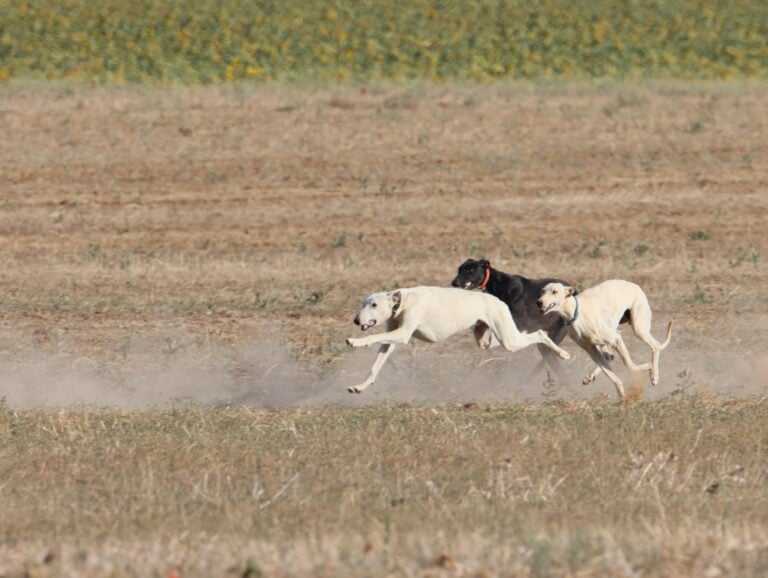
All dogs have prey drive, but some breeds have so much they need a structured outlet every day. If you’ve got one and your dog is “feral,” there’s nothing wrong with the breed, it’s doing what it was bred for with no job to do. These are general tendencies, not rules.
- Herding breeds like Border Collies, Australian Shepherds, Corgis, Shelties, Cattle Dogs and Malinois tend to have a big eye-stalk and chase with the grab turned down.
- Working and guardian breeds like German Shepherds, Rottweilers, Dobermans and Boxers have a strong chase and grab, and they can really lock in on you when it’s channeled.
- Terriers like Jack Russells, Staffies, Rat Terriers and Bull Terriers a lot of times have the whole sequence turned way up in a small body.
- Sporting breeds like Labs, Goldens, Vizslas and Weimaraners have a lot of chase and retrieve drive.
- Northern breeds like Huskies and Malamutes have a ton of drive and like doing their own thing, so they need more structure from you, not less.
See high prey drive dog breeds, group by group, and the flirt pole by breed guides.
Which interactive toys actually work for prey drive
A ball that spins by itself and a chase toy you run yourself both get sold as “interactive,” but they do really different things for a dog. This is my judgment as a trainer, not lab testing.
| Toy | Exercise | Brain work | Builds obedience | Lets the chase finish | My take |
|---|---|---|---|---|---|
| Flirt pole | High | High | High | The whole thing | Where I’d start |
| Tug toy | Medium | Medium | Medium | Part of it | Good reward, not the main outlet |
| Puzzle feeder | Low | High | Low | None | Rest days |
| Treat dispenser or lick mat | Low | Medium | Low | None | Calm time after a session |
| Auto ball launcher | High | Low | None | Part of it | Skip it for training |
| Electronic motion toy | Low | Low | None | None | Skip it |
How I’d judge any “interactive” toy
Does it need you? If it works without you, it’s not building your relationship or any training. Does it get at prey drive and not just boredom? A lot of toys help with boredom, but very few let the chase finish. Do cues like wait, drop it and recall fit into it? Will it hold up to your dog? And can you replace the parts that wear out, like lures and line?
The flirt pole
It’s the one that gives the dog the whole thing, stalk, chase, catch and win, and the sit before the chase and the drop after the catch build impulse control. Five to 10 minutes of structured play tires a lot of dogs out pretty quick. It’s not something your dog plays with alone though.
Tug
Tug is more about pulling against you than chasing. It’s good for a “drop it” while he’s excited and makes a great reward, but it doesn’t give him the stalk and chase, and I wouldn’t use it with a dog that guards his stuff.
Puzzle feeders and treat toys
Good brain work, but they don’t touch prey drive, so a dog that tears up the furniture after a puzzle got his brain worked but his drive is still hungry. They’re great for rest days and calm time after a chase session.
Ball launchers and electronic toys
A launcher takes you out of it, so the dog learns to play without you, and there’s no stalk or catch. Electronic motion toys lose their newness fast, and a lot of them don’t hold up to bigger dogs.
Prey drive training by size and drive level
High-drive or destructive dogs: start with a chase toy you control, built strong enough to take what a big dog dishes out, and add puzzle feeders on rest days. Reactive dogs: structured chase with a wait built in, and work with a qualified behavior pro too, see reactive dog training. Small dogs with drive: same session, a lighter pole and shorter chases, and terriers and small herding breeds usually love it. Moderate-energy dogs: a puzzle feeder might be enough, and a flirt pole is more for fun and bonding. Older dogs: easy puzzle feeders, snuffle mats and lick mats, and check with your vet.
Rugged XL + 3 Lures
- Dogs 30 lbs and up · one 46-inch piece of fiberglass · 800-lb Dyneema line
- In my own use it holds up to a 120-lb power breed · free US shipping
Rugged XL Pro Kit
- The XL with 5 lures and a spare line
- Free US shipping
The Standard
- Dogs under 30 lbs · 450-lb Kevlar line
- $20 flat US shipping
If your dog is right at 30 lbs, go XL. Every order has a 30-day money-back guarantee, and you pay return shipping unless the pole failed.
Want more of this in your Google results? Add Whimsy Stick as a preferred source.
Prey drive training FAQ
What is prey drive in dogs?
Prey drive is a natural instinct dogs are born with to chase, catch and mess with things that move. It’s part of the predatory motor pattern, and it isn’t the same thing as aggression. Every dog has some, and the problems start when it has nowhere to go.
Can prey drive be trained out of a dog?
No. Dogs are born with it, and trying to shut it down a lot of times just frustrates the dog, which comes out as tearing stuff up, reacting or obsessing. What you want is an outlet you can repeat every day, with a sit before the chase, a drop after the catch and a clear end.
Is prey drive the same as aggression?
No. Prey drive is the urge to chase and catch, and aggression is a dog reacting to something it sees as a threat. A dog chasing a squirrel is in prey drive, and a dog growling at another dog over a bone is in a whole different place.
Can a flirt pole increase prey drive?
Not if you use rules. With a sit before the chase, a drop after the catch and a wait between reps, a flirt pole puts the drive your dog already has into something you control. With no rules it can wind him up instead, so the waits are what turn chasing into training.
What interactive dog toy tires a dog out the fastest?
I’d say a structured flirt pole session, cause it lets the dog run the whole chase, and for a lot of dogs 5 to 10 minutes of it does more than a long walk.
How long until I see results from prey drive training?
Every dog is different, so I’m not gonna give you a date. If you keep at it every day, watch for the pacing and restlessness to ease up first, and the bigger stuff can take longer. Doing it every day matters more than how long each session is.
Should I do prey drive training before or after walks?
Before. A lot of dogs walk calmer and pay better attention on leash after a session, and doing it after the walk when they’re already worked up usually doesn’t go as well. Try it for a week and see.
Can I combine flirt pole training with puzzle toys?
Yes, and the order matters. Do the flirt pole first and then scent work or a puzzle feeder to cool down, cause the chase takes care of the drive and the puzzle is calm brain work after.
Is prey drive training safe for puppies?
Yes, if you change it up. Keep it to 2 or 3 minutes, move the lure gently with no jumping, and care more about the waits than the speed. Young puppies shouldn’t be jumping over and over cause their joints are still developing, so ask your vet what’s OK.
How many interactive toys does a dog actually need?
I’d say one main toy and one or two extras, cause more than that and they stop being special. Put the main one away when you’re not using it so it only comes out for sessions.
Where you want to end up
After the routine. Two dogs settled on the couch in the evening after a session.
Give the drive somewhere to go, every day.
You run it, the dog gets the whole chase, and your cues go right into it. Thirty days to try it.
Add the Rugged XL + 3 Lures, $94.95Smaller dog? See the Standard, from $55.95
Keep reading
- The Controlled Freedom course (10 free lessons)
- Resource guarding: food, toy and space
- Door dashing and the threshold wait
- Complete flirt pole training guide
- How to train a high prey drive dog
- Best flirt pole for high-energy dogs
- Flirt pole buying guide
- Fence running, explained
- Stop a dog chasing cars
- Best flirt pole for herding dogs
Based on my own experience training dogs. Not veterinary or behavioral medical advice. Exercise disclaimer.


