
TL;DR
Fence running is barrier frustration, and it pays itself off. Your dog wants to chase or greet something and can’t get to it, and every passerby looks like they ran off when the dog charged, so the habit gets rewarded all day and keeps getting worse. Use up the drive with real exercise, cut down what your dog can see along the fence, and give them something better to do than guard it.
The flirt pole training guide covers using up the drive, and if there’s reactivity in the mix too, see reactive dog training.
Who This Is For
- Your dog has worn a track along the fence
- Your dog’s barking at the fence is driving the neighbors crazy
- Your dog charges the fence at everybody who walks by
- Yard time has turned into nonstop patrolling
- You’re worried it’s getting worse
- You’ve got a high-drive dog that spends time alone in the yard
- You want it fixed, not just worked around
Signs of Barrier Frustration
- There’s a worn dirt track along the fence line
- They charge and bark at people, dogs or cars going by
- They patrol back and forth frantically for long stretches
- It gets more intense the longer they’re out there
- They turn on another dog when they get worked up
- They ignore you completely while they’re on patrol
- They lock onto the fence the second they go outside
What Fence Running Really Is
A dog running the fence isn’t doing a good job guarding the place, it’s frustrated. They want to chase or greet what’s going by and the fence stops them, so all that drive comes out as a frantic patrol. The fence holds the drive in and gives it nowhere to go.
It sticks cause it rewards itself. Every jogger and dog and car keeps moving and leaves, so to your dog it feels like charging worked. Per the American Kennel Club, barrier frustration is reinforced every time the trigger passes by.
It escalates the longer it runs
Every patrol winds your dog up a little more, so it gets more intense over time. A dog that’s left to run the fence for hours is really just practicing getting more frantic.
Drain the Drive First
A dog with a satisfied chase drive has a lot less to bring to the fence. The patrol is prey and play drive that got blocked, so give that drive what it wants on purpose and there’s less pressure behind it. A real chase before yard time takes the edge off.
A structured chase gives that drive somewhere it’s allowed to go, which the fence never will. When your dog gets to stalk and chase and catch, there’s less of that frantic need to charge the fence. Add some brain work too, cause a dog that’s done some thinking tends to patrol less. The ASPCA ties excess barking and patrolling to unmet needs.
Never leave a patroller alone out there
Yard time with nobody watching is where the habit gets practiced, so exercise first, then supervise, and don’t let your dog run that pattern for hours on end.
Close the Fence Line
You can cut a lot of it out by taking away what sets it off. Your dog can’t patrol what they can’t see, so block the view with solid fencing, privacy screening or a barrier set back from the fence.
Then give your dog a better job. Interrupt the patrol early with a recall, reward them for checking in with you, and send them into a chase or a settle. Once the yard is a place for play and calm instead of guard duty, there’s a lot less reason to patrol it. If there’s serious aggression at the fence, get a professional to help.
Reward the check-in
Try to catch your dog before they lock onto the fence and pay them for coming to you, cause that way they learn turning away from the fence is what actually gets them something.
Drain, manage, redirect
Legal Chase
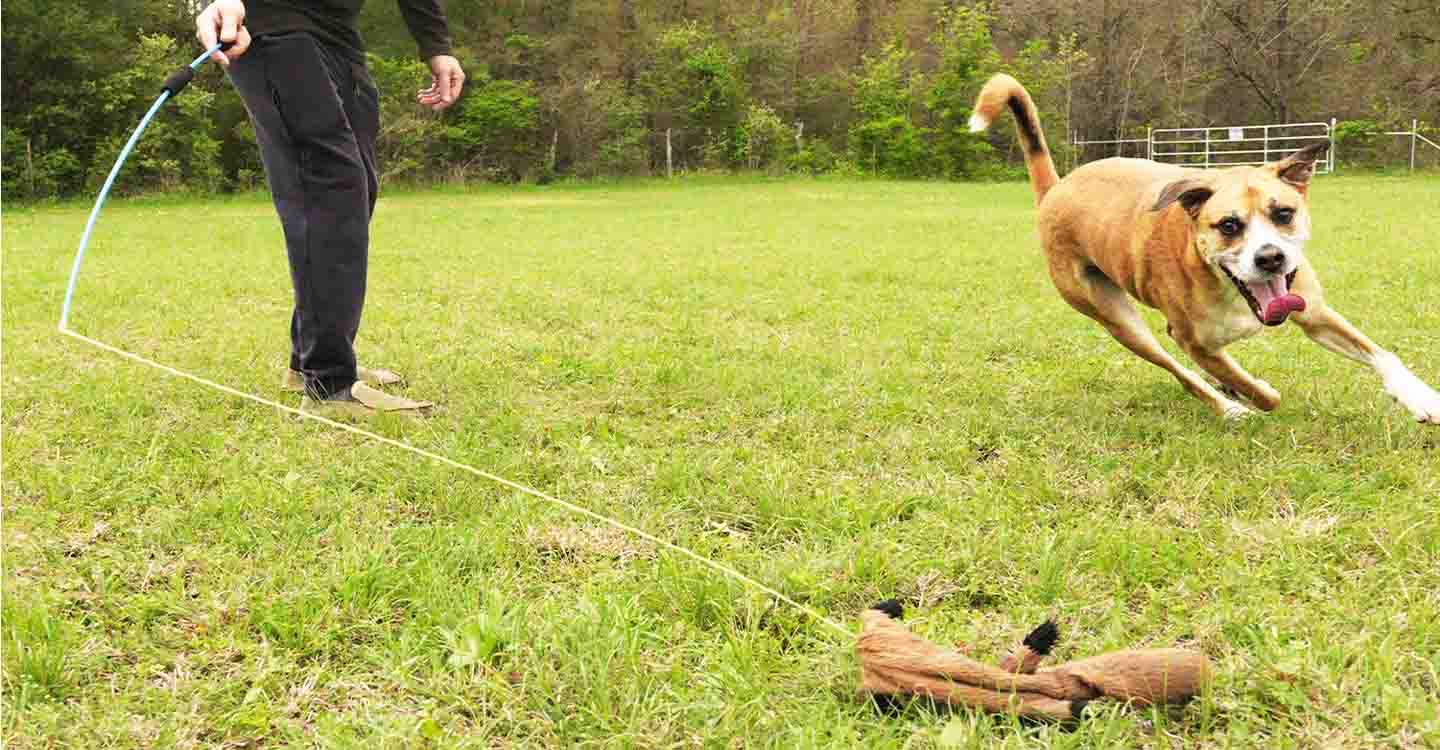
A flirt pole session before yard time so the drive has somewhere real to go.
Block the View
Solid fencing or screening so your dog can’t see what sets them off.
Reward Check-Ins
Interrupt the patrol early and pay your dog for coming to you instead.
It’s really just drive with nowhere to go, so feed the drive, block the view, reward the check-in and give it some time.
Barrier frustration can turn into real aggression or redirected biting, so if a dog on patrol turns on another dog or a person, or it just keeps getting more intense, I’d get a qualified trainer or a veterinary behaviorist involved and keep a close eye on the yard till then.
The Whimsy Stick: The Release the Fence Can’t Give
A fence runner has chase drive with nowhere to go. A flirt pole gives that same drive somewhere it’s allowed to go, so there’s less left over for the patrol.
Read These Next to Go Deeper
Dog Fence Running: FAQ
Why does my dog run the fence line?
Most of the time it’s barrier frustration. Your dog wants to chase or greet whatever’s going by and the fence is in the way, so the frantic patrol turns into a habit that pays itself off, cause every person walking by leaves right when the dog charges. The way I’d work on it is use up the drive and block the view.
How do I stop my dog from running the fence?
I’d go at it from a few directions at once. Use up the chase drive with some real exercise before yard time, block the view with solid fencing or screening, and pay your dog for checking in with you instead of patrolling, and whatever you do don’t leave a fence runner out there alone to practice it all day.
Is fence running bad for dogs?
Yeah, it is. It’s stressful and it feeds itself so it’s not healthy exercise, and your dog gets more worked up the longer it goes and it can spill over into redirected aggression. The longer it’s been going the harder the habit is to break, so I’d deal with it early.
What is barrier frustration in dogs?
It’s the frustration a dog gets when something like a fence or a window or a leash keeps them from getting to what they want, and all that blocked drive comes out as barking and lunging and patrolling. Fence running is pretty much the yard version of it.
Will more exercise stop fence running?
It’s a big part of it cause a dog with a satisfied chase drive has less to bring to the fence, and a real outlet before yard time takes the edge off. I’d still pair it with blocking the view and redirecting though, cause exercise by itself may not undo a habit your dog’s practiced a lot.
How do I stop my dog barking at the fence?
You cut down what your dog can see and use up the drive behind the barking. So block the view, interrupt the patrol early with a recall and reward calm and check-ins, cause a dog that can’t see what sets them off and has had their energy met usually has a lot less to bark about.
Why does my dog redirect on another dog at the fence?
When a dog is that worked up and has nowhere to put it, it can spill onto whatever’s closest, and a lot of times that’s another dog in the house. That’s redirected aggression and it’s a warning sign the frustration is too high, so keep the dogs apart when they’d be patrolling and get professional help to bring it down safely.
Can I fix fence running or just manage it?
Honestly you can really cut it down, not just manage it, but managing it is part of the plan. Using up the drive, blocking the view and rewarding a better choice can change the habit over time, and the bad cases or the ones with aggression need a professional.


