Whimsy Stick

Free Shipping $60+
·
30-Day Money-Back
·
Trainer-Designed
Breed Guide · Border Collies · Flirt Pole Training

Best Flirt Pole Routine for Border Collies: Make It Work

Border Collies don’t have an energy problem. They have an unmet drive problem. For high-energy Border Collies, a 10-minute structured flirt pole routine builds impulse control into the eye-stalk-chase sequence so the same drive that used to cause obsessive behaviors becomes a tool for training.

Christopher Lee Moran, professional dog trainer
Christopher Lee MoranProfessional Dog Trainer · 10 Years · Instinctual Balance
9 min read · Updated April 2026
10 to 15
Minutes per session
12 mo
Minimum age to start
2 to 3 wk
To see behavioral change
10 yrs
Working with herding breeds
TL;DR

Border Collies need to complete the full predatory motor pattern: eye, stalk, chase, capture, win. A structured 10 to 15 minute session once or twice daily produces genuine neural calm and reduces obsessive behaviors more effectively than physical exercise alone.

Key rules: Keep the lure low to protect joints. Always finish with a drop-it and all-done cue. Don’t start structured sessions before 12 months. The AKC notes Border Collies are athletically intense but musculoskeletally vulnerable when overworked. VCA Animal Hospitals confirms that repetitive impact before growth plates close causes lasting joint damage. Most owners see measurable improvement in 2 to 3 weeks.

Who This Guide Is For

Border Collie owners whose dogs are relentless, intense, unable to settle, and constantly fixated on movement. Also for owners of Australian Shepherds, Shelties, and other herding breeds with similar drive profiles. If your dog is still wired after long runs, chases shadows obsessively, herds children or other pets, or seems impossible to satisfy through conventional exercise, this is the protocol.

Signs Your Border Collie Needs This Routine

Shadow chasing or light fixation that intensifies over time. Compulsive staring at movement (cars, bikes, leaves). Herding children, guests, or other pets. Still wired and pacing after an hour of running or fetch. Obsessive ball fixation or inability to disengage from games. Barking at anything that moves. Difficulty settling in the house despite being physically exhausted. Getting progressively more intense with age rather than calmer.

The Real Problem With Border Collies

Border Collies aren’t high energy the way a kid is high energy. They’re high drive. Specifically: eye, stalk, chase. If that sequence never completes, the dog doesn’t get neurological resolution. They keep searching for something to lock onto: light reflections, shadows, cars, joggers, anything that moves. For the universal framework on managing high prey drive, that guide covers the principles that apply across all breeds.

Every Border Collie owner I’ve worked with describes the same dog: relentless, intense, unable to settle, constantly fixated on movement. The instinct is to exercise them more. However, the dog comes home, naps, and wakes up ready to go again within the hour. That’s because most exercise doesn’t touch the actual problem.

A structured flirt pole routine engages that sequence fully and keeps the handler in control of every phase. Unlike fetch or unstructured chase, it completes the predatory pattern deliberately. For the full neurological explanation, see Prey Drive Training for Dogs.

Why Obsessive Behaviors Show Up in Border Collies

Border Collies are famous for obsessive behaviors because their default coping strategy is to fixate and control movement. When they don’t have a legitimate outlet, they build their own. The drive doesn’t disappear. It just finds inappropriate targets.

💡

Light and shadow chasing

👀

Compulsive staring and stalking

🧒

Herding kids, pets, and guests

These aren’t personality quirks. They’re drive-based behaviors that emerge when the herding and prey sequences have no legitimate outlet, and they tend to intensify over time if not addressed. A consistent structured routine addresses this directly by giving the drive a handler-directed channel every single day. For dogs that are also overexcited and hard to settle, this routine stacks well with the overexcitement protocol.

If your Border Collie is obsessing, they’re not being weird. They’re trying to complete a sequence their brain is wired for and failing to find a legitimate outlet for it.

Christopher Lee Moran, Instinctual Balance Dog Training
Key Takeaway

Shadow chasing, light fixation, and compulsive herding are not personality defects. They’re the herding drive finding its own outlet. Give the drive somewhere legitimate to go and these behaviors reduce, typically within two to three weeks.

The Best Flirt Pole Routine for Border Collies

This is the exact routine I use with high-drive herding breeds. It’s short, repeatable, and it produces the calm that owners are actually trying to achieve. For the complete foundational method, see the Flirt Pole Training Guide. If your Border Collie shows reactive behaviors, the flirt pole reactivity protocol pairs well with this routine.

1
Warmup first, 2 minutes

Loose walking, a few sits, a few hand touches. Joints need to be warm before the sprint-and-cut movement that defines a good routine for these dogs.

2
Wait before every chase

Hold the lure still. Ask for a sit or down. Hold 5 to 10 seconds. Release with a verbal cue only. This impulse control component is what separates a training session from unstructured play. Border Collies lock onto the lure intensely. That intensity is exactly what makes the wait so valuable.

Cue: “Wait”
3
Chase in short bursts, 20 to 40 seconds

Fast, low, and with lots of direction changes. No jumping. Keep the lure on the ground throughout to protect joints and engage the correct motor pattern. Side-to-side sweeps and figure-eight patterns work better than circles for Border Collies because the direction changes re-engage the stalk drive at each crossover.

Cue: “Get it”
4
Let them catch often

Catching completes the predatory sequence. No catch means no resolution. Give them wins every 3 to 4 rounds. This is the most commonly skipped step, and skipping it is the primary reason routines fail to produce calm in Border Collies.

5
Drop-it, then restart

Cue out, reward the release, then restart from the wait. That repetition builds the real-world impulse control that transfers to daily behavior. For the full drop-it progression, see Impulse Control Drills.

Cue: “Out”
6
End deliberately every time

All-done cue, lure disappears, then a calm settle with a chew or snuffle mat. This final step is what converts physical fatigue into genuine behavioral calm. Don’t skip it. A session without a clean ending leaves the drive unresolved.

Cue: “All done” → “Place”
From the Training Files

3-year-old Border Collie, obsessive shadow chasing, herding the family cat

The owner was running this dog 5 miles a day plus 30 minutes of fetch. The shadow chasing was getting worse, not better. The cat had started hiding under the bed full-time. Two behaviorists had recommended medication.

We replaced the fetch with two structured 10-minute flirt pole sessions daily (morning and evening) using this exact routine, with emphasis on the slow-creep stalk phase and deliberate catches every 3 reps. Runs were reduced to three per week.

By week 2, shadow fixation had reduced by roughly 75% (owner’s estimate). By week 3, the dog was settling on its bed after sessions without being asked. The cat came out from under the bed for the first time in months. By week 4, the compulsive herding of the cat had stopped almost entirely. Less total exercise, dramatically calmer dog. The variable was the type of drive outlet, not the amount of physical exercise.

How Long and How Often to Run This Routine

Border Collies will not self-regulate. They will run until injury or collapse if you let them. Your job as the handler is to stop while the dog still wants more, not after they’ve already overextended.

Adult session length
10 to 15
Minutes total per session
Daily frequency
1 to 2
Sessions per day
Time to results
2 to 3
Weeks to measurable change

Split sessions work well for dogs new to structured drive work: 5 minutes on, a short break, then 5 minutes on. This is particularly useful for Border Collies who struggle to settle mid-session or who tend to spin out mid-chase. For dogs that are specifically hyper after walks, running the flirt pole session before the walk rather than after produces better results.

The Full Combination That Produces Fastest Results

If you want the fastest behavioral change, stack these three phases in order after every session. This combination addresses drive, cognitive engagement, and parasympathetic recovery, all three of which a Border Collie needs to genuinely settle.

Drive + Brain + Calm
Drive

Structured flirt pole routine: short, intense, lots of catch and release. This resolves the predatory motor pattern.

Brain

Two minutes of obedience immediately after: sits, downs, place, heel. The transition enforces handler focus. See How to Bond With Your Dog for more on building handler engagement.

Calm

Cooldown and settle: chew, snuffle mat, or a quiet decompression walk. This closes the loop. For more on why cognitive enrichment works best after drive resolution, see Dog Enrichment and Mental Stimulation.

Safety Rules

Do
  • Keep the lure low to the ground throughout
  • Use grass or dirt surfaces when possible
  • Warm up before and cool down after every session
  • Let them catch and possess the lure often
  • End every session with a deliberate all-done cue
  • Wait until 12 to 14 months for structured sessions
Don’t
  • Encourage jumping or aerial lure catches
  • Run sessions on slick floors or hard concrete
  • Allow marathon sessions beyond 15 minutes
  • Start structured sessions before growth plates close
  • Let the dog control when the session ends
  • Use elastic cord poles that snap back unpredictably

Border Collies are built to work. Your goal isn’t to make them tired. It’s to give the drive a place to go, and then close the loop so the brain can actually shut off. That’s what a proper routine does that a long run never will.

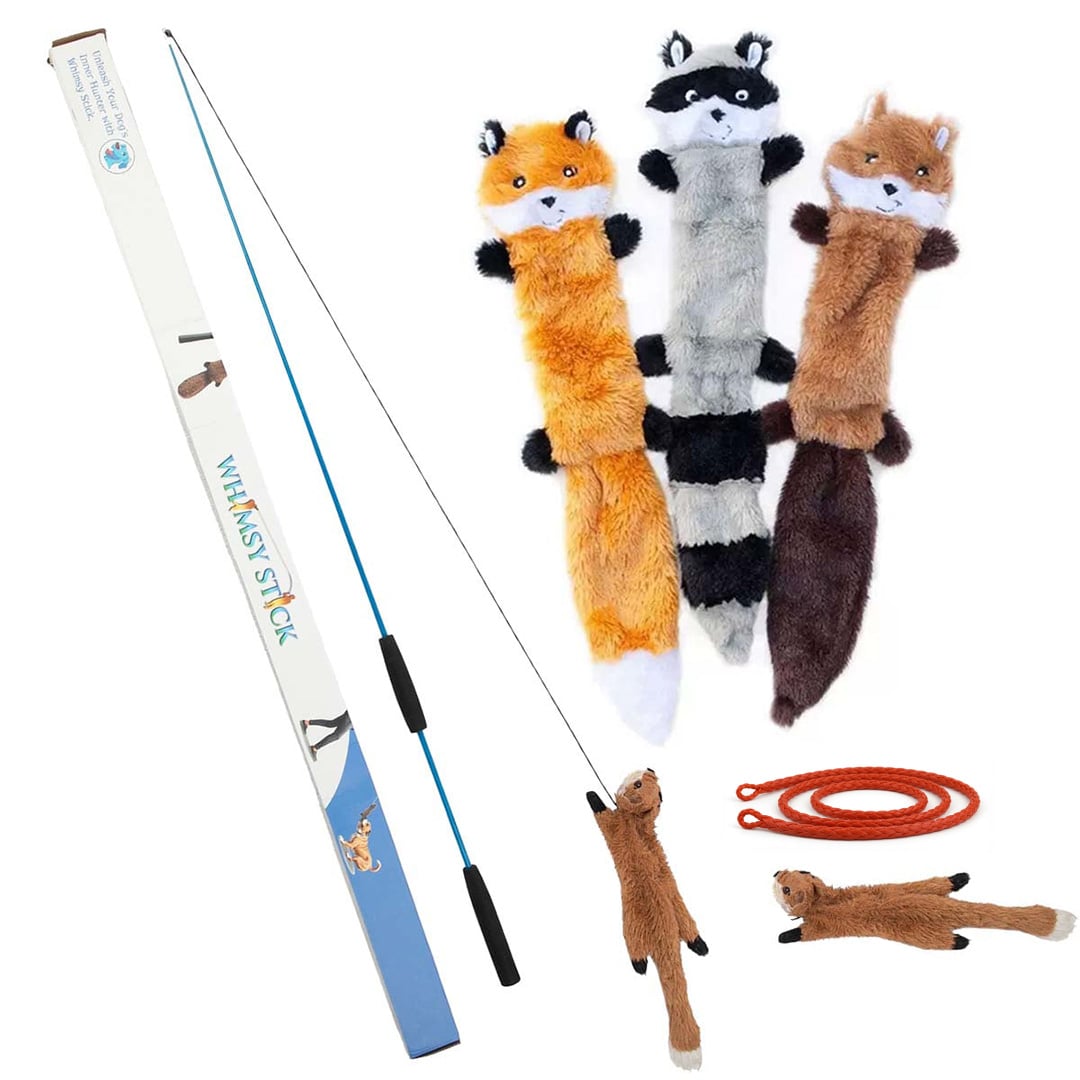
Which Whimsy Stick Is Right for Your Border Collie

Most Border Collies fall under 30 lbs, making the Standard the right tool. It’s light enough for precise indoor technique and the Kevlar static line produces smooth, predictable lure movement with no elastic snap-back. For larger or particularly intense working-line Border Collies (or dogs that have already destroyed other equipment), the Rugged XL provides reinforced construction that holds up under daily high-intensity use. For a deeper look at what separates equipment that lasts from equipment that doesn’t, see Best Flirt Pole for High Energy Dogs. For the full equipment comparison, see the Buying Guide and the DIY vs. Professional Flirt Pole Design breakdown.

Whimsy Stick Standard, Border Collies under 30 lbs

Kevlar static line, quick-swap lures, controlled low movement. Built for the structured sessions Border Collies need daily. $54.95, free shipping, 30-day guarantee.

Shop Standard →
Whimsy Stick Rugged XL, larger or intense working-line Border Collies

Reinforced construction for dogs that have already destroyed other poles. 8-ft radius, multiple lures. Starting at $74.95, free shipping, 30-day guarantee.

Shop Rugged XL →
Commonly Asked Questions

Flirt Pole Routine for Border Collies: FAQ

Is a flirt pole good for Border Collies?
Yes. A structured routine directly engages the eye-stalk-chase sequence herding dogs are wired for, produces neural fatigue, builds impulse control, and channels the exact behavioral tendencies that manifest as obsessive behaviors when they have no legitimate outlet. It’s as close to a breed-specific solution as structured play gets.
10 to 15 minutes once or twice daily for adult Border Collies. End while the dog still wants more. Border Collies will not self-regulate and will run until they collapse if allowed. The handler controls session length every time without exception.
Yes, in most cases significantly. A consistent routine gives the herding and prey drive a complete, handler-directed outlet. Shadow chasing, light fixation, and compulsive herding reduce because the drive that fuels them is being resolved daily. Most owners see measurable change within two to three weeks of consistent sessions.
Structured sessions should wait until at least 12 months, ideally 14 to 18 months when growth plates have fully closed. Before that age, the explosive lateral movement carries real injury risk to developing joints. Puppies from 6 months can do gentle lure work: slow drag on the ground, no jumping, 2 to 3 minutes maximum. This builds foundational engagement and the drop-it cue without joint stress.
Because physical exercise and neurological regulation are not the same thing. A structured routine completes the full eye-stalk-chase-catch-possess sequence, which produces neural fatigue that running alone doesn’t touch. A Border Collie who runs five miles a day but whose herding drive never gets a proper outlet will still show drive-related behavioral problems. The sequence has to complete, including the drop-it and all-done cue, for genuine calm to follow.
Lightweight, fast-moving lures that mimic small prey movement tend to work best. Feather, fleece, and fur lures all work well depending on the individual dog. The key is matching the lure to what actually triggers engagement for your specific dog. The Whimsy Stick quick-swap lure system lets you test different options without buying a new pole each time.
Fetch removes the stalk phase and compresses possession into an immediate retrieve, so the predatory sequence never fully completes. Fetch also creates a handler-independent arousal loop where the dog self-reinforces by demanding more throws. A structured routine keeps the handler in control of every phase, which is what makes it a training tool rather than just exercise.
The Standard for most Border Collies under 30 lbs. The Rugged XL for larger or particularly intense working-line Border Collies, or dogs that have already destroyed other equipment. Both use Kevlar static line with no elastic snap-back.
Run sessions in areas with minimal shadow contrast. If the dog breaks focus to fixate on a shadow, stop the lure completely and wait. Do not compete with the shadow. When the dog re-engages with the lure, restart. Over time, the structured lure becomes a higher-value target than environmental shadows because it actually completes the sequence. Consistency is the fix, not redirection in the moment.
Christopher Lee Moran, professional dog trainer
Christopher Lee Moran
Professional Dog Trainer · Founder, Instinctual Balance Dog Training

Christopher is the creator of the Controlled Freedom training philosophy and the Whimsy Stick flirt pole. He has spent 10 years specializing in drive-based behavioral modification with herding breeds, Border Collies, and high-drive working dogs across approximately 400 client dogs.

This article is for educational purposes only and is not veterinary advice. For severe obsessive behaviors or aggression, consult a professional behaviorist.

Ready to put this routine to work?

Make the drive work for you.

The Whimsy Stick is built for structured training sessions. Quick-swap lures, Kevlar line, real construction. Standard for most Border Collies. Rugged XL for intense working lines. Both ship free with a 30-day money-back guarantee.

0
    0
    Your Cart
    Your cart is emptyReturn to Shop