
Best Flirt Pole for Herding Dogs
The best flirt pole for a herding dog is one sized to its weight, with a lure that stays low and a line built for hard, fast turns. Dogs 30 lbs and up, like most Border Collies, Aussies, Cattle Dogs and Kelpies, get the Rugged XL. Dogs under 30 lbs, like most Corgis and Shelties, get the Standard.
By Christopher Lee Moran, working dog trainer, around 400 client dogs · Updated October 2026
My pick for most herding dogs
Full disclosure: I make these poles, so I’m not neutral. Whatever you buy, look for the same three things: a one-piece pole with no joints to work loose, a static line that doesn’t stretch and snap back, and a lure you can keep low.
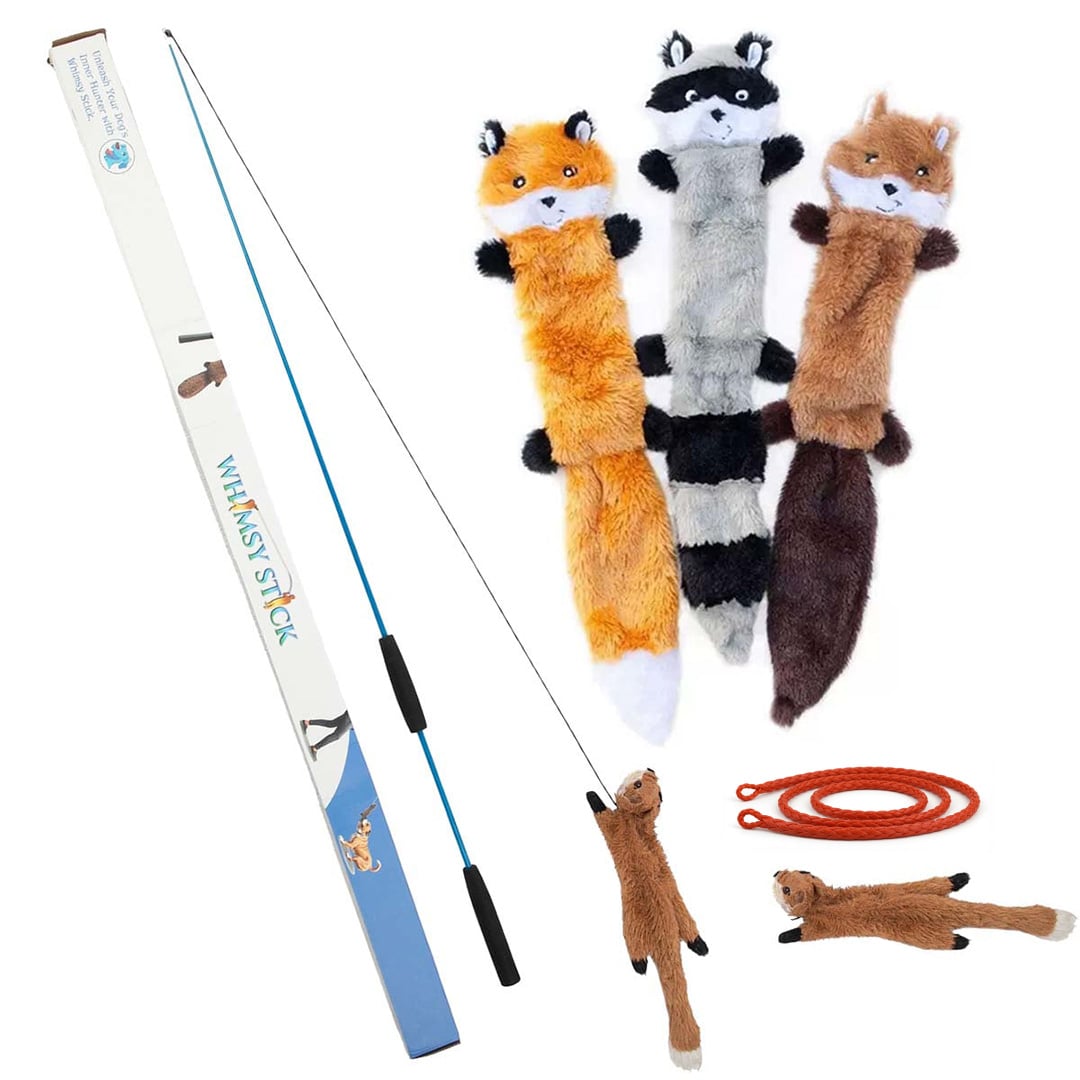
Rugged XL Pro Kit
- One-piece fiberglass pole, about 4 ft, with an 800-lb Dyneema line (that’s the line rating, not a promise about the whole pole)
- 5 lures and a spare line, because herding dogs grip hard and lures wear out
- For dogs 30 lbs and up · free US shipping
30-day money-back guarantee · usually ships within 2 days
Rugged XL + 3 Lures
- Same pole and line, 3 lures, no spare line
- Dogs 30 lbs and up · free shipping
Which size is your herding dog?
Weight decides the size. Still, how your dog grips matters too, so a hard gripper gets the Rugged XL at any weight. The session lengths below are my starting points, not rules, so adjust them to your dog and to your vet’s advice.
How to run a herding-dog session
Herding dogs go from zero to full speed in a second, so structure is what keeps this safe and useful. Here is the session I use.
- Warm up for 2 minutes. Loose walking, a few sits and hand touches. Cold muscles and explosive starts are how injuries happen.
- Wait before every chase. Hold the lure still, ask for a sit or down, then release with a word. That pause is where impulse control gets built.
- Chase in short, low bursts. 20 to 40 seconds of fast movement with the lure on the ground and moving away from the dog, never at them.
- Let them catch it every 3 or 4 reps. The catch is the part herding dogs rarely get. Skipping it is one of the most common mistakes.
- Trade for a drop-it, then restart. Swap the lure for a treat, then release again. Each round practices letting go on cue.
- End on purpose. Say your all-done word, put the pole away, and give them something calm to do, like a chew or a snuffle mat.
A real session: a Corgi chasing with the lure kept flat on the grass, exactly how it should look for a long-backed dog.
Watch more sessions on YouTubeBoom, a client’s dog, holding the catch after a chase.
Breed by breed: what changes
Every herding dog runs the same basic sequence, but each breed leans on a different part of it. Here’s how I adjust the session.
Border Collies
Border Collies don’t just chase. They lock on. The eye that makes them so good with sheep can turn into staring at shadows, lights or the vacuum when it has nowhere to go. A common mistake is never letting them catch the lure. If the chase never finishes, the drive builds instead of settling. So let them win every 3 to 4 reps, ask for a drop-it after every catch, and stop while they still want more. For a full week of sessions, see the Border Collie routine.
Australian Shepherds
Where a Border Collie stalks, an Aussie sprints and cuts. They were bred to turn stock, so quick direction changes are what they love. Getting an Aussie started is easy. Getting one to stop is the real work. Change direction every few seconds, keep it to 10 to 12 minutes, then hand over a chew or a snuffle mat so the off-switch gets practice too. Still restless after long walks? That usually points to unused drive, not a lack of miles.
Australian Cattle Dogs
Heelers bring grip to the catch. They bite hard and they don’t love letting go, so teach the drop-it with a food trade before you ever run a fast session. They’re also tough dogs that hide fatigue well. Slower turns, a lazier chase or heavy panting mean it’s time to end, even if your dog says otherwise.
Shetland Sheepdogs
Shelties often bark through the whole chase. That’s normal drive, not a problem. If alarm barking is an issue at home, though, pay the quiet catches with a better reward. Most Shelties are under 30 lbs, so the Standard fits.
Kelpies
Kelpies have Border Collie stamina with a little less of the staring. Their sessions can run a bit longer, 10 to 15 minutes, but you decide when it’s over, not the dog. The husky routine uses the same rule for another breed that never wants to quit.
German Shepherds and Malinois
These two sit between herding and working dogs: herding-style eye and stalk with a much harder bite. With them, structure isn’t optional. See the German Shepherd and Malinois guide.
Why herding dogs need more than walks
Herding is the hunting sequence with the ending removed: the dog eyes the target, stalks, and chases, but it was bred not to finish with a grab. At home, though, that drive has nowhere to go, which is why so many herding dogs nip heels, circle people, or fixate on cars and shadows.
That pull is built in. The AKC says all herding breeds “share an instinctual ability to control the movement of other animals,” and notes they’ve been known to herd their owners, especially the kids. Researchers have even catalogued the steps: a 2024 paper in Applied Animal Behaviour Science set out an ethogram, a formal list of behaviors, for the predatory sequence in dogs. It maps the behavior. It doesn’t test training methods.
A walk works the legs. A flirt pole, by contrast, lets the dog run the whole sequence on your terms and actually finish it with a catch, then stop when you say so. Most herding dogs do best with both.
Ten minutes of structured chase is not a replacement for training or a vet visit. Instead, think of it as giving the drive a job with a clear start and finish.
Safety rules for herding breeds
Corgis and other long-backed dogs
Corgis are chondrodystrophic: short legs on a long body, which raises the risk of intervertebral disc disease (IVDD). They were bred to nip heels and duck kicks, so the drive is real. It just has to stay low.
Do
- Keep the lure flat on the ground
- Use slow, sweeping S-curves
- Play on grass, carpet or soft dirt
- Let them catch it often
Don’t
- Let them jump for the lure
- Flick or bounce it up in the air
- Play on hard or slick floors
- Allow twisting turns in mid-air
Keep Corgi sessions to 8 to 10 minutes, and if your dog has ever had back trouble, get your vet’s OK first. For background, see Cornell’s canine health topics.
Puppies
Wait until your puppy is at least 6 months old, and ask your vet about growth plates. From 6 to 12 months, keep sessions to 3 to 5 minutes, keep the lure low, and skip hard sprints and sharp turns.
Stop the session if you see: snapping at the air instead of the lure, frantic barking that won’t break, trembling, or no response to cues they know. Ask for a sit, wait for them to settle, and try a shorter, slower session next time.
Flirt pole vs. other enrichment for herding dogs
Most herding dogs need more than one kind of outlet. Each tool covers a different part of the job, though, and only one runs the whole sequence.
| Tool | What it covers | What it misses |
|---|---|---|
| Flirt pole | The whole sequence: eye, stalk, chase, catch, release on cue | Sniffing and new places, so keep the walks |
| Walk | Movement, smells, a change of scene | Chase and catch, impulse control |
| Fetch | Chase and retrieve | The stalk and a real catch; repeated throws can wind herders up |
| Puzzle toys | Thinking and foraging | Any physical chase |
| Tug | Grip, pull, time with you | Eye, stalk and chase |
That’s why I use a flirt pole as the main drive outlet, a walk for the nose and legs, and a puzzle or chew afterward to help them settle.
Herding stick or flirt pole?
They’re different tools. In livestock work, a herding stick is the handler’s stick, used to guide and block sheep or cattle. A flirt pole, on the other hand, is a pole with a line and a lure that your dog chases and catches. So if you’re looking for a way to work your herding dog’s drive at home, you want a flirt pole.
Watch a Cattle Dog session

Quick answers
Which flirt pole size does my herding dog need?
Size by weight. Dogs under 30 lbs, like most Corgis and Shelties, use the Standard. Dogs 30 lbs and up, like most Border Collies, Australian Shepherds, Cattle Dogs and Kelpies, use the Rugged XL. Any dog that grips and shakes hard should use the Rugged XL at any weight.
Will a flirt pole make my herding dog more hyper?
Unstructured chasing can wind a herding dog up. A structured session is different: the dog waits, chases in short bursts, catches, releases, and the session ends on your cue with a calm settle. If your dog gets more frantic as a session goes on, shorten it and slow the lure down.
How long and how often should a herding dog play?
Most herding dogs do well with one session of 8 to 15 minutes a day, depending on the breed. Corgis and Shelties sit at the short end. Some high-drive dogs do better with two shorter sessions. Consistency matters more than length.
Can herding puppies use a flirt pole?
Wait until your puppy is at least 6 months old and ask your vet about growth plates first. From 6 to 12 months, keep sessions to 3 to 5 minutes, keep the lure on the ground, let the puppy win often, and skip hard sprints and sharp turns.
Is a flirt pole safe for Corgis?
Yes, with changes. Corgis are prone to disc disease, so the lure stays flat on the ground, sessions stay at 8 to 10 minutes on soft ground, and there’s no jumping or twisting. If your Corgi has had back trouble, check with your vet first.
Why does my herding dog nip heels and circle people?
Most often it’s herding instinct with no other outlet. The AKC notes herding breeds are known to herd their owners, especially children. Give the drive a structured outlet every day, manage the dog around kids, and teach a sit when people move. If the nipping is hard or aimed at children, bring in a qualified trainer.
Can a flirt pole replace walks for a herding dog?
No, they do different jobs. A walk gives the nose and legs new ground. A flirt pole works the chase and the catch and practices stopping on cue. Most herding dogs do best with both.
How do I know my herding dog is too worked up?
Watch for snapping at the air instead of the lure, barking that won’t break, trembling, refusing to let go, or ignoring cues it knows. End the session, ask for a sit, and wait for calm. Next time, go shorter and slower.
What if my herding dog won’t chase the lure?
Some dogs need a slow start. Try a few short sessions of slow drags on the ground before any real chase, and let the dog win early. The 5-session introduction walks through it. If a dog stays worried, that’s worth looking at before any chase work.
Is a herding stick the same thing as a flirt pole?
No. In livestock work, a herding stick is the handler’s stick used to guide and block stock. A flirt pole is a pole with a line and a lure that a dog chases and catches. If you want a chase outlet for a herding dog at home, you want a flirt pole.
Give the drive a job.
Try it for 30 days. If it isn’t a fit for your dog, email me for a full refund, including your original shipping; you only cover the postage back. I’m a one-man company, and I’ll work with you.
Get the Pro Kit, $129.95Smaller dog? See the Standard, $55.95
Based on my own experience training dogs. Not veterinary advice. Exercise disclaimer.


