

Automatic toys are an extra, they aren’t a plan. Launchers and lure machines can make a dog run and treat gadgets can make a dog think. What none of them do is teach impulse control or end the session on your terms, and that’s the part that actually settles a high-drive dog down.
If you’ve only got ten minutes, I’d spend them on a chase with some structure to it and you on the other end of the line. Use the machines on the side, with you watching, if your dog likes them.
Who This Is For
- Owners shopping for a toy that exercises the dog for them
- Anyone comparing a ball launcher, a motorized lure, and a flirt pole
- Large-dog owners tired of electronic toys that die in a day
- People with long work days and a dog that never seems done
- Parents of fetch-obsessed dogs wondering if a launcher helps or hurts
What Counts as an Automatic Dog Toy
An automatic dog toy is any toy that moves, throws or gives out treats without a person running it. Almost everything sold falls into four kinds, automatic ball launchers, motorized lure and chase-line machines, electronic toys that move on their own, and treat-dispensing gadgets. Then you’ve got remote-control toys and most of the moving interactive toys, and those are kind of in between, cause somebody’s steering but a motor’s doing the work.
And each kind fixes a different problem, so when people lump them all together that’s usually where they end up buying the wrong thing. A launcher is fetch on repeat and a lure machine is a sprint. A rolling electronic ball is something new for a little while, and a treat gadget is a puzzle.
Four Machine Types, Graded Honestly
Launchers and lure machines get the most running out of a dog, and the toys that move on their own and the treat gadgets are mostly mental work or light activity. None of the four needs a person to run it, and that’s the selling point and the weakness at the same time. This is what each one does good, where it falls apart, and which dog it suits.
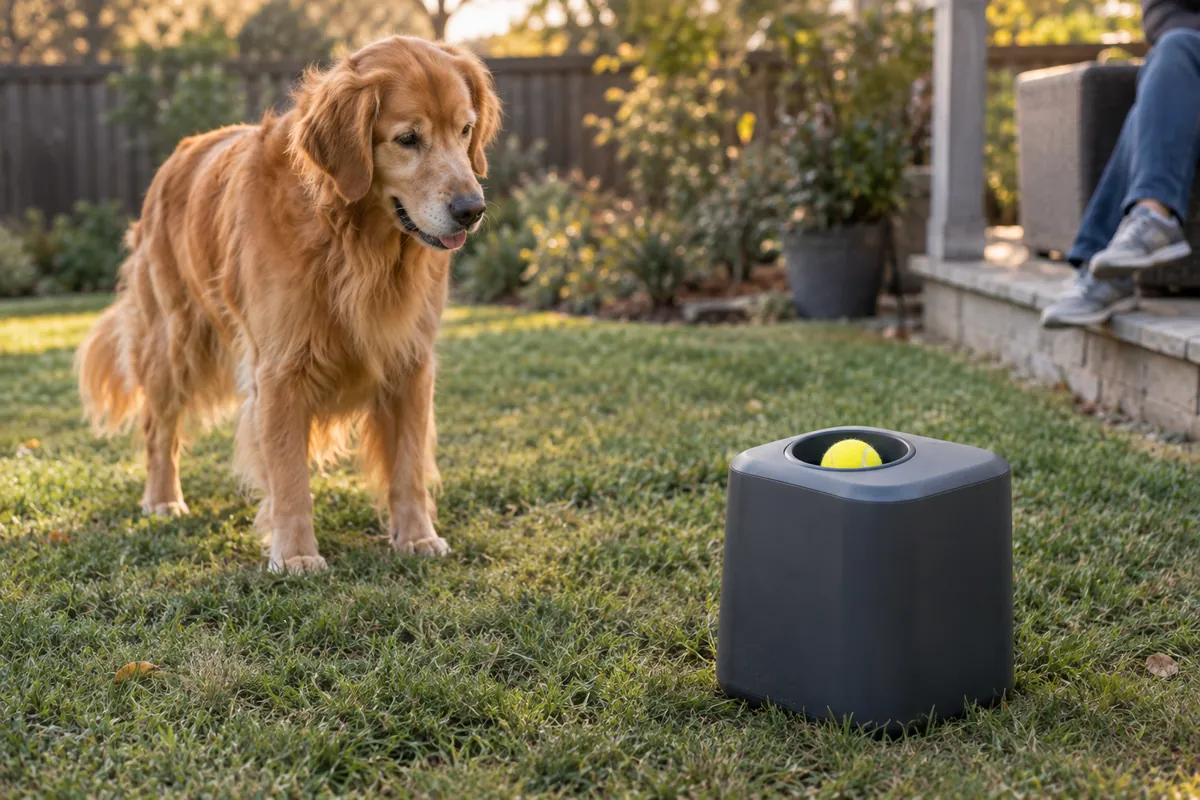
Automatic ball launchers
A dog that drops the ball in the hopper gets throw after throw, so a retriever can run hard while you work. The American Kennel Club lists an automatic ball launcher along with tug and puzzle toys as options for high-energy dogs.
My issue with it is it throws the same arc over and over and keeps going after the dog is done, and that feeds the ball-obsessed loop instead of calming it down.
Motorized lure and chase-line toys
A motor drags a lure along a line, a lot of times around pulleys, so the dog gets a real flat-out chase. If you’re searching for a rabbit chase toy, this is usually what you’re after, and sighthounds and terriers that are crazy about chasing usually love it.
But it needs a big, clear, fenced space and somebody watching that moving line. And the machine decides when the lure moves, so the dog never practices waiting or letting go.
Self-moving electronic toys
Rolling balls and wiggling plush toys can catch the eye of a curious dog or one without a lot of drive, and they can fill a slow afternoon. They’re small and easy to put away too.
For a large or driven dog though, they’re bite-sized. And a strong chewer can crack the housing open pretty quick, and now you’ve got batteries and plastic right there in the dog’s mouth.
Treat-dispensing gadgets
Stuff like timed feeders and wobblers and puzzle dispensers make a dog sniff around and figure out how to get to its food. That’s real work for their brain, and I like it for rest days or right before you head out. The enrichment toy guide goes deep on these.
It’s not physical exercise though, and the electronic ones add motors and cords to chew on. And a food puzzle doesn’t do a thing for the chase drive.
Do They Actually Tire a Dog Out?
Launchers and lure machines can wear out a fit dog’s body, but tired and settled aren’t the same thing. A dog that sprinted after 60 throws is winded, but it never practiced stopping or waiting or shutting off. So a dog can lay there panting on the floor for a while and then come right back asking for more.
Tired is not the same as settled
Chase drive goes in order, search, stalk, chase, grab, and then the end of the hunt that satisfies them. The predatory motor pattern explains why dogs only feel finished when they get through the whole thing. A launcher runs the chase over and over and the dog never gets to finish, and all that repeating can leave a high-drive dog more wound up, not less.
The off switch a machine cannot teach
What makes a high-energy dog easy to live with is the off switch, so waiting when it’s fired up, dropping on cue and settling down after play. You build that with rules, and rules need a person. The impulse control drills and the guide to teaching a dog to settle show you how it works. You can switch a machine off, but it can’t teach your dog to switch itself off.
Where Automatic Toys Fall Short
The weak spots are strain from nonstop launching, batteries and parts a dog can chew, and nobody there to set rules or see the dog getting tired. None of that means you can’t ever use one. It just means use them for short sessions while you’re watching, and don’t expect them to do a trainer’s job.
Repetitive strain from nonstop launching
An article from Cornell’s Riney Canine Health Center warns that leaping and twisting during ball play cause sudden injuries and also long-term damage that builds up from doing the same thing over and over. Their page on iliopsoas injury names repetitive wear, like daily games of fetch, as a common cause. A launcher is daily fetch with nobody deciding when to quit, so keep the arc low and the session short.
Supervision, batteries, and breakage
Every machine has parts a dog can chew, like the housing, cords, balls and batteries. PetMD warns that a chewed alkaline battery exposes a dog to corrosive stuff that can damage the mouth, throat and gut, and that you should call a vet right away and not try to treat it at home. That’s reason enough to never leave a strong chewer with a gadget unless you’re watching.
No handler, no rules
A machine can’t see a dog starting to limp or pant too hard or go frantic. It can’t stop for a wait or ask for a drop either. You can, and those little pauses are where the training happens.
Stay in the room. Only run a launcher or lure machine while you’re watching, on grass or something else that isn’t slick, with the arc low so the dog isn’t leaping and twisting.
Stop early. Cornell’s canine health center says to stop before the dog gets too tired, and that a tongue curling at the edges or getting wide at the tip means the dog is worn out. If a battery gets chewed, call your vet.
Automatic Toys vs a Handler-Run Flirt Pole
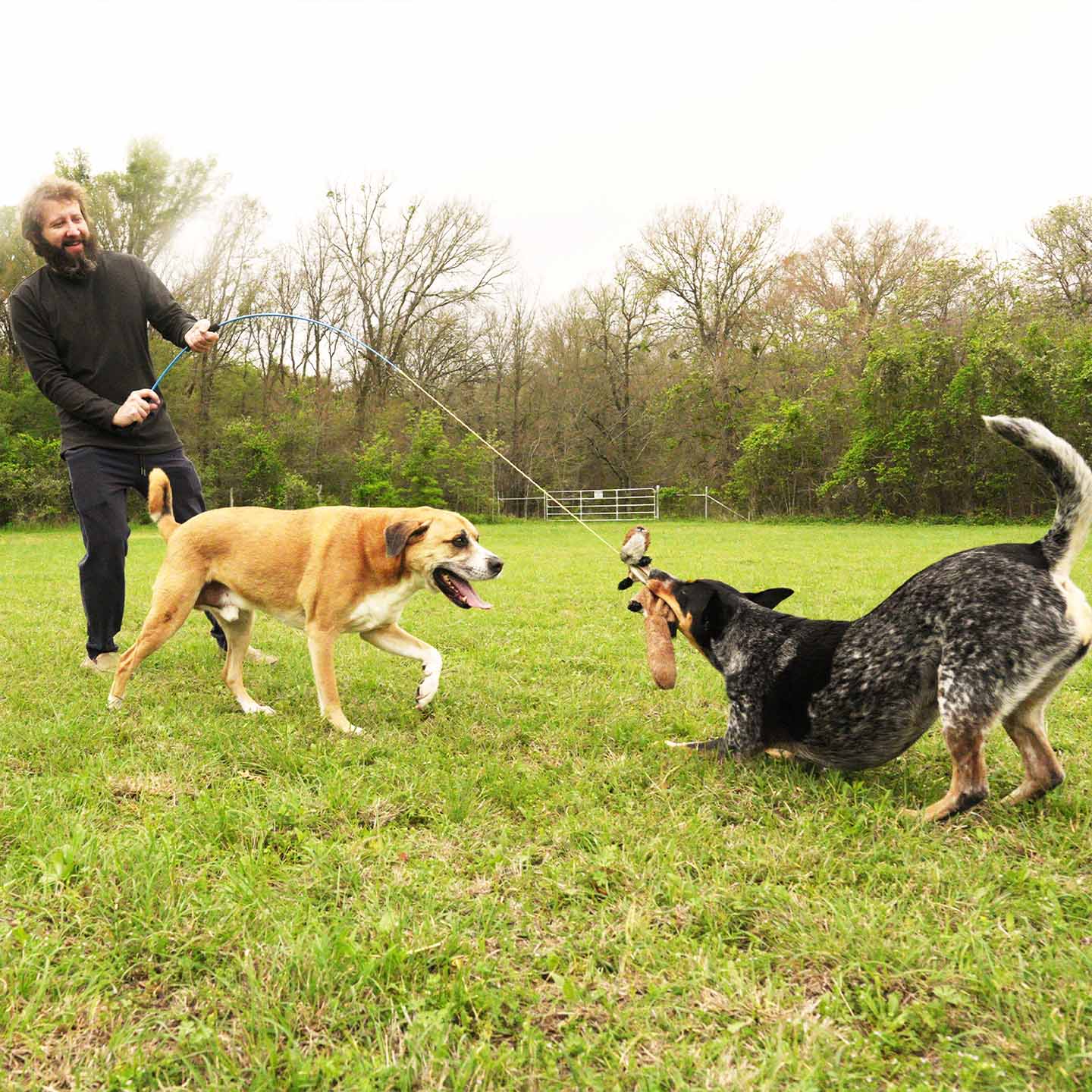
A flirt pole you run yourself gets a dog running hard too, and it adds the rules and the pacing and a real finish that no machine gives you. The tradeoff is the pole needs you for about ten minutes a day and a machine runs without you. The table shows where each one wins, and that includes the rows where a machine comes out ahead.
| Factor | Ball launcher | Motorized lure | Self-moving toy | Treat gadget | Flirt pole (you run it) |
|---|---|---|---|---|---|
| Physical output | High | High | Low to moderate | Minimal | High, paced by you |
| Completes the hunt (catch and win) | Partly | Partly | Rarely | No | Yes, every rep |
| Builds wait, drop, off switch | No | No | No | No | Yes |
| Reads fatigue and stops | No | No | No | No | Yes, you do |
| Batteries or motor to chew | Yes | Yes | Yes | Often | No |
| Needs your time | No | Setup and watching | No | No | About 10 min a day |
| Best use | Supervised extra cardio | Big fenced yards | Gentle, curious dogs | Rest days | Daily core session |
On a phone you can scroll the table sideways. These ratings are my judgment as a trainer, not lab measurements.
The pole isn’t magic, and you can’t just swing it around any old way either. Using a flirt pole is an art on its own. Wide low arcs and short sets matter, and that’s why the guide on flirt pole safety is worth reading before your first session. To see how running the chase yourself compares to other chase toys, look at the chase toy breakdown.
Who Automatic Toys Actually Suit
Automatic toys suit fit dogs with a calm head on them and owners who stay in the room, and they work best as an extra next to a daily session you run yourself. They’re a bad fit for strong chewers, ball-obsessed dogs and dogs that have a hard time settling, cause those dogs need rules more than they need reps.
Good fits
- A healthy retriever that already drops the ball and stops when asked
- Sighthounds with a large fenced field and an owner watching the lure line
- A small, gentle dog that enjoys a rolling toy for a few minutes
- Any dog that needs a treat puzzle before you leave for work
Poor fits
- Power chewers, since housings, balls, and batteries end up in the mouth
- Fetch-fixated dogs that cannot quit, because repetition feeds the fixation
- Reactive or frantic dogs that need practice switching off
- Large dogs matched with small gadgets sized for small dogs
If you picked a machine because you are short on time
That’s a fair reason. But I’d still take ten minutes with some structure over an hour of a machine throwing with no rules. The plans for tiring out a dog when you work full time and for exercising a dog when you physically can’t are built for exactly that kind of week.
A machine can make your dog run. Only you can teach your dog to stop. Use gadgets on the side and build the daily session around a chase you control.
The Handler-Run Option: Whimsy Stick
If you want one tool that gets your dog running hard and also gives you the wait, the catch and a clean finish, it’s a flirt pole you run yourself. I built the Whimsy Stick for exactly that kind of session, and there’s no motor and no batteries in it.
Whimsy Stick Rugged XL
The big dog version of a chase you control. The dog sprints and cuts and catches and gets a real finish, and you decide when the game starts and ends.
- One-piece reinforced fiberglass pole, no telescoping joints
- 800-lb Dyneema static line, no bungee snap-back
- Free US shipping and a 30-day money-back guarantee
Related Guides
Want more of this in your Google results? Add Whimsy Stick as a preferred source.
Automatic Dog Toys: FAQ
Do automatic dog toys tire a dog out?
Some do, physically. An automatic ball launcher or a motorized lure can run a fit dog hard. The electronic toys that move on their own and the treat gadgets are mostly light activity or mental work. None of them teach the dog to stop on cue, so a dog can end up tired but still wound up.
Are automatic ball launchers safe for dogs?
They can be, with limits. Cornell’s Riney Canine Health Center warns that leaping and twisting cause injuries, including long-term damage that builds up from doing the same thing over and over, and links daily fetch to iliopsoas wear. Keep the launches low and the sessions short, stop before the dog gets too tired, and stay in the room.
What is the best electronic dog toy for a large dog?
For a big dog, most of the small toys that move on their own are bite-sized, so they get crushed or swallowed. A launcher sized for large balls is the only machine I’d look at, and only with you watching. For real exercise, I don’t think a gadget beats a chase you run yourself on a pole that can take it.
Do motorized lure or rabbit chase toys work at home?
They get a dog really sprinting, and that’s why sighthound owners like them. They need a big, clear, fenced area and somebody watching the moving line. But the machine decides when the lure moves, so the dog doesn’t learn anything about waiting or letting go or stopping.
Can I leave my dog alone with an automatic toy?
I wouldn’t, cause batteries, motors and hard plastic housings can all get chewed, and PetMD warns that a chewed battery can burn a dog’s mouth, throat and gut. Launchers also keep throwing after a dog is done. Any machine is something you watch them play with, not a babysitter.
Are remote control dog toys a good idea?
A remote car puts you back in the game, and that beats a toy running on its own. The problem is size and how long they last, cause most are small and fragile and full of batteries. If your dog catches everything it chases, I wouldn’t expect a remote toy to last long.
Do treat-dispensing toys count as exercise?
Not as physical exercise. Treat gadgets are mental work, so sniffing and pawing and figuring things out. That’s useful on rest days or before you leave for work. They go good with a short chase session, but for a high-energy dog they don’t replace one.
Is a flirt pole better than an automatic ball launcher?
For most high-drive dogs, yes. A flirt pole needs you and that’s the whole point, cause you set the wait, the release, the catch and the drop, and you end the game. A launcher just repeats the throw. The pole costs you about ten minutes a day, and the launcher costs you the training.
How long should a dog play with a ball launcher?
Not long. Cornell’s Riney Canine Health Center says to stop before a dog gets too tired, and that a tongue curling at the edges or getting wide at the tip means the dog is worn out. A few minutes of low launches and then a real cool-down is plenty.
Which Whimsy Stick fits my dog?
Dogs 30 lbs and up get the Rugged XL, a one-piece reinforced fiberglass pole with an 800-lb Dyneema line, $74.95 for the Base or $94.95 for the 3-lure Bundle, and it ships free in the US. Dogs under 30 lbs get the Standard at $55.95 with a 450-lb Kevlar line.


