
Most interactive toys for big dogs keep them busy, but they don’t satisfy them. A dog with a lot of prey drive needs to finish the whole thing, stalk, chase, catch and win. That’s what gives the game a real ending. I have found that a dog with a satisfied animal instinct is much better behaved. A flirt pole with some structure does that in 5 to 10 minutes. Puzzle toys, solo balls and motorized gadgets don’t. If your big dog is going through toys, it’s not cause they need a tougher toy. They need a different kind of toy altogether.
Interactive Dog Toys for Large Dogs, Ranked by a Trainer
I graded every kind of toy below on the same three things. Does it actually tire out a big dog, does it survive one, and does the dog still care about it a few days later. The sections after the list get into why.
Structured chase tool (flirt pole)
This is the only one that runs the whole hunt, stalk, chase, catch and win. You’re moving the lure, so it’s never the same game twice and the dog doesn’t get bored of it like a toy laying on the floor. It’s my pick for any big dog with real drive, and the rest of this page is why.
Tug systems with rules
Tug is something you do together, and it’s a good place for them to bite if you use a start word and a clean drop. But it skips the stalk and the chase, and with a really big dog every round turns into a strength contest you have to win.
Snuffle mats
Sniffing really does settle dogs, and big dogs like it too. It calms them down more than it tires them out, so I’d use it as the cool-down after real exercise, not as the exercise.
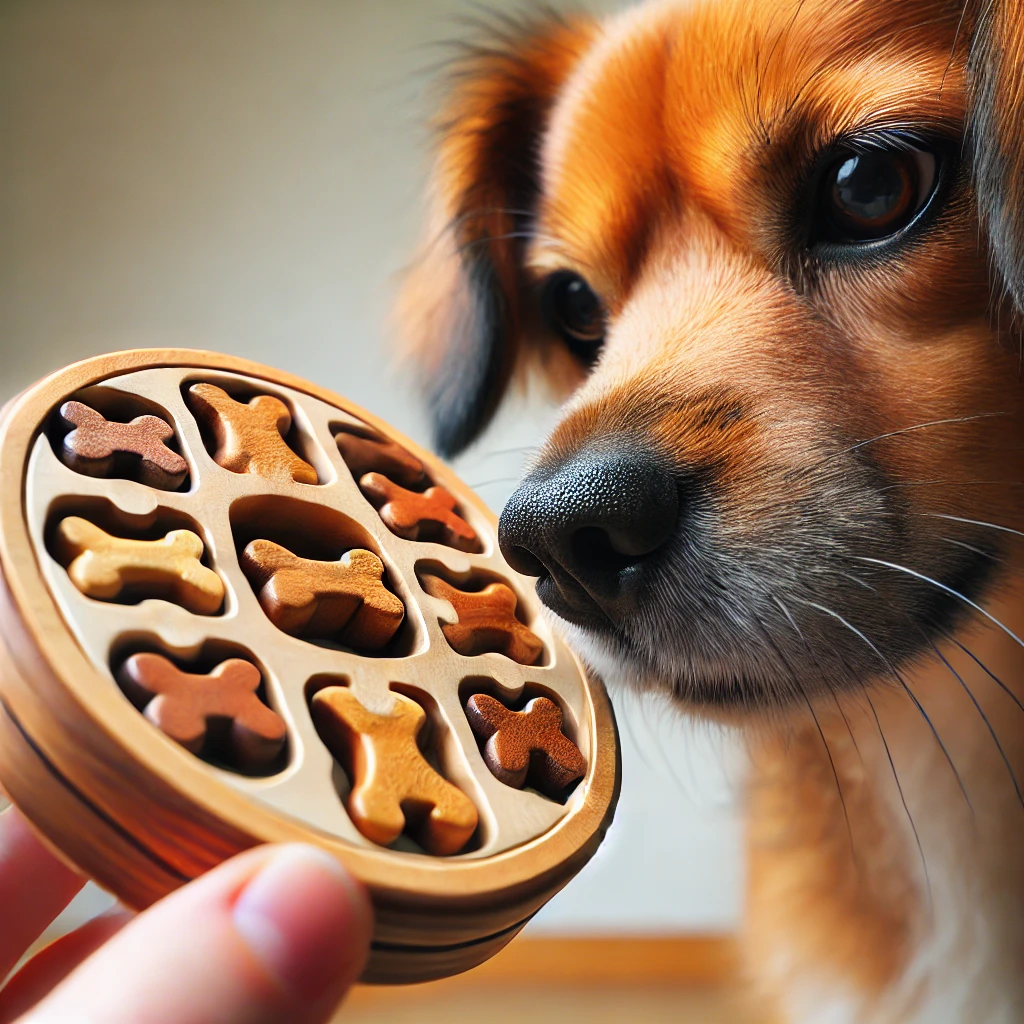
Puzzle feeders
There’s only one way to solve it, and a smart big dog figures it out pretty quick and then carries the whole thing around the kitchen. It’s fine for breakfast, but the prey drive is still sitting there after.
Treat-dispensing balls
It’s basically a slow food bowl that rolls. Some dogs like knocking it around, but the drive that’s eating your furniture never gets touched, and all those treats add up on a big dog.
Lick mats
This is pretty much the opposite of exercise, licking helps a dog wind down. It’s good for the cool-down after a session, but it’s not a replacement for one.
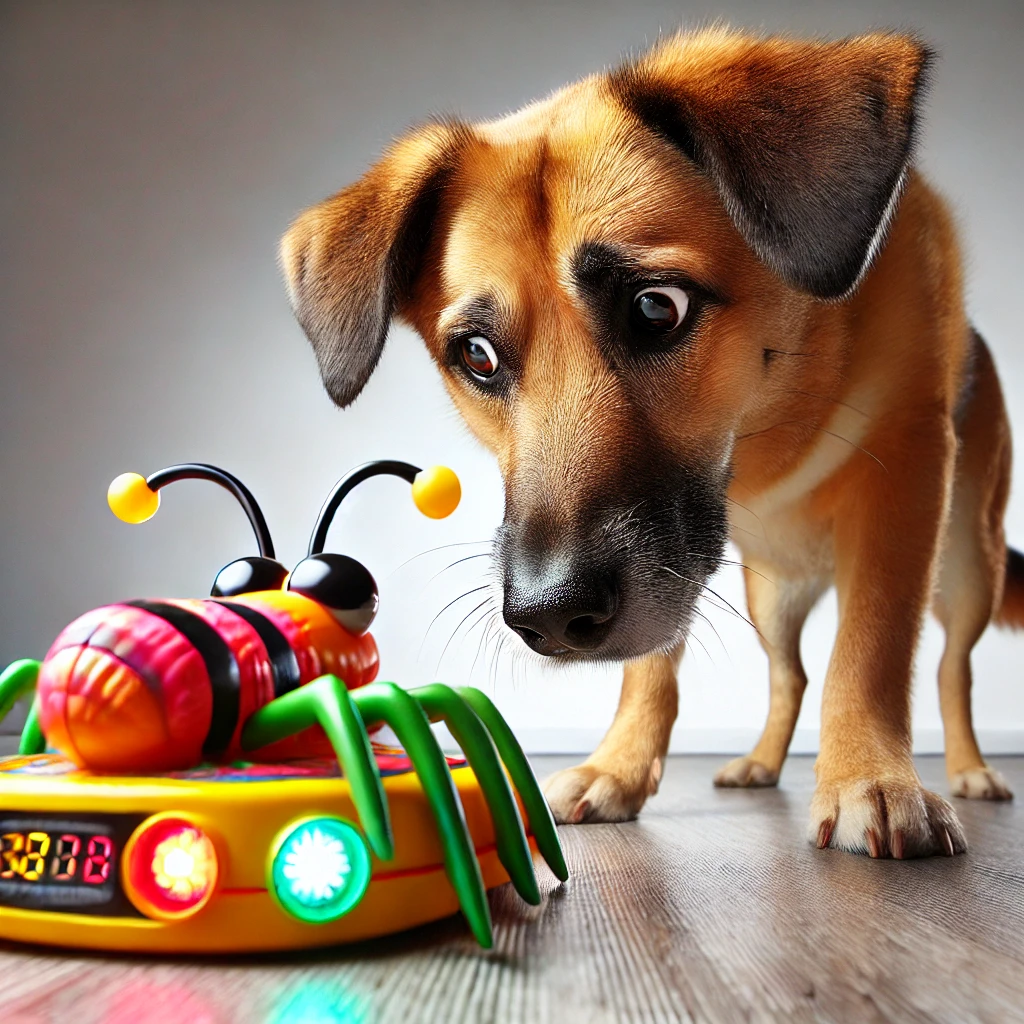
Electronic and motorized toys
New and exciting for a day, then ignored, and they a lot of times don’t survive big dog paws. The most expensive way I know to not tire out a dog.
Signs Your Large Dog Isn’t Being Mentally Satisfied
Before we get into what works, see if any of these sound familiar.
Still hyper after a long walk
Destroys things when left alone
Fixates on movement obsessively
Won’t settle no matter what
That’s not a bad dog. A lot of times it’s a dog whose instincts have nowhere to go. And it’s the stuff most “interactive dog toys” don’t touch, cause most of them are made to keep a dog busy, not to satisfy the drive.
And that difference is a big deal. Keeping a dog busy is kinda like you scrolling your phone, sure it kills time but there’s no chase in it and no catch. With a big dog that has real prey drive, it doesn’t last long before the drive shows up on your furniture again.
Why Most Interactive Dog Toys Don’t Work for Large Dogs
Prey drive runs in an order the dog is born with, and when part of it gets skipped the dog’s left all wound up.
I don’t call that a behavior problem, the way I see it the dog just needs it. The ASPCA notes that dogs who don’t get enough stimulation tend to find their own ways to keep busy, which can lead to unwanted behaviors. When a dog doesn’t get to finish that sequence, it comes out all over the place, like pulling on leash, locking onto stuff, grabbing at you, tearing up furniture, and not settling after exercise.
A lot of folks buy a toy that only handles one piece of it. The ball’s the chase, the tug toy’s the bite and the puzzle feeder is hunting for food, but there’s hardly anything that lets a big dog run the whole thing start to finish while you’re the one running it.
Partial activation only
Full sequence resolution
If your dog is going through toys, it’s not cause they need a tougher toy. They need something that lets them finish what those toys only start.
How to Actually Stop Destructive Behavior in Large Dogs
Chewing the baseboards, shredding the couch, counter surfing, digging up the yard. That’s usually not a difficult dog, it’s a dog whose prey drive has nowhere to go.
Big dogs have big gas tanks. Labs, Shepherds, Rottweilers and Great Danes were all bred to work, herd, guard or hunt. When that drive has nowhere to go, it finds somewhere, and it’s usually your stuff. For power breeds, see best for pit bulls and power breeds.
A lot of advice gets this wrong. Exercise by itself doesn’t fix it. A long walk burns calories but it doesn’t let them chase and catch anything. Your big dog comes home with tired legs and a brain that’s still wound up, and an hour later they’re back on the couch cushions.
What helps is giving that drive a real outlet. A few minutes of structured chasing a lot of times does more for a big dog than a long walk, cause they actually get to finish. Chasing is instinct, not bad manners, so punishing it doesn’t fix much. Giving it a place to go does.
6-Step Routine That Actually Produces Calm
Ask for a sit before you bring the lure out. Sit Reward them for staying calm, cause that’s how your dog figures out a game with rules is starting and not some free-for-all.
You’re good if your dog can hold that sit without lunging, eyes on the lure and body still.
Do 5 or 6 rounds of about 20 seconds each, and stop between rounds and ask for a sit or down before you go again. Wait The wait before every release builds self-control while they’re actually fired up.
When it’s working your dog backs off the lure as soon as you stop, and a few rounds in they’ll start throwing you a sit or a down without being asked.
Stop the lure and let your dog have it for a few seconds. Get it This is the part a lot of people skip, and without the win they never finish, so the dog stays wound up.
Most dogs grab it, give it a little shake and then you can just see the body loosen up.
Trade a really good treat for the lure. Drop it That keeps holding onto it from turning into guarding it, and it teaches your dog that giving it up doesn’t end the fun, it starts the next round.
What you want is a quick drop and your dog looking up at you instead of diving back in for it.
Closing the session and locking in the calm
Steps 1 through 4 are the fun part and steps 5 and 6 are how you bring them back down. Skip the ending and your dog’s probably gonna stay revved up, cause that’s honestly where it all pays off.
Put the lure away where they can’t see it, say all-done, and then ask for a down or place. All done That word is the line between play and calm, and a lot of dogs pick it up quicker than you’d think.
If it’s sinking in, they’ll go to the down or place pretty quick and you’ll hear the breathing slow.
Follow it with a chew, a lick mat or a stuffed chew toy. Place That helps them go from fired up to really resting, and over time your dog learns a session always ends with something good instead of with being frustrated.
Done right, your dog lays there with the chew, no circling or whining, and stays put a good while on its own.
Do it every day and give it time, and look for less tearing stuff up and a dog that settles easier. What clients tell me in general is their dogs are a lot more relaxed and calmer and seem more satisfied after using the flirt pole.
The Pre-Departure Trick for Home-Alone Dogs
There’s a whole aisle of toys for dogs that are home alone, and for a lot of big dogs they’re the wrong answer. Puzzle feeders, rolling balls, lick mats and snuffle mats are good for some dogs. But they’re not the answer for a big dog with real drive that’s left by itself.
What I’d do is a flirt pole session before you leave, along with the other toys, not instead of them.
Five to ten minutes of chasing with some structure before you walk out the door changes things. The drive got taken care of, so now the puzzle feeder is enough. A dog that got to chase and catch a lot of times sleeps while you’re gone instead of rearranging your living room.
A 5 to 10 minute session before you leave can change a lot. Once the drive’s been taken care of, the quiet toys are enough, and a satisfied dog a lot of times just sleeps.
Flirt Pole vs. Puzzle Toy: What Actually Tires Them Out
They fix different problems, and knowing the difference tells you where each one fits in your dog’s day.
Puzzle toys make a dog think, with sliding panels, hidden spots and treat dispensers, and that’s worth something. But a lot of puzzles are made for small and medium dogs, and a big smart dog figures them out fast. Some just pick the whole thing up and carry it off.
Active prey drive tools let the dog use its instincts while you’re running it. The good ones tap into what a dog naturally wants to do, not just digging for food. A good flirt pole should be lightweight and somewhat flexible but not too flexible. For more on what makes a pole last, see why fiberglass wins.
The 5-factor head-to-head
I’d use both, cause puzzle toys have their place, but if you’re picking the main thing for a big dog with real drive, I’d go with the chase toy, cause it gets them moving, lets them finish the chase, builds self-control, and it’s something you do together.
Is This the Right Tool for Your Dog?
The right fit
- Big dogs (30 lbs and up) with a lot of prey drive
- Any breed that tears up toys and furniture
- Dogs still restless or hyper after a walk
- Dogs that tear stuff up when left alone
- High-energy working breeds like Shepherds, Malinois, Rotties and Labs
- Owners who want to build self-control while they exercise the dog
Not the right fit
- Dogs with anxiety that needs a vet’s help
- Any dog with a bone or joint injury, unless the vet says OK
- Aggression toward people, see a behavior professional first
- Puppies under a year going full speed (keep it easy and ask your vet)
- Owners looking for a toy to leave out and forget about
- A replacement for professional help in serious cases
If your dog fits the first list, I don’t think you’ve got a behavior problem. You’ve got a dog that needs something it isn’t getting. That’s a different problem with a different fix, and giving that drive somewhere to go is where I’d start.
What to Actually Look For When Buying
If your big dog needs something that takes care of the drive instead of just distracting them, look at these five things.
Five things to evaluate before you buy
- Durability. If it can’t survive a real session with a big dog it’s not made for a big dog, so I’d look for solid construction and not hollow PVC.
- Range of motion. Big dogs need to run and not just trot. The field of chase is important with bigger dogs, so you want the lure to get out at least 6 to 8 feet from your hand.
- Drive activation. The lure has to move in a way that makes them want to chase, so fast, hard to predict, and changing with what the dog does.
- Impulse control built in. The best tool isn’t just exercise. It builds self-control while they’re fired up too, like a sit before the chase and a drop-it after the catch.
- Replaceable lure system. Lures wear out, and if they swap easy you’re buying a $12.95 lure instead of a whole new toy.
Safety Notes
Always be there for the session, and play on grass or something soft, never concrete or a slick floor. I’d keep the lure low, shoulder height or under, so their joints don’t take a beating, and quit while your dog still has some left in the tank. If they get too worked up and stop listening, or start snapping frantic or shaking, just end it and give them something calm to do. And don’t punish chewing, give the drive somewhere to go.
This article is for educational purposes. If your dog’s behavior is sudden or extreme, consult your veterinarian. For full buying guidance, see the complete buying guide.
Do not use a flirt pole with a dog that has active orthopedic injuries, clinical aggression toward people, or untreated anxiety that causes self-harm. Get veterinary or professional behavior clearance first. This tool is a training aid for healthy, high-drive dogs, not a fix for medical or severe behavior conditions.
Same idea, made for smaller dogs under 30 lbs. Lures swap easy. About 4 ounces with a Kevlar line rated at 450 lbs. Shipping is $20 cause it goes in a longer box.
$55.95
Reinforced one-piece rod for big dogs, and about 8 feet of reach. Lures swap easy. I bought the flirt poles I could find and handed them out to clients, watched what broke, and then built this one.
$74.95 · Free US shipping included
Three lures, so a worn one doesn’t end your session early. Same reinforced pole. The better deal for dogs that are hard on their stuff.
$94.95 · Free US shipping included


One Response