
TL;DR
You can exercise a dog while you barely move, and for a high-drive dog it a lot of times works better than a slow walk. Use a flirt pole sitting down, scatter meals across the floor, fill up puzzle feeders and play short recall games. Ten focused minutes of the right stuff can tire a dog out more than a long walk. Your dog is putting in the effort, so your job is to run the game, not to sweat.
How to do the flirt pole sitting down is in the flirt pole training guide, and more ideas are in how to exercise a dog without walking.
Who This Is For
- You’re recovering from surgery, an injury or an illness
- You live with chronic pain or have a hard time getting around
- You use a wheelchair or can’t walk very far
- You’re wiped out after a long shift and your dog is wired
- You’re older and your dog is young and high-drive
- You’re on bed rest or have a medical restriction for a while
- You feel guilty you can’t walk your dog enough
Signs You Need a Hands-Off Plan
- Your dog is bouncing off the walls and you can’t move much
- Skipped walks are turning into chewing, barking or pacing
- You dread exercising your dog cause your body can’t handle it
- Your dog follows you room to room begging for something to do
- You’re starting to feel guilty your dog isn’t getting enough
- You need something that works from a chair or a bed
- Long walks are off the table for now, but your dog still has plenty of energy
Why Hands-Off Exercise Still Tires a Dog
You don’t have to move for your dog to move. They just need a reason to run and sniff and figure stuff out. Set up the right game and your dog burns the energy while you stay in one spot.
How hard the dog works is what does it. A slow walk is low effort for a dog, so it barely takes the edge off one that’s wired. Short bursts of hard chase or some focused nose work take a lot more out of them per minute, and that’s why a ten-minute session can do more than a walk you’re in no shape to take. Per the American Kennel Club’s exercise guidance, mental work counts as real work too.
The two jobs you still own
From a chair you still control when it starts and what the rules are, so you start the game and set the pace and call it off, and your dog does the running.
Five Ways to Burn Energy From a Chair
There are five main ways to burn your dog’s energy from a chair. A flirt pole sitting down, scatter feeding, puzzle feeders, recall games down the hallway and short scent searches all work. Every one of them puts the effort on your dog, so you run it and they do the running. Put any two together and a lot of wired dogs will settle.
Seated flirt pole
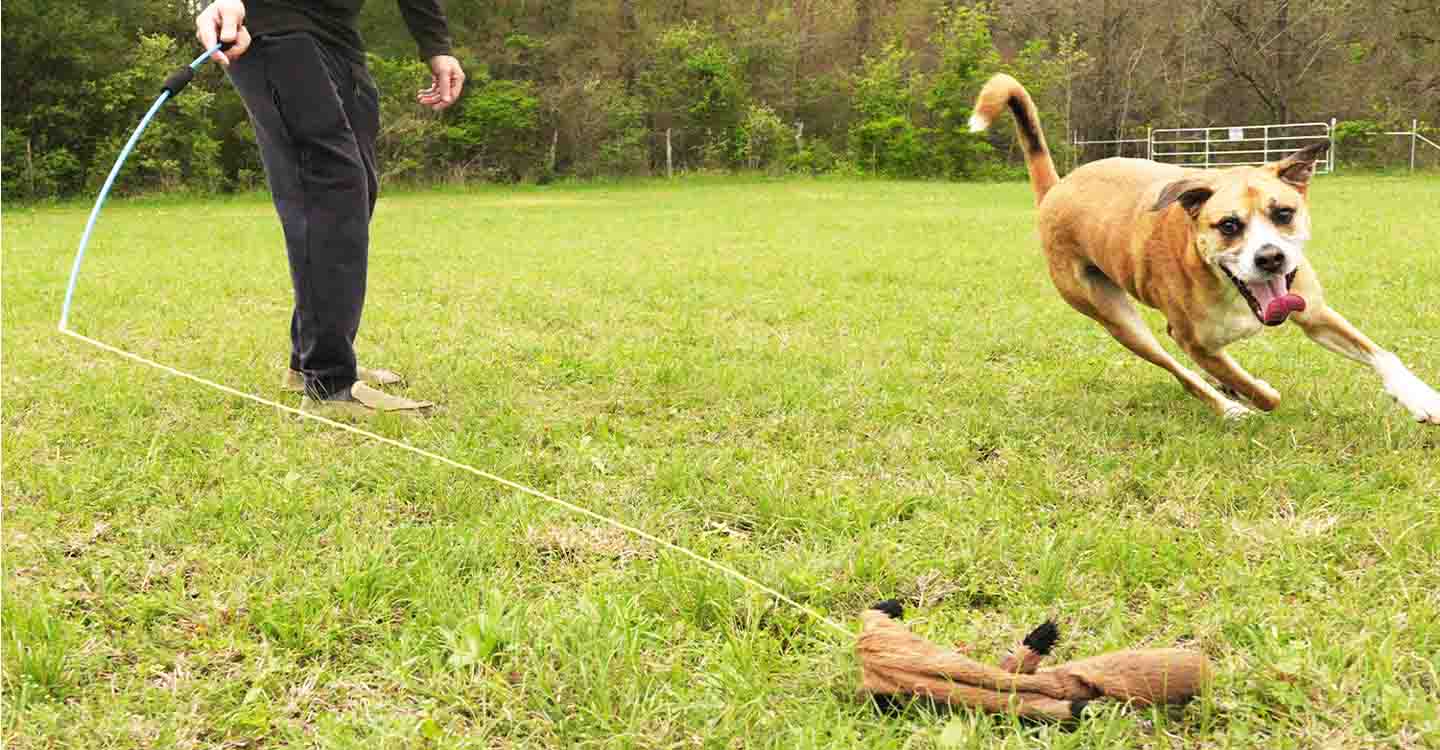
Sit in a doorway or on a patio chair and sweep the flirt pole in wide arcs, so your dog chases and cuts and catches it while you only move your arm. Keep it short and let them win a lot, and you’re the one who decides when it’s over.
Scatter feeding and puzzles
Toss your dog’s kibble across the floor or the yard and let the nose do the work. Puzzle feeders and frozen stuffed toys make a meal last a lot longer and give them something quiet to work out. When you can’t move at all this is the one I’d go to, cause all you do is hand it over. There’s more in enrichment and mental stimulation.
Short recall games
Toss a treat down the hallway and send your dog after it, then call them back to your chair for another one, and all those sprints add up pretty quick while they’re practicing their recall too. If somebody can help, put them at the other end and pass the dog back and forth while you watch.
Why the Flirt Pole Fits This Perfectly
It’s hard to find anything that burns this much energy for this little effort from you. A flirt pole is a pole, a line and a lure. You flick it and your dog does the rest, the sprint and the turn and the catch. A good one should be lightweight and somewhat flexible but not too flexible, and the Rugged XL is about 8 oz, so your arm isn’t fighting it the whole time.
It works because it completes the predatory motor pattern, the chase and catch a walk never gives them. So your dog finishes actually tired instead of still buzzing. Sitting down, you can do the whole thing in a small backyard or a quiet garage with enough room for the lure to move.
A 10-Minute Session You Can Run Sitting Down
You can do this whole session from a chair. Warm your dog up, do some short bursts of chase, then bring them back down with nose work so they settle after.
Keep the bursts short with rest in between, and if your body is having a bad day just skip the chase and do scatter feeding and puzzles, cause whatever you can manage that day is fine.
Flick, chase, settle
Easy Start
Do a few gentle sweeps with the flirt pole or some slow treat tosses to warm them up before any hard chasing.
Chase Rounds
Then short flirt pole chases of about 20 to 30 seconds with rest in between, or recall sprints down the hallway if standing is out.
Nose Work
Scatter a handful of kibble and let your dog sniff around and wind down while you stay put.
The way I see it your effort isn’t what does this, the structure is, so set up the game and control the pace and let your dog spend the energy while you stay sitting.
If it’s your dog that’s restricted and not you, follow your vet first, cause a dog recovering from surgery or an injury may be on strict activity limits, so stick to nose work and puzzles only till the vet clears them for real movement.
I’d skip hard chase for puppies under 12 months cause their growth plates are still open, and pounding on them over and over can damage joints that are still developing, so keep young dogs on scatter feeding and gentle games.
The Whimsy Stick: Made for Effort-Free Chase
Most of this plan comes down to one tool. I tried a lot of flirt poles before I made mine, and a lot of them were too short or bulky or just too heavy, and that matters even more when you’re running it from a chair.
Read These Next to Go Deeper
Want more of this in your Google results? Add Whimsy Stick as a preferred source.
Hands-Off Dog Exercise: FAQ
How do you exercise a dog when you can’t walk?
You let your dog do the moving, so use a flirt pole from a chair and scatter their meals and fill up puzzle feeders and play short recall games down the hallway. How hard they work matters more than how long, so ten focused minutes of this can tire a lot of dogs more than a slow walk.
Can you tire out a dog without physical effort?
Yeah, a flirt pole and scatter feeding and puzzle toys put almost all the effort on your dog. You start the game and set the rules and then your dog does the running and the figuring out while you stay sitting.
What is the least tiring way to exercise a dog for the owner?
Honestly puzzle feeders and scatter feeding, cause you hand them over and your dog works for their food without you doing anything, and then I’d add a short flirt pole session sitting down for the physical side.
How do I exercise my dog after my surgery?
Stick to stuff you can do sitting down, like flirt pole sweeps and scattered kibble and puzzle toys and recall games with somebody helping. Wait till your body heals before anything that needs you on your feet, follow what your own doctor told you, and stop if a movement hurts.
Is mental stimulation as good as a walk?
For getting energy out, active brain work a lot of times does more than an easy walk, cause a dog working a puzzle or hunting for scattered food is working hard. Walks still give them sniffing and fresh air so take them when you can, but brain work fills the gap when you can’t.
How long should a hands-off session be?
Ten to fifteen minutes of focused work is plenty for a lot of dogs, and you can do two or three short sessions spread through the day. I’d just watch your dog, and once they settle and quit looking for more, the session did its job.
Can a flirt pole really be used sitting down?
Yeah, you only need to move your arm to sweep the lure, so you can do it from a chair on a patio or in a garage, and you keep the arcs wide and let your dog do the sprinting and cutting.
What if I have no energy at all today?
Go with the easiest stuff, so scatter a meal across the floor and hand over a stuffed puzzle toy, cause that by itself gives a lot of dogs some real brain work while you rest.


