
TL;DR
A treadmill is fine indoor cardio if you bring your dog onto it slow and keep it safe. Machine off first with treats, then the lowest speed for a few seconds, then a little more speed and time over a lot of short sessions that go well. Don’t tie the leash to it. Don’t force it. Stay right there. If you rush it you’re gonna end up with a dog that’s afraid of the thing, and even done right it only builds stamina, it won’t scratch the itch to chase and catch.
Mix the treadmill with some drive work from the flirt pole training guide, and there are more indoor ideas in how to exercise a dog without walking.
Who This Is For
- You don’t have a yard or a safe place to walk
- You live with brutal heat or cold or a lot of rain
- You’ve got a high-drive dog that needs steady miles every day
- You work and want an indoor option you can control
- You’re getting your dog back in shape with your vet’s guidance
- You’ve already been wondering about a dog treadmill
- You want cardio that doesn’t depend on the weather
Signs a Treadmill Could Help
- There’s no safe yard or sidewalk for real exercise
- The weather keeps canceling your time outside
- Your high-energy dog needs steady cardio every day
- Your schedule makes long walks hit or miss
- You want a workout you can control and keep track of
- Your dog does fine with structure and routine
- You can stick with a slow, patient introduction
When a Treadmill Makes Sense
Honestly a treadmill earns its spot when weather or space is what’s stopping your dog from getting real exercise. It doesn’t care if it’s scorching out or pouring, so on the days the walk falls through you’ve still got something. That’s why it fits people with no yard or a rough climate best.
You also get control you don’t get with most exercise. You set the exact speed and time, and that helps with conditioning and weight programs. Per the American Kennel Club, a treadmill can supplement, but not replace, normal exercise and enrichment.
A supplement, not a substitute
A treadmill handles steady cardio but it doesn’t do anything for drive or sniffing, so I’d treat it as one tool and not the whole plan.
Introduce It Slowly
Going slow is the whole trick here. Machine off, your dog sniffs it, they get treats. Then the lowest speed for a few steps and you stop. Fear of a treadmill usually gets built in those first few tries when somebody cranks it up too fast, so add speed and time a little at a time over a lot of short sessions and keep paying them.
Explore the still machine
Leave it off to start. Let your dog step up on it and sniff around, and treat them when they’re calm and curious. To a dog it’s a weird loud machine, and if you skip this part a lot of times you get a dog that’s scared of it for good.
Lowest speed, seconds at a time
Once your dog is relaxed, turn it on the slowest setting for just a few steps and reward a lot and then stop, and over a lot of short sessions add a little speed and a little time so it feels easy to your dog the whole way.
Supervise every second
Stay right next to your dog and keep the sessions short, and don’t ever tie the leash to the machine or walk away, cause a spooked dog can get hurt fast. If your dog looks stressed, stop and try again later.
The Rules and the Ceiling
There’s some rules I’d never bend on with a treadmill. Don’t leave a dog on it alone and don’t tie the leash to it, keep the area around it clear, and if you see fear or your dog’s getting tired you stop right then. The belt keeps going even if your dog trips and that’s how they get hurt, so you watch the whole time.
It’s also worth knowing what it can’t do. Walking or trotting on it is cardio and that’s good, but there’s nothing to stalk or chase or catch on a belt, and a dog that only ever gets the treadmill a lot of times comes off it with tired legs and a head that’s still wound up. That’s where play that works the drive comes in.
Puppies and hot belts
Hard treadmill work waits till a puppy is a year old since their growth plates are still open. And watch the paws on any dog, long sessions can heat up the pads.
Sniff, step, stop
Machine Off
Let your dog step on and sniff the belt while it’s off and reward them for staying calm.
Lowest Speed
Then a few slow steps on the lowest setting with lots of rewards, and stop there.
Add Slowly
Add a little speed and time over a lot of short sessions that go well for your dog.
A treadmill gets you cardio whatever the weather’s doing and that’s pretty much it, so go slow and stand right there and give your dog some drive work on the side cause there’s nothing to catch on a belt.
Never tie the leash to a treadmill and don’t leave your dog on one alone, cause a spook or a stumble can hurt a dog fast. Start on the lowest speed and keep it short, and if you see fear or limping or your dog’s getting tired you’re done for the day.
I wouldn’t do hard treadmill work with a puppy under 12 months cause the growth plates are still open, keep the young ones on gentle play till they’re grown, and on adult dogs check the paw pads when the sessions get longer.
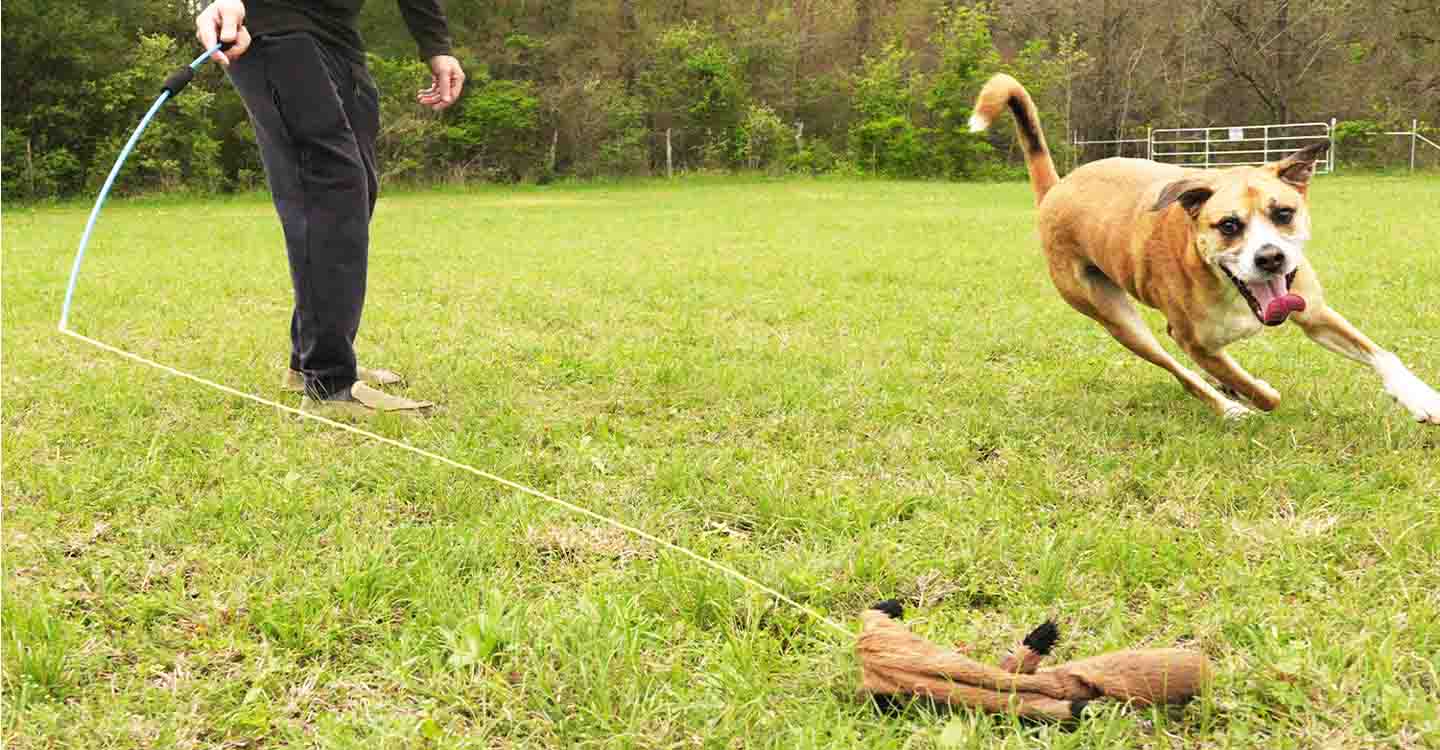
The Whimsy Stick: For the Drive a Belt Can’t Reach
The belt puts miles on your dog. What it can’t do is let them stalk and grab something, and a flirt pole handles that part indoors on the same rainy days.
Read These Next to Go Deeper
Want more of this in your Google results? Add Whimsy Stick as a preferred source.
Dog Treadmill Training: FAQ
How do you train a dog to use a treadmill?
Slow, and I’d keep it fun the whole way. Your dog gets treats for checking it out while it’s off, then you run the lowest speed for a few steps and quit while it’s going good, and over a lot of short sessions you add speed and time. Stay right there with them and don’t ever tie the leash to it.
Is a treadmill good exercise for a dog?
Yeah, as indoor cardio it can be pretty good, especially when there’s no yard or the weather’s bad, and you can set the exact speed and time if you’re getting a dog in shape. It won’t scratch the chase and catch itch though, so I’d pair it with some play that works the drive and a little enrichment.
Is it safe to run a dog on a treadmill?
It can be, as long as you stick to the rules. That means bringing them on slow at the lowest speed and staying with them the whole time, never tying the leash, and stopping the minute you see fear or they’re getting tired. I’d skip hard work for puppies too and keep an eye on the paw pads when sessions get longer.
How long should a dog walk on a treadmill?
Start with a couple of minutes and build up slow, cause a short session that goes good beats a long forced one every time, especially early on. How long should really come from your dog’s fitness and how comfortable they are, not some number you picked, and if you’re not sure what’s right for your dog ask your vet.
Can any dog learn to use a treadmill?
A lot of dogs can with some patience, but some never get comfortable on one and honestly that’s fine. Confident dogs that love food tend to pick it up quicker. I wouldn’t ever force a scared dog, and if the stress isn’t fading after several sessions I’d just drop it and do something else.
Will a treadmill tire out a high-energy dog?
It’ll help with the body but not much with the head. Steady trotting burns real energy, sure, but your dog never gets to stalk or catch anything on it, and that’s why a dog that only gets the treadmill can still be wound up after, so I’d add some chase or scent work on top.
What kind of treadmill should I use for a dog?
The safest is one made for dogs, cause those have side rails and a longer belt, but a regular one can work if you’re careful about it. Whatever you end up using, make sure the lowest speed is actually slow and the surface is stable and the area around it is clear.
Can I put my dog on the treadmill while I am away?
No. Not ever. With the belt moving, one stumble or spook can hurt a dog badly, so you’re right there every single time.


