
TL;DR
You can’t exercise your dog’s body on crate rest, so you exercise the brain instead. Puzzle feeders, snuffle mats, scent games and calm training you can do from a chair all tire a dog out without breaking the activity limits. Follow the vet’s restrictions to the letter, and let the brain work carry the load until your dog is cleared to move. A tired brain helps settle a restless body, so for now this is what you lean on.
For more enrichment ideas, see enrichment and mental stimulation, and save the flirt pole training guide for when your dog is cleared to move again. If all that built-up energy turns into restlessness, jumping, and attention-seeking, plan on working through that once the vet lifts the limits.
Who This Is For
- Your dog is on crate rest after surgery
- You’re dealing with a torn ligament, a fracture or some other recovery order
- You were told no running, jumping or stairs for weeks
- You’ve got a high-drive dog going stir-crazy in a crate
- Your recovering dog is barking, whining or chewing on the crate
- You need to keep your dog quiet and want to try more than medication
- You’ve got a long stretch of restricted activity ahead
Signs Crate Rest Is Going Sideways
- Whining, barking or crying in the crate nonstop
- Chewing or clawing at the crate or the bandages
- Bouncing off the walls the second you open the door
- Won’t settle even when they’re obviously tired
- Trying to jump, spin or bolt when the vet said not to
- Seems down, sulking or not eating like normal
- You’re worn out from keeping a lid on it all
Tire the Brain When the Body Can’t
Brain work is real work. A dog sniffing out hidden food or working a puzzle is burning real energy even when they’re lying flat, and since the body’s off limits on crate rest, that’s what you’ve got to work with right now.
Whatever the vet said goes. If they said no running, no jumping and no stairs, they meant it, so every game on this page happens at a walk or slower. Stick to the recovery plan cause that’s what protects the repair.
Why a bored dog is a wrecked recovery
A bored dog that’s going nuts in there is gonna fight the crate, and all that thrashing is a risk to whatever’s healing. That’s why keeping the brain busy is part of the recovery and not some bonus.
Calm Games That Don’t Break the Rules
The safest crate rest games are the ones where the brain works and the body stays put. So I’d start with puzzle feeders and snuffle mats, then add slow scent searches close enough that your dog barely has to move, and some calm chin-rest training on top of that. None of that breaks the activity limits as long as nothing goes faster than a walk, and it’ll still wear a dog out pretty good.
Puzzle feeders and snuffle mats
Meals are the easy win here, so quit using the bowl and put every one of them in a puzzle toy or throw the kibble across a snuffle mat, and your dog can lay right there and use their nose the whole time. That’s what I’d build the whole crate rest day around cause it takes no movement at all, and the American Kennel Club includes puzzle toys among its brain games for dogs.
Low-key scent games
Stick a few treats somewhere close where your dog can reach without getting up, and let them find them slow. Nothing fancy, it’s just sniffing, but that’s work for the brain and the body barely moves.
Training you can do from a chair
Teach quiet stuff like a chin rest, eye contact or slow nose targets. Calm training gives your dog a job and something to get right, and that helps a lot of dogs settle. Pair it with a settle cue from the impulse control drills once your dog is cleared.
Set Up the Crate for Calm
A calm spot helps make a calm dog, so I’d keep the crate somewhere quiet and dim and away from all the front door traffic, and cover part of it so there’s less to see and react to.
Boring is the goal
Give a frozen stuffed toy at the noisy times of day, like when the mail comes, so your dog has something to do besides react. Quiet and predictable is what you’re after, cause a calm routine is what gives the repair a chance to heal.
You can’t tire out the body right now so you tire out the brain, and puzzle feeders and snuffle mats and some calm training will tire a dog on crate rest without breaking any of the vet’s restrictions.
The vet’s restrictions override everything on this page, so if your dog is on no-movement orders keep even the games slow and inside what’s allowed, and if you’re not sure, ask the vet before you add any activity.
Don’t use a flirt pole or any chase work during crate rest, save it for after your dog is fully cleared, cause chase is the last thing a healing joint needs.
The Whimsy Stick: For When Movement Is Cleared
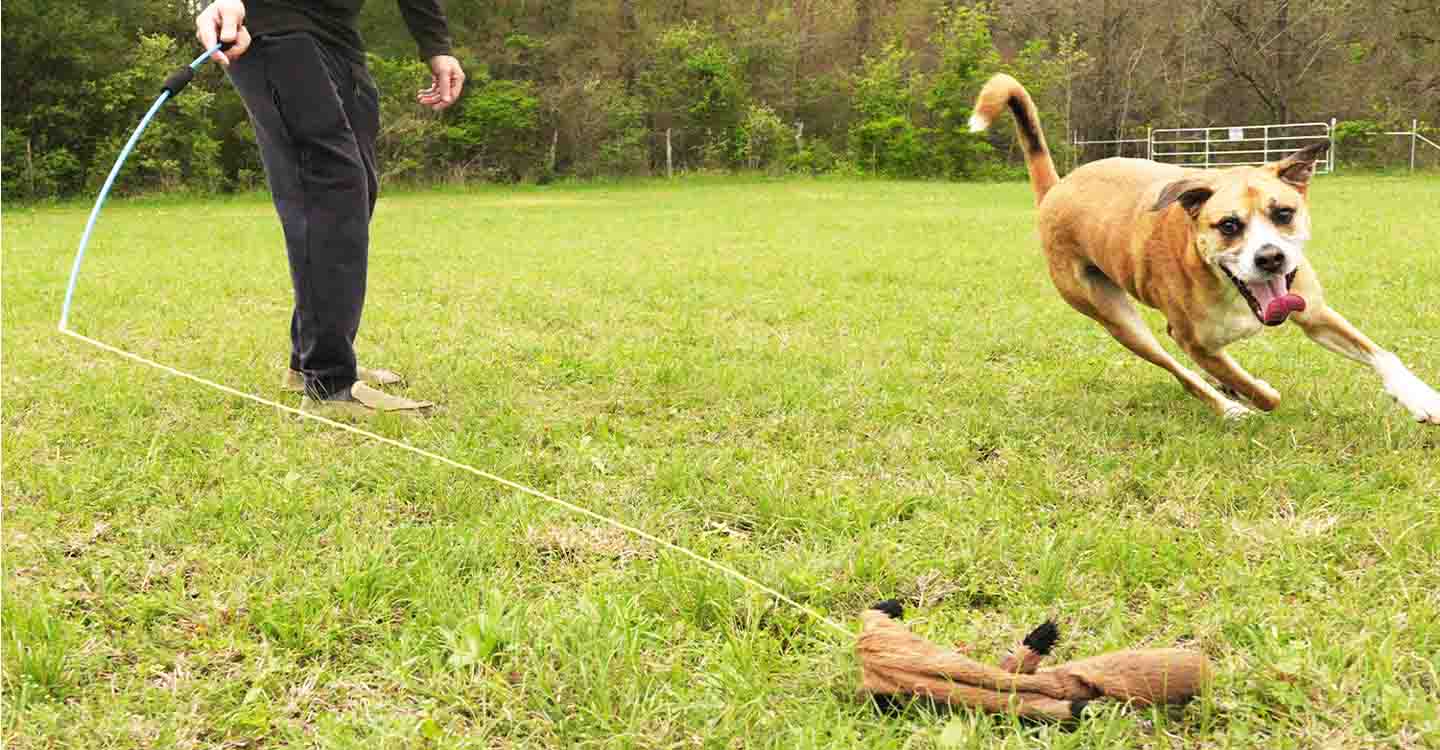
A flirt pole is not for crate rest. It’s for after the vet clears your dog to move again. Even then I’d start slow, with the lure barely moving, and work back up a little at a time on the vet’s schedule, cause using a flirt pole is an art on its own and going easy with it is part of that.
Read These Next to Go Deeper
Dog Crate Rest and Restricted Activity: FAQ
How do you keep a dog calm on crate rest?
You work the brain since the body is off limits, so feed out of puzzle toys and snuffle mats and play slow scent games your dog can reach and do calm training like chin rests from a chair. Keep the crate quiet and partly covered too, and follow the vet’s limits exactly.
How do I entertain a dog that can’t move?
I’d lean on brain work. Puzzle feeders and snuffle mats and lick mats and frozen stuffed toys and gentle nose games all tire a dog without moving around, and if you switch between a few of them they stay interesting over a long recovery.
How long does crate rest usually last?
It depends on the injury, and it’s usually weeks and not days. Your vet sets the timeline and when activity gets added back, so follow those checkpoints and don’t rush it, cause getting hurt again puts you right back at the start.
Can mental stimulation really tire a dog out?
Yeah it can, working out a problem uses real energy and a lot of dogs take a good nap after a puzzle meal, so on crate rest it’s the closest thing you’ve got to exercise.
Should I use a flirt pole during crate rest?
No, chase work is the opposite of what a healing joint needs, so put the flirt pole away till your vet fully clears your dog to run and then bring it back slow and safe.
Why is my dog barking so much in the crate?
A lot of times it’s built-up energy and boredom with nowhere to go, so add brain work and cover part of the crate so there’s less to react to and keep the area calm, but if the barking is frantic or looks like pain, call your vet.
Can I give my dog a break outside the crate?
Only inside the vet’s rules, which usually means short, calm potty trips on a leash with no running or stairs, and you keep your dog slow and under control the whole time. If you’re not sure how much is allowed, ask the vet before you do it.
How do I rebuild fitness after crate rest?
Slow, and on the vet’s schedule. Start with short calm walks and then add some gentle movement, and only bring back chase and hard exercise once you’re cleared, building back up over weeks and not days so the healed tissue can keep up.


