
TL;DR
Go slow. Hold off on adventures and hard training for the first couple weeks, keep their world small and the days predictable, and don’t push the exercise. Most people lean on the 3-3-3 rule here (three days, three weeks, three months) and that’s fine as a rough guide. What you’re really building is trust, and being patient now pays off for a long time.
Once your dog has settled in, you can start building an outlet with the flirt pole training guide, and work on confidence with building confidence in your dog. If the settling-in energy later turns into separation anxiety, jumping, or attention-seeking, you can train through that once there’s some trust in place.
Who This Is For
- You just adopted a rescue
- You want to bond but don’t know where to start
- Your new dog seems shut down or overwhelmed
- Your rescue is bouncing off the walls
- You’re worried you’ll mess up the first few weeks
- You’ve got kids or other pets to introduce
- You want a confident dog down the road
Signs Your Rescue Is Still Decompressing
- Hiding, shutting down or not eating at first
- Overwhelmed or way too amped up in new places
- Pacing, panting or can’t settle down
- Jumping at normal sounds around the house
- Clingy one minute and avoiding you the next
- You haven’t really seen their personality yet
- Accidents or nerves even though they were trained before
The First Days Are for Calm
Your new dog is stressed even if they’re hiding it pretty well. Everything they knew is gone, so of course they’re on high alert, and the first job is just helping them feel safe. Training and fun come after.
Keep their world small for a while. Meals at the same times every day and a quiet spot that’s theirs will do more right now than any outing, and honestly boring is good here.
The 3-3-3 guide
You’ll hear people call it three days, three weeks, three months. That’s roughly how long it takes to start decompressing, then learn the routine, then really feel at home, so I wouldn’t judge your dog by week one.
Gentle Movement, Not Big Adventures
Exercise early on should calm them down, not overwhelm them. A dog that’s flooded with too much can’t decompress, so skip the dog park and long hikes and busy trails at first. Keep it gentle, with short leashed walks somewhere quiet and plenty of time to sniff.
Some rescues go the other way and bounce off the walls. For those dogs a little structured outlet takes the edge off without winding them up more. Keep it short and low-key and let the dog set the pace. The American Kennel Club recommends easing a new dog into activity.
Sniffing is decompression
Let your dog sniff on walks instead of marching them along, cause sniffing helps take the stress down and a slow walk with lots of stops settles a rescue better than a fast one.
What Not to Do Early On
The biggest mistakes come from going too fast. People want to bond, so they pile on visitors and outings and asking for stuff. Try not to, and give your dog some room to breathe first.
Hold off on the big stuff until they settle in. That means no hard training, no dog parks, no meeting every friend you have, and no forcing affection. If you let trust build on the dog’s time, you get to see who they really are and the bond gets stronger for it. Introduce kids and other pets slowly, and always supervise.
Let them come to you
I’d sit quietly and let a nervous dog come to you when they’re ready instead of reaching for them, cause you want to be the calm, safe thing they pick on their own.
Give them the first two weeks to just settle. The adventures aren’t going anywhere and they’ll still be there once your dog trusts you.
Go slow with kids and other pets and strangers, cause a stressed new dog can react in ways they never would once they’re settled. Supervise every introduction and make sure the dog has a way to get away and don’t ever force them to interact, and if you’re seeing serious fear or aggression I’d get a professional trainer involved early.
The Whimsy Stick: For When Trust Is Built
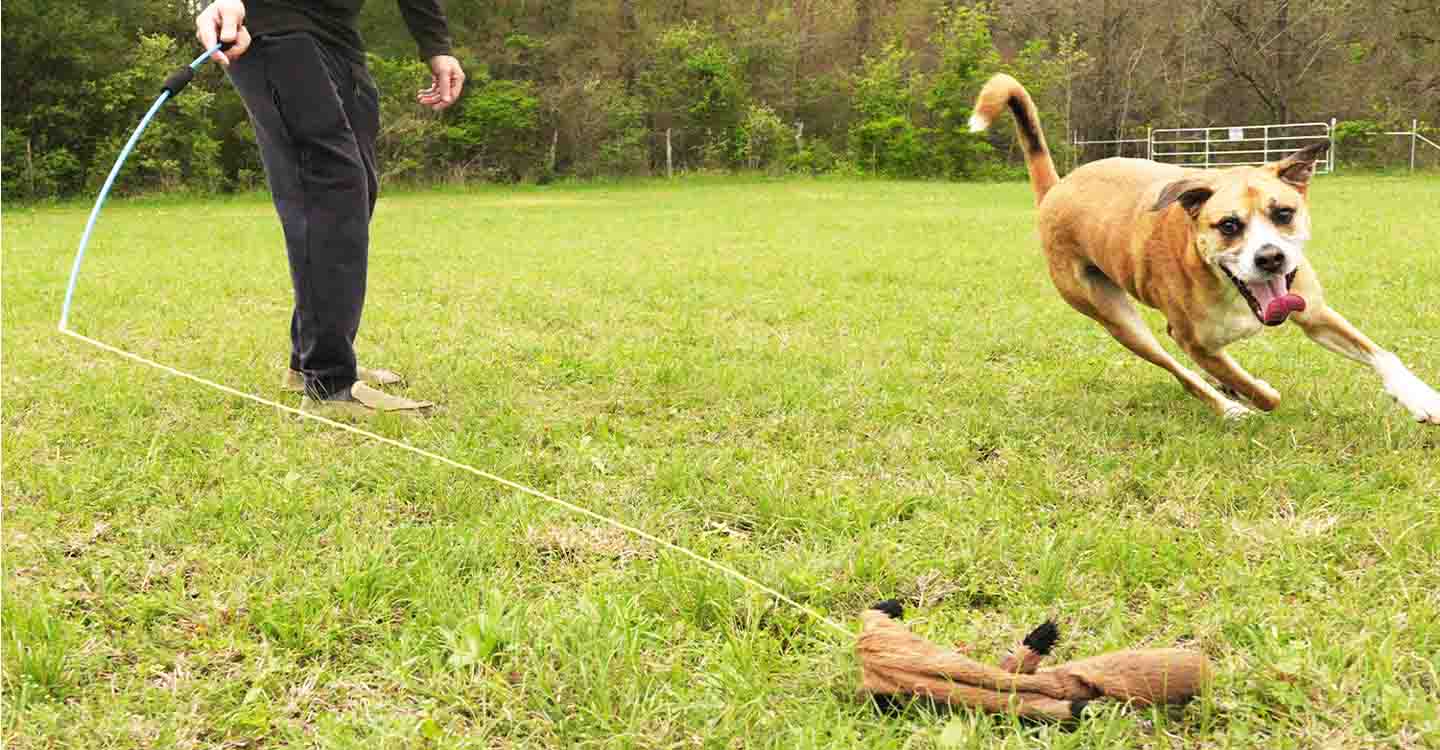
I wouldn’t pull out a flirt pole in week one. It’s for later, once your rescue has settled in. I’ve taken on shut-down rescues other trainers had failed with, and the way I see it a dog needs a few things to feel satisfied, exploring, playing, and the biggest one, hunting. The flirt pole is how you give them that last one, through play with you.
Read These Next to Go Deeper
Your First Two Weeks With a Rescue: FAQ
What should I do with a new rescue dog the first week?
Not a whole lot, and that’s on purpose. Keep things quiet, set a routine and let them settle in without pressure. A gentle walk on leash with lots of sniffing is plenty that first week.
What is the 3-3-3 rule for rescue dogs?
It’s a rule of thumb people use for how a rescue adjusts. Roughly three days to start decompressing, three weeks to learn the routine, three months to feel at home. Every dog’s different though, so let yours set the pace and don’t judge them by the first few days.
How much exercise should a new rescue dog get?
Less than you’d think at first. Short leashed walks somewhere quiet with time to sniff settle a stressed dog better than long or busy outings do. If your rescue’s got a ton of energy, a short low-key outlet helps without overwhelming them.
Should I take my new rescue to the dog park?
Not in the first few weeks. A busy dog park is a lot for a dog that’s already stressed and it can lead to fear or a bad run-in with another dog, so I’d wait till your dog has settled in and is confident and listening to you before you add that much going on.
Why is my new rescue dog hiding or not eating?
They’re stressed and decompressing from a huge change, and hiding or not eating or shutting down is pretty common early on. Give them quiet and space and a routine and a lot of dogs come around, but call your vet if your dog goes without eating for long.
When can I start training my rescue dog?
You can start on the relationship and a routine right away, but I’d hold off on anything demanding until they decompress. Staying calm and learning their name and simple reward-based basics are fine early, and the harder work can wait till they trust you.
How do I bond with my new rescue?
Slowly, and on their terms. Taking care of them the same way every day and staying calm around them and letting them come to you builds trust a lot faster than forcing affection, and once they settle, playing and training together is where the bond really grows.
My rescue is bouncing off the walls. What helps?
Some rescues shut down while they decompress and some get way too amped up. For the wired ones I’d add a short, low-key outlet with some structure and plenty of calm routine, and keep it gentle and skip the busy outings, and a lot of times the energy comes down as they start to trust you.


