
Quick summary
Resource guarding is normal, until it isn’t. Any dog can get protective of its food or a chew or its spot on the couch, and some get that way about a person. Usually it’s mild and nobody gets hurt. It turns into a real problem when the warnings keep getting bigger and you can see a bite coming.
The fix goes against what most people think. Don’t snatch the thing away, and don’t correct the growl either. With the trade-up protocol your dog figures out that when you walk over, something better than what it’s got is on the way. Manage it first, train it second, and call a pro if there’s ever a bite.
- Your dog goes stiff or freezes or growls when it’s got food or a chew or a toy.
- Someone said to take stuff away to show who’s boss, and it blew up on you.
- It’s the couch or the bed your dog guards, or one person in the house.
- You have a puppy and you’d like to stop guarding before it ever gets going.
- There are kids in the house and a dog that guards, so you need a hard safety line.
- Freezes up over the bowl or a chew when you get close.
- Hard stare, whale eye, or a low growl as you come up.
- Eats faster, or hunches over the thing and turns its back to you.
- Lip lift, air snap, or a lunge to keep you off it.
- The guarding has slowly spread to more items or more people.
What Resource Guarding Is (and Why It Is Normal)
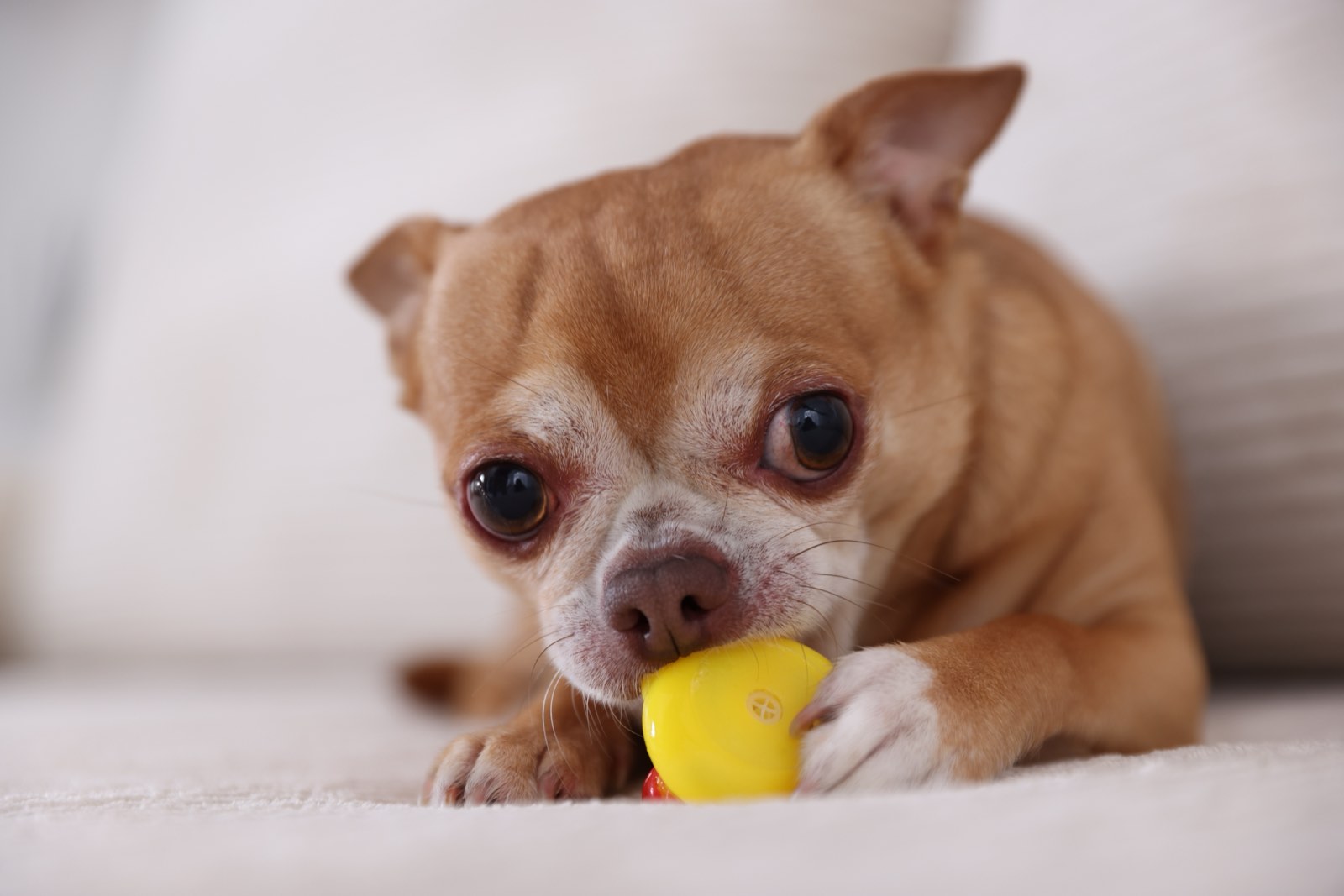
It’s really just a dog hanging on to something it cares about, whether that’s food or a chew or a toy or a spot on the bed or even a person, and since animals that held on to their stuff did better in the wild, every dog has a little of that in it. Where it turns into a problem is when the warnings keep climbing toward a bite.
Guarding lives on a ladder
Guarding comes in steps, kind of like a ladder. Down low it’s a little pause or the dog gulping its food. Next you’d see a stiff body or a hard stare or a lip lift, then a growl, then a snap at the air, and contact is the last step. Each one of those is the dog warning you, so a dog that guards politely is really talking to you pretty clearly.
A lot of owners only notice the top rungs, but the quiet signals were there first, a lot of times for months. If you learn to read the low rungs (that’s what body language work is for) you buy yourself room to change how the dog feels before it climbs.
The growl isn’t the problem. Think of it like a smoke alarm. You don’t want to shut the alarm off, you want to put out the fire under it, and that fire is the dog being scared of losing something it values.
Why Dogs Guard: Evolution Plus Learning History
Dogs guard for two reasons stacked on top of each other. One is instinct, holding on to stuff kept animals alive, so protecting a resource is just built in. The other is what the dog has learned. A dog that learned hands near the bowl means the bowl goes away is gonna guard harder, so instinct sets the starting point and experience pushes it up or down.
The learned half is the half you can change
You can’t rewrite instinct, but what the dog learns from here on out is on you. Every time you’re around a resource the dog learns one of two things, either you coming close means it loses something or you coming close means it gets something. A lot of times guarding got worse cause well-meaning owners kept proving the first one true.
Arousal plays into it too. After a crazy day a dog is gonna guard quicker than a dog that’s settled, which is where trigger stacking and staying regulated come in. A dog that gets structured outlets and plenty of rest just has more room before something tips it over.
Guarding comes from fear of losing something. Your dog isn’t trying to be the boss of you, it’s protecting something it’s worried is gonna disappear. Once you treat it as a feeling you can change instead of a fight you have to win, the whole thing gets a lot easier to fix.
The Types of Resource Guarding
If the dog values it, the dog can guard it. Usually that’s the bowl, good chews, toys, beds and furniture, or a person. But it’s different for every dog, and you’ll get one that guards the couch like crazy and couldn’t care less about its bowl.
Most people know this one, somebody walks by the bowl and the dog tenses up or freezes or starts wolfing it down, and since it eats every day it gets to practice that every day, which is why management matters so much here. I’d feed behind a closed door while you’re training, and please don’t test the dog by sticking your hand in its food.
Most commonBully sticks, pig ears, raw bones, the long-lasting stuff, that’s a lot of times where you see the hardest guarding, cause it’s worth a ton to the dog and it hangs around a while. Early on I’d only hand those out in a crate or a closed room and leave the dog alone till it’s done.
Highest valueToys, spaces, and guarding a person
Some dogs guard toys, and funny enough a lot of them guard a stolen sock or a napkin harder than anything they’re actually allowed to have. I wouldn’t chase them cause that just makes it a prize, so trade for something better or toss a few treats on the floor and the sock gets forgotten pretty quick.
Possessive of toysThen there’s space, like the bed or the couch or a crate or a doorway. You walk up or ask the dog to move and it stiffens or growls. While you’re working on it I’d keep a house line on and teach a happy off cue, with the reward away from the furniture so getting off actually pays.
Space guardingThis time you’re the thing being guarded. Another dog or a person gets near its favorite human and the dog growls or snaps. Each time it gets away with blocking people off it’s practicing that, so manage it calmly, reward the dog for staying loose while people come up, and don’t let the growl pay off.
Dog guarding ownerThe Mistakes That Make Guarding Worse
There are two habits that make guarding worse pretty much every time. One is taking stuff away to show the dog who’s boss, and the other is punishing the growl. A growl is a warning, so if you punish it the dog learns to skip the warning and just bite. Getting confrontational doesn’t take the threat away, it proves to the dog the threat was real.
Taking things away to prove a point
If you keep walking up and taking the bowl or the bone you’re proving the dog’s worst fear right, cause every time it learns your hands mean it’s losing something, so next time it guards harder. This gets passed around as dominance training and it ends up creating the exact aggression it’s supposed to prevent.
Punishing the growl
A growl is about the most honest thing a dog can give you. If you punish it you don’t change the fear under it, you just get rid of the warning, and then you’ve got a dog that bites with no growl first, which is a lot more dangerous. When you get a growl I’d give the dog space and then fix what’s causing it with management and trade-up training, not with a correction.
There’s other stuff that makes it worse too, like staring the dog down over its food, crowding a dog that’s resting, or letting kids walk up on a dog that’s chewing. Don’t get in its face, just take the pressure down and build some trust so the dog chooses to give things up cause it pays to.
The Trade-Up Protocol, Step by Step
The trade-up protocol flips it around so you coming close means the dog gets something better. Instead of taking the thing away you’re adding to it, so you only get as close as the dog stays relaxed and toss in something better and back off again, and after enough of that the dog actually starts to loosen up when you walk by its stuff, because every time you do something good happens.
If your dog has ever bitten, broken skin or guards around a child, I wouldn’t do this alone, get a qualified professional first. This is for mild to moderate guarding in a safe setup, and it only works as long as nobody is being put at risk.
Find the spot where you can stand and your dog just keeps on eating or chewing all loose and relaxed, and that’s your starting line. Closer than that sets off a guard so don’t start inside it, and honestly I’d stay right at that spot for the first several sessions.
Distance firstTake one step in and toss a treat that’s way better than what the dog’s got and step back out, cause the only thing the dog needs to learn right now is that you showing up means a bonus and then you go away. Keep doing that till your dog looks up at you expecting the treat instead of tensing up over its stuff.
Approach predicts goodClosing the distance and naming the trade
Move in a step only when the dog stays loose, and go by the dog’s body, not the calendar. Stiffening, freezing, eating faster, that’s your dog saying you’re too close. Back up to the last easy distance and build it back from there. Relaxed reps are what count here, not days.
Body language rulesWhen the head comes up for the treat every single time, go ahead and name it. Say trade or drop right as the dog turns toward you, then pay. All you’re doing is putting a word on something the dog already chose to do, and since that word always pays, it turns into good news instead of a threat.
Cue: TradeThe move that fixes the fear
With stuff you can safely swap, take the item and give the better treat and then give the item back whenever it’s safe to. That’s the big one, cause now giving something up means the dog gains instead of loses. Once the dog isn’t scared of losing it anymore, there’s nothing left to guard.
Give to getWhere structured play fits in
Trade-up is really give-to-get, and structured play works the same muscle. When a dog drops a lure it loves on cue while it’s all fired up, it’s practicing letting go and getting paid for it. I wouldn’t use drive drills instead of the food-bowl work, but they back up the same lesson and build some self-control around it.
Whimsy Stick Rugged XL
A flirt pole isn’t gonna fix guarding by itself and I’m not gonna pretend it does. But drop-it and trade drills when the dog is fired up build that give-to-get habit the trade-up training needs, and this is the pole I make for that kind of work. The impulse control drills and prey drive training guides have the actual steps.
Add Rugged XL to Cart, $74.95Management and Safety While You Train
Training changes how the dog feels, but it takes time, so management keeps it from getting practiced in the meantime. Feed a guarder alone behind a closed door. Pick up whatever it fights over while the dog’s out of the room. And while you’re training, just don’t set up the exact situation that gets the growl.
Every rehearsal makes it stronger
Anything a dog practices gets stronger and guarding is the same way, cause every time a guard works the dog learns it works, so the first job is stopping those reps. I’d get rid of the triggers you can and stay away from the ones you can’t until the trade-up work has changed how the dog feels.
Practical management that works
Simple, and the same way every time. Meals in a crate or a closed room, high-value chews only where the dog can finish alone, loose stuff that gets stolen picked up, baby gates on the spots it guards. Don’t test the dog. Set the house up so guarding barely ever gets a shot.
Good management counts as training. While you’re counterconditioning, keeping the dog from practicing is real work, you’re not dodging anything. Some dogs are always gonna need some management around their most valuable stuff, and that’s a fine place to end up.
Kids and Guarding: A Hard Safety Line
Kids and resource guarding are a dangerous mix, cause kids move unpredictably, get in faces and reach for things. You can’t ever count on a child to read a growl or do a trade, so until a professional says otherwise I’d keep dogs and kids apart around all food, chews and beds with gates and physical management.
A bite over a resource can happen fast, so a child should never take something from the dog or walk up on a dog that’s eating or chewing, and you can’t count on a kid to notice a warning growl, the adults handle every interaction. If you’ve got guarding and kids in the same house I’d bring in a qualified professional early instead of hoping the dog works it out.
Build a safe default instead
I’d teach everybody in the house one rule, when the dog has something good you leave it alone, and give the dog its own place to eat and chew and protect that place. You can’t expect a kid to handle a growling dog, so the adults are in charge of the gates and the watching and the setup, every time.
When to Hire a Pro or Veterinary Behaviorist
Get professional help before the guarding gets worse, not after a bite. I’d call a qualified trainer or a veterinary behaviorist if your dog has bitten, if a child is involved, if it’s getting worse or if you don’t feel safe doing the protocol, and since guarding can also have a medical cause, get a vet exam to rule that out first.
The red flags that mean call now
Some situations are just past what you should handle at home, so if the dog has broken skin, guards a bunch of different things, goes to snapping fast or has bitten a person, I’d stop and get help. And if a dog that never guarded before suddenly starts, take it to the vet, cause pain and some medical issues can set it off.
What a good professional does
A qualified pro can read your dog in person, which no article can do, and then build a safe plan around your dog. Look for somebody who uses counterconditioning and management instead of force, cause getting confrontational makes guarding worse. A veterinary behaviorist can also do a medical workup and, when it makes sense, medication that brings the anxiety down enough for the training to stick.
The way I see it guarding is a fear you can change and you don’t have to win a war over it, so manage the triggers, trade instead of take, and don’t punish a growl. If there’s a bite or kids or a dog that’s getting worse, bring in a professional early.
Resource Guarding, FAQ
The basics
Is resource guarding in dogs normal?
Yeah, holding on to what they had kept animals alive in the wild, so every dog has the instinct, and mild guarding like stiffening up for a second over a bone is normal and pretty common. It turns into a problem when the warnings climb toward snapping or biting, or when the dog keeps guarding more things and more people.
Does resource guarding mean my dog is dominant or aggressive?
No, guarding comes from being scared of losing something, it’s not dominance and it’s not a flaw in your dog, so the dog isn’t trying to be the boss, it’s protecting something it’s worried is gonna disappear. Dominance-type corrections make it worse cause they prove you coming close is a threat, so building trust with trade-up is what actually brings the guard down.
Can resource guarding be cured completely?
A lot of dogs get way better and live normal lives, but guarding is an instinct so I’d think of it as management plus training and not a cure that’s done forever. What you want is a dog that trusts giving things up pays off and doesn’t feel threatened anymore. Some dogs are always gonna need some management around their most valuable stuff, and that’s fine.
Food, growls, and taking things
Should I take food away from my dog to prevent resource guarding?
No, taking food away teaches the dog that you coming close means it loses something, and that’s exactly what builds guarding. I’d do the opposite and walk up, drop in a better treat and leave, and over time you showing up means a bonus so the dog stops feeling like it has to defend the bowl.
Why should I never punish my dog for growling?
Cause a growl is a warning and that’s useful to you. If you punish the growl the feeling under it is still there, you just took away the warning, so the dog learns to go straight to a bite, and when you get a growl I’d give the dog space and then work on the cause with management and trade-up training.
What is the trade-up protocol for resource guarding?
Trade-up is a counterconditioning method where you don’t take things, you teach the dog that you walking up to its stuff means something better is coming. Start at a distance the dog is fine with, toss a better treat and back off, and then slowly close the distance over a lot of relaxed reps until the dog is happy to see you coming.
People, kids, and safety
My dog guards me from other dogs and people. What do I do?
Guarding a person is still resource guarding, you’re just the resource, so I wouldn’t let the dog decide who gets near you by growling. Manage those situations, reward the dog for being calm when others come up, and countercondition so people coming near you means good things for the dog, and if there’s snapping, work with a professional.
Is resource guarding around children dangerous?
Yeah, this is the riskiest situation there is, cause kids move unpredictably, get in faces and reach for things, and they can’t reliably read a growl. Until a professional says otherwise I’d keep dogs and kids completely apart around food, chews and beds, and never have a child trade with or take things from a dog that guards.
Pros and prevention
When should I hire a professional for resource guarding?
I’d get help before a bite and not after, so call a qualified trainer or a veterinary behaviorist if your dog has bitten or broken skin, if a child is involved, if the guarding is getting worse or if you don’t feel safe doing the protocol. Guarding can have a medical cause too, so get a vet exam to rule that out.
How do I stop resource guarding in a puppy before it starts?
It’s a lot easier to prevent than to fix, so from day one I’d walk by the puppy while it eats and drop a treat, so you being near its food always means something good. Practice happy trades for toys and chews too and give the item back a lot, and don’t ever snatch things away or crowd a puppy over its bowl to test it.


