
Quick summary
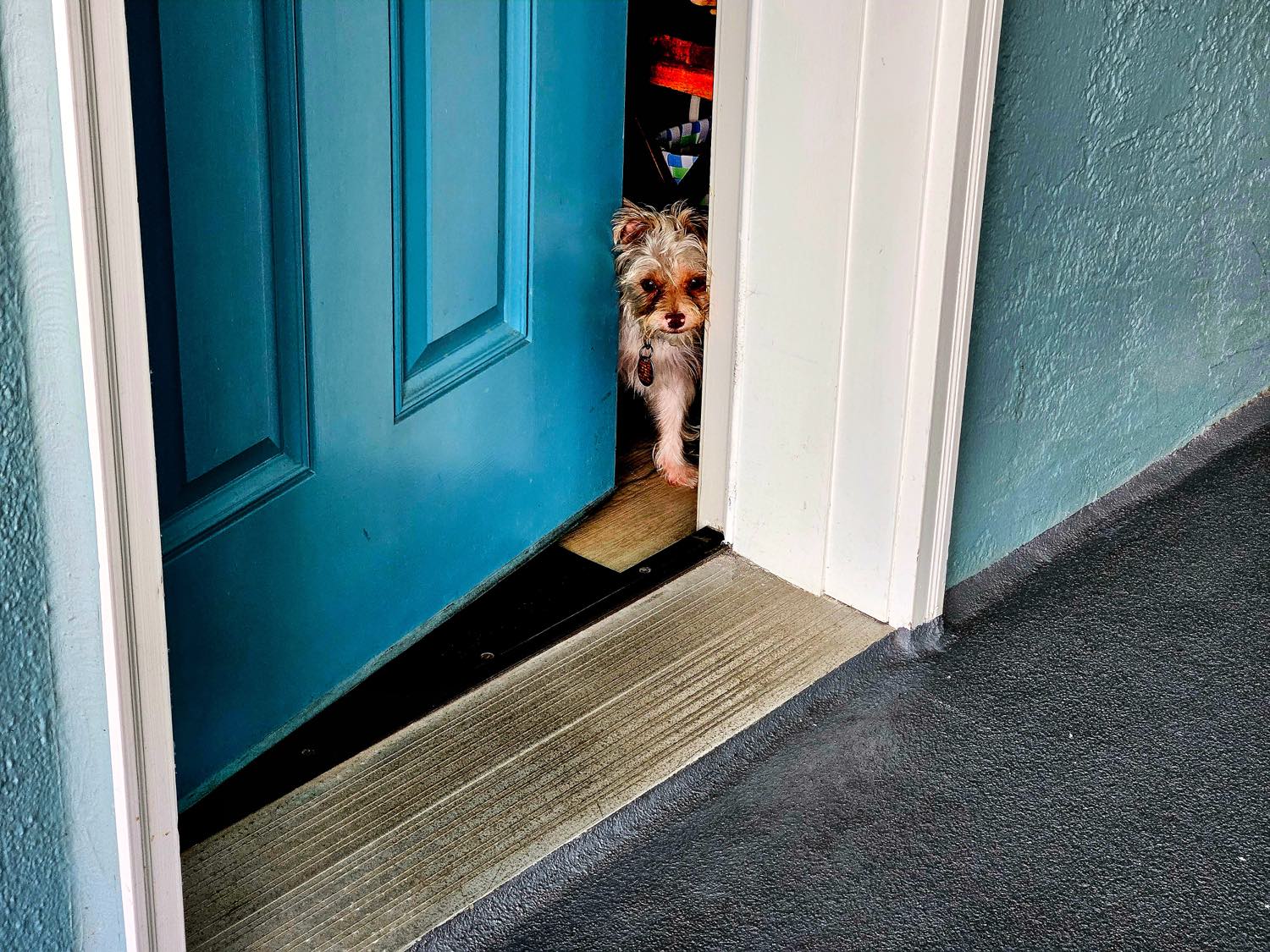
Door dashing is an impulse-control problem. Your dog has learned the door means fun is coming. Grip harder all you want, a dog that wants out will win eventually, so the real fix is a trained wait at the threshold.
So here’s what you do. Block the practice with management. Then teach that the door means park it. Pay the dog where it’s parked, crack the door an inch at a time instead of swinging it wide, and let only the release word send it out. Every trip through the door is a self-control rep, you’re not trying to out-muscle the dog.
- Your dog shoots past you the second the door cracks open.
- You’re tired of bracing and blocking and body-checking at every doorway.
- Your dog already slipped out once and it scared you bad.
- You’ve got kids, guests or delivery drivers opening doors when you don’t expect it.
- Your dog waits fine at home but the car door or the gate or a friend’s place is a whole different story.
- The keys jingle or the leash comes off the hook or the doorbell rings and the dog is already at the door.
- The sit falls apart the second your hand hits the handle.
- Gets through gaps you’d swear were too small for it.
- A door open two inches might as well be wide open.
- Ignores a spoken wait once it gets worked up at the door.
- It got out once already, and now you flinch any time somebody touches the door.
Why Door Dashing Is a Life-or-Death Problem
Door dashing is a safety problem first, manners come way after that. A dog that gets out the gate can end up in the road or in a fight with another dog or just gone, and guests and delivery drivers aren’t gonna warn you before they open a door, so it really only has to happen one time.
A lot of people lump door dashing in with counter surfing and jumping up on guests, and I get it, but I don’t think it belongs there. A dog jumping on your aunt is embarrassing. A dog in traffic is a whole other thing, and when you file it under manners it just never gets taken as seriously as it should.
The behavior only has to win once
It’s usually just normal life that gives the dog its chance, like you’ve got groceries in both arms when a kid swings the door open for a friend, and somebody’s always distracted when it happens so the dog gets a clean shot at the gap. And one good run outside is a lot of times enough to teach the dog the yard or the street or the neighbor’s cat is worth the sprint.
Treat the door like a busy intersection. Once you see it as a safety thing it goes right to the top of the list, cause you quit hoping the dog grows out of it and you start handling the door like anything else that could get your dog killed, and honestly that’s usually when the training finally sticks.
Why Dogs Bolt: Arousal at the Threshold
A doorway is a threshold and thresholds wind dogs up, and every time that door has meant a walk or the yard or somebody coming over the dog learned a little more, so every dash that worked just made the next one quicker.
The dog is really just doing what it got taught, cause doors have paid off big over and over and now the click of the latch by itself sets it off and it’s gone before you can get a word out, and nobody did that on purpose, it just got built one rep at a time.
The threshold is an arousal amplifier
Everything interesting is on the other side of that door and the dog can’t get to it yet, so the excitement just keeps stacking up until the door opens and it all comes out at once straight through the gap, which is the same thing you see with fence-line frustration or a dog busting out of the crate, and it’s why even calm dogs can lose their minds at a doorway.
If your dog goes out the door after something moving, like a cat or a car, that chase instinct is its own topic, so read the predatory motor pattern explained and then come back and build the wait.
To your dog an open door is the signal that something good is about to happen, so if you change what the open door means you’re fixing the dash right where it starts.
The Management Layer: Stop the Rehearsal
No training is gonna stick until the dog stops practicing the dash. Each bolt makes the habit a little stronger, so I’d use a leash or a baby gate or a two-door airlock and then the dog just physically can’t do it while you’re working on the wait.
Management isn’t cheating and it doesn’t mean you failed at training, it’s what keeps the dog alive and keeps your training clean while the wait is still shaky, cause every time the dog gets out you lose ground you already worked hard for, so keep that door shut, really shut, until the wait holds up on its own.
Layers that stop the dash today
Grip-and-hope at the doorway
- Putting your body across the gap every single time
- Grabbing the collar as the door opens
- Yelling wait when the dog’s already moving
- Hoping the dog just grows out of it
- Counting on a word you have to get out before the dog takes off
A managed threshold while you train
- Leash goes on before any door opens near the dog
- A baby gate or pen set back from the entryway
- A two-door airlock so one door is always shut
- A cue that sends the dog to a mat or crate
- Text guests and delivery drivers to wait until the dog is parked
Keep something physical between your dog and any door that’s in use until the wait holds up with distractions going on. One loose dog can undo weeks of work, or worse, so safety doesn’t wait for the training to catch up, and I’d only take the gate down once the dog earns it.
The Threshold-Wait Protocol, Step by Step
This turns an open door into the cue to wait instead of the cue to go. There are five steps and you start with the door shut and work out from there an inch at a time, paying the dog in a parked spot away from the door, and the wait only ever ends on your release word.
I’d do these reps cold, so not when you’re actually heading out, cause if there’s a real walk on the line the dog is too worked up to learn anything. Practice at random calm times and keep sessions short, two or three minutes, and quit while the dog is still getting it right.
I wouldn’t lean on a spoken command here, so walk up to the closed door and cue a sit or down a few feet back and reward it, and keep doing that till your hand heading for the handle already means park it, cause then you’re not racing the dog to get the word wait out.
Cue: the doorEvery treat goes to the dog in its parked spot a few feet back and not at the doorway, cause if you feed by the door you’ve taught the dog the door pays, but if you feed in the spot then the spot is where good stuff happens, and a dog hangs out where it gets paid.
Pay the spot, not the doorTesting the handle and cracking the door
With the dog parked, reach for the handle, and if the dog holds mark it and reward right there. If it breaks, calmly take your hand off and reset the park and try again with less movement, cause touching the handle shouldn’t mean anything until the dog can hold through it. This rep is easy to skip but it’s where the wait actually gets built.
Touch, hold, rewardCrack the door one inch and if the dog holds, close it and reward in the spot, and only add another inch when the dog is bored with the one you’re at. If it breaks the door closes and you go back a width. That way you get to a fully open door with the dog still parked, a long time before anybody actually walks out through it.
One inch at a timeSending the dog through
Then you make it harder one piece at a time, how long first and then how far and then distractions, so a longer hold and then you stepping through the door and then a person or a tossed toy out there. The open door never sends the dog, only the release word does, and after a while an open door just quits meaning go. There’s more detail in the impulse control drills.
Release, then goProofing the Wait: The Three Ds
A wait that holds on a quiet afternoon isn’t done yet. So you proof it with the three Ds, duration, distance and distraction. I’d only change one at a time cause if you stack them the whole thing falls apart, and only make it harder once the dog is bored with where you’re at.
I think of it like three separate dials and you never turn two at once, so when you add distance by stepping outside you take duration and distraction back down to easy, and once distance is solid you bring one of the others back up, cause a dog can only handle one new thing at a time.
Duration, distance, distraction in order
Start with duration, cause a longer hold at a closed door is the safest place to build patience. Then distance, so step through the door, then two steps out, then out of sight for a second, and come back and reward the dog that’s still parked. Distraction is last and it’s the hardest one. A person walking by, another dog, a tossed toy or the doorbell all go in this last stage, one at a time and at a distance the dog can handle.
A wait you trained at the front door doesn’t mean anything at the car. Dogs are funny that way, a skill at one door doesn’t carry to the next one on its own. So do short reps at the back door and the gate and the car and your buddy’s house too. Plan on it as a separate step and you won’t be surprised when the home wait doesn’t travel.
Troubleshooting a Dog Who Still Bolts
If a dog still bolts it’s usually cause you moved too fast or it’s still getting to practice between sessions, and a broken wait just means the door is still worth more than the reward, so I’d go back a width and reward a lot and build it back up an inch at a time.
1. The dog breaks the instant the door opens
Most of the time you just jumped ahead, so shut the door and go back to a width the dog can hold and pay big there before you add an inch, cause breaking at the open door just means the door is still more interesting than your treat and you gotta let the treat win at an easier step first.
2. The dog waits at home but bolts elsewhere
That wait never made it past the front door. I’d treat every new door like day one, short easy reps at the car, the yard gate, wherever the dog goes in and out.
3. The dog bolts only when guests arrive
People showing up gets a dog worked up, so the wait that holds on a calm afternoon falls apart at the doorbell. I wouldn’t fight it at the door, I’d train a spot on a mat or in a crate and send the dog there before you open up, and reward the spot a lot and only greet guests once the dog is settled. For the settle part, see how to teach a dog to settle.
4. The dog bolts toward moving things outside
Now you’re dealing with chase drive on top of door excitement. The dog isn’t just trying to get out, it’s going after the squirrel or the jogger or the car. Keep working the threshold wait, and add some work on the chase itself. The full outdoor version is in how to stop a dog chasing cars, bikes, and joggers.
If the wait falls apart no matter how easy you make it, the dog is still getting to practice somewhere. I’d look at your management first cause a dash between sessions quietly undoes the training, so fix the holes and start back at a closed door and the wait will come back.
The Door Is an Impulse-Control Rep
Door manners come down to impulse control, and you can train impulse control. A structured flirt pole session works the wait and the release while the dog is really fired up, and that carries over to the door. The dog that holds at the door is usually one that gets to practice holding still while it’s worked up somewhere else.
This part is easy to miss. At the door you’re asking the dog to sit still while everything in it says go, and that’s the same thing a good flirt pole session works on. The dog waits while the lure moves, lets go of the catch on cue, and holds it together when it’s the most fired up. So the pole builds the off-switch, and the threshold wait is where the dog uses it.
Why a walk will not fix a dasher
A tired dog still bolts cause dashing is about self-control and not extra energy, and structured impulse work is a different thing than exercise. When the dog practices waiting and letting go while it’s fired up, the door gets easier even on days you didn’t train at the door. For more on the tool, see the canine flirt pole reference.
Whimsy Stick Standard
It has a 450-lb Kevlar static line with no snap-back, so the lure moves the way your hand moves. That control is what lets you work wait and release cleanly with dogs under 30 lbs, and it’s the same self-control that holds a dog at the door. Shipping is $20 cause it ships in a longer box.
Shop Standard, $55.95Whimsy Stick Rugged XL Base
I bought the flirt poles I could find and handed them out to clients, and I watched what broke, so I built my own. It’s a one-piece 46-inch reinforced fiberglass rod with an 800-lb Dyneema static line, so there’s no snap-back. It’s for dogs 30 lbs and up and it’s good for working wait and release when the dog is really fired up. One lure included, free US shipping.
Add Rugged XL to Cart, $74.95Once the door has a real wait and the dog has a real off-switch, they back each other up. You stop dreading the doorbell, and the dog stops acting like an open door is a starting gun. For more on all of it, look at the buying guide and the prey drive training guide.
This is general information from a dog trainer, not veterinary advice. If your dog’s bolting comes with panic, breaking out of confinement or hurting itself, talk to a qualified behavior professional.
Door Dashing and the Threshold Wait, FAQ
The basics
Why does my dog bolt out the door?
Cause the door has meant walks and the yard and people and squirrels for its whole life, and doorways get dogs fired up anyway. It’s not defiance. Every dash that worked made the next one quicker, and a tighter grip won’t undo that, management plus a trained wait will.
How do I stop my dog from running out the door?
Two parts. Block it with a leash or a baby gate or a second door so the dog can’t keep practicing, and then train the threshold wait, closed door first and an inch at a time from there, paying the dog in its spot and sending it through only on a release word.
Is door dashing dangerous?
Yeah it is. Out the door can mean the road or a car or a dog fight, and kids and guests and delivery drivers open doors without asking you first. It only has to happen once. I look at threshold training as a safety skill way more than manners, and I’d keep the management up the whole time you’re training.
Should I use a command like wait, or should the door be the cue?
The door. If it all hangs on you saying wait, you’re racing a fired-up dog to get the word out, and you’ll lose that race on the reps that matter. Once your hand on the handle means park it, the dog holds before you open your mouth. Keep the spoken cue as backup.
Timing and difficulty
How long does it take to train a threshold wait?
Honestly it depends on the dog, so I’m not gonna give you a number, but short reps every day get you there faster and high-drive dogs usually take longer at the open-door and distraction stages. The biggest thing is whether you kept the dog from dashing between sessions, cause every bolt it gets to practice sets you back.
What if my dog breaks the wait as soon as the door opens?
Usually that means you went too fast. Close it up, back off to a width your dog can hold, and reward a bunch there before you add any more. The open door is still beating your reward, so make it easy again and build back one inch at a time.
Do I need treats forever to keep the wait?
Nope. Treats build it, then once it’s solid you hand them out only some of the time, and pretty soon the walk or the yard is the reward, and that only comes after the release. Just pay the wait often enough that it stays stronger than wanting to bolt.
Age, generalization, and guests
Can I train an older dog to stop bolting?
Yeah, threshold training works at any age cause it’s a learned cue. An older dog with years of dashing behind it has a stronger habit, so I’d lean harder on management while you build the new wait, and the steps are the same, it just takes more reps.
My dog waits at home but bolts at other doors. Why?
A lot of times the wait got trained at one door and never carried over. Dogs don’t figure a skill works in a new place, so a wait learned at the front door doesn’t mean anything at the car, the gate or a friend’s house until you train it there too, and I’d do a few short reps at every door the dog uses as its own step.
My dog only bolts when guests arrive. What do I do?
People showing up gets a dog worked up, so the wait that holds on a quiet afternoon falls apart at the doorbell. I’d train a spot away from the door instead, like a mat or a crate, and send the dog there before you open up, and reward the spot a lot and only greet guests once the dog is settled. After a while the doorbell means go to your spot.
Exercise and management
Does more exercise stop door dashing?
Not really. A tired dog will still bolt, cause this is about self-control, not leftover energy. Exercise helps a dog settle in general, sure, but what carries over to the door is impulse work, like a flirt pole session with waits and releases while the dog is fired up. That does more for the door than another walk.
Is a baby gate or an airlock cheating?
Cheating? It’s the smartest part of the plan. A gate or an exercise pen or a two-door airlock keeps the dog from practicing the dash while the wait is still shaky. Leave the barrier up until the wait holds with stuff going on, cause safety comes first and the training catches up.


