
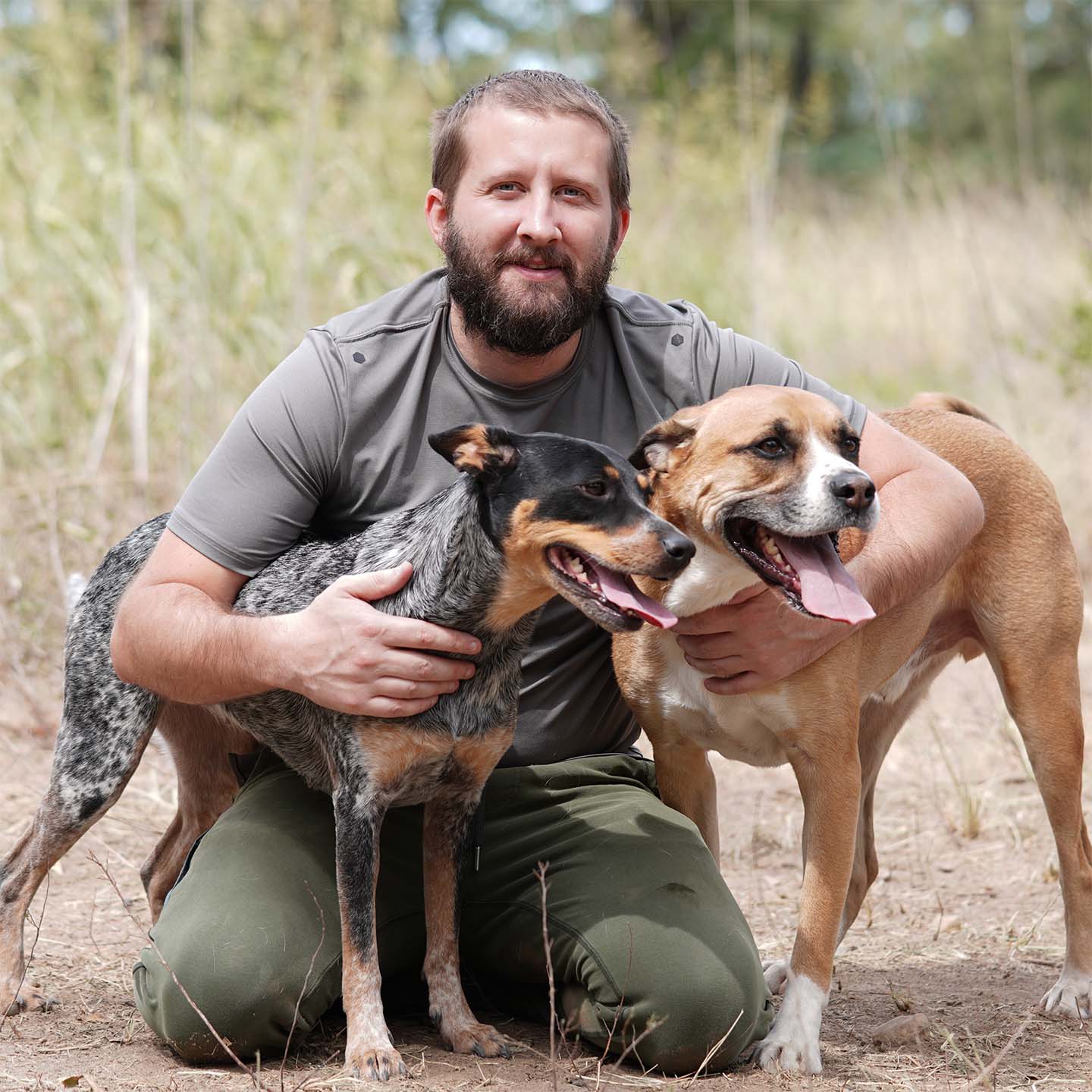
Quick summary
I’d go with the Rugged XL for a Boxer, and run it in a way that respects that short nose. I keep sessions shorter for Boxers than I would for a Lab or a Doberman, just a few minutes for a healthy adult and even less for a young dog. And only when it’s cool outside.
The Boxer-specific protocol is short bursts of chasing with breaks in between, so they get a chance to breathe. The drop-it when they’re all fired up is the big one for Boxers, cause letting go is exactly what a mouthy, jumpy Boxer needs to learn. A lot of Boxers stay puppy-like for a long time, and that’s not them being stubborn, it’s just how a lot of them are. This is my Controlled Freedom method, from about 10 years and around 400 client dogs, and it works fine with a dog that takes a while to grow up.
Who This Guide Is For
- Your Boxer is past puppyhood and still mouths, jumps, or loses it at the door.
- You’ve got a teenage Boxer and the teenage part just keeps going.
- The Boxer 500s happen all day long now, not just once in a while.
- You tried running the energy out of your Boxer and ended up with a fitter dog with the same problems.
- Your Boxer has breathing problems and you want to know what’s safe (start with your vet).
- You’ve got a Boxer and another playful dog in the same house.
Signs Your Boxer Needs Structured Impulse Control Work
- Grabs hands, sleeves, leashes or guests with their mouth when they get excited.
- Jumps on people when they say hi, even after you’ve worked on it.
- Can’t hold a sit-stay when the doorbell rings or people come over.
- Does Boxer 500s over and over all day, not just the odd zoomie.
- Counter-surfs, steals food or grabs stuff they know they shouldn’t.
- Barks at you or the door or other dogs when they don’t get their way.
- Is young and keeps getting called stubborn, hyper or untrainable.
The Boxer Drive Profile: Brachy, Playful, High-Drive
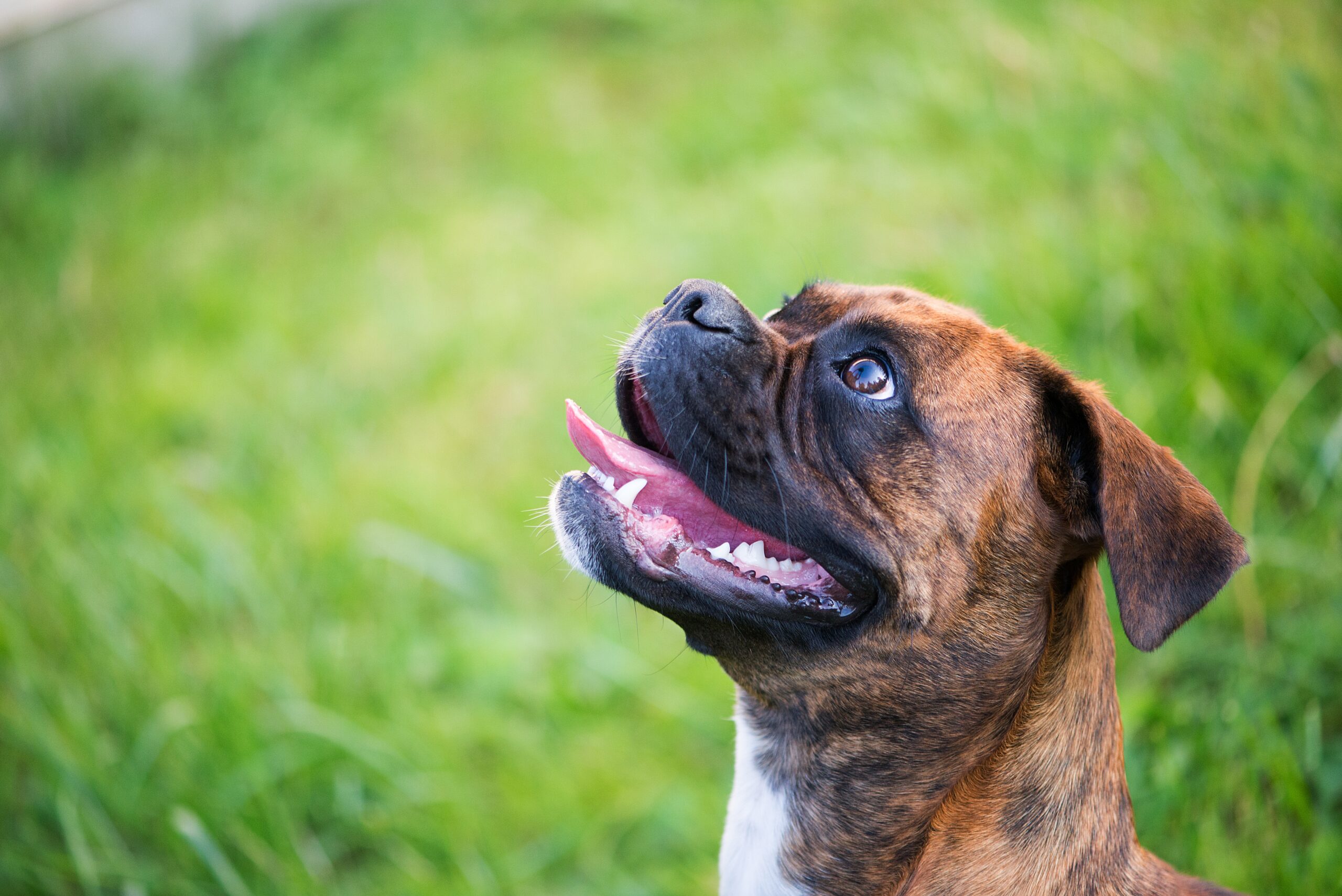
Picking a flirt pole for a Boxer starts with knowing what makes them tick. A lot of Boxers love to chase and they stay playful way into adulthood, they’re really tuned in to their people, and that short face means they can’t go hard for very long.
The breed comes from Germany and has a working past before it became the family dog it is now. So you get an athletic dog that loves to chase in a short-faced body. That can make them a handful to live with, but a lot of them do really well with structured play as long as you adjust it for them.
That short face changes how I’d run every part of this. Dogs cool off by panting, and a short-nosed dog has a harder time doing that. So I wouldn’t let a Boxer go hard for a long stretch, no matter how much energy they seem to have. Short bursts with breaks in between is how I’d do it.
A quick chase, then a pause where they catch the lure and hold it, gives them time to catch their breath without ending the session. That’s why how you run it matters more with a Boxer than with a lot of other breeds.
The long adolescence is breed-typical
A lot of Boxers stay puppy-like for a long time, goofy and wound up and ready to play, well past when you’d expect them to settle. That doesn’t mean your dog is stubborn or you did something wrong. That’s just how a lot of Boxers are.
A lot of owners expect their Boxer to calm down around a year and a half and then they’ve got a two-year-old still bouncing off the walls. So I’d keep treating them like a teenager longer, with shorter sessions and shorter waits, until they show you they’re ready for more.
What works for Labs and Dobermans
- Sessions can run longer
- Can handle warmer days better
- Longer chases are usually OK
- Usually grow up sooner
- Still watch the heat
- Ask your vet about heart checks
What works for brachy-class breeds
- Keep sessions short
- Only when it’s cool out
- Short bursts with breaks
- Can stay puppy-like a long time
- Heat is a big deal
- Ask your vet about their heart first
That short face is just something you plan around. Short bursts and breaks fit a Boxer. If you run one like a Lab with long nonstop chasing, they can get in trouble breathing, and a lot of them will keep going anyway cause they’ve got that much drive. So the safe way to do it is also the way that works. See the predatory motor pattern explained.
Breathing, Heart and Health Rules Specific to Boxers
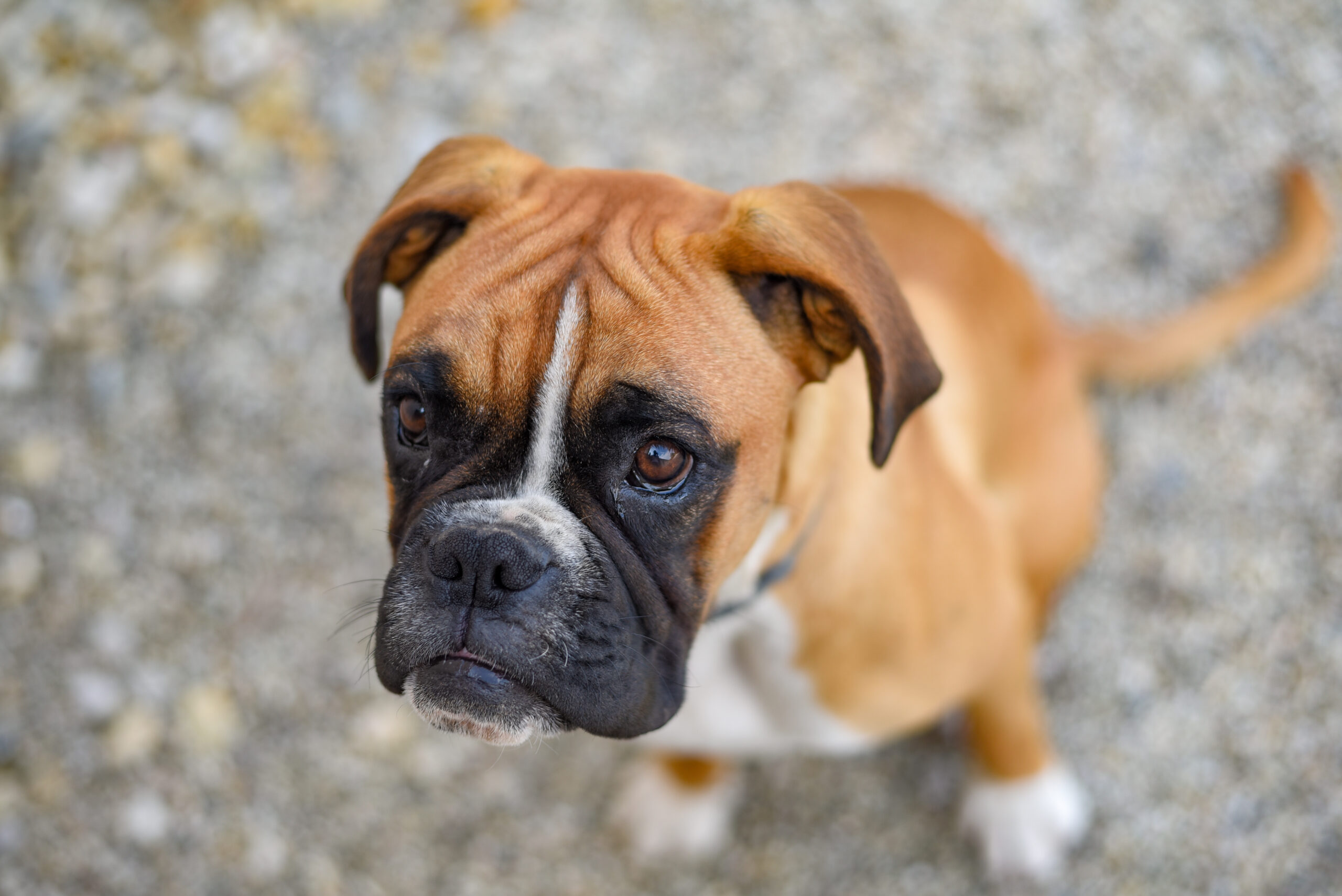
I’m not a vet, so this part is mostly about knowing when to ask yours. The short face is the main thing I plan around with a Boxer. There’s also a heart condition that’s named after the breed, and that’s something your vet should talk to you about before you start hard exercise. Get them checked out first and ask what’s OK for your dog.
Short-nose breathing management
A Boxer’s face isn’t as flat as a Pug or a Bulldog, but it’s still short. So I’d change three things.
One, only do it when it’s cool out cause panting doesn’t cool them down as well, so on a warm day I’d just skip it. Two, keep the session short, a few minutes for a healthy adult. Three, watch their breathing the whole time. If it gets louder, the panting gets really hard, or their gums change color, stop right then.
If your Boxer has been diagnosed with a breathing problem or has had airway surgery, don’t do any flirt pole work until your vet says it’s OK. Some of those dogs shouldn’t do chase games at all. Ask your vet what they can do instead, like scentwork, some easy training or short slow walks. For more on the tool itself, see the canine flirt pole.
Boxer cardiomyopathy (ARVC): ask your vet
Boxer cardiomyopathy, or ARVC, is a heart condition named after the breed. I’m a trainer, not a vet, so I’ll leave explaining it to your vet. Ask them about it before you start hard exercise.
Your vet can tell you what testing makes sense and how often to recheck as your dog gets older. If your Boxer has been diagnosed with a heart problem, skip the flirt pole unless your vet says otherwise. And since Boxers are a short-nosed breed anyway, check with your vet before starting any hard exercise.
Talking to your vet before you start
Your vet may want to run a heart test before your Boxer does a lot of hard running. Let them decide what’s needed, that’s their job and not mine.
Before you start chase work I’d ask your vet if your dog is OK for short bursts of hard running, if it needs any heart testing first, what signs mean you should stop a session right away, and whether you should check again before summer, and then ask again at the yearly visit, cause things change as they get older.
There are some Boxers I wouldn’t do chase work with. That’s a Boxer your vet hasn’t checked out yet, a Boxer with a heart problem unless the vet clears it, and a Boxer with a breathing problem or one getting over airway surgery.
Same goes for a young puppy, who should just get the lure sitting still for now till your vet says they’re ready to chase full speed, any Boxer on a hot day, shade or not, and a Boxer being treated for something serious. For those dogs I’d do scentwork, some obedience, mat work or a food puzzle instead.
The Teenage Boxer Phase (It Can Run Long)
The teenage stretch with a Boxer can go on a long time. Longer than a lot of people expect. Plenty of owners figure their Boxer will settle down around a year and a half and then they’re still dealing with a wall-bouncer way after that. So keep the teenage version of the routine going until your dog shows you they’re ready for more.
With a teenage Boxer I’d change three things.
One, keep sessions even shorter than you would for an adult. A young dog can’t hold it together as long, and you’ve still got that short face to think about.
Two, start the wait at a few seconds and build it slow. Ask for too much too soon and they fail, and a Boxer will take that as the rules being up for discussion.
Three, expect them to test you. A smart, playful young Boxer is gonna come up with all kinds of ways to break the wait or jump the release. That’s just being a Boxer, it doesn’t mean it isn’t working.
What it usually looks like with a teenage Boxer
At first your Boxer is gonna treat the whole thing like a big joke. They’ll slide forward out of the wait, grab the lure early and play keep-away instead of dropping it, and that’s normal. Every time you calmly reset, they learn the rules are real.
Then the waits usually get steadier, the drop-it starts working when they’re a little worked up, and the zoomies after a session get shorter. After that, you may start seeing it carry over to the mouthing and the door. Every dog goes at its own speed, so don’t hold yours to a schedule. In general, what clients tell me is their dogs are a lot more relaxed and calmer and seem more satisfied after using the flirt pole.
The Boxer-Specific Protocol and Daily Schedule
It’s the same five steps I use with every dog, wait, chase, catch, drop it, then all-done and settle. With a Boxer I just keep the chases short with breaks, keep the whole session short, and put a lot of work into the drop-it, cause that’s what helps with the mouthing.
Lay the lure on the ground and keep it still, let your Boxer lock on, and then ask for a sit or a stand and have them wait, a few seconds for a young dog and a little longer for an adult. A lot of Boxers find the wait hard cause they’re so wound up to play. Keep it honest, and if they break it you just reset.
Success looks like: your Boxer stays put without creeping, eyes on the lure, ready to go but still.
Cue: WaitGive the release word, then move the lure in short quick bursts and stop in between so they can catch it and catch their breath. I wouldn’t let a Boxer chase nonstop for long, so watch their breathing during the breaks, and if they’re still panting hard, make the break longer before you go again. A Boxer is quick and agile and they’ll cut tight turns, so give them some room and keep the lure on the ground.
Success looks like: your Boxer goes hard for a short burst, then takes a breather during the pause instead of pulling at the lure the whole time.
Cue: Get itThe catch, release, and all-done
Every couple of bursts, stop and let your Boxer catch the lure and hold it a few seconds, a little longer than you would with a lot of dogs, cause that’s their chance to breathe. So they’re catching their breath while you’re working on self-control, and that’s a good trade.
Success looks like: your Boxer shakes and mouths the lure happy, the breathing slows down, and they look back to you when you ask for the out.
Cue: (pause, let the Boxer possess)Ask for the out, reward them for letting go, and start over at the wait. Getting a drop-it when your Boxer is the most fired up is the most important thing you’ll practice, cause that’s the skill that helps with mouthing. A dog that can let go of the lure when they’re wound up has a better shot at letting go of a hand or a sleeve, and it helps with the jumping too. For the full progression, see flirt pole impulse control drills.
Success looks like: your Boxer lets go the first time you ask, no tug of war, and looks at you for the next round instead of grabbing it again.
Cue: OutEnding the session and building the off-switch
After a few minutes, and less for a young dog, end with one last catch and drop-it. Say all-done, put the lure where they can’t see it, then ask for a down or place and reward them for being calm, and don’t just walk away and leave your Boxer to wind down by themselves. Wait till the breathing is back to normal before you let them off place. They learn the game starts with you and ends with you, and that’s how you start building an off-switch in a dog that doesn’t seem to have one.
Success looks like: your Boxer settles on place pretty quick, the breathing comes back down, and they hold the down without looking around for the lure.
Cue: All done → PlaceThe daily schedule for a Boxer
Morning structured session. A short session of the full routine in the morning while it’s still cool, which gets the day started right, and the cool air is easier on that short nose.
Mid-day mental engagement. Some obedience, scentwork or tricks in the middle of the day, and this isn’t a second flirt pole session, it just gives their brain something to do without making them breathe hard.
Evening decompression walk. An easy walk on leash where they can sniff, once it cools off in the evening. For Boxers that are hyper or wound up in the late afternoon, a short flirt pole session in the evening a lot of times works better than another walk.
How This Helps With Boxer Mouthing and Jumping
Mouthing and jumping are two of the biggest Boxer complaints, and a lot of times they come from the same place, a dog with a lot of drive to chase and play and nowhere to put it. That bouncy Boxer hello doesn’t mean you failed at training. Your dog wants to chase and grab and hold onto something, and if they don’t have a place for that, people end up being the target. A flirt pole gives them the right thing to do it with.
I’d look at it in three parts.
One, the session gives your Boxer something they’re allowed to chase and mouth and hold, so it goes on the lure and not on hands or sleeves or guests.
Two, the drop-it teaches them to let go when they’re the most worked up. If they can let go of the lure in the middle of a chase, they’ve got a better shot at letting go of a guest’s sleeve too.
Three, the all-done and settle teaches them to calm down when you ask, and that’s the same thing you need at the door before the jumping starts.
What the mouthing fix looks like at home
Why traditional Boxer training fails the mouthing problem
A lot of people try to fix mouthing and jumping by correcting it, ignoring it, or handing the dog a toy. The problem is none of those give the drive anywhere to go, so it’s still there. Turning your back doesn’t make the drive go away. It just finds something else to land on the next time they’re excited. Giving that drive a real outlet and teaching some self-control along with it is what I’d do.
Boxer Behavior Problems This Can Help With
A lot of Boxer problems come back to the same thing, a dog with a lot of drive and play in them and no place to put it. I have found that a dog with a satisfied animal instinct is much better behaved. Working on each problem one at a time a lot of times doesn’t stick when the drive is still bottled up. This isn’t a cure for anything, but it gives the drive somewhere to go.
Mouthing and jumping during greetings
Mouthing hands, sleeves, and leashes. Mouthing is probably the number one thing Boxer owners complain about. The flirt pole gives your dog something they’re allowed to mouth, then you practice the drop-it when they’re wound up. Stick with it every day and look for less mouthing and a quicker let-go when you ask.
Jumping during greetings (the hop-and-bop pattern). Jumping on people is a lot of times the same excitement as the mouthing. The all-done and settle at the end of every session is the part that helps here, cause it teaches them to calm down when you ask. Then practice a sit or place when the doorbell rings, and keep at it.
Zoomies, demand behaviors, and door-charging
Boxer 500s and constant zoomie patterns. The Boxer 500 is just a Boxer thing, but if it’s happening all day long, that dog has a lot of energy with nowhere to go. A short chase-and-catch session gives that energy a place to go. The zoomies probably won’t disappear, but they tend to happen less and end sooner.
Demand barking and handler escalation. This is a loud, pushy dog that hasn’t learned self-control yet. The sessions teach them the fun comes from the routine and not from yelling at you. You also have to quit answering the barking, every single time, or it won’t stick.
Counter-surfing and pulling
Counter-surfing and food stealing. This is the same self-control problem showing up around food. The flirt pole has your dog practice self-control while they’re all fired up, and that’s the hard version, so the easier ones like leaving the counter alone get easier to teach after that. A lot of Boxers are smart and love food, so use that.
Pulling on leash or destructive chewing. Both of these a lot of times come from energy looking for somewhere to go. A session before a walk can mean a calmer dog that pulls less. A session before the crate or before you leave can mean a dog that lays down instead of going after the couch. For more on destructive chewing, see why dogs destroy things when bored.
The flirt pole helps a dog with too much energy and not enough self-control. It won’t fix real separation anxiety where the dog panics, or fear aggression, or a dog that’s bitten another dog, or compulsive stuff. Those need a qualified trainer or a vet behaviorist. You can use the flirt pole alongside that work, but it doesn’t replace it. For reactivity, see reactive dog training.
Which Whimsy Stick Fits Your Boxer
For an adult Boxer I’d go with the Rugged XL. Adult Boxers are well past the 30-lb line for the Standard. The XL is one 46-inch reinforced fiberglass rod with no joints and a Dyneema line rated at 800 lbs that doesn’t stretch, so the lure goes where your hand goes. That control makes it easy to do short bursts and stop on a dime. A good flirt pole should be light and somewhat flexible but not too flexible, and at about 8 ounces you can swing it for a while.
I wouldn’t use the Standard on an adult Boxer, cause even the smaller females end up over 30 lbs. With a puppy, keep the lure still and work on the wait, the drop-it and trading for a treat. Let your vet tell you when your puppy is ready for full speed chasing. Once they’re there and the vet has checked them out, the Rugged XL is the one.
Recommended equipment for Boxers
Whimsy Stick Rugged XL
Reinforced fiberglass rod and a Dyneema line rated at 800 lbs that doesn’t stretch or snap back. I bought the flirt poles I could find and handed them out to clients, and a lot of them were too short or bulky or too heavy, or had a violent bungee cord. So I built my own and tested it on high-drive client dogs for years before I sold one. It’s easy to do short bursts and stops with it, and that’s what a Boxer needs. Free US shipping and a 30-day money-back guarantee. I’m a one-man company and I want you happy with it, so I’ll work with you.
Shop Rugged XL, from $74.95If you want all the details on how it’s built and what to look for in any pole, see the complete flirt pole buying guide. If you’ve got another working breed, the Lab and Doberman guides are in the sidebar.
Best Flirt Pole for Boxers, FAQ
Equipment selection
What is the best flirt pole for a Boxer dog?
I’d go with the Whimsy Stick Rugged XL, cause adult Boxers are well over 30 lbs and the Standard is too light for them. The line doesn’t stretch, so you can do short bursts and stop when you want instead of making them sprint nonstop, which matters a lot with a short-nosed dog, and the one-piece rod handles the quick turns fine.
Brachy safety & puppy timing
Is a flirt pole safe for Boxers given the brachycephalic airway issue?
It can be, but I’d be stricter with a Boxer than with a longer-nosed dog, cause a short-faced dog has a harder time cooling off, so ask your vet first. Then do short bursts with breaks, keep the whole session to a few minutes, only do it when it’s cool and watch their breathing the whole time. If your Boxer has a diagnosed breathing problem or has had airway surgery, don’t do it unless your vet says OK.
At what age can I start flirt pole training with a Boxer puppy?
You can start a young puppy with the lure sitting still, just working on the wait and the drop-it for a few minutes, and as they get older you can add slow drags and really short chases, but I’d save full speed chasing for when your vet says their body is ready for it.
Cardiac safety
What is Boxer cardiomyopathy and does it affect flirt pole work?
It’s a heart condition named after the breed, also called ARVC, and I’m a trainer, not a vet, so ask your vet about it before you start any hard exercise and let them tell you what testing makes sense. If your Boxer has been diagnosed with it, skip the flirt pole unless your vet says otherwise.
Mouthing, jumping & adolescence
Will a flirt pole help with my Boxer’s mouthing and jumping?
It can help a lot, cause the mouthing and that bouncy hello a lot of times come from a dog with a lot of chase and play in them and nowhere to put it, and the flirt pole gives them something they’re allowed to mouth, and you practice the drop-it while they’re wound up, which helps with letting go of hands and sleeves. Do it every day and stick with it.
How long does the Boxer adolescent phase last?
A lot of times longer than people expect, cause plenty of Boxers stay goofy and puppy-like well into adulthood, so I’d keep the teenage version of the routine, with shorter sessions, shorter waits and more resets, going until your dog shows you they’re ready for more.
Session length & zoomies
How long should flirt pole sessions be for a Boxer?
Just a few minutes for a healthy adult when it’s cool out and less for a young dog, and when it starts warming up I’d cut it way down, and on a hot day just skip it, cause a short-nosed dog has a hard time cooling off. A lot of Boxers will keep going even when they’re struggling, so you watch the clock and their breathing, not their enthusiasm.
Will a flirt pole tire out a Boxer with the famous boxer zoomies?
I wouldn’t try to tire a Boxer out, I’d give that energy somewhere to go, cause a lot of times the zoomies are a dog that’s all wound up with nothing to finish and a short chase-and-catch session gives them that. The zoomies probably won’t go away completely, but they tend to happen less.
Breed comparison & timeline
How does the Boxer compare to other working breeds for flirt pole work?
The biggest difference is that short face, so I’d keep Boxer sessions shorter than I would for a Lab, with more breaks, and a lot of Boxers are smart and playful and stay young a long time. The drop-it work is where a Boxer a lot of times gets the most out of it, cause mouthing is such a common problem with them.
How long until I see behavior changes in my Boxer?
Every dog is different so I won’t give you a date, but at first your Boxer is gonna clown around and try every way to dodge the wait, and then the drop-it usually starts working, and after that you may see it carry over to greetings and the door. What clients tell me in general is their dogs are a lot more relaxed and calmer and seem more satisfied after using the flirt pole. Doing it every day matters most.
When the drive looks missing
What if my Boxer has zero prey drive or has never chased anything?
Some dogs just need to warm up to it, so if your Boxer has never chased anything, try the 5-session ramp, short sessions where they just check it out, then slow drags before any chasing. A lot of dogs come around once they get the idea, and if yours seems scared of it, work on that before you push the chase.


