
TL;DR
Inside, a high-energy dog or just a plain active one needs one thing for the body and one for the brain, and you do them on purpose. Use a flirt pole with the lure kept low, or a tug with rules, for the body. Then feed a meal through a puzzle feeder or snuffle mat and finish on a lick mat. Stuck inside for the whole season? The winter exercise plan covers the cold weather side.
Who This Is For
- Apartment owners with a dog built for a farm
- Anyone facing a long winter or a rainy season
- People who come home too late for a real walk
- Owners whose dog ignores every toy in the basket
- Households where the dog runs laps at 9 pm
Signs Your Dog Is Going Stir-Crazy Inside
- Pacing between the door and the window
- Evening zoomies that shake the floor
- New chewing on shoes, cords, or cushions
- Barking at every hallway sound
- Toys dropped in your lap on repeat
Why Most Indoor Toys Fall Short
Most indoor toys don’t cut it for a high-energy dog cause they only cover half of what it needs. A chew or a puzzle works the mouth and the brain but not the legs, and a ball bouncing off the walls works the legs but there’s no finish to it. Inside, the dog needs one thing for the body and one for the brain, and you do them on purpose.
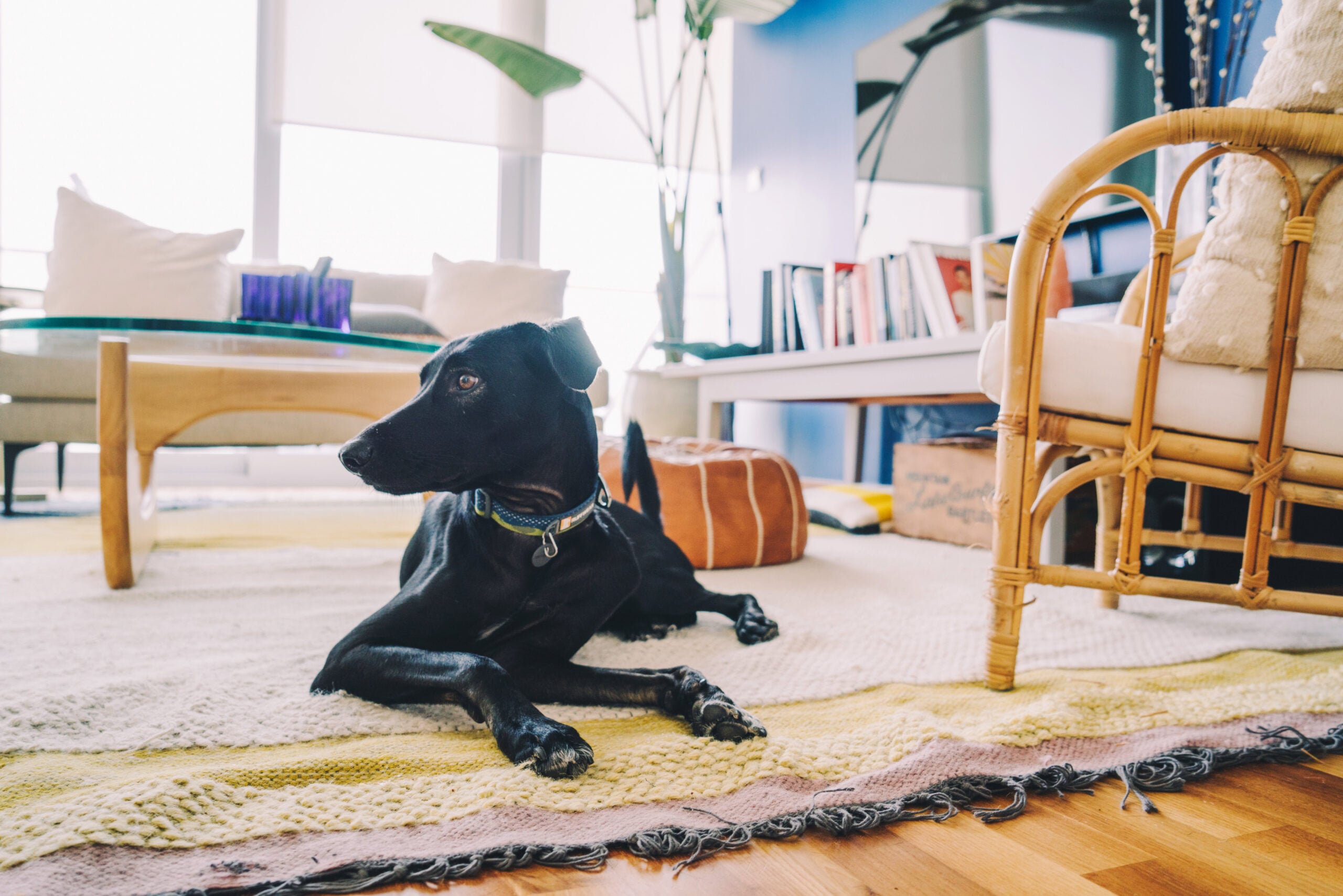
A basket of toys doesn’t fix that, cause a toy that just sits there stops being interesting. The AKC’s guide to bored dogs says to rotate toys so an old one feels new again, and it warns that a 10-minute stroll around the block isn’t likely to tire out any dog.
Brain work counts, but it isn’t the whole job
Mental work is real work too. PetMD notes that mental exercise can tire a dog out even more than physical exercise, especially working breeds. But with a driven dog, a day of nothing but puzzles can still end with zoomies at bedtime, cause the legs want their turn too.
Six Indoor Toys, Compared
For burning energy inside, a flirt pole with the lure kept low and a tug toy with a trained release do the most. For the brain, use a puzzle feeder, snuffle mat or lick mat. Hide-and-seek and nose games are somewhere in the middle, and they don’t cost a thing.
| Toy or game | Space needed | Energy burned* | Noise | Supervision |
|---|---|---|---|---|
| Flirt pole, low lure | About 8 x 8 ft cleared, or a hallway | High | Low with a rug down | Always; put it away after |
| Tug with rules | A few feet | Medium to high | Low | Always; it’s a two-player game |
| Puzzle feeder | A bowl’s footprint | Low body, high brain | Varies by design | Yes, until you know the dog |
| Snuffle mat | A mat’s footprint | Low body, high brain | Quiet | Yes; pick it up after |
| Lick mat | A mat’s footprint | Low; calming | Quiet | Yes |
| Hide-and-seek, nose games | Several rooms | Medium | Quiet | You run it |
*The energy ratings are my judgment as a trainer, not lab measurements.
Flirt pole, run low
Out of the six, this is the only one that gives the dog the whole chase, so the stalk, the sprint, the catch and the win. Clear about 8 x 8 feet, put a rug that won’t slide down on hard floors, and keep the lure on the ground for 5 to 10 minutes. The apartment flirt pole guide covers how to run it in tight spaces, hallway dashes and all.
Tug with rules
Tug burns a lot of energy inside as long as the dog lets go on cue. The AKC’s tug guide cites studies that found tug doesn’t make dogs aggressive, and a trainer quoted there recommends 10 to 15 second bursts with a trained out and the spine kept straight. Get a rope, rubber or fire hose tug with some length to it or a handle on each end so your hands stay away from the teeth. You can drill the out with the impulse control drills.
Puzzle feeders
Feed one meal a day out of a puzzle and not a bowl. The ASPCA calls food puzzles a great way to slow down eating and add mental work, and says to watch closely with any homemade one. Start easy, cause an early win keeps the dog trying.
Snuffle mats
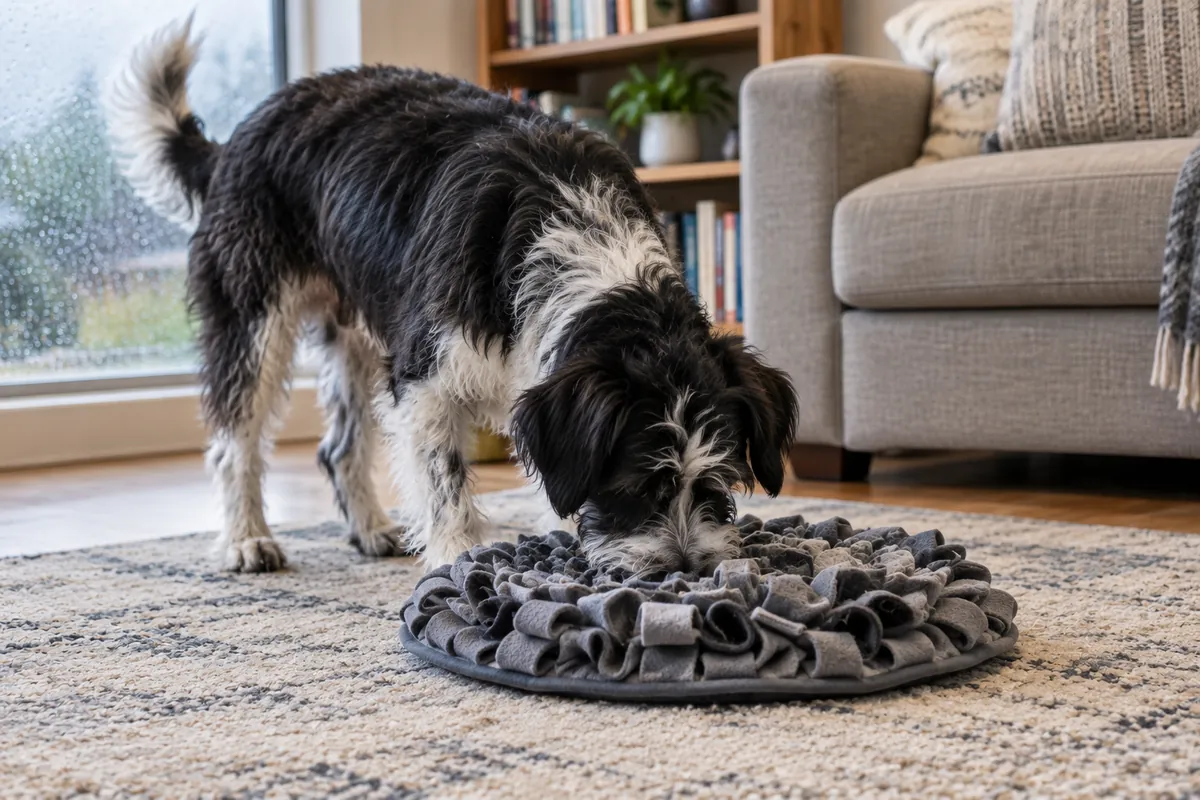
A snuffle mat hides kibble in strips of fabric so the dog has to sniff it out. The AKC says they help keep a dog active when it’s too hot or cold to be outside much. It also says they’re not a good fit for aggressive chewers, so pick the mat up when the food’s gone.
Lick mats
A lick mat is for winding down, so use it after the workout, not in place of it. The AKC’s lick mat guide suggests frozen broth to calm a dog during storms or fireworks, says to watch them with it, and warns that some peanut butter has xylitol, which is toxic to dogs.
Hide-and-seek and nose games
These don’t cost anything and they still work the dog’s nose and its recall. The AKC’s indoor games list includes hide-and-seek, which needs a solid sit, stay and come, and a shell game with treats under boxes. For more brain games, see mental stimulation for large dogs.
An Indoor Day That Actually Tires the Dog
Do the body job first, then the brain job, then a settle. About ten minutes of flirt pole with the lure low, or tug, takes the edge off. A meal in a puzzle feeder or snuffle mat works the nose, and a lick mat on the dog’s bed teaches it to come down. Do it every day you’re stuck inside.
Body, brain, then bed
Chase or Tug
Flirt pole with the lure kept low, or tug with a clean out on cue.
Work for Dinner
Put the meal in a puzzle feeder or a snuffle mat.
Lick and Rest
A lick mat on the dog’s bed and then lights out.
That last step matters more than it looks like it does. A dog that never practices calming down can stay revved up even after good exercise, and that’s why teaching a dog to settle belongs in the plan.
Indoors, pair one body job with one brain job, then end on a settle, and that’s about all there is to it.
Indoor Safety: Floors, Space, Chewing
Inside, it’s usually the floor and the furniture that cause the trouble. So clear out a spot, throw a rug that won’t slide down on hard floors, and keep that lure low so your dog isn’t jumping around. Every chew should be too big to fit all the way in their mouth, and I’d watch your dog with any new toy till you know what it’s gonna do with it.
The chew rules come from VCA Animal Hospitals, and VCA also says to toss a toy once the stuffing shows, the rope frays or the rubber breaks. Cause if a chunk gets swallowed it can get stuck in the stomach, and that can mean surgery.
Look up and look down before you start. Watch out for ceiling fans and hanging lamps, move the coffee table out of the way, and put a rug down on tile or hardwood so the dog can actually get a grip.
Never leave the pole or a tug out with an unsupervised dog. The full checklist is in is a flirt pole safe for dogs.
Why a Flirt Pole Is the Indoor Pick
A flirt pole is my pick for inside cause it’s the only toy here that finishes the chase in a small space, and you control how fast it goes. Run it low for ten minutes and a wired dog gets a real sprint and a real catch. Pick it by weight, so the Standard for under 30 lbs and the Rugged XL for 30 lbs and up.
But be honest about what it can’t do. For big working-line dogs, sessions inside are an extra, they don’t fully replace time outside. A big dog has a long leap and needs the room you only get outdoors, so get outside when the weather lets you. The flirt pole training guide shows how to run both.
The poles have 4.9 stars across 38 product reviews, and there are 306 reviews across 7 platforms counting my training work, from about 10 years and around 400 client dogs. Read the Whimsy Stick reviews before you decide.
Whimsy Stick Flirt Pole
Sized by weight: the Standard has a 450-lb Kevlar line for dogs under 30 lbs, and the Rugged XL has an 800-lb Dyneema line for dogs 30 lbs and up. Free US shipping on Rugged XL. Small dog? Get the Standard, $55.95.
More for the Indoor Dog
Want more of this in your Google results? Add Whimsy Stick as a preferred source.
Indoor Dog Toys: FAQ
What are the best indoor toys for high-energy dogs?
I’d pair something physical with something for the brain. A flirt pole kept low, or a tug toy with a release they know, works the body, and a puzzle feeder or snuffle mat or lick mat works the head. Honestly one of each, used every day, is better than a whole basket of toys your dog ignores.
How do I tire out a high-energy dog indoors?
The way I’d do it is body first, then the brain, then let them settle. So about 5 to 10 minutes of flirt pole with the lure low, or some tug, then feed a meal out of a puzzle feeder or snuffle mat, and finish up with a lick mat on their bed.
Can you use a flirt pole indoors?
Yeah you can. Clear about 8 x 8 feet or use a hallway, put down a rug that won’t slide if you’ve got hard floors, look out for ceiling fans, and keep the lure on the ground so your dog isn’t jumping. About 5 to 10 minutes is plenty.
Do puzzle toys tire a dog out?
They do help. PetMD notes that mental exercise can tire a dog out even more than physical exercise. But a high-drive dog is usually still gonna need something physical too, so I’d pair the puzzle with a short chase or tug session.
Are snuffle mats good for dogs?
For most dogs, yeah. The AKC says they turn sniffing into a game and help when it’s too hot or cold to be outside much. They’re not great for heavy chewers though, so pick the mat back up once the food’s gone.
Is tug of war a good indoor game?
Yeah, as long as there’s rules. The AKC cites studies that found tug doesn’t make dogs aggressive. Keep it in short bursts, teach an out you can count on, keep their back straight, and with puppies and seniors only pull back lightly.
What indoor games can I play with my dog?
Hide-and-seek, a shell game with treats under boxes, and a simple obstacle course made out of boxes and chairs are all on the AKC’s indoor list. PetMD adds “find it” with hidden toys. And I’d throw in a short tug or flirt pole session for the physical side of it.
How much space do I need to play with my dog inside?
Usually less than you’d think. Tug and puzzles and snuffle mats and lick mats only need a few feet, and a flirt pole works in about 8 x 8 feet of cleared floor, or down a hallway doing back and forth dashes.
Which indoor toys are safe to leave a dog alone with?
Honestly, not many. VCA Animal Hospitals says to watch a dog while it chews and toss toys once they break, and the AKC says to watch them with lick mats and pick up snuffle mats after. And don’t ever leave a flirt pole or a tug out with a dog nobody’s watching.


