
Will Neutering Calm My Dog Down? A Trainer’s Answer
Will neutering calm my dog down? If what you mean by calm is he quits roaming and he quits lifting his leg in the house and he quits mounting, then there is a pretty good chance of it, cause those run on testosterone. If what you mean is he quits bouncing off the walls and pulling on the leash and jumping on people, then I would not count on the surgery for that, and VCA Animal Hospitals says “neutering does not cause a change in personality, guarding instincts, intelligence, playfulness, or affection.” All of that energy is still going to be in him the week after, and it is going to need a place to go same as it did before.
I am not telling you to neuter him or not to. That one is between you and your vet, and there are health reasons on both sides of it that I am not the one to weigh for you. What I can tell you about is the behavior, so that you know what you are getting out of it and what you are not before you go in.
By Christopher Lee Moran, working dog trainer, about 10 years and around 400 client dogs. No certifications or vet credentials, I learned by doing the work. I make the Whimsy Stick, which is a chase toy, so I’m not neutral about any of this.
What neutering does change
There is a study on this that I see people point back to all the time and it is from 1997 out of UC Davis, where they had 57 grown male dogs that all had some kind of a problem behavior and they got them castrated and then they called up the owners to see what it did. And what the owners told them, according to that study, is the urine marking and the mounting and the roaming got better by half or more in at least 60 percent of the dogs, and for somewhere between 25 and 40 percent of the dogs it was 90 percent better or more than that.
So those three are what the surgery is good at, and you can see why, cause a dog that is out roaming is out looking for a female, and the marking and the mounting are tied up in the same thing. I would not put every bit of mounting in there, and I say that cause of something I ran across in that Sydney paper I get to further down, where they were talking about a dog getting on the furniture or on people and what they wrote was “perhaps this activity is motivated by play or anxiety,” so that kind I would not expect the surgery to do much with. The American Kennel Club says about the same, that “neutering can often, though not always, help reduce or eliminate undesirable behaviors, such as leg-lifting and mounting,” and I would pay attention to where they put “though not always” in there.
It did not matter how old the dog was
One thing out of that study that I did not expect was the age of the dog did not tell them anything, and neither did how long he had been doing it. What they wrote is that the age of the dog or how long the problem had been going on “does not have value in predicting whether castration will have a beneficial effect.” So if you have got a five year old that marks in the house, nobody can tell you he is too old for it to help, and they can’t promise you it will either.
What it does not change
I went back through the summary of it to see if they said anything about energy and they did not, there is not one word in there about the dog being calmer or slower or having less go in him after. And when I thought about it that made sense to me, cause marking and mounting and roaming are all things he does on account of there being females around, and wanting to run is not that. If he is a herding dog or a bird dog or a terrier then he is going to want to run after the surgery the same as he did before it, cause he got that from how he was bred.
Playfulness is on that VCA list of things it does not change, and when I read that I took it as them saying the same thing I am. Say he drags you down the street to get at a squirrel, well that is prey drive and I would not be counting on a surgery to take that out of him, and it is no different with the dog that jumps all over your company or the one that will not lay down at night. Nobody has worked that dog yet and nobody has showed him how to settle is what I see when I look at him, and I do not know of a surgery that does either one. What I would not lump in there is a dog that is fine all day and only tears the place up when he gets left by himself, I would have your vet hear about that one cause it can be him being scared and not him being bored.
He might even put on weight
I did find one thing on that VCA page about him slowing down and it was his metabolism they were talking about and not him. “Neutering a dog will reduce his metabolism; however, obesity is the result of overfeeding and lack of physical activity” is how they wrote it and they have it down as one of the downsides. So he could get fat easier and still have every bit of the energy he had, and I had to read that twice, cause to me that says watch his food and do not go cutting his exercise back once he is healed up.
What about aggression
People ask me about aggression with this and I would be careful what you are expecting to get there, cause I read what I could find on it and it does not all point the same way. If you go by the vet pages it sounds pretty good, VCA puts “reduces certain types of aggression” on the list of reasons to do it and what the AKC has is it “may also decrease aggressive behavior in some dogs,” and then I got to reading the studies themselves and I did not come away near as sure as those two pages sound. Even those UC Davis people that got the good numbers on marking did not get anywhere close to that on aggression, and how they wrote it up for aggression toward the family and toward other dogs was castration “may be effective in decreasing aggression in some dogs, but fewer than a third can be expected to have marked improvement,” and for the dog that goes after people he does not know they did not come up with anything that held.
The survey of 13,000 dogs
There is a bigger one than that and it came out in 2018 in Frontiers in Veterinary Science, and it is surveys that owners filled out on better than 13,000 dogs so I would keep that in mind when you read it. I thought for sure it was going to say the fixed dogs were less aggressive and it did not, cause being fixed or not did not go along with aggression toward people the dog knew or toward other dogs, and neither did how old he was when it got done. The only place they found anything was with strangers and it went the wrong way, where the ones that got fixed at 7 to 12 months old came out 26 percent more likely to be aggressive toward a stranger. I am not going to make that out to be more than it is, cause the people that wrote it called it “only a minimal increase” theirselves.
What I would do with that
Now those are surveys that owners filled out, and something I did not catch the first time through is they threw out the dogs that got fixed to correct a behavior problem, so it can’t tell you the surgery caused any of that and I am not going to sit here and tell you it did, but what I get from it is if you have a dog that is biting or going after people then I would not go into that surgery thinking it is the fix for it. I would have a dog like that seen by your vet and by somebody that does behavior work for a living, and I would do that whether you neuter him or you do not.
When he gets neutered can matter
There is one more out of 2018 that I had not ever heard about until I went looking for this page, and it is from the University of Sydney, where they had owner reports on 6,235 male dogs and what they did with them was figure up how much of his life each one of those dogs had his hormones for. I thought it was going to say the longer he had them the worse he acted and it came out the other way around, where the dogs that had them longer got reported less often for 26 different behaviors that they call “mostly unwelcome,” and 8 out of those 26 had to do with being fearful and 7 had to do with aggression. The only two they found going the other way was marking in the house and howling when he gets left by himself.
It is not only that one study saying it either, cause I went and checked, and the AKC has a line on their page that goes “recent data suggests neutering before puberty may instill a tendency toward shyness and insecure behavior,” and VCA has one too where they say neutering before maturity “may be associated with increased risk of certain fearful behaviors, such as noise phobia.”
That is a question for your vet
Now I would not read any of that as do not neuter your dog, cause there is not one of them saying that, and the differences they found were not big ones either, on the males they were somewhere from 5 to 12 percent. What I would do with it if he was mine is ask the vet when the right time is for a dog his size and his breed, and if he is a nervous dog already then I would make sure to bring that up while I was in there.
Does spaying calm a female dog
I get asked about the females too and I do not have a different answer for them. Spaying her is going to stop her heat cycles and whatever comes with a heat, so if she is one that tries to get out of the yard when she is in season then I would expect that to quit, but I have not seen it take a busy dog and make a lazy one out of her and I did not find anybody claiming it does.
Those same people in Sydney did the females the year after, 8,981 of them, and I figured it was going to be a different story than the males and it was not much different. The ones that kept their hormones longer got reported less for 10 behaviors, and one of the 10 was a fear one and three were aggression, and then they got reported more for chewing and for howling. I went in the full paper to see if they had anything on how wound up she is and they did, it was getting excited when the doorbell rings and before a car ride, and the ones with less of their hormones were the ones reported for it more and not less.
Why people think it worked
Somebody is going to tell you they got theirs fixed and he calmed right down and I believe them, I think they saw what they saw. What I would ask is how old he was, cause most of them get neutered in that first year or two and a dog is growing out of being a puppy right about then whether he gets the surgery or not, and if they make him lay around a week or so after and the roaming and the marking let up on top of that then I can see how it would feel like a calmer dog to the person living with him. I would not say he has any less run in him though. If yours is in that teenage stretch right now I wrote about it on the adolescent dog that will not listen.
What does calm a dog down
Ten years of this and I have seen two things calm a dog down, and I have not seen a third. He has got to get to do what he was bred to do and then somebody has got to teach him how to shut it off after, and that is the order I do them in cause I can’t get a dog to lay down that has not done anything yet that day and I do not think you can either.
Work him at what he was bred to do
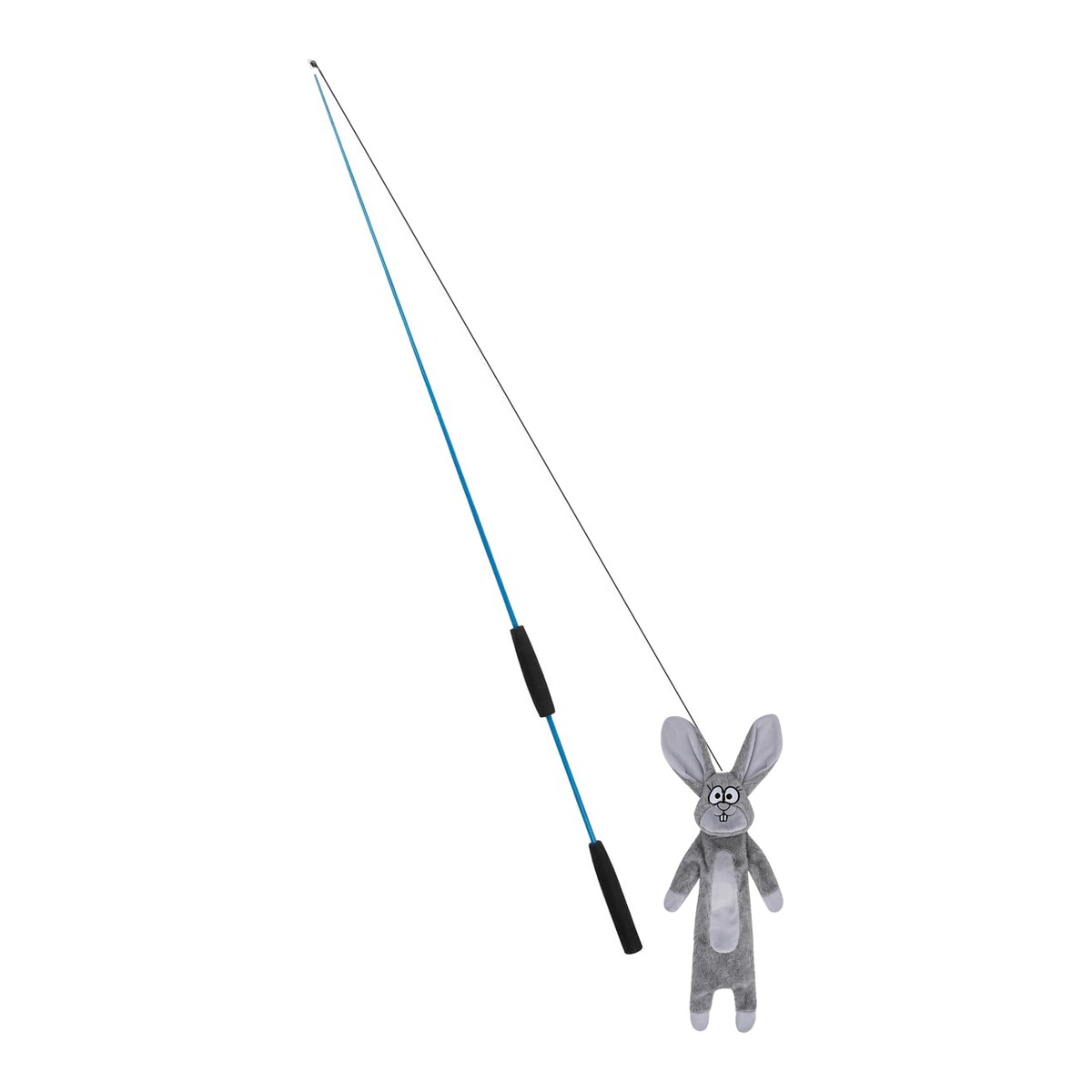
A lot of people figure a good long walk would do it and for most of these dogs it does not, not on a leash anyhow, cause what he is wanting is to chase something and catch it and get his mouth on it and there is none of that on a walk. I give it to him in the yard with a flirt pole, which is a pole that has a line on it and a lure tied on the end of the line, and ten minutes of that is about all it takes. There is a page on here about what a flirt pole is, and if you can’t tell whether he is getting enough then I would look over the signs your dog needs more exercise.
I did not make the thing just to get a dog tired though, and I would not want you thinking that is all it is. When he catches that lure you are going to tell him to drop it, and then he has got to wait on you before he gets to go again, and I do not know of anything harder for a dog that is all wound up than that wait. I look at it as him practicing how to hold himself back, which is what you were hoping the surgery was going to do. I wrote all of that out in the impulse control drills.
Then teach him to settle
Calm is not something a dog just has or does not have is how I look at it, you can teach it to him the same as a sit. I wait until he has been worked and that is when I put him on a mat or a bed and have him stay on it, and how I do that is on how to teach a dog to settle. If you want the longer version of where all of this energy is coming from, I put that on why is my dog so hyper.
Right after the surgery
I am not trying to talk you out of it, and if you do go on and have it done then he is not going to get to chase anything for a little bit. I looked up what the AKC says on that and it is your vet will probably have you restrict his activity for a few days while the incision heals, and for a female that got spayed they say 7 to 10 days. VCA is longer than that on their page about after surgery, where it is “for most procedures, your dog’s activity should be restricted for 7-10 days” with no running and no jumping. Whatever your own vet tells you is what I would go by, and I would leave the pole in the closet until they say he is clear to run.
I will tell you that stretch is hard on a dog that is used to getting worked every day. My page on keeping a dog calm on crate rest is where I put some things you can do with him in the meantime that do not have him running or jumping.
Which Whimsy Stick to get
I tried a lot of flirt poles before I ever made mine and they were too short or too bulky or just too heavy, and so I ended up building my own. There are two sizes and you go by what your dog weighs. Under 30 lbs gets the Standard and 30 lbs and up gets the Rugged XL, and if he is right at 30 or still growing I would go with the XL.
Rugged XL + 3 Lures
- Dogs 30 lbs and up · one-piece 46-inch fiberglass pole · 800-lb Dyneema line
- Free US shipping · pre-order, ships by December 10
Rugged XL Pro Kit
- Same pole, five different lures (Meerkat, Rabbit, Fox, Coyote and Sloth) and a spare 800-lb line
- Free US shipping · pre-order, ships by December 10
Rugged XL
- Same pole and line, 1 lure
- Free US shipping · pre-order, ships by December 10
The Standard
- Dogs under 30 lbs · 1 lure · 450-lb Kevlar line
- $20 US shipping, cause it goes in a longer box · usually ships within 2 days
Every order has a 30-day money-back guarantee on it, and you would pay the shipping to send it back unless the pole failed. Extra lures are $13 for when your dog wears one out.
Want more of this in your Google results? Add Whimsy Stick as a preferred source.
Neutering and behavior questions
Will neutering calm my dog down?
It tends to cut down on roaming, urine marking and mounting. It does not take the energy out of him, and VCA Animal Hospitals says neutering does not cause a change in personality or playfulness.
How long after neutering does a dog calm down?
I did not find a source that gives a number of days for that and I am not going to make one up. I would ask your vet what to expect with your dog.
Does neutering stop a dog from marking in the house?
It helps a lot of them. In a 1997 UC Davis study of 57 adult male dogs, marking improved by half or more in at least 60 percent of the dogs. The rest of them got less out of it than that.
Does neutering stop aggression?
I would not count on it. That UC Davis study says fewer than a third of dogs can be expected to have marked improvement, and a 2018 survey study of more than 13,000 dogs found no link between neutering and aggression toward familiar people or other dogs. A dog that is biting needs your vet and a behavior professional.
Does spaying calm a female dog down?
It stops her heat cycles and what comes with them. It does not turn a high energy dog into a low energy one.
Is my dog too old for neutering to change his behavior?
The UC Davis study found the age of the dog did not predict whether castration would help. Whether an older dog should have the surgery is a question for your vet.
Can neutering too early cause behavior problems?
The AKC says recent data suggests neutering before puberty may instill a tendency toward shyness and insecure behavior, and VCA says neutering before maturity may be associated with certain fearful behaviors such as noise phobia. I would ask your vet about the timing for your dog.
What will calm my dog down if neutering does not?
What I would start with is some kind of work where he gets to chase something and catch it, and then once he has been worked I would teach him how to settle, cause those two are what I have seen do it.
Will my dog gain weight after being neutered?
VCA says neutering will reduce his metabolism, and that obesity is the result of overfeeding and lack of physical activity. So I would watch his food and keep him exercised.
Now I am a dog trainer and not a vet, so if you have a puppy that is still growing or an older dog or one with something going on in the joints, back or heart, I would ask your vet before you start any chase game. I have a page on who should skip the flirt pole and another one on using a flirt pole with a puppy.
The surgery will not wear him out. Ten minutes of chase will.
Pre-order the Rugged XL + 3 Lures, $95Under 30 lbs? See the Standard, $56
Based on my own experience training dogs and the sources linked above. Not veterinary advice. Exercise disclaimer.


