
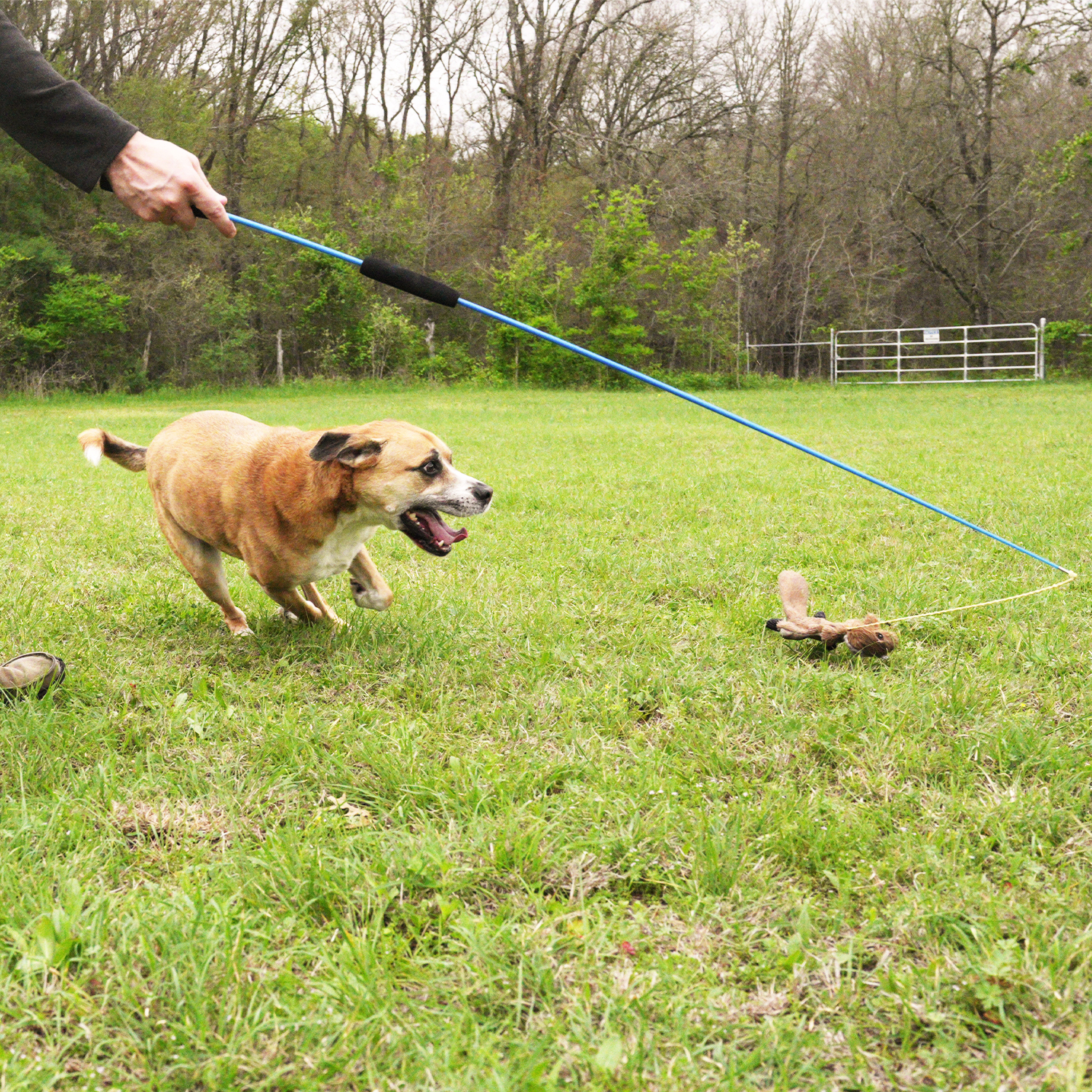
An interactive toy becomes a training tool when the session runs on a fixed structure, not when the toy is held differently. In contrast, same toy, different system, opposite outcomes. The structure has five phases: position, wait, release, chase, drop, restart, all-done. Then run it daily for 5 to 10 minutes. Embed the same four cues in every rep. Next, progress drill difficulty week by week.
Most dogs hit reliable impulse control under arousal at the 8-week mark on this protocol. AKC guidance on play-based training confirms that structured sessions produce more durable behavior than unstructured play. This page covers the session mechanics. For the broader enrichment context, see the dog enrichment and mental stimulation guide.
Who This Guide Is For
- You already bought an interactive toy and your dog is more wound up than before
- Your sessions feel chaotic, not productive
- Your dog ignores cues the moment the toy comes out
- You want a repeatable structure, not “let your dog have fun”
- You need to know what good progression looks like week to week
Signs Your Dog Needs This Protocol
- The toy comes out and your dog loses all composure, lunging, barking, spinning before you even move it
- Sessions leave your dog more wound up, not calmer
- Your dog knows sit and down in the kitchen but forgets both the moment drive kicks in
- Drop-it is a suggestion your dog routinely ignores
- You’ve tried three or four different interactive toys and the hyperactivity is the same with all of them
- Your dog fixates on the toy storage spot between sessions, whining, staring, pawing at the closet
The Five Phases of Every Training Session
Every rep follows the same pattern. Position, wait, release, chase, drop, restart. After 8 to 12 reps, close with all-done and a settle cue. In practice, predictability is what makes the structure work. Eventually, the dog learns the rhythm and starts performing each piece automatically. If you want the foundational flirt pole mechanics behind this protocol, the flirt pole training guide covers the full method from day one through advanced work.
Position the dog before the toy appears
First, cue a sit or down stay before you retrieve the toy. Rather, the toy never appears as a bribe to start behavior, it appears as the consequence of behavior the dog has already produced.
Wait before every release
Hold position for 3 to 10 seconds while the lure moves in front of the dog. Body still, eyes tracking. First, start at 3 seconds in week one and add 1 to 2 seconds weekly.
Release into controlled chase
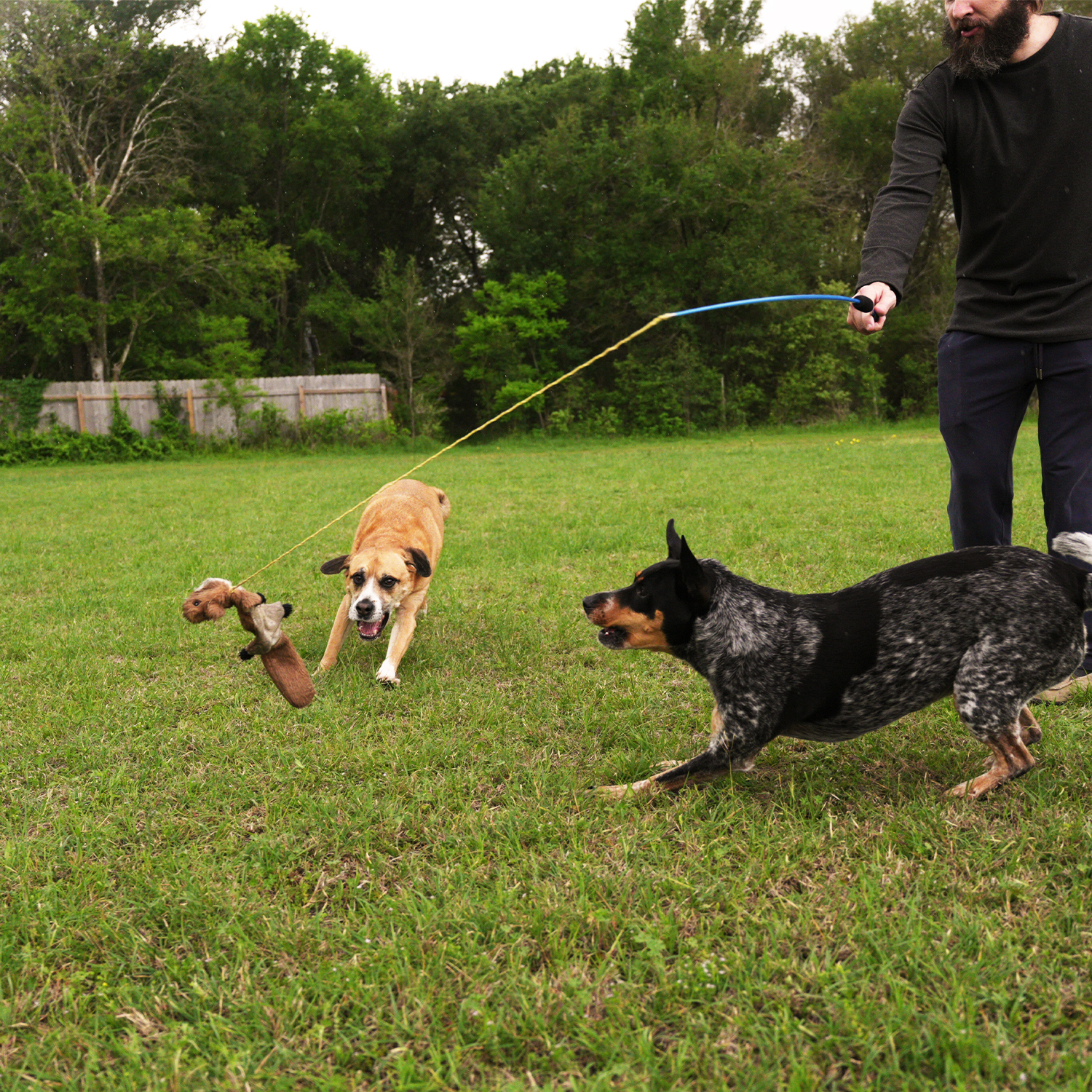
Move the lure in deliberate prey-like arcs: slow creep, sudden burst, direction change, brief freeze. Keep movement low and horizontal to protect joints. You direct the chase, not the dog.
Drop-it on every catch
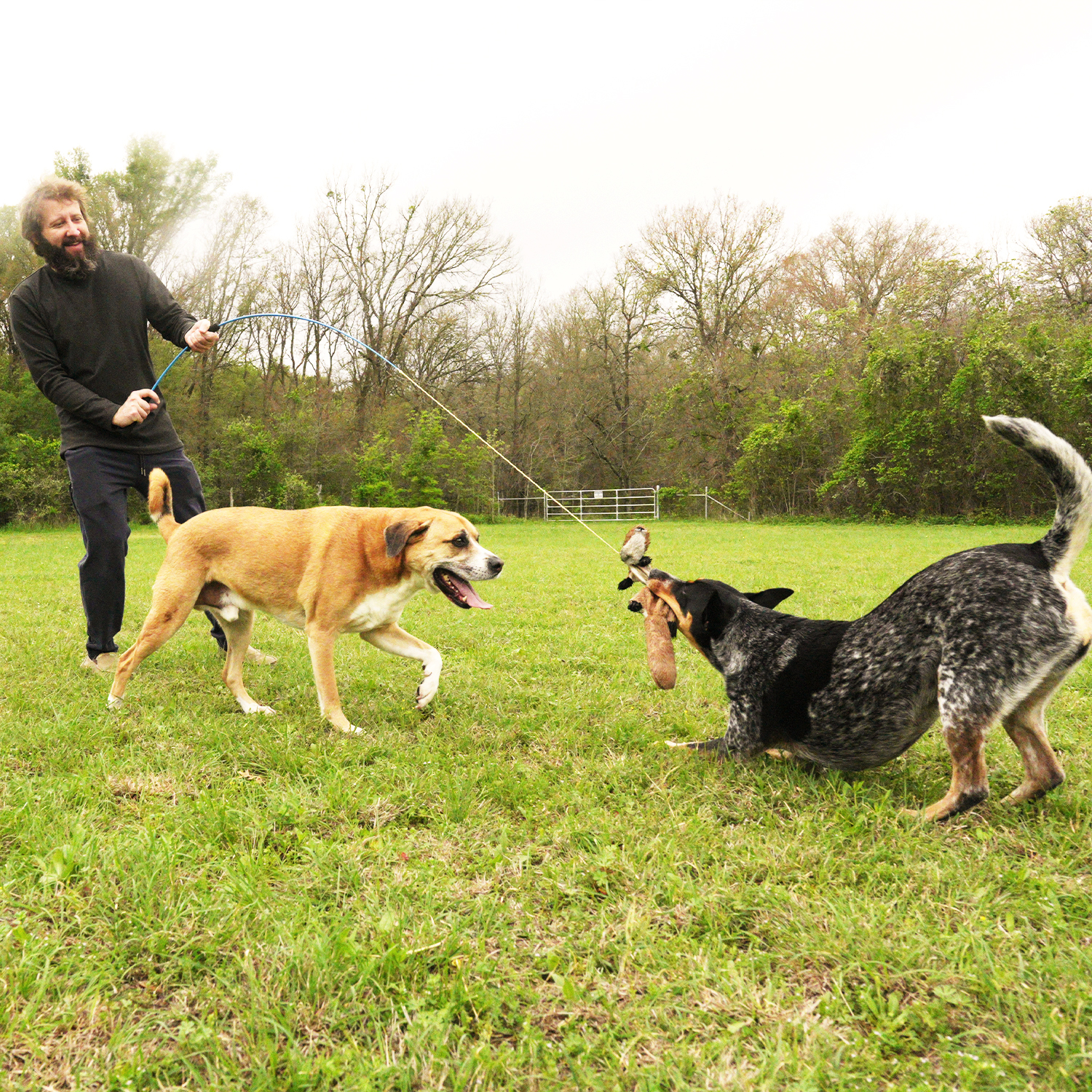
Once the dog captures the lure, mark the win with a brief tug or pause, then cue drop-it. This builds a reliable out under maximum drive pressure that transfers to real-world items.
End with a deliberate transition
After 8 to 12 reps, cue all-done, stow the toy out of sight, and cue settle or place for 2 to 3 minutes. In fact, skipping this phase is the top reason dogs “can’t come down” afterward.
The toy is the vehicle. Structure is the training. In contrast, same toy run with no system produces stimulation. Same toy run with the five phases produces a dog that listens under arousal. That distinction is everything.
Christopher Lee Moran · Controlled Freedom MethodThe Four Cues Embedded in Every Rep
Use the same words every session. Pick your cue list and lock it in. Predictability builds reliability. Likewise, switching synonyms across sessions slows everything down and signals to the dog that words are not load-bearing.
The cues are not optional. But if you skip the cue and just hold the toy, you are running a play session, not a training session. Ultimately, the cue is what carries the behavior into real-world situations where the toy is not present.
Structured Session vs. Unstructured Play: What You Actually Get
An 8-Week Drill Progression That Works
Still, the session anatomy stays the same every week. The difficulty changes. Increase the wait duration. Later, increase the drop-it latency under drive. Second, add distractions in the environment. Move sessions to new locations. Each week builds on the last.
Foundation
Install the cues. 3-second waits. Treat-paired drop-it. Sessions in one familiar location only. Instead, focus on cue clarity, not duration.
Duration
Extend waits to 10 to 15 seconds. Now begin fading the treat from drop-it. Add varied lure speed and direction during the chase phase.
Distraction
Run sessions in new locations. Introduce mild distractions (another person walking by, a familiar dog at a distance). Wait holds at 20 seconds.
Generalization
30-second waits with active lure movement. Drop-it under maximum drive. The cues now transfer reliably outside the session into walks, the house, and real-world triggers.
By the 8-week mark, the dog is operating on a different baseline. Wait, drop-it, and all-done now hold in everyday contexts because structured repetition under arousal installed them as durable behaviors.
AVMA enrichment guidelines confirm that structured predatory play with handler control produces measurable behavioral outcomes. Cornell’s Riney Canine Health Center calls handler-directed structured activity among the most reliable interventions for arousal management.
In fact, the same protocol is the engine behind solving destructive chewing, post-walk hyperactivity, and the can’t-settle problem. Once the eight-week foundation is solid, the impulse control drills guide maps the advanced progressions.
When Sessions Aren’t Working: Common Fixes
Usually, if the session is failing, the fix is almost always in the structure, not the dog. Five common breakdowns and what to change:
Dog can’t calm down after sessions
Pacing, whining, can’t lie down for 30+ minutes post-session.
You’re skipping the transition phase
Add a clear all-done cue, stow the toy completely out of sight, and cue settle or place for 2 to 3 minutes. Ultimately, the session has to end on a calm state, not in the middle of activation.
Dog won’t drop the lure
You cue drop-it and the dog clamps down harder or runs off with it.
Trade for higher value, fade over weeks
Then pair drop-it with a small piece of meat or cheese for 2 to 3 weeks and fade the food reward gradually. Never wrestle the lure away. That teaches possession aggression. The release should be the dog’s choice, prompted by a cue that has been built positively.
Dog ignores the wait cue
The lure moves and the dog breaks position immediately. No impulse control under drive.
You’re moving too fast in week one
Drop wait duration to 1 second. Get 10 clean reps. Move to 2 seconds. The dog has to win the rep to learn the cue. Failed reps teach nothing.
Dog gets more wired with more sessions
Meanwhile, daily play sessions are making behavior worse, not better.
You’re running play sessions, not training sessions
No cues, no waits, no all-done = stimulation only, no resolution. Add the structure. Same toy, same time, different outcome. This is the same dynamic behind dogs being more hyper after walks.
Cues hold in sessions but fail outside
Wait works during play but the dog ignores it on walks.
You’re in weeks 1–4, generalization is week 7+
This is normal at this stage. Generally, the cues need 6 to 8 weeks of repetition inside sessions before they generalize. Stay with the progression. If you’re past week 8 and cues still don’t generalize, sessions need more environmental variation (week 5–6 work) before adding more weeks.
Never use an interactive toy as a bribe or a frustration outlet. Two patterns cause real behavioral damage and are common with unsupervised toy use.
The bribe pattern: Toy appears before behavior is offered. Dog learns that compliance is optional, the toy comes out regardless. Kills the position cue and makes every future session harder to open cleanly.
The frustration outlet pattern: Owner pulls the toy out when the dog is already in a destructive or anxious state, hoping to redirect. This pairs the toy with high arousal as the entry state.
The dog learns to go higher, not lower, when the toy appears. Run sessions only from a calm baseline. The session creates arousal on your terms; it does not absorb existing arousal on the dog’s terms.
When sessions aren’t working, audit the structure before you blame the dog. Nine times out of ten the breakdown is a missing transition phase, a skipped wait cue, or a session opened from arousal instead of from calm.
Structured Sessions Build More Than Behavior
The structured session is doing two jobs at once. It teaches specific cues. It also positions you as the source of what the dog finds most rewarding.
That second job is what builds the handler-dog bond, the foundation everything else sits on. A dog that knows wait and drop-it but doesn’t care about its handler performs inconsistently. A bonded dog running the same cues performs reliably across contexts.
Interactive toys without structure are just expensive enrichment theater. Same toy run with the five phases produces a dog that listens under arousal. The tool isn’t the training, the system is.
Christopher Lee Moran · Controlled Freedom MethodThis is why one tool used daily with structure beats a closet full of toys used inconsistently. The dog isn’t just learning cues. It’s learning that engagement with you, in this specific way, is the most reliable source of what it wants most. For dogs where the bonding deficit runs deeper, reactivity, anxiety, persistent disengagement, the same structured drive work applies; see how it functions in reactive dog training.
Match the Tool to Your Dog’s Weight Class
The session structure is the same regardless of which flirt pole you run it with. The pole has to hold up to the dog’s drive level for the session to stay intact. A snapped line or broken pole mid-session is a safety problem and teaches the dog that intensity destroys the tool. For the full professional reference, see the canine flirt pole.
Lightweight flexible rod, Kevlar-reinforced line, replaceable lures. Built for the structured training sessions in this guide.
Reinforced construction, 8-ft radius, 1 lure included. Built for working breeds running the full 8-week progression at full intensity. Free US shipping included.
Everything in the Base plus 3 lures total, swap textures and shapes to keep drive high through the full progression. Free US shipping included.
The owners who get the best training results are not the ones with the most equipment or the longest sessions. They are the ones who run the same structured five-phase session, with the same four cues, in the same order, every day for eight weeks. Structure beats variety. Consistency beats intensity.
Christopher Lee Moran · Controlled Freedom MethodInteractive Toys for Dog Training: FAQ
How do I use interactive dog toys for training?
Run structured sessions of 5 to 10 minutes daily with a five-phase anatomy: position, wait, release, chase, drop, restart, all-done. Every rep embeds commands the dog learns to perform under arousal. The toy is the vehicle. The command structure is the training.
How do I use interactive dog toys for impulse control?
Build a wait cue before every release and a drop-it cue after every catch. Start with 3 to 5 second waits in week one and progress by 1 to 2 seconds each week. By week 8 most dogs hold for 30 seconds with active lure movement, which transfers directly to real-world impulse control situations.
How long should a training session with an interactive toy last?
Five to ten minutes is the right range for daily structured sessions. Longer sessions degrade in quality, encourage obsessive behavior, and burn the dog out. Two short sessions per day produce better outcomes than one long session three times a week.
Can interactive toys replace formal obedience training?
Interactive toys do not replace formal training, but they reinforce it under arousal, which is where most training breaks down. A dog who holds a sit-stay in a quiet living room but loses composure outdoors has not generalized the command. Practicing the same commands inside a high-drive play session teaches the dog to respond when it matters most.
Session structure and cadence
What is the right command sequence inside a session?
Position cue (sit or down), wait, release cue (get-it or break), chase, capture, drop-it, restart cue, repeat for 8 to 12 reps. Close with all-done and a settle cue. Use the same words every session. Predictability is what builds reliability.
How often should I run interactive toy training sessions?
Daily is ideal. Six days a week with one rest day is sustainable for most owners and produces consistent behavioral change. Skipping days resets some of the conditioning, especially early on. After three months of consistent work, the pattern is established enough to handle occasional gaps.
Troubleshooting common problems
What if my dog gets too amped during sessions and cannot calm down after?
This is almost always a session-ending problem, not a session-content problem. Add a clear all-done cue, stow the toy completely out of sight, and cue a settle or place command for 2 to 3 minutes. The transition phase teaches the dog to come down from arousal. Without it, the session ends in the middle of activation and the dog stays wired.
My dog will not drop the lure. How do I fix that?
Trade for a higher value reward initially (a small piece of meat or cheese works for most dogs), pair it with the drop-it cue, and fade the food reward over 2 to 3 weeks. Never wrestle the lure away. That teaches possession aggression. The release should always be the dog’s choice, prompted by a cue built through consistent positive association.


