
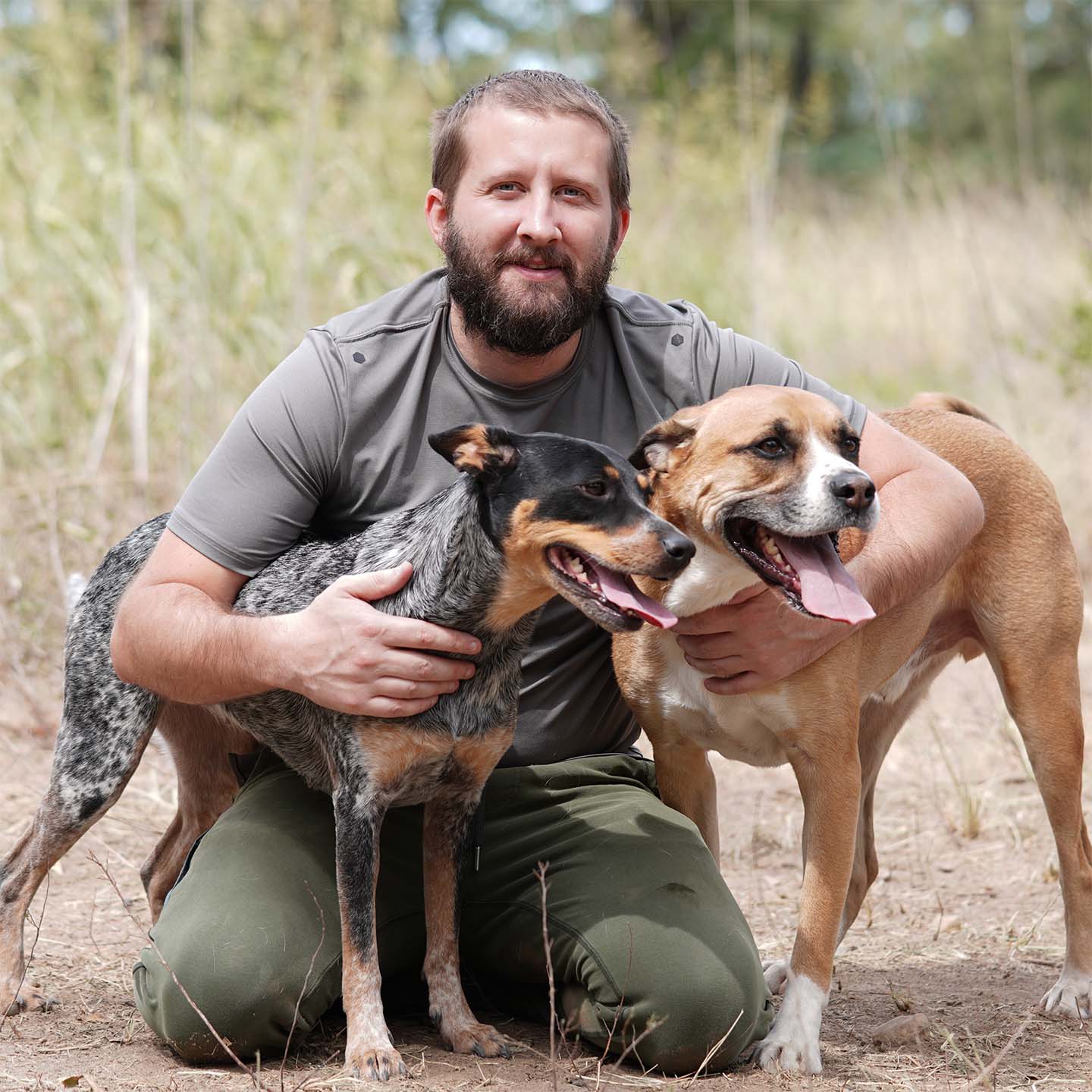
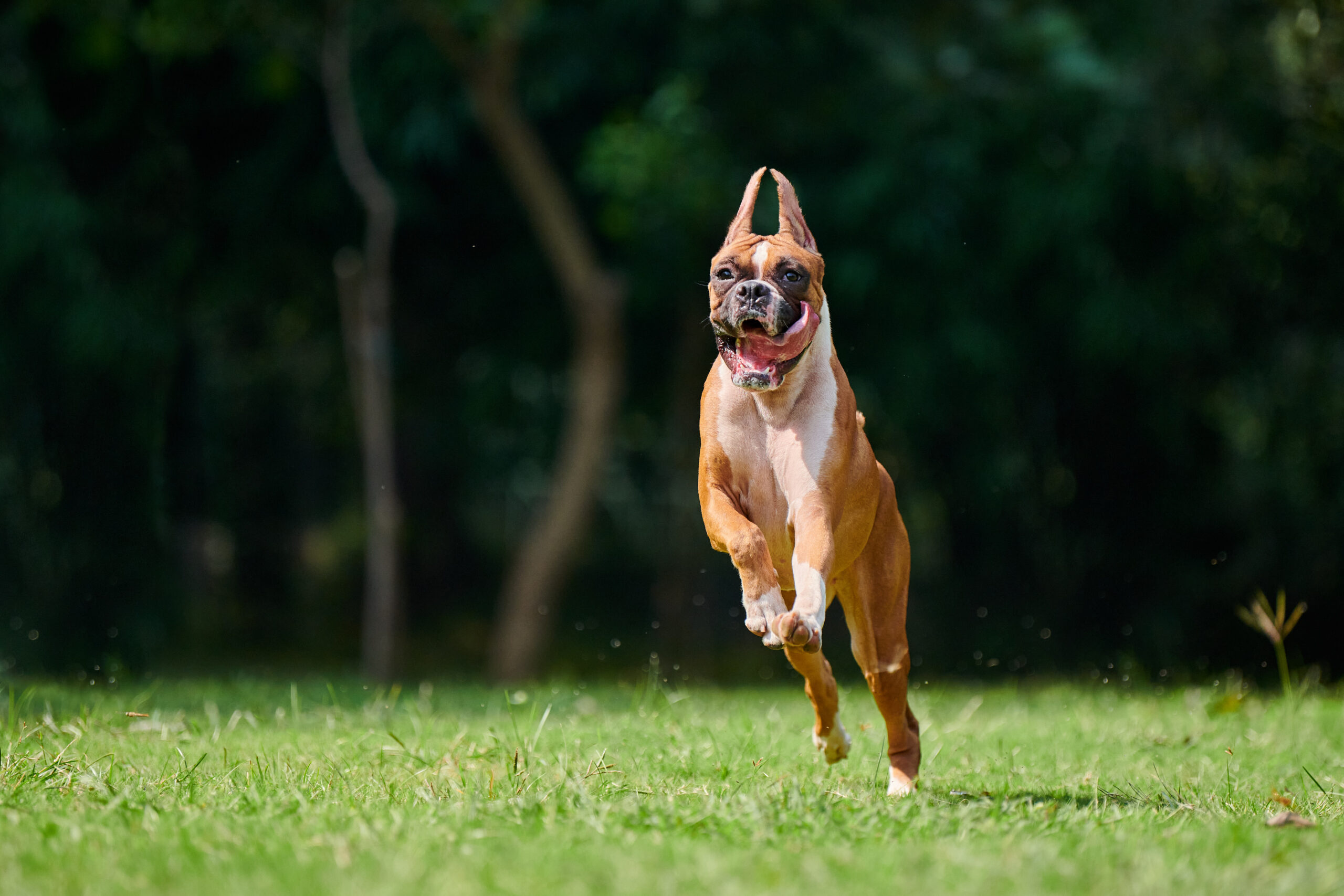
A dog hyper after walks is experiencing trigger accumulation: the walk activates the prey drive system through squirrels, cyclists, and passing dogs without ever completing the predatory sequence. Arousal loads up with no discharge mechanism. The dog arrives home more activated than when it left. A longer walk makes this worse, not better.
In practice, the fix is a 5 to 7 minute structured post-walk finisher that runs the sequence through to completion. For most dogs hyper after walks, this finisher becomes the anchor of the daily routine. The protocol and the tool are both below.
Who This Guide Is For
- an interactive exercise toy: channels drive into structured exercise
- Owners whose dog comes home from walks more wired than when they left
- Anyone who has tried longer walks, extra fetch, or dog parks without improvement
- Owners of high-drive, working, or herding breeds that never seem to turn off
- People dealing with post-walk zoomies, nipping, object grabbing, or inability to settle
- Trainers looking for a structured post-walk protocol to recommend to clients
Signs Your Dog Needs a Post-Walk Finisher
- Pacing, whining, or inability to settle for 20+ minutes after returning home
- Zoomies that start within minutes of the leash coming off
- Grabbing shoes, pillows, or household objects immediately after walks
- Jumping on people or mouthing/nipping when you walk through the door
- Getting more hyper after longer walks rather than less
- Reactivity on walks that seems to get worse the further you go
Why Your Dog Is Hyper After Walks: The Loading Problem
A dog hyper after walks is not under-exercised-it’s over-activated and under-resolved. This is among the most common complaints I hear from owners of high-drive breeds, and among the most misunderstood. The instinct is to walk the dog longer or more often. That approach almost always makes the problem worse rather than better, because the walk itself is the loading event.
What a walk does and doesn’t do
A walk does real things for a dog, but it does not fix a dog hyper after walks. Sniffing satisfies olfactory enrichment, physical movement burns some energy, and the change of environment provides cognitive novelty. For lower-drive dogs, that is often enough to produce post-walk calm. For high-prey-drive dogs, it frequently isn’t. Every activation stimulus on the walk-a squirrel, a bicycle, a jogger, a dog behind a fence-triggers the prey drive system. The dog’s arousal spikes, it orients and pulls toward the trigger, and the walk continues without the sequence completing.
Particularly, multiply that by 10 or 15 trigger exposures and the arousal system of a dog hyper after walks hasn’t discharged. It’s loaded with unreleased drive from 15 interrupted sequences. That’s what you see pacing your house when you get home. The dog is hyper after walks not because the walk was too short but because the walk loaded the system without providing any mechanism to discharge it. The same loading mechanism drives overexcited behavior at predictable moments throughout the day.
What walks deliver vs what they miss
Loads the system
- Sniffing and olfactory enrichment
- Steady-state low-intensity cardio
- Trigger exposure: squirrels, bikes, dogs
- Interrupted prey drive activation, repeated
- Arousal accumulation without discharge
Needed for resolution
- High-intensity sprint and direction changes
- Chase sequence run to completion
- Actual catch and possession phase
- Handler-controlled intensity and stopping point
- Deliberate session close that signals rest
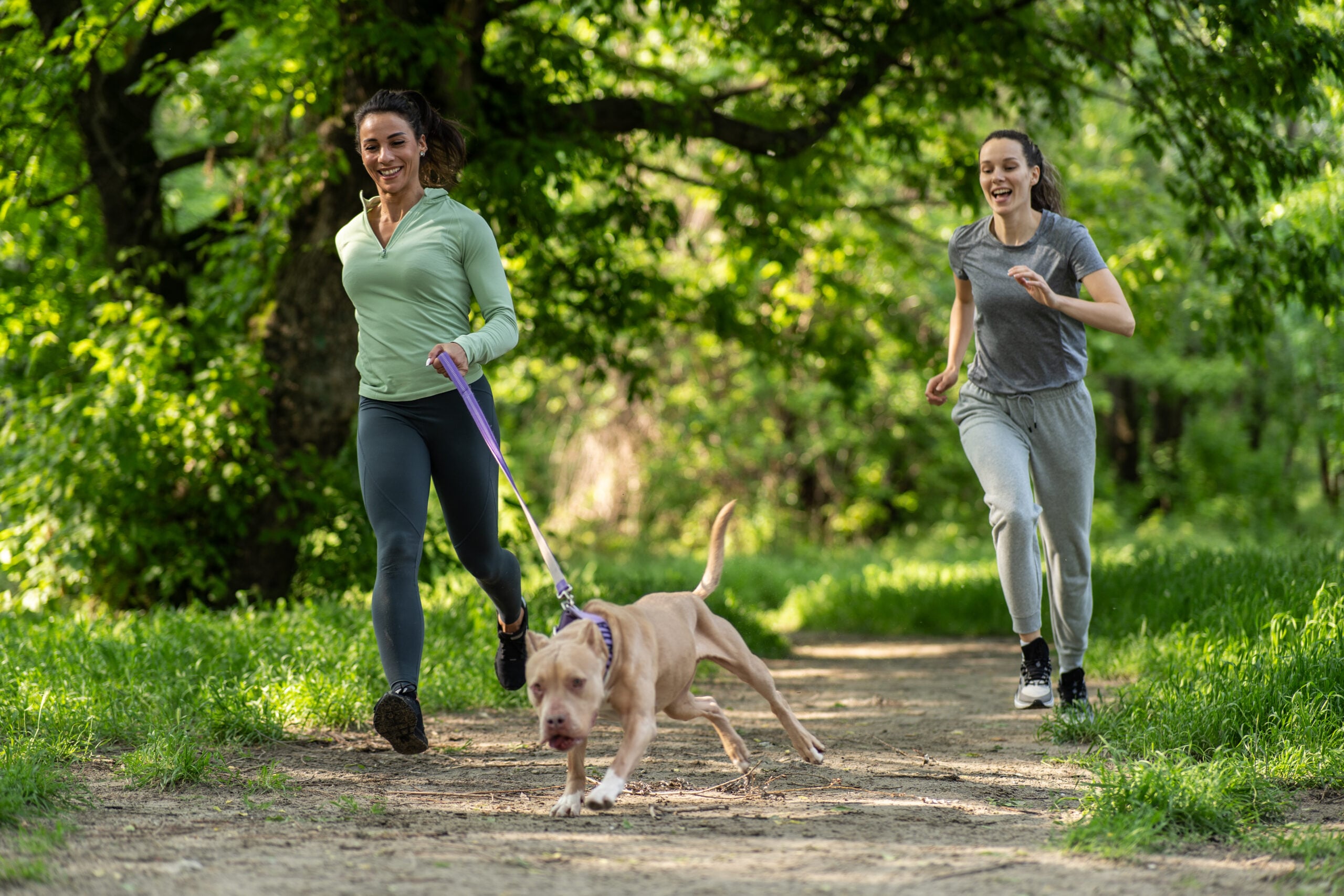
A dog hyper after walks isn’t a disobedient dog. It’s a dog with a prey drive system that loaded up on a 45-minute parade of escaping prey and came home with nowhere to put it. The walk activated without resolving, and the dog doesn’t know how to discharge that on its own.
Christopher Lee Moran · Working Dog TrainerWhy More Walking Makes It Worse
Every interrupted prey sequence on the walk carries forward as residual activation. The predatory sequence-orient, stalk, chase, capture, win, release-is neurologically wired in order. When step one (orient) fires and the sequence doesn’t complete, the residual activation carries forward. On a typical urban dog walk, this pattern repeats. Each additional walk adds more trigger exposure on top of an already-activated baseline, which is precisely why dogs hyper after walks don’t improve with longer walks alone.
This is the same accumulated drive that surfaces as reactive dog training challenges on the walk. The sequence has to complete somewhere or it carries forward. According to the American Kennel Club, structured predatory play that runs the full sequence is among the highest-value enrichment activities for dogs because it addresses this neurological need directly. AVMA guidance on dog behavior reinforces that structured engagement addresses needs passive exercise does not. That is why the same dog can be hyper after a two-hour walk but settled after a seven-minute structured flirt pole session.
The accumulation chart
In short, none of the arousal discharged. The walk added physical tiredness but the prey drive system is still fully loaded when you walk through the door. That’s the pacing dog, the zooming dog, the dog grabbing objects and jumping on furniture five minutes after a long walk. If your dog is hyper after walks regardless of how far you go, this trigger accumulation pattern is almost certainly what’s happening.
Walk Alone vs. Walk + Finisher
The difference isn’t the amount of physical activity-it’s whether the prey drive system gets to complete its sequence. The comparison below shows why a dog hyper after walks doesn’t respond to more of the same exercise and why adding a structured finisher changes the outcome completely. Structure beats duration every time.
The Post-Walk Finisher: The Fix
This is the practical solution for a dog hyper after walks. Run it immediately after returning. Every dog hyper after walks arrives home with active accumulated arousal. The finisher converts that loaded drive into structured output rather than letting the dog self-discharge destructively.
Indeed, leash off, ask for a sit, wait for one calm breath before doing anything. Sit The reset moment tells the nervous system that a structured event is beginning, not chaos.
For example, lure motionless-dog holds position. Wait Hold 5 to 10 seconds. This trains impulse control at exactly the arousal level where it needs to hold in the real world.
In fact, release and move the lure in ground arcs with cuts and unpredictable pauses. Get it Keep the lure low. Ground movement produces the sprint pattern that discharges accumulated arousal.
Steps 4 through 6: complete and close
Overall, stop the lure completely and let the dog have it. Three to five seconds of possession. This is the step that makes the finisher work. Without the possession phase the session is still an interrupted chase.
Generally, go neutral after possession. Out Mark the release and immediately restart from wait. Run 4 to 6 rounds total.
In contrast, verbal all-done, lure put away out of sight, then a down or place cue with calm reward. All done Follow with a chew or puzzle feeder for 15 minutes. This deliberate ending teaches the dog that sequence completion means rest.
The 6-Step Finisher Protocol
Before entering the house, leash stays on. Ask for a sit and hold it for a full breath. The dog learns the door is not the end of structure-it’s the start of the protocol.
Additionally, inside, leash off, lure out of sight. Ask for a sit or down. Hold 30 to 60 seconds of required stillness. The dog’s arousal level at this moment is exactly where impulse control needs to train.
However, wide ground arcs, direction cuts, unpredictable pauses. Keep the lure low and moving. Release from wait each round. This is where the accumulated post-walk arousal gets a legitimate outlet.
Meanwhile, every 3 to 4 rounds, stop the lure completely and let the dog have it for 3 to 5 seconds. Without this step the session is still an interrupted chase. The catch is what signals sequence completion.
End with a verbal all-done cue, lure put away out of sight immediately. Mark the release with a calm reward. The disappearance of the lure is the neurological signal that the sequence is closed, not paused.
Specifically, down or place cue, then a long-duration chew or snuffle mat for 15 minutes. This bridges the gap between high arousal and genuine rest without leaving the dog to manage the transition alone.
From the training files: real client results
A client’s 2-year-old German Shepherd was pacing, whining, and grabbing objects for 30 to 45 minutes after every walk despite walking 60 to 90 minutes daily. The owner had tried longer walks, dog parks, and puzzle feeders with no improvement.
In practice, we added a 7-minute structured post-walk finisher using the protocol above. Sit before every chase. Catch every 3 reps. Drop-it with a food trade. The session ended with a deliberate all-done ending and a frozen Kong.
Day 3: Post-walk pacing dropped from 45 minutes to under 15. By week 2: The GSD was settling on a mat within 5 minutes of the finisher ending. By week 3: The owner reduced the daily walk from 90 minutes to 45 with better post-walk behavior than the longer walk ever produced. The walk wasn’t the problem-the missing discharge was.
Dogs I see still hyper after walks no matter how far they go have almost universally never had their accumulated post-walk arousal given a legitimate structured outlet. A walk loads the system. A finisher discharges it. You need both.
Christopher Lee Moran · Controlled Freedom MethodWhat to Expect: The Progress Timeline
Should You Walk Before or After Play?
For high-drive dogs, structured play first and walk second produces measurably better behavioral outcomes. If your dog is consistently hyper after walks, changing the daily sequence often produces immediate improvement even before you add a finisher.
Particularly, drive-resolved play before the walk brings baseline arousal down significantly. The dog hyper after walks pattern often breaks within days just from the sequence change. The dog walks more calmly, sniffs more productively, and returns home settled rather than loaded. But if the walk comes first, you’re layering trigger exposure on top of an already-activated system and then asking the finisher to unload all of it.
In short, the same loading-and-discharge mechanism shows up in adolescent dogs that suddenly stop listening on walks. For owners dealing with that pattern, see how to handle adolescent dog problems alongside the post-walk finisher.
Which Dogs Are Most Likely to Be Hyper After Walks
The dog hyper after walks pattern is most consistent in high-prey-drive and working breeds. These are the dogs whose neurological drive systems were built for sustained high-intensity work, not 45-minute trigger parades.
Indeed, mixed breeds with significant working breed influence show the same post-walk hyperactivity pattern. Lower-drive companion breeds typically don’t experience this because their prey drive systems don’t load as dramatically during a walk. If your dog is hyper after walks and falls into one of these breed categories, the drive-resolution approach described in this guide is specifically built for that profile.
Common Mistakes That Keep a Dog Hyper After Walks
For example, beyond skipping the finisher entirely, a few patterns consistently undermine owners working to solve the dog hyper after walks problem.
Longer walks as the response
In fact, the most common one. More trigger exposure without resolution adds more load to an already-loaded system. A dog hyper after walks on a one-hour walk doesn’t become settled after a two-hour walk-it often becomes more activated.
Free fetch instead of a finisher
Overall, repetitive unstructured fetch creates a very similar arousal loop to the walk. The retrieve cue re-activates the chase response without running the predatory sequence to completion. Structure every rep.
Skipping the deliberate ending
A finisher that trails off rather than ending deliberately leaves the drive system still running. The all-done cue, lure removal, and follow-on chew are all part of the discharge mechanism.
Inconsistent daily routine
Generally, the dog hyper after walks pattern responds to consistent daily sessions, not occasional ones. Missing the finisher three days in a row resets the behavioral baseline and the accumulated arousal returns.
Missing the post-walk finisher three days in a row typically resets the behavioral baseline entirely. The pattern doesn’t fade gradually-it snaps back. Daily consistency is not optional for dogs hyper after walks; it’s the mechanism. A finisher done occasionally is better than none, but it won’t produce the lasting behavioral change that daily sessions build.
A dog hyper after walks isn’t a broken dog or a bad owner. It’s a predictable neurological pattern with a predictable fix. The walk loads the prey drive system. The finisher discharges it. Run both, in the right order, and the post-walk chaos resolves.
The Tool the Post-Walk Finisher Runs On
In contrast, the finisher works with a flirt pole built for the arousal levels a dog hyper after walks brings home: a line that doesn’t snap back, a rod that allows wide ground arcs, and a lure the dog actually wants to chase. For dogs 30 lbs and under, that’s the Standard. Working breeds and power dogs need the Rugged XL-reinforced for the bite forces those breeds generate. Both options are below. For the full professional reference, see the canine flirt pole.
Additionally, kevlar line, replaceable fleece lures. Built for the arousal levels a dog hyper after walks brings home.
However, reinforced for the bite forces and prey drive intensity of high-drive working breeds. One lure included. Free US shipping included.
Meanwhile, same Rugged XL pole plus two extra lures. Working breeds hyper after walks burn lures fast during high-arousal finisher sessions. The bundle is what most clients actually need. Free US shipping included.


