
How to Use a Flirt Pole With Your Dog: A Trainer’s Step-by-Step Guide
You start with a short wait and then you let your dog go chase a lure that you drag low across the ground in wide arcs. Each chase is about 15 to 30 seconds, your dog gets to catch it every 3 or 4 rounds, and you trade for a drop-it before you go again. After about 10 minutes you stop on purpose and finish with a calm down. This is the basic loop I’d start anybody with. If you’re brand new to it, start with what a flirt pole is.
By Christopher Lee Moran, working dog trainer, around 400 client dogs · Updated October 2026
Before you start
- Space. You want a flat patch of grass about 20 feet across. I stay off concrete and asphalt cause that’s rough on a dog’s joints when they’re cutting and turning.
- Timing. Go out when it’s cool, early morning or evening, and don’t play right after a big meal.
- A calm start. If your dog is already bouncing off the walls, wait for one still moment before that lure even comes out of the closet.
- Age. I don’t start a puppy before 6 months, and even then it’s just an easy intro, not full speed sprints. Ask your vet when their growth plates should be closed, cause with big breeds that can take a while.
The session, step by step
- Wait. The lure sits still on the ground while you ask for a sit or a down. Three seconds is plenty to start with, then let them go with a word like “get it.”
- Chase low. Drag the lure along the ground in wide arcs, always moving it away from your dog, and throw in a few sudden turns. I keep each burst around 15 to 30 seconds.
- Pause for the stalk. Every so often just stop the lure dead. A lot of dogs will freeze and drop their head and creep in on it, so let them, then move it again.
- Let them catch it every few rounds. I start at every 3 or 4 rounds. When your dog grabs the lure, quit moving the pole and let them hold it and shake it for a few seconds. Don’t yank it away from them, that can be rough on the neck. A dog that never gets to win ends up frustrated instead of satisfied.
- Trade for a drop-it. Hold the pole still and put a treat by your dog’s nose. As soon as the lure drops say your release word, then ask for the wait again. The next chase is what they get for letting go.
- End on purpose. Around 10 minutes in, finish on a catch, say your all-done word and put the lure out of sight. Then ask for a down and give them a chew.
Step 1 in real life: the dog holds a down and stays put. Once this is solid the chase becomes the reward for holding it together.
More impulse control drillsThe pole I use for this
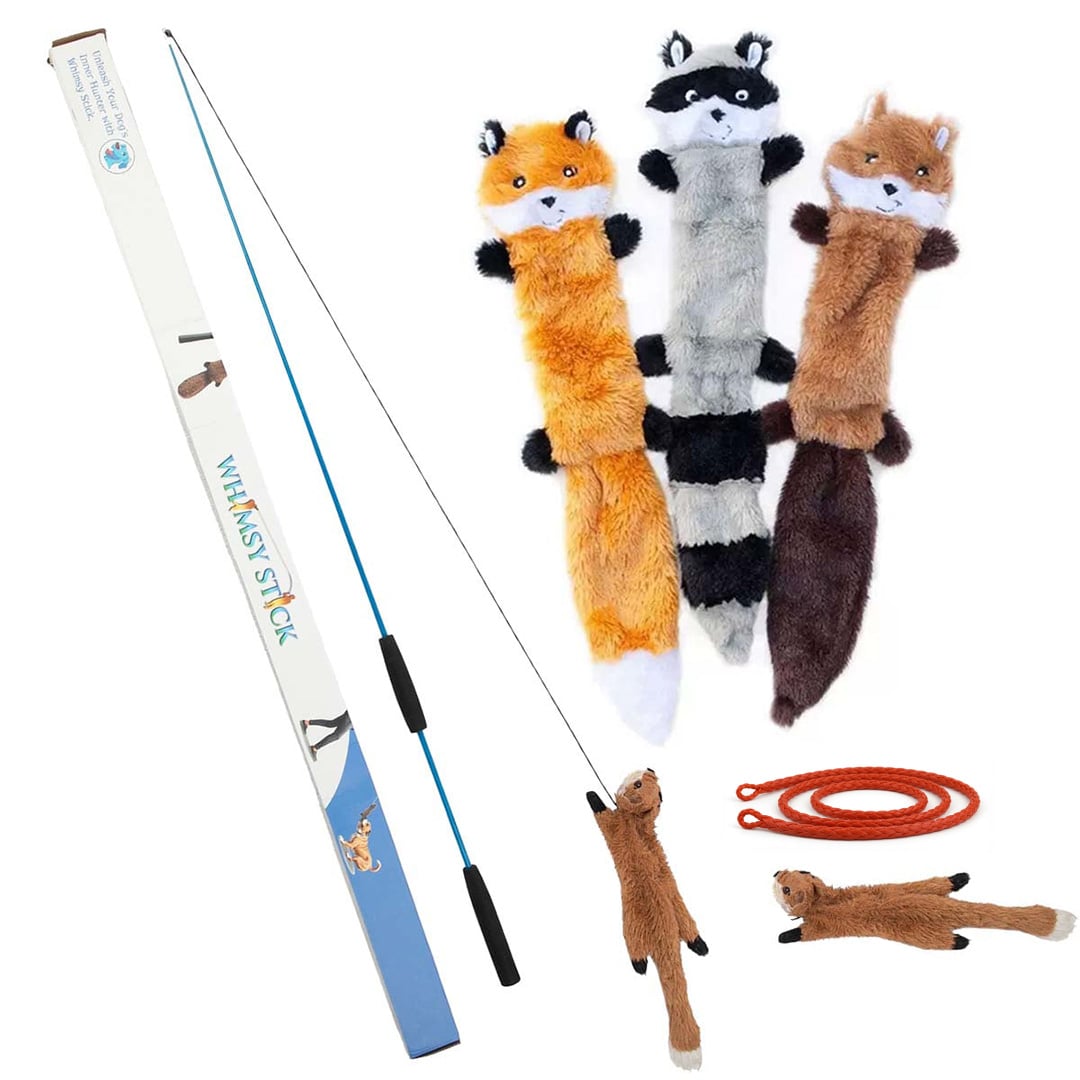
Rugged XL Pro Kit
- One-piece fiberglass pole with an 800-lb Dyneema static line
- 5 lures and a spare line, so a chewed-up lure doesn’t cut a session short
- For dogs 30 lbs and up · free US shipping
30-day money-back guarantee · usually ships within 2 days
Standard
- Kevlar line rated at 450 lbs, 1 lure
- Dogs under 30 lbs · $20 shipping
The chase. Keep it low and fast and wide, then let them catch it and trade for the drop-it.
How long and how often
For most adult dogs I’d aim for about 8 to 15 minutes most days. Small dogs and seniors usually end up on the short end of that. Some high-drive dogs do better with two short sessions instead of one long one. Rest days are fine, and doing it most days is better than going long once in a while.
Grow the wait over time
The wait starts at three seconds. If your dog is ready you can stretch it over the next few weeks to 10 seconds, then 20, then 30, but that’s just a direction to head, it’s not a rule. Think about what’s going on there. A dog holding a wait with a lure sitting right in front of its nose is practicing the same self-control you want at the door and on walks and when people come over.
5 mistakes that make it backfire
- Waving the lure in the air. That just teaches jumping and twisting, so keep it on the ground.
- Never letting the dog win. If it’s all chase and no catch, you’re just winding the dog up.
- Skipping the wait and drop-it. Without those two you’re just playing chase. It’s fun, but it isn’t training.
- Going too long. Once you get past about 15 minutes the dog gets tired and sloppy, and that’s when bad landings happen.
- Leaving the pole out. Put it away after every session, cause a dog left alone with it is gonna chew it.
Adjusting for your dog
Small dogs
Use a lighter pole like the Standard. Slow the lure down some and keep sessions around 8 to 10 minutes.
Big and power breeds
These dogs grip hard. I’d use the Rugged XL, keep your turns wide and work the drop-it more than you normally would. More in the power breed guide.
Herding and high-drive working breeds
These dogs wind up fast, so build the wait before you build speed and take more breaks than you think you need. Reach matters with them too, cause they’re quick and they’ll cut inside the lure if you let them. More in the herding dog guide.
Puppies and seniors
Puppies start at 6 months at the earliest. Until your vet says harder play is okay, that means 3 to 5 easy minutes with the lure low and plenty of wins. Seniors and dogs with joint problems need your vet’s okay first, and then you keep everything slow and wide.
Stop the session if your dog is panting a lot harder than normal, favoring a leg, snapping at the air instead of the lure, or not listening to cues it knows. Next time go shorter and slower.
Want more of this in your Google results? Add Whimsy Stick as a preferred source.
Quick answers
How do you use a flirt pole with a dog?
Ask for a short wait, then let your dog chase a lure you drag low in wide arcs. Let them catch it every 3 or 4 rounds, trade it for a drop-it and go again. After about 10 minutes wrap it up with an all-done word and a calm down.
How long should a flirt pole session last?
About 8 to 15 minutes for most adult dogs, and less for small dogs, seniors and young dogs. Quit while your dog still wants more, don’t wait till they’re wiped out.
How often should I use a flirt pole?
Most days for most dogs, and take rest days whenever you want. I’d rather see you keep a steady routine than do one big long session.
When can a puppy start using a flirt pole?
Not before 6 months, and only as an easy intro. Keep sessions around 3 to 5 minutes with the lure low. No hard sprints and no sharp turns till your vet says the growth plates are closed, and with big breeds that can take longer.
Will a flirt pole make my dog more excited or aggressive?
Just chasing with no structure can wind a dog up. A session built around waits and catches and drop-its with a clear ending is a different thing. If your dog gets more frantic as it goes, make it shorter and slow the lure down. If you’ve got a dog with aggression, work with a qualified trainer.
About ten minutes, then you end it
Try it for 30 days. If it isn’t a fit for your dog, email me for a refund, and you cover return shipping unless the pole failed. I’m a one-man company and I want you happy with it, so I’ll work with you.
Get the Pro Kit, $129.95Smaller dog? See the Standard, $55.95
Based on my own experience training dogs. Not veterinary advice. Exercise disclaimer.


