

TL;DR
Swimming is one of the best low-impact workouts a dog can get, because water carries the body while the muscles still work hard. It burns calories, builds strength, and spares aching joints, so it fits overweight, arthritic, senior, and recovering dogs well. Introduce it slowly, use a life vest at first, and never leave a swimming dog unattended. Since not every dog is a natural, patience and safety matter more than speed.
Set the weekly frame with the dog exercise guide, pair swimming with land work like the canine conditioning exercises, and keep the flirt pole training guide for the days you stay dry.
Who This Is For
- Owners of overweight dogs needing joint-safe cardio
- People with arthritic or senior dogs that ache on land
- Owners rehabbing a dog back to fitness (with vet sign-off)
- High-drive dog owners looking for a big energy burn
- People near a safe lake, pool, or dog swim center
- Owners of water-loving breeds
- Anyone wanting variety beyond walks and chase
Signs Swimming Might Be Right
- Your dog is overweight and struggles with land exercise
- Arthritis or joint pain flares after hard walks
- The dog is recovering and cleared for gentle movement
- A high-drive dog that never seems to tire out
- Hot summers make land exercise risky
- Your dog already loves water and puddles
- You want cardio that spares the joints
Why Water Is So Effective
Water supports the body while the muscles still work against resistance. Because the joints carry almost no load, a dog can burn hard without the pounding of a run. So swimming delivers real cardio with minimal wear.
That combination is why rehab pros use it constantly. Overweight dogs burn calories without stressing sore joints, and recovering dogs rebuild muscle safely. Per the American Kennel Club, swimming is excellent low-impact conditioning.
Who benefits most
Seniors, arthritic dogs, heavy dogs, and high-drive dogs all gain here. When land exercise hurts or overheats, water often becomes the safest hard workout available.
How to Start Safely
To start a dog swimming safely, go slow and positive. Let it wade in at its own pace with treats, fit a canine life vest, and never toss it in. Because trust comes first, a calm introduction in shallow, still water beats a fast one. Always supervise every second.
Go slow and positive
Never toss a dog in, since that can create a lifelong fear. Instead, let the dog wade in at its own pace with treats and praise. Because trust comes first, a calm introduction beats a fast one every time.
Use a canine life vest
Fit a dog life vest for the early sessions and for any open water. Even strong swimmers tire, so the vest buys a safety margin. Keep the first swims short and end while the dog still has energy.
Pick safe water
Start in a pool, a calm shallow lake, or a dog swim center rather than a current or waves. Rinse the dog after, especially with chlorine or lake water, so the coat and skin stay healthy. Per the American Veterinary Medical Association, supervision is non-negotiable around water.
What Swimming Does Not Cover
Swimming is a fantastic body workout, but it is not the whole picture. Because it does not satisfy the chase-and-catch instinct, a swim-only dog can still be mentally restless. So pair it with drive-based work on land.
Not every dog swims, either, and that is fine. Some breeds sink more than float, and some simply hate it, so never force it. When water is out, land options like structured chase and scent work carry the load.
Balance the week
Mix swimming with a little land conditioning and mental work for a complete dog. When you blend the two, you cover strength, cardio, and drive all at once.
Water is the great equalizer. The dog that cannot run without pain can still swim itself tired, joints and all left in peace.
Christopher Lee Moran · Working Dog TrainerWade, float, rest
Wade In
Let the dog explore shallow water with treats and praise, vest on, no pressure.
Short Laps
A few short supported swims toward you, ending while the dog still has energy.
Rinse and Rest
Rinse the coat, dry the ears, and let the dog settle after the workout.
Swimming is the joint-safe hard workout. Water carries the load, the muscles still work. Start slow, vest up, and never leave a swimming dog alone.
Never leave a swimming dog unsupervised, and use a life vest at first. Dogs tire and panic in water, and pool edges and currents are dangerous. Rinse off chlorine and lake water, and dry the ears to prevent infections.
Get vet clearance for recovering, arthritic, or heart-condition dogs. Swimming is gentle on joints but still real cardio, so confirm your dog is cleared before hard water work.
The Whimsy Stick: For the Days You Stay Dry
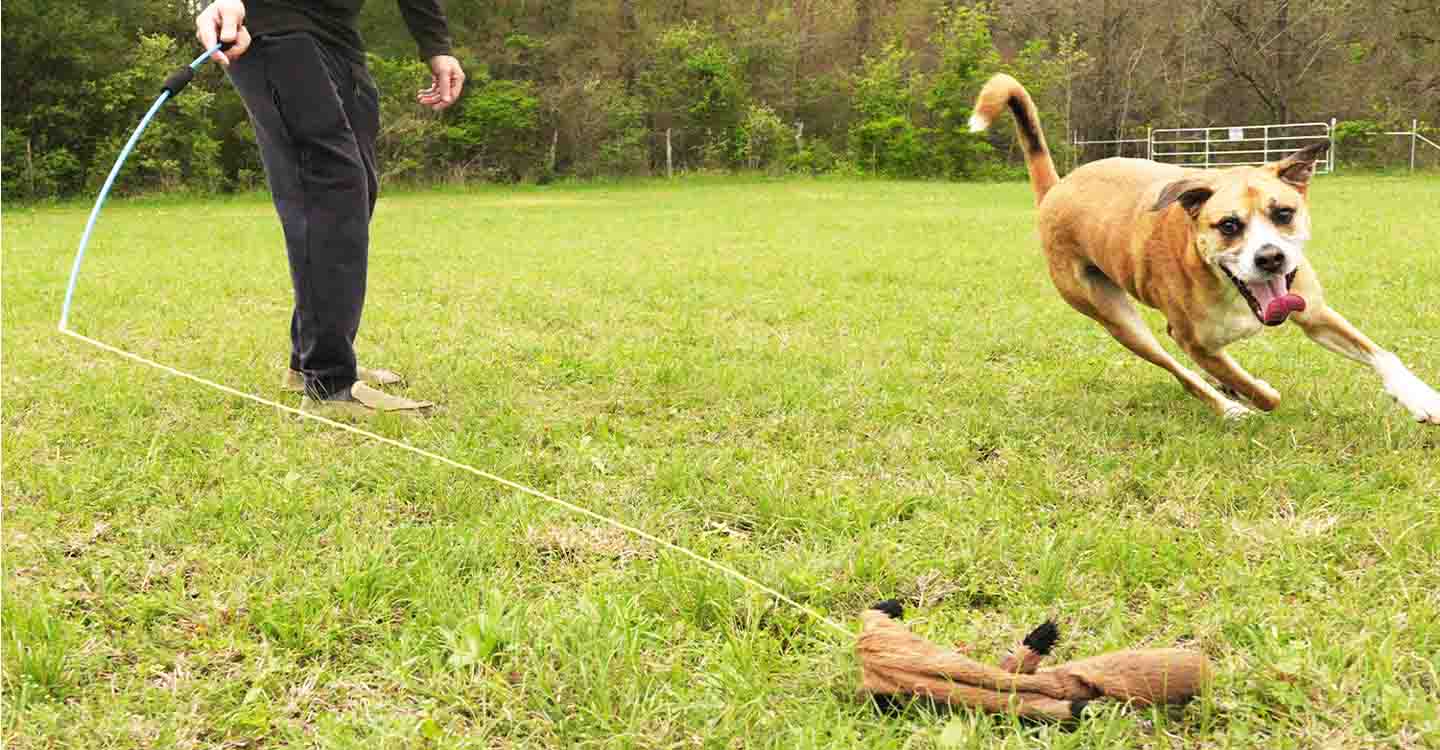
Water is not always available, and it does not scratch the chase itch. A flirt pole covers the drive side and the dry days, alongside a swim routine.
Read These Next to Go Deeper
Swimming as Dog Exercise: FAQ
Is swimming good exercise for dogs?
Yes, it is one of the best low-impact workouts available. Because water supports the body, swimming burns calories and builds muscle without pounding the joints. It suits overweight, arthritic, senior, and recovering dogs especially well, as long as it is introduced slowly and supervised.
How long should a dog swim for exercise?
Start with five to ten minutes and build gradually. Swimming is deceptively tiring, so short sessions are plenty at first. End while the dog still has energy rather than pushing to exhaustion, and add time over weeks as fitness improves.
Is swimming better than walking for dogs?
For joint-safe cardio, often yes, because water removes the impact a walk still carries. Swimming works the whole body harder in less time. Walking still offers sniffing and land conditioning, though, so the best plan usually blends both.
How do I teach my dog to swim?
Go slow and keep it positive. Let the dog wade in at its own pace with treats and praise, fit a life vest, and never toss it in. Start in calm shallow water and support the dog until it finds its stroke.
Is swimming safe for all dogs?
No, not every dog is a natural swimmer. Some breeds sink more than float, and some simply dislike water. Always use a life vest at first, choose calm water, supervise closely, and never force a fearful dog.
Can overweight dogs swim to lose weight?
Yes, and it is a great option. Water spares the joints while the dog burns real calories, which is ideal for a heavy dog that struggles on land. Pair it with a vet-guided diet, since weight loss is still mostly about food.
Do I need a life vest for my dog?
For early sessions and any open water, yes. Even strong swimmers tire, and a vest buys a critical safety margin. It also helps a nervous beginner feel secure while learning.
Does swimming tire a dog out mentally?
Less than chase or scent work does. Swimming is a strong physical workout but it does not satisfy the predatory chase instinct. Pair it with drive-based play or puzzles so the brain gets tired too.


