
TL;DR
You cannot exercise a dog’s body on crate rest, so you exercise the brain instead. Puzzle feeders, snuffle mats, scent games, and calm training you can run from a chair all produce real fatigue without breaking activity limits. Follow the vet’s restrictions to the letter, and let mental work carry the load until movement is cleared. Because a tired brain settles a restless body, this is your main tool for now.
For the wider enrichment menu, see enrichment and mental stimulation, and save the flirt pole training guide for when your dog is cleared to move again. If the pent-up energy spills into restlessness, jumping, and attention-seeking, plan to retrain that pattern the moment activity limits lift.
Who This Is For
- Owners whose dog is on post-surgery crate rest
- People managing a torn ligament, fracture, or recovery order
- Anyone told no running, jumping, or stairs for weeks
- Owners of a high-drive dog going stir-crazy in a crate
- People whose recovering dog is barking, whining, or chewing the crate
- Anyone who needs to keep a dog quiet without drugs
- Owners bracing for a long restricted-activity stretch
Signs Crate Rest Is Going Sideways
- Nonstop whining, barking, or crying in the crate
- Chewing or clawing at the crate or bandages
- Bouncing off the walls the second the door opens
- Refusing to settle even when clearly tired
- Trying to jump, spin, or bolt against the vet’s orders
- Depression, sulking, or loss of appetite
- You are exhausted from managing the chaos
Tire the Brain When the Body Can’t
Mental work is real work. A dog solving a puzzle or searching for hidden food burns genuine energy, even lying still. That is your lever on crate rest, because the body is off-limits.
The vet’s restrictions come first, always. No running, no jumping, no stairs means exactly that, so every game here happens at a walk or slower. Per the American Veterinary Medical Association, following the recovery plan is what protects the repair.
Why a bored dog is a wrecked recovery
A frantic, under-stimulated dog fights the crate, and that stress slows healing. So keeping the brain busy is not a luxury here. It is part of the recovery.
Calm Games That Don’t Break the Rules
The safest crate-rest games work the brain while the body stays still. Puzzle feeders, snuffle mats, slow scent searches within reach, and calm chin-rest training all tire a dog without breaking activity limits. Because the vet’s restrictions come first, keep every game at a walk or slower.
Puzzle feeders and snuffle mats
Feed every meal through a puzzle toy or scattered on a snuffle mat. The dog stays lying down while the nose and brain do the work. This is the backbone of crate-rest enrichment because it needs zero movement, and the American Kennel Club rates food puzzles among the best low-impact brain work.
Low-key scent games
Hide a few treats within the dog’s allowed reach and let it sniff them out slowly. Kept calm and close, scent work drains the brain hard without asking the body to move much at all.
Training you can do from a chair
Teach quiet behaviors like chin rest, eye contact, or slow nose targets. Calm training gives the dog a job and a win, which settles the nervous system. Pair it with a settle cue from impulse control drills once the dog is cleared.
Set Up the Crate for Calm
A calm space makes a calm dog. Keep the crate area quiet, dim, and away from the front-door chaos. Cover part of the crate to lower the visual triggers that spike arousal.
Boring is the goal
A frozen stuffed toy at the noisy times of day, like when the mail comes, gives the dog a job besides reacting. Predictable and quiet is what you want, since a calm routine is what lets the repair heal.
On crate rest you cannot drain the body, so you drain the brain. A dog that gets to think and solve settles into recovery instead of fighting it.
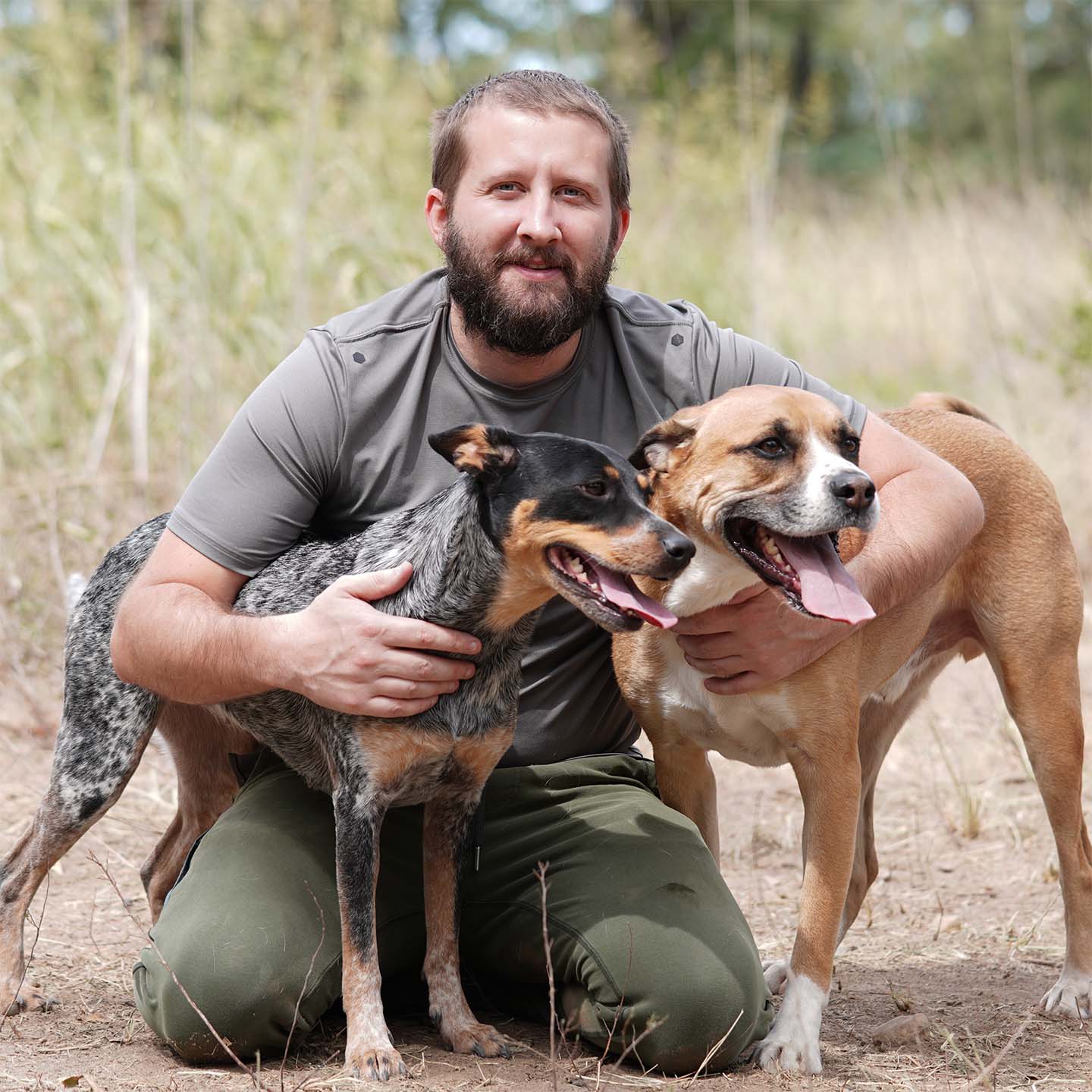
Christopher Lee Moran · Working Dog TrainerYou cannot drain the body, so drain the brain. Puzzle feeders, snuffle mats, and calm training tire a dog on crate rest without breaking a single vet restriction.
The vet’s restrictions override everything on this page. If your dog is on no-movement orders, keep even the games slow and within the allowed range. When in doubt, ask the vet before adding any activity.
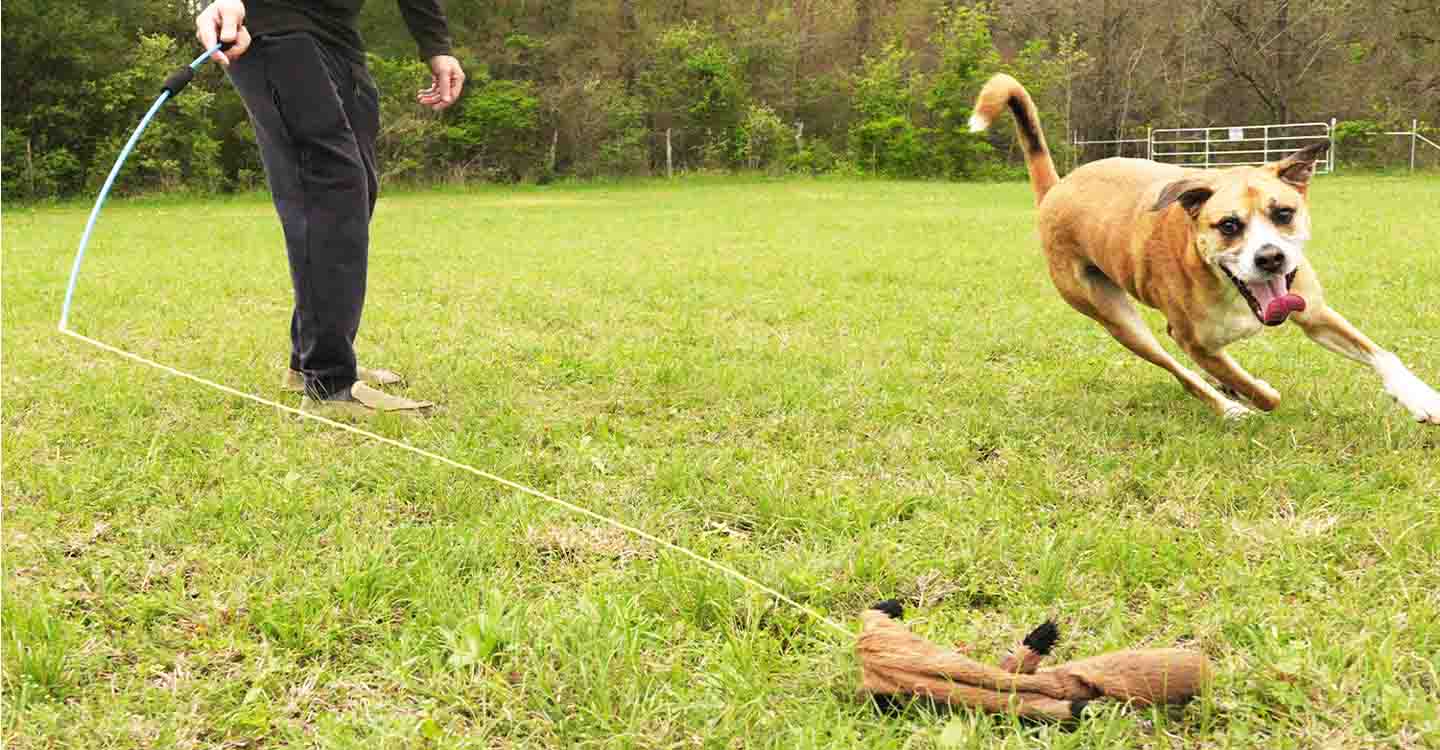
Do not use a flirt pole or any chase work during crate rest. Save it for after the dog is fully cleared. Chase is the last thing a healing joint needs.
The Whimsy Stick: For When Movement Is Cleared
A flirt pole is not a crate-rest tool. It is what you reach for once the vet clears your dog to move again, to rebuild drive and energy the right way.
Read These Next to Go Deeper
Dog Crate Rest and Restricted Activity: FAQ
How do you keep a dog calm on crate rest?
Work the brain since the body is off-limits. Feed through puzzle toys and snuffle mats, play slow scent games within the dog’s reach, and do calm training like chin rests from a chair. Keep the crate quiet and covered, and follow the vet’s limits exactly.
How do I entertain a dog that can’t move?
Lean entirely on mental work. Puzzle feeders, snuffle mats, lick mats, frozen stuffed toys, and gentle nose games all tire a dog without movement. Rotate a few so the novelty holds up over a long recovery.
How long does crate rest usually last?
It depends on the injury, but many orthopedic recoveries run six to twelve weeks. Your vet sets the timeline and the milestones for adding activity back. Follow those checkpoints rather than rushing, because a re-injury restarts the clock.
Can mental stimulation really tire a dog out?
Yes. Active problem-solving burns real energy and produces genuine fatigue, which is why a puzzle-fed dog often naps hard afterward. On crate rest it is the closest thing you have to exercise.
Should I use a flirt pole during crate rest?
No. Chase work is the opposite of what a healing joint needs. Put the flirt pole away until your vet fully clears your dog to run, then use it to rebuild drive and energy safely.
Why is my dog barking so much in the crate?
Usually pent-up energy and boredom with no outlet. Add mental work, cover part of the crate to cut visual triggers, and keep the area calm. If barking is frantic or looks like pain, call your vet.
Can I give my dog a break outside the crate?
Only within the vet’s rules, usually short, calm, leashed potty trips with no running or stairs. Keep the dog slow and controlled the whole time. When unsure how much is allowed, ask the vet before you do it.
How do I rebuild fitness after crate rest?
Slowly, on the vet’s schedule. Start with short calm walks, then add gentle movement, and only bring back chase and hard exercise once you are cleared. Ramp up over weeks, not days, so the healed tissue keeps up.


