
TL;DR
A dog that is hyper at night is usually running on unspent daytime energy, or it is overtired and wound up. Because a quiet day leaves the tank full, it overflows in the evening when you want to relax. The fix is a real energy burn earlier in the evening, followed by a deliberate calm wind-down. Add routine, and the nightly explosion fades. Since the evening burst is stored energy escaping, spending it earlier ends it.
Burn the energy with the flirt pole training guide, then build the calm with impulse control drills.
Who This Is For
- Owners whose dog explodes with energy every evening
- People whose dog will not settle at bedtime
- Owners of a dog that is calm all day, then wild at night
- Anyone whose evening zoomies wreck the wind-down
- People with a crate-and-9pm-chaos routine
- Owners of high-energy dogs with quiet daytime hours
- Anyone who just wants a peaceful evening
Signs of the Evening Energy Dump
- Racing around the house right when you sit down
- Grabbing socks or toys to start a chase
- Unable to settle despite looking tired
- Whining or pacing in the evening
- Nightly zoomies at roughly the same time
- Getting a second wind at bedtime
- A calm daytime dog that flips a switch at night
Why the Night Sets It Off
Most evening hyperactivity is the day’s unspent energy catching up. Because a dog that lounged or waited alone all day never emptied its tank, the energy overflows when the house finally settles. So the timing is not random, it is a buildup hitting its limit.
Overtiredness can flip it the other way. Like an overtired toddler, a dog that never got a proper rest or a proper outlet gets wired instead of sleepy. Per the American Kennel Club, both too little activity and too little rest can drive nighttime restlessness.
Your calm is their cue
Dogs often ramp up right as you wind down, since your stillness frees them to seek action. So the couch becomes the starting gun for the zoomies.
Burn It, Then Settle It
The cure is a real burn earlier in the evening, not a fight at 10pm. Because the tank is full, you empty it on purpose before the explosion. So a hard chase session an hour or two before bed removes the fuel.
Then teach the come-down. A wound-up dog does not settle on its own, so follow the burn with calm: scent work, a chew, and a quiet settle routine. When you end the evening on low energy every night, the dog learns the pattern. Pair it with a real daytime outlet so the tank is not overfull to begin with.
Same time, every night
Routine does a lot of the work here. So run the burn and the wind-down at the same time nightly, and the body starts to expect calm.
What Makes It Worse
The biggest mistake is a big exciting play session right at bedtime. Because that spikes arousal when you need it dropping, it backfires. So keep the hard burn earlier, and make the last stretch before bed calm.
Chasing or scolding the zooming dog also fuels it, since attention of any kind rewards the game. So instead, redirect calmly, give the burst safe footing, and lean on the earlier burn to prevent it. The Cornell Riney Canine Health Center links steady routines to better rest.
Rule out too little sleep
Some dogs are simply not getting enough daytime rest in a busy home. So a quiet, undisturbed nap spot can settle a wired evening as much as exercise does.
The dog is not being difficult at 9pm. It is handing you the energy the day never took. Spend it earlier and the couch stays yours.
Christopher Lee Moran · Working Dog TrainerBurn early, settle late
Hard Chase
A real flirt pole session to empty the tank before the explosion hits.
Scent and Chew
Nose work and a chew to bring arousal down after the burn.
Quiet Routine
A calm settle routine at the same time nightly so the body expects sleep.
The evening explosion is the day’s leftover energy. Burn it early, then teach the come-down. Routine turns a wild night into a calm one.
A sudden change in nighttime behavior can signal pain, anxiety, or a medical issue. When a settled dog suddenly cannot rest at night, or the restlessness comes with other changes, see your vet. Rule out discomfort before treating it as an exercise gap.
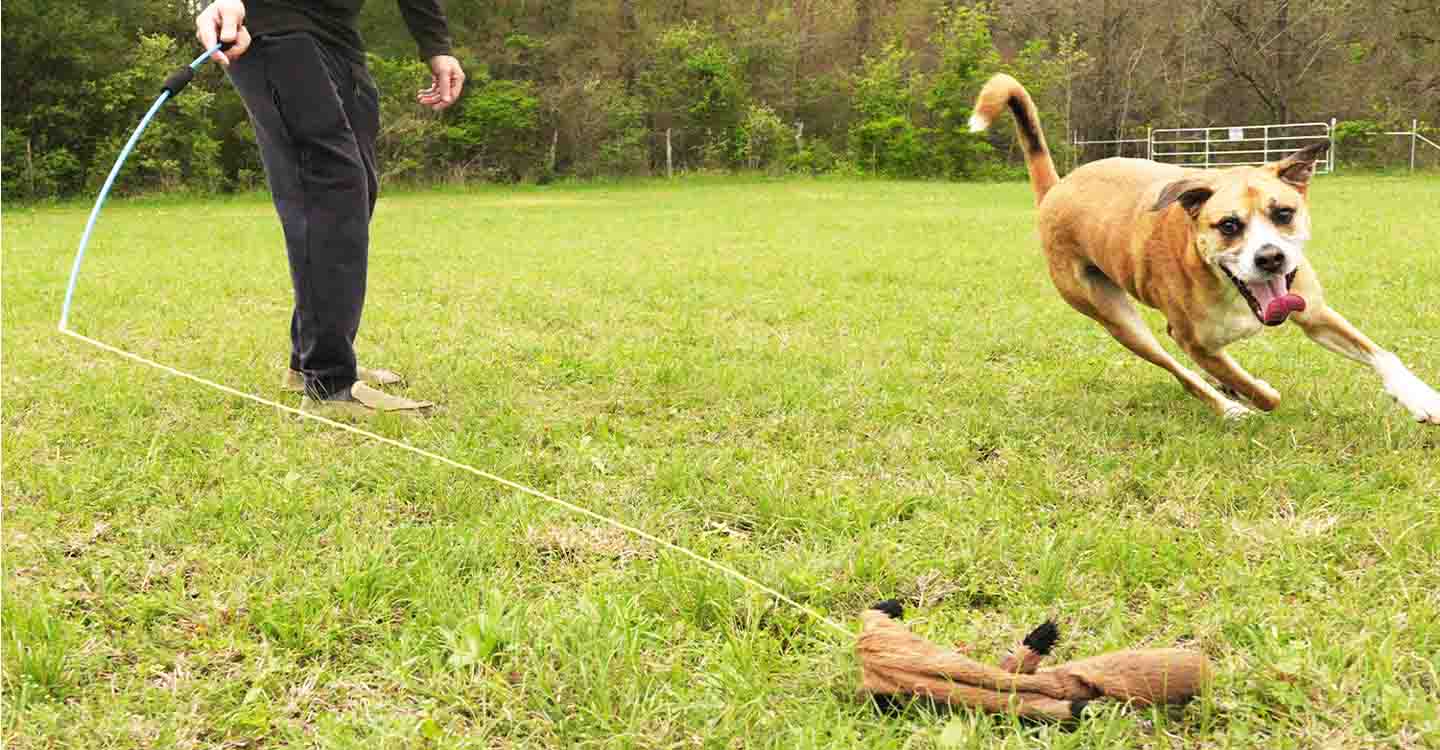
The Whimsy Stick: Empties the Tank Before 9pm
The evening explosion is a full tank overflowing. A flirt pole empties it fast, earlier in the night, so there is nothing left to detonate on the couch.
Read These Next to Go Deeper
Nighttime Hyperactivity: FAQ
Why is my dog hyper at night?
Usually because the day’s energy never got spent. A quiet or under-exercised day leaves the tank full, and it overflows in the evening right when you want to relax. Overtiredness and a lack of routine make it worse, so the fix is an earlier burn plus a calm wind-down.
How do I calm my dog down at night?
Burn the energy earlier, then teach the come-down. Run a real exercise session a couple of hours before bed, then follow it with scent work, a chew, and a quiet settle routine. Keep the last stretch before bed calm and consistent.
Why does my dog get zoomies at night?
Because your evening stillness frees up a dog that has energy to burn. The couch becomes the starting gun, and the built-up energy explodes. Spend it earlier with a real outlet and the nightly zoomies usually fade.
Should I play with my dog before bed?
Play earlier, not right at bedtime. A big exciting session just before bed spikes arousal when you need it dropping. Do the hard burn a couple of hours out, then keep the final stretch calm with a chew or scent work.
My dog is calm all day but wild at night. Why?
Often the daytime calm is really under-stimulation, especially if the dog is home alone. The unspent energy then dumps in the evening. A proper daytime outlet plus an evening burn evens it out.
Can too little sleep make a dog hyper at night?
Yes, an overtired dog often gets wired rather than sleepy, like an overtired toddler. Busy homes can leave a dog short on undisturbed daytime rest. A quiet nap spot can settle the evening as much as exercise does.
How long until the nighttime hyperactivity stops?
With an earlier burn and a consistent wind-down, most owners see real change within a couple of weeks. Routine is doing much of the work, so consistency matters. If nothing improves, look at daytime exercise, rest, and a possible medical cause.
Is it bad to let my dog have zoomies at night?
An occasional safe zoomie is harmless, but nightly ones signal unspent energy. Give the burst safe footing when it happens, and prevent it with an earlier outlet. Do not chase or scold, since attention just fuels the game.


