
TL;DR
Stamina is built gradually, not switched on. Start with what your dog handles comfortably, then add about ten percent to distance or time each week while watching recovery. Blend steady cardio with short power intervals and real rest days. Get a vet check first, respect the heat and the terrain, and a soft dog becomes a trail-ready partner over a couple of months. Because tissue adapts slowly, the fastest safe route is a patient one.
Start with the big picture in the dog exercise guide, pair the cardio with strength from the canine conditioning exercises, then add power with the flirt pole training guide.
Who This Is For
- Weekend hikers whose dog gasses out on the trail
- Runners who want a canine partner
- Owners of a soft, out-of-shape dog with potential
- People prepping a young dog for an active life
- Owners returning a dog to fitness after time off
- Anyone whose dog is sore the day after a big outing
- Active owners who want to do it without injuries
Signs Your Dog Needs Conditioning
- Quitting or slowing hard after a mile or two
- Sore, stiff, or limping the day after a big outing
- Panting far longer than the effort should cause
- Lagging behind on hikes it used to handle
- Soft muscle tone and a lack of definition
- Overheating or flagging in mild activity
- A young dog you want to build up the right way
Build the Engine Gradually
Endurance comes from progressive overload, just like it does for people. Because the body adapts to a little more each week, you grow stamina by nudging the workload up slowly. So start where your dog is, not where you want it to be.
The ten percent guide keeps it safe. Add roughly ten percent to distance or time per week, and back off if recovery suffers. Per the American Kennel Club, gradual conditioning prevents most exercise injuries.
Watch recovery, not just effort
How your dog feels the next day tells the real story. So if it is stiff or sore, you went too far, and the next week should ease off rather than push on.
Cardio, Power, and Rest
A complete conditioning week blends three things: steady cardio, short power intervals, and real rest. Because muscle and tendon strengthen during recovery, the rest days are training too. Most of the early weeks live in the steady cardio base that carries everything else.
Steady cardio for the base
Build the aerobic base with steady trotting: brisk walks, light jogs, and gradually longer hikes. Because the base carries everything else, most of the early weeks live here. Keep the pace conversational at first.
Short power intervals
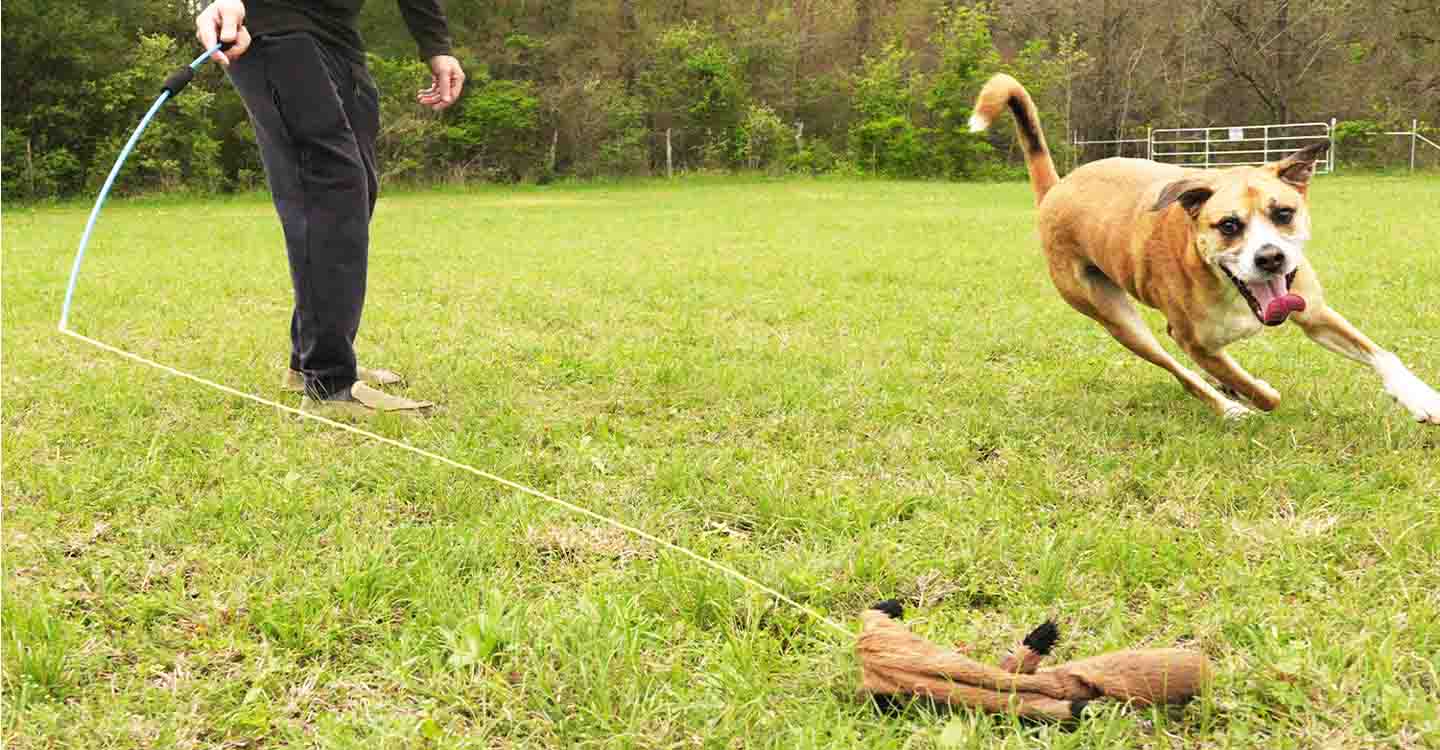
Add short bursts of hard effort to build the top end. A flirt pole session brings sprint, cut, and accelerate work that flat miles never do, which sharpens power and agility. So a little interval work each week rounds out the engine.
Rest days are training
Muscle and tendon adapt during recovery, not during the workout. So schedule real rest days, and never stack hard efforts back to back on a still-building dog. The Cornell Riney Canine Health Center stresses gradual loading for sound joints.
Train Without Breaking the Dog
The fastest way to ruin a conditioning program is an injury. Because heat, hard surfaces, and young joints all raise the risk, respect them. Get a vet check before hard work, and skip heavy loading for puppies whose growth plates are still open.
Mind the conditions too. Hot pavement burns paws and causes overheating, so train in the cool hours and carry water. When you build on soft ground, in good weather, on a mature dog, the miles add up safely.
Trail-ready takes weeks
A soft dog usually needs six to twelve weeks to handle real distance. So plan the build backward from your goal outing, and do not cram it into a week.
You cannot cram fitness. A dog’s tendons and lungs adapt on their own schedule, and rushing them just trades a slow build for a fast injury.
Christopher Lee Moran · Working Dog TrainerBase, power, rest
Steady Cardio
Brisk walks and light jogs that get a little longer each week.
Interval Work
Short flirt pole bursts for sprint, cut, and acceleration on top of the base.
Recover
Real rest days so muscle and tendon adapt and strengthen.
Fitness cannot be crammed. Add ten percent a week, mix cardio with power, and rest hard. A soft dog becomes trail-ready in a couple of months.
Get a vet check before starting a conditioning program. Undetected joint or heart issues turn hard exercise dangerous. Watch for limping, reluctance, or heavy recovery, and back off when you see them.
Skip heavy loading and long-distance work for puppies under 12 to 18 months. Growth plates are still open, so build young dogs slowly with light activity until they mature.
The Whimsy Stick: The Power Half of Fitness
Steady miles build the base, but they never train sprint and acceleration. A flirt pole adds the power and agility that make a dog a strong, athletic partner.
Read These Next to Go Deeper
Building a Dog’s Stamina: FAQ
How do I build my dog’s stamina?
Build it gradually with progressive overload. Start with what your dog handles comfortably, then add about ten percent to distance or time each week while watching recovery. Blend steady cardio with short power intervals and real rest days, and get a vet check before hard work.
How long does it take to get a dog fit for hiking?
Usually six to twelve weeks for a soft dog, depending on the starting point and the goal. Endurance adapts slowly, so plan the build backward from your target outing. Rushing it trades a slow, safe build for a fast injury.
How many miles can a dog hike?
It depends entirely on breed, age, fitness, and conditions. A conditioned athletic dog can cover many miles, while a soft or short-nosed dog tires fast. Build up gradually and judge by recovery, not by a number, especially in heat.
Should I run with my dog every day?
No, hard efforts need rest days between them, especially while fitness is building. Daily easy movement is fine, but back-to-back hard runs invite injury. Alternate harder days with easy or rest days so the body can adapt.
How do I know if my dog is overexercised?
Watch recovery and willingness. Soreness the next day, limping, lagging, reluctance to go, or heavy prolonged panting all signal too much. When you see them, ease off and rebuild more slowly, and see your vet for any persistent limp.
Can any dog build endurance?
Most healthy adult dogs can improve a lot with gradual training, though genetics set a ceiling. Athletic breeds build deep endurance, while flat-faced and giant breeds have real limits. Work within your dog’s build and always prioritize safety over ambition.
Does a flirt pole help build fitness?
Yes, it adds the power and speed work that steady miles miss. The sprint-cut-catch pattern trains acceleration, agility, and anaerobic fitness. Paired with a steady cardio base and rest, it rounds out a complete conditioning program.
When can a puppy start endurance training?
Not until the growth plates close, roughly twelve to eighteen months depending on breed. Long-distance and high-impact work before then can damage developing joints. Keep young dogs on light, varied activity and build real endurance once they mature.


