
TL;DR
Senior dogs still need exercise, just gentler and smarter. Short easy walks, slow flirt pole sweeps on soft ground, and daily mental work preserve muscle, mobility, and mood without stressing old joints. Because the drive often outlasts the body, scent games and calm training carry more of the load. Follow your vet’s lead on any diagnosis. Since doing nothing speeds the decline, gentle and frequent is the goal.
Set the frame with the dog exercise guide, cover the mental side with enrichment and mental stimulation, and save the harder flirt pole training guide drills for cleared, sound dogs.
Who This Is For
- Owners of a graying dog who are unsure how much to do
- People whose senior is losing muscle or slowing down
- Owners of arthritic dogs who still have drive
- Anyone worried about overdoing it with an old dog
- People who want to keep a senior sharp and engaged
- Owners managing weight on a less active older dog
- Anyone whose old dog is bored but not fragile
Signs Your Senior Needs Gentle Work
- Losing muscle over the hips, thighs, or topline
- Slower to rise and stiff after resting
- Sleeping more but still restless or whiny
- Gaining weight as activity drops off
- Getting bored, clingy, or a little depressed
- Hesitating at stairs or reluctant to jump up
- Still bright-eyed and asking for something to do
Movement Is Medicine for Seniors
Muscle and mobility fade fast in an old dog that stops moving. Because use-it-or-lose-it is real, gentle daily activity keeps a senior stronger and steadier for longer. So the answer is rarely rest, it is the right kind of work.
Mental work matters just as much here. A bored senior gets stiff, heavy, and low, while an engaged one stays bright and mobile. Per the American Kennel Club, older dogs benefit from consistent low-impact exercise.
Read the dog, not the calendar
Age is a number, but the body tells the truth. So watch how your dog moves and recovers, and let that set the dose rather than a birthday.
Low-Impact, High-Frequency
The right formula for a senior is low-impact and high-frequency. Run several short, gentle sessions a day instead of one long haul. Because frequent movement keeps joints lubricated and muscle on the frame, little and often wins. Lean on mental work to fill in whatever the body cannot do.
Short, gentle movement
Two or three short easy walks beat one long haul for a senior. Because frequent gentle movement keeps joints lubricated, little and often wins. Add slow flirt pole sweeps on soft grass for the dogs that still love to chase.
Lean on the brain
When the body can only do so much, the brain picks up the slack. Scent games, puzzle feeders, and calm training tire a senior without a single hard step, a payoff the Cornell Riney Canine Health Center links to healthier aging. So a graying dog can still get a real workout lying in the living room.
Warm up and soft ground
Old muscles are tight, so ease into any activity and stick to grass over pavement. A short warm-up walk before anything faster protects stiff joints.
Gentle Chase Still Has a Place
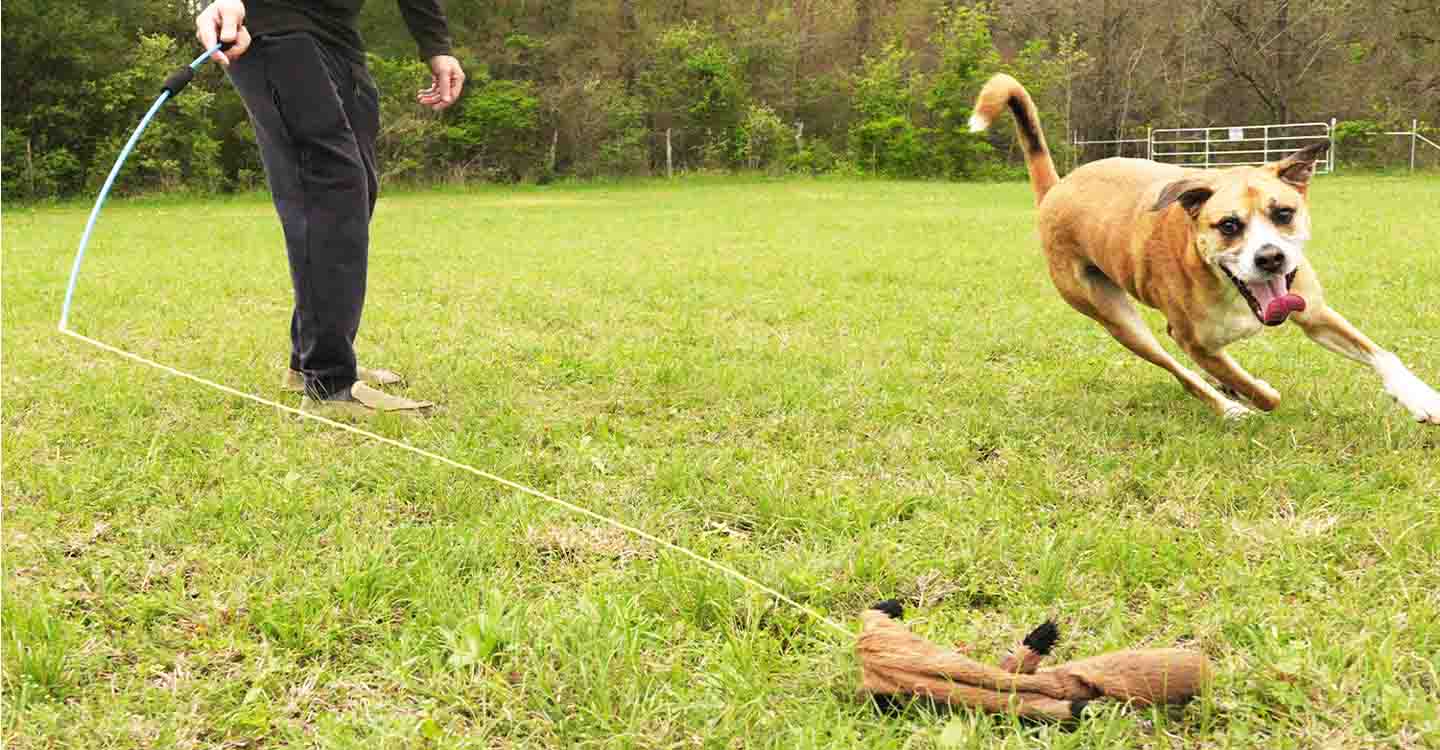
A flirt pole is not only for young athletes. Slowed down and kept low, it lets a senior with drive still stalk and catch. Because it satisfies the same instinct a puppy has, it keeps an old dog mentally young.
Keep the arcs slow, the turns wide, and the sessions short, so there is no hard cutting or jumping. When your dog is cleared and sound, gentle chase adds joy that a slow walk cannot. Stop the moment it stiffens up.
When to hold back
If your dog has arthritis, a heart condition, or any diagnosis, check with your vet before chase work. So err gentle, and drop to walks and nose games on the sore days.
A senior dog is not done, it is just slower. Keep the body moving and the mind working, and you buy your old friend more good years, not fewer.
Christopher Lee Moran · Working Dog TrainerAge is not a reason to stop. It is a reason to go gentle and frequent. Short movement plus real mental work keeps a senior sound and happy.
Get vet clearance for a senior with any diagnosis. Arthritis, heart issues, and old injuries change what is safe, so check before adding harder work. Watch for new limping, heavy breathing, or reluctance, and back off when you see it.
Skip high-impact work with seniors. Because old joints do not absorb impact well, avoid jumping, hard cutting, and long stairs. Keep chase slow and on soft ground.
The Whimsy Stick: Gentle Enough for a Senior
A flirt pole slowed down keeps an older dog stalking and catching without the pounding of a run. This is the one I use with seniors that still have drive.
Read These Next to Go Deeper
Senior Dog Exercise: FAQ
How do you exercise a senior dog?
Keep it gentle, low-impact, and frequent. Short easy walks, slow flirt pole sweeps on soft ground, and daily mental work preserve muscle and mobility without stressing old joints. Because senior drive often outlasts the body, lean on scent games and calm training too.
How much exercise does an older dog need?
Enough to stay strong and engaged, dosed to the individual. Two or three short sessions a day usually beats one long one for a senior. Watch how your dog recovers and adjust, since a stiff, sore dog needs less and an eager one can do a bit more.
Is it safe to exercise an arthritic dog?
Yes, gently and with vet guidance. Low-impact movement actually helps arthritis by keeping joints mobile and muscle on the frame. Avoid jumping and hard cutting, stick to soft ground, and follow your vet’s plan on medication and limits.
Should senior dogs still play?
Absolutely, play keeps an old dog mentally young. Slow, low chase, gentle tug with rules, and nose games all bring joy without hard impact. Keep sessions short and stop before the dog tires or stiffens.
Can a senior dog use a flirt pole?
A sound, vet-cleared senior can, as long as you slow it down. Keep the arcs low, the turns wide, and the sessions short so there is no hard cutting or jumping. It satisfies the same instinct that keeps a dog feeling young.
How do I keep my senior dog mentally sharp?
Give the brain daily jobs. Scent games, puzzle feeders, new easy tricks, and short training sessions all keep an old dog engaged. Mental work tires a senior without a single hard step and lifts the mood.
My senior dog is losing muscle. What can I do?
Add gentle strength work and enough protein, with your vet’s blessing. Slow sit-to-stands, short hill walks, and light movement help hold muscle on an aging frame. Pair it with easy daily activity so the whole body stays used.
Is it bad to stop exercising an old dog?
Yes, inactivity speeds the decline. Muscle, mobility, and mood all fade faster when a senior stops moving. Gentle, frequent activity is one of the best things you can do to keep an old dog comfortable and sound.


