
TL;DR
Helping an overweight dog lose weight is mostly a food problem, not an exercise problem. Roughly two-thirds of the result comes from portions and treats, and about one-third from movement. Fix the diet with your vet first, then add short high-intensity sessions the dog can recover from. Aim for 1 to 2 percent of body weight lost per week. Because a slow flat walk barely moves the needle, the exercise that works is short and intense, not long and boring.
Zoom out with the dog exercise guide for the full plan. Once your vet clears the dog, structured chase intervals burn more per minute than a march and kill the boredom-eating too. The full technique lives in the flirt pole training guide.
Who This Is For
- Owners whose vet just flagged their dog as overweight or obese
- People who walk their dog daily and still cannot get the weight off
- Owners of a heavy, unfit dog who need a safe place to start
- Anyone confused about how much to feed a dog that needs to slim down
- Owners of high-drive dogs who eat out of boredom and beg constantly
- People who want fat loss without wrecking an older dog’s joints
- Anyone who wants a real plan instead of “walk more and feed less”
Signs Your Dog Is Carrying Too Much Weight
- You cannot feel the ribs without pressing hard through a layer of fat
- No visible waist when you look down at your dog from above
- No belly tuck-up when you look from the side
- Gets winded fast on short walks and lags behind
- Struggles with stairs, jumping onto the couch, or getting up slowly
- Begs at every meal and scavenges for dropped food
- A rounded, slab-sided back instead of an hourglass shape
Why Dogs Get Overweight in the First Place
Almost every overweight dog is eating more calories than it burns, and the gap is usually smaller than owners think. A few extra treats, a heaped scoop instead of a measured one, and table scraps add up fast on a body that only needs a few hundred calories a day. The dog is not broken. The math just tilted the wrong way.
Age and neutering slow metabolism a little, so the food that kept a young dog lean now adds fat. Meanwhile, a bored dog eats out of boredom, because food becomes the only interesting event in a flat day. That is a behavior problem hiding inside a weight problem, and it is one that exercise fixes directly.
The part owners get wrong
Most people try to fix weight with exercise alone while leaving the bowl untouched. That rarely works, since you cannot out-walk a bad diet on a dog that burns so little to begin with. Per the American Kennel Club’s guidance on safe canine weight loss, diet drives most of the result. Exercise still matters, but it plays a supporting role.
You cannot out-walk a bad diet. Fix the bowl first, then use exercise to speed it up and to give a bored, food-obsessed dog something better to do than beg.
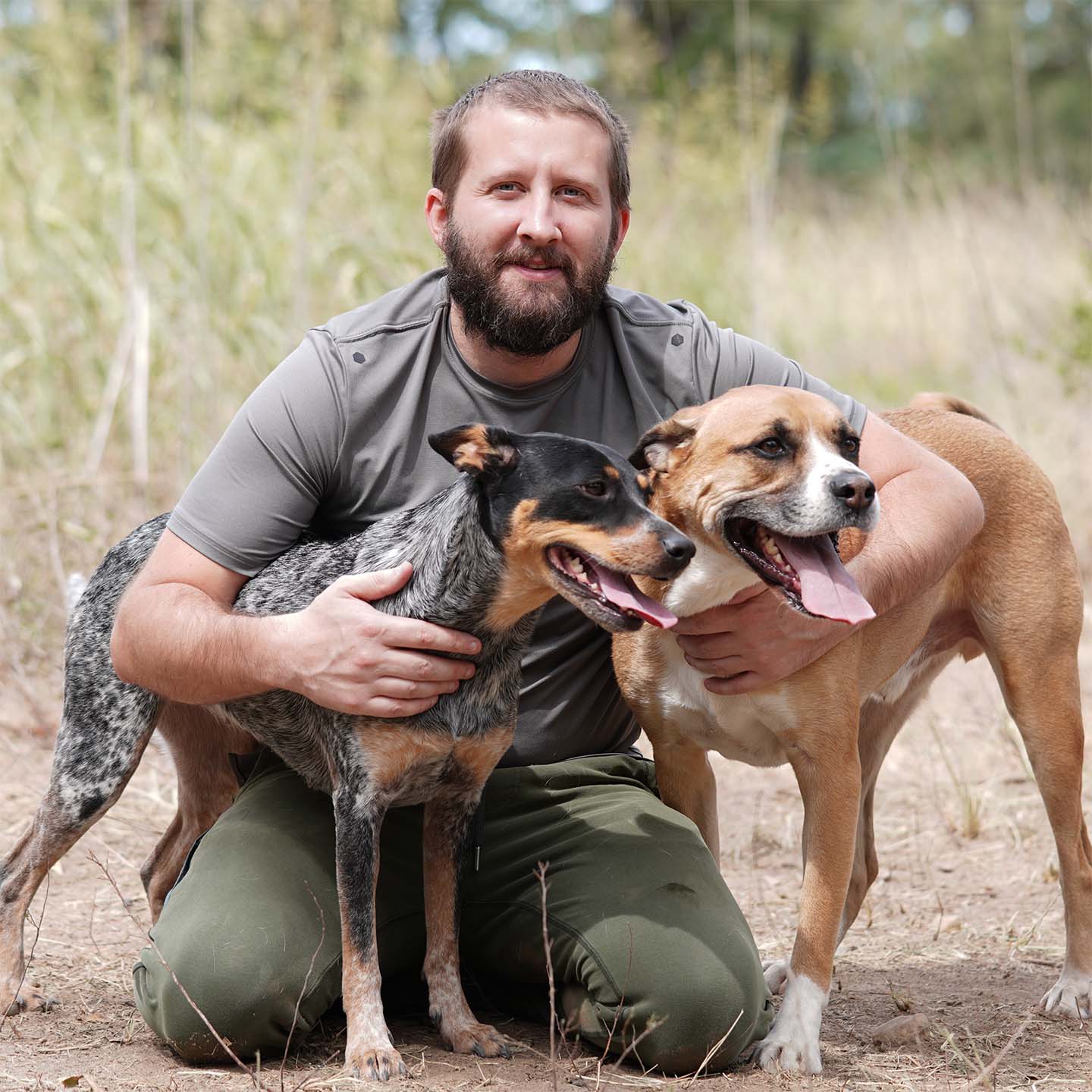
Christopher Lee Moran · Working Dog TrainerDiet: Where Most of the Loss Comes From
If you only do one thing, measure the food. Weight loss is roughly 60 to 70 percent diet, so this section carries most of the weight, literally. Your vet sets a target body weight and a daily calorie number, and everything else follows from that.
Get a real calorie number
A rough starting estimate is target weight in pounds times 15, plus 70, for daily calories. That is a ballpark, though, not a prescription. Because a crash diet can trigger dangerous liver problems, your vet should confirm the number and, for many dogs, recommend a proper weight-loss food that keeps the dog full on fewer calories. The Cornell Riney Canine Health Center’s weight-management guidance is a solid reference to bring to that conversation.
Measure, do not eyeball
Use a kitchen gram scale, not a scoop. A “cup” varies wildly depending on who is pouring, and a small daily overage is exactly how the weight arrived. Split the day’s food into timed meals, give the dog 15 minutes to eat, then pick the bowl up.
The treat problem
Treats should stay under 10 percent of daily calories, and most owners blow past that without noticing. Swap biscuits for green beans, carrot coins, or a few pieces of the dog’s own measured kibble. Whenever you hand over food, subtract it from the daily total instead of adding it on top.
Diet is the lever. Measure every meal with a gram scale, cap treats at 10 percent, and let your vet set the target. Exercise speeds the result, but the bowl decides it.
Exercise: Why Intensity Beats Duration
A slow flat walk is low intensity, so it burns surprisingly few calories for the time it costs. Walking is still worth doing, because it is joint-friendly and gives your dog sniffing and decompression that nothing else replaces. To actually shift fat faster, though, you want short bursts of harder work, not a longer march.
Short high-intensity intervals raise the heart rate, recruit more muscle, and keep burning after the session ends. That is why a few minutes of hard chase can do more than a plodding hour. It also handles the boredom-eating, since a dog that gets to run and problem-solve stops treating the bowl as the best part of the day. For the wider menu of options, see how to exercise a dog without walking.
Why chase work fits weight loss
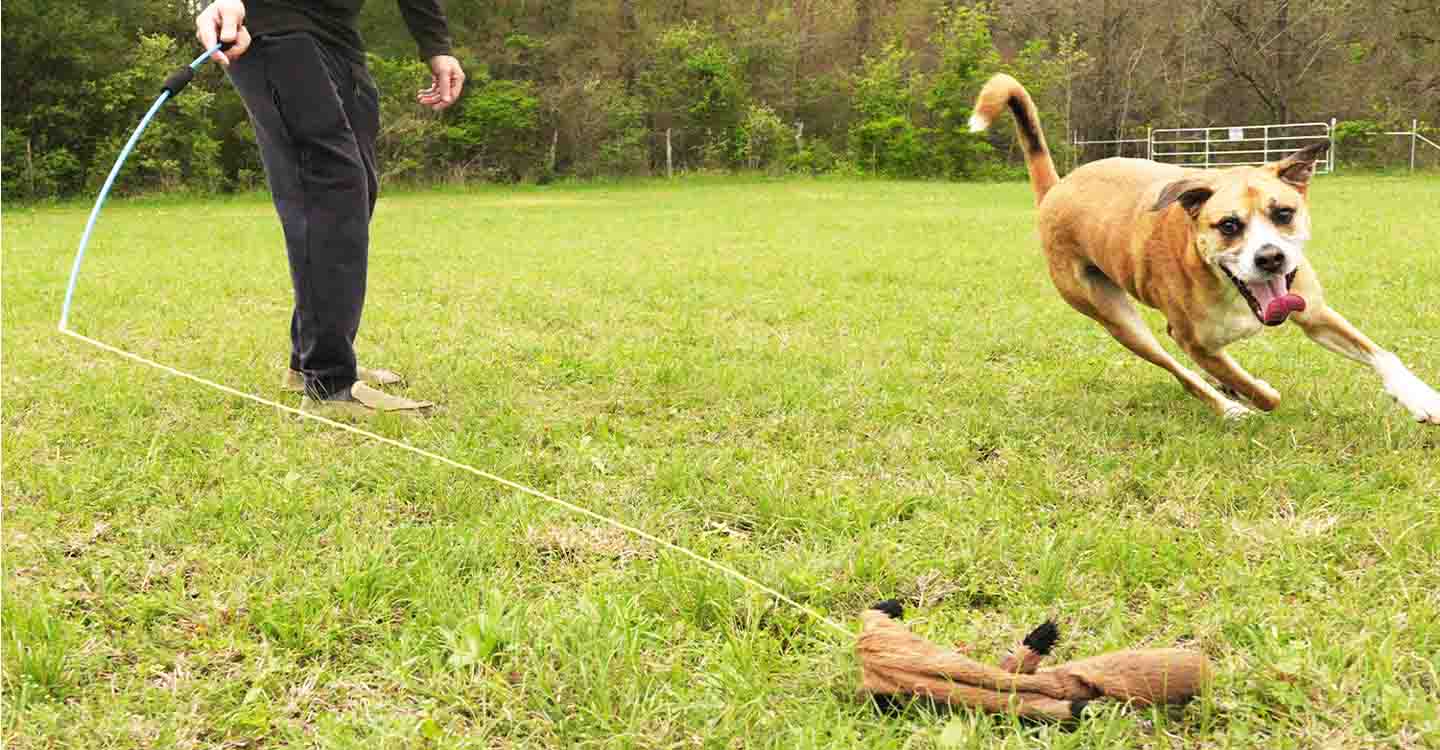
Structured chase with a flirt pole runs those intervals in a small space. The dog sprints, cuts, catches, and resets, then rests, over and over, which is textbook interval training. Unlike fetch, it completes the predatory motor pattern, so the dog finishes satisfied instead of wound up and hungry. For breed-specific dosing, how much exercise does my dog need breaks it down.
The 15-Minute Fat-Burn Session
This session is built to start easy and scale, because an overweight dog is also an unfit dog. Do not throw a heavy dog straight into hard cutting. Get a vet check first, then build the intervals over weeks as the dog gets lighter and fitter.
Easy in, hard middle, easy out
Easy Walk
Loose walking on soft ground to raise the heart rate and loosen the joints before anything hard.
Short Chase Bursts
Eight rounds of 20 to 30 seconds of gentle chase, full rest between each. Keep the lure low and turns wide so an unfit dog is not slamming into hard cuts.
Walk and Water
Slow walking and water. Watch breathing recover, and stop early on any dog that overheats or gases out fast.
Run this once or twice a day depending on what your dog can recover from. If the dog is sore, panting hard long after, or limping, you went too far, so dial it back. As the weight drops, add a round or two and let the intervals get a little longer.
What Actually Burns Fat, Ranked Honestly
Here is how the common options stack up for a dog that needs to lose weight. Low-impact work is the safe starting point, while interval chase does the most per minute once a vet clears the dog.
| Method | Burn Per Minute | Joint Impact | Kills Boredom |
|---|---|---|---|
| Slow flat walk | Low | Very low | Barely |
| Swimming | High | Very low | Some |
| Fetch | Medium | High | Some |
| Flirt pole intervals | High | Medium | Yes |
| Long stair sprints | High | Very high | Some |
Swimming and interval chase win on burn without hammering joints. Save high-impact work for after the weight is off, when the dog can handle it.
Exercising a Heavy Dog Without Hurting It
A heavy dog carries extra load on every joint, so hard exercise on the wrong body causes injury instead of fat loss. Respect these limits while the weight is still up.
Get a vet check before any harder exercise. Heavy dogs, flat-faced breeds, seniors, and dogs with joint history need clearance first. Heat is the biggest danger: skip hard outdoor work when it is above 85 degrees, and stop immediately for heavy panting, a brick-red tongue, or wobbliness.
Puppies under 12 months skip the high-impact stuff entirely. Growth plates are still open, and hard repetitive impact damages developing joints. Keep young dogs on easy movement and diet until they mature.
Progress by feel, not by a fixed target. A dog that recovers well and moves better each week is ready for a little more. A dog that is stiff, sore, or slow to recover needs less, so back off and let the diet carry the load for a while.
Real Results: A Lab That Dropped the Weight
The Whimsy Stick: Built for Interval Chase
Short chase intervals need a tool that runs them cleanly in a small space. This is the flirt pole I use with client dogs, and the one that powers the routine above once your vet clears the dog for harder work.
Read These Next to Go Deeper
Overweight Dog Weight Loss: FAQ
How much should I feed my dog to lose weight?
Your vet sets the number, because it depends on target weight, not current weight. A rough starting estimate is target body weight in pounds times 15, plus 70, for daily calories. A proper weight-loss food and an exact gram amount from your vet beats eyeballing scoops every time, so measure with a gram scale.
How much exercise does an overweight dog need?
Start with what your dog can recover from, not a fixed target. For an unfit dog that often means two short 10 to 15 minute sessions a day, built from easy walking plus a few short chase intervals, then scaled up over weeks. Intensity matters more than duration.
Can I just walk my dog to lose weight?
Walking helps, but a slow flat walk is low intensity and burns relatively few calories. Keep it for the sniffing and joint-friendly movement, and add short higher-intensity bursts to move fat faster. Remember that the diet, not the walk, does most of the work.
How do I know if my dog is overweight?
Use a body condition score. You should feel the ribs with light pressure, see a waist from above, and see a belly tuck-up from the side. If the ribs are buried and the back looks rounded, your dog is likely carrying extra weight, so ask your vet to confirm.
How fast should a dog lose weight?
Slowly. Most dogs should lose about 1 to 2 percent of body weight per week, or roughly 3 to 5 percent per month. A crash diet is dangerous and can cause serious liver problems, so weigh every two weeks and adjust with your vet.
My dog is too heavy to run. Where do I start?
Fix portions first and add short easy walks on soft ground. Keep every session inside what your dog can recover from without heavy panting or soreness. As the weight comes off the dog gets fitter, and then you add gentle chase intervals once a vet has given the all-clear.
Does boredom make dogs overeat?
Often it does. A bored, under-stimulated dog begs, scavenges, and treats food as the highlight of the day. Structured exercise and enrichment give the dog a job, which lowers food-seeking behavior and makes the diet far easier to hold.
Can a flirt pole help my dog lose weight?
For a healthy, vet-cleared dog, yes. It runs short high-intensity chase intervals that burn more per minute than a flat walk while satisfying drive. Treat it as a supplement to a vet-guided diet, never a replacement for fixing the food, and scale it gently for a heavy or unfit dog.


