
TL;DR
You can keep a dog well-exercised on a full-time schedule by trading long sessions for short, intense ones. Ten minutes of hard chase before work and ten after burns more than a slow hour. Puzzle-fed meals cover the boredom while you are gone, and a dog walker or lunchtime break helps if you can arrange it. Because intensity beats duration, the clock is not really the problem.
The chase technique is in the flirt pole training guide, and more options sit in how to tire out a high-energy dog.
Who This Is For
- Nine-to-fivers with a high-energy dog at home
- People too wiped after work for a long walk
- Owners whose dog destroys things while they are gone
- Anyone squeezing exercise into a packed schedule
- Owners who feel guilty about crate or alone time
- People who want results without an hour a day
- Shift workers with unpredictable hours
Signs Your Schedule Is Failing Your Dog
- Chewed furniture, trash raids, or scratched doors while you are out
- The dog explodes with energy the second you walk in
- Barking or whining reported by neighbors during the day
- Pacing, restlessness, or trouble settling at night
- Weight creeping up from too much sitting around
- The dog acts starved for attention every evening
- You keep meaning to walk more and it never happens
It Is Not Time, It Is Intensity
Most working owners think they need an hour they do not have. They do not. A slow leash walk is low intensity, so even a long one barely dents a high-drive dog. The clock is a distraction from the real fix.
Short bursts of hard work change the math. When a dog sprints, cuts, and catches, the heart rate spikes and the energy actually drains. So ten focused minutes can beat a plodding hour. The American Kennel Club notes that high-drive breeds rarely settle on walks alone.
Physical and mental, both
A tired body with a bored brain still gives you a restless dog. That is why the plan pairs a short physical burst with mental work like puzzle feeders, an approach the Cornell Riney Canine Health Center backs for busy households. Together they cover both tanks in the little time you have.
A Working Day That Actually Works
A working-day plan has three touchpoints. Run a ten-minute flirt pole burst before you leave, a puzzle-fed meal or a midday walker while you are gone, and ten more minutes of hard chase at night. Because the dog starts and ends the day drained, the hours in between stay calm.
Before you leave
Run a ten-minute flirt pole burst in the yard, then feed breakfast from a puzzle toy. The dog starts the day drained instead of wound up, which makes the alone-time far calmer.
While you are gone
Leave a stuffed frozen toy or a puzzle feeder timed for midday. If your budget allows, a dog walker or a lunchtime dash home breaks up the long stretch. Even twenty minutes in the middle resets the day.
When you get home
Before you collapse on the couch, give ten more minutes of hard chase. It burns the evening energy and stops the dog treating you as its only entertainment. For the mental side, see enrichment and mental stimulation.
Why Chase Beats A Rushed Walk
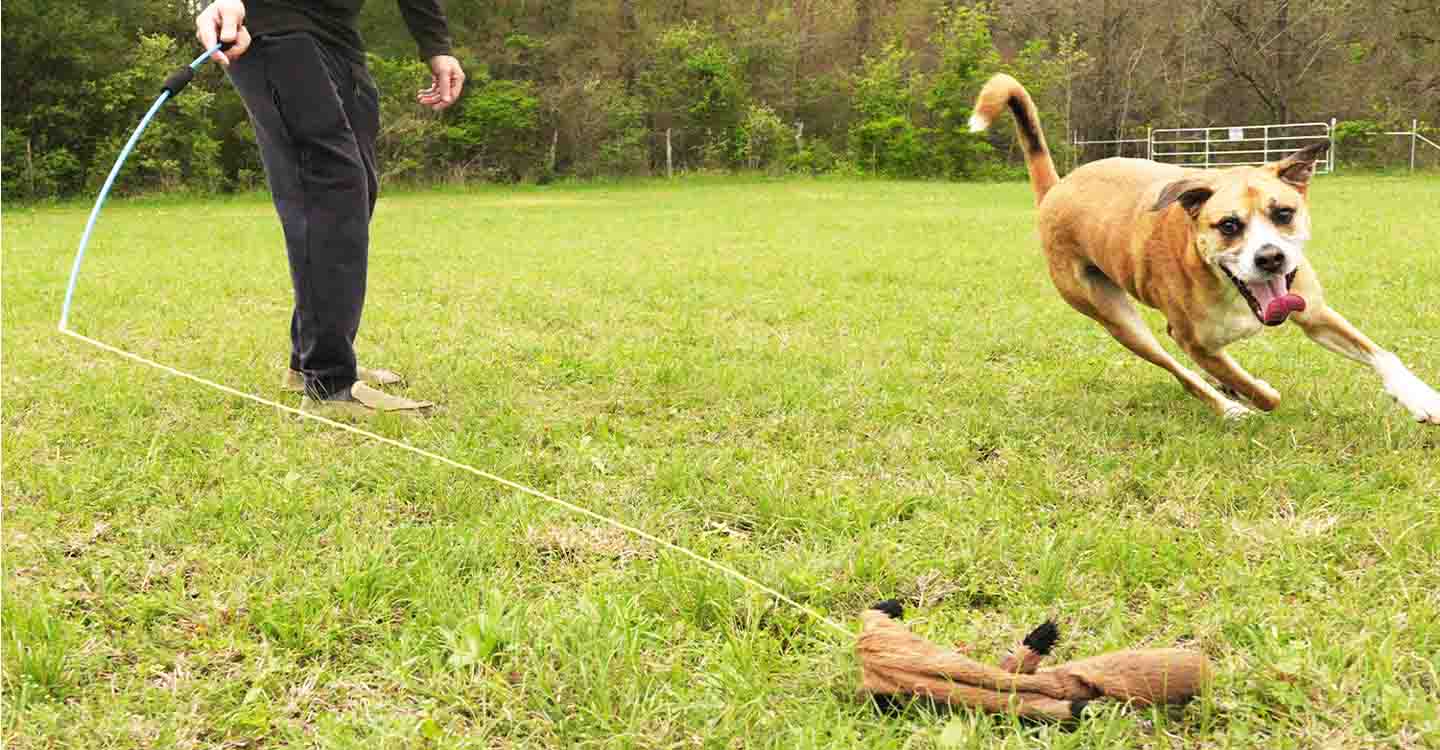
A flirt pole is the most time-efficient tool a busy owner can own. It packs sprint, cut, and catch into a tiny window and a small space. Ten minutes and a backyard is all it takes.
It works because it finishes the predatory motor pattern a walk leaves hanging. So the dog ends satisfied, not still hunting for something to do. That is the difference between a dog that naps all evening and one that pesters you until bed.
The 10-Minute Before-and-After
Run this twice: once before work, once after. Warm up, hit the intervals hard, then bring the dog down so it settles instead of bouncing.
On days you are truly fried, lean on the puzzle feeder and cut the evening session short. Consistency matters more than any single perfect session, so protect the habit over the intensity when you have to.
The problem was never the length of your day. It was the intensity of the ten minutes you can spare. Spend them right and the job stops costing your dog.
Christopher Lee Moran · Working Dog TrainerWarm up, burn, settle
Loosen Up
A few easy flirt pole sweeps or a short jog around the yard before the hard work.
Hard Chase
Six to eight short chase bursts with rest between, letting the dog sprint, cut, and catch.
Wind Down
Scatter a little food so the dog searches and settles before you head out or sit down.
The workday is not the enemy. A slow walk is. Two ten-minute bursts of real chase beat an hour you cannot fit in anyway.
Warm the dog up before hard sprints, especially first thing in the morning. Cold muscles tear. A couple of minutes of easy movement first keeps the fast stuff safe.
Puppies under 12 months skip the high-impact bursts. Growth plates are open, so keep young dogs on gentle play and puzzles until they mature.
The Whimsy Stick: Built for the 10-Minute Burn
The whole plan hinges on packing real work into ten minutes. This is the tool that does it, before and after your shift.
Read These Next to Go Deeper
Exercising a Dog on a Full-Time Schedule: FAQ
How do you tire out a dog when you work all day?
Trade length for intensity. A 10-minute flirt pole burst before and after work burns more than a slow hour, and puzzle-fed meals cover the boredom while you are gone. A midday walker or lunch break helps if you can arrange one.
Is it cruel to leave a dog while you work full time?
Not if the dog’s needs are met around your hours. Dogs handle alone time well when they get real exercise before and after, plus mental work during the day. The problem is under-exercised alone time, not alone time itself.
How long can a dog be left alone during a workday?
Most adult dogs handle four to six hours comfortably, and up to eight with a solid routine and a midday break. Puppies and seniors need more frequent breaks. A dog walker or family member at the midpoint makes long days far easier.
What can I do before work to tire my dog out?
Run a 10-minute flirt pole session in the yard, then feed breakfast from a puzzle toy. The dog burns energy and eats slowly, so it settles into the day drained instead of wound up and looking for trouble.
Do puzzle feeders actually help while I am at work?
Yes. A puzzle feeder or frozen stuffed toy turns a 30-second meal into 15 minutes of problem-solving, which tires the brain and eats into the boredom. Time one for midday to break up the long stretch.
Is a quick walk enough for a high-energy dog?
Usually not. A slow walk is low intensity, so it barely touches a high-drive dog no matter the length. A short burst of hard chase drains far more energy in less time, which is exactly what a busy schedule needs.
Should I get a dog walker?
If your budget allows and your dog does long stretches alone, yes. A midday walker or daycare day breaks up the boredom and adds real movement. It is not required if your morning and evening sessions are intense enough.
How do I exercise my dog if I get home exhausted?
Keep it short and let the dog do the work. Ten minutes of flirt pole from a standing or seated position burns the evening energy without demanding much from you. On the worst days, a puzzle feeder alone buys you an hour of quiet.


