
Stop Barking. Fix Pulling. Build Recall. Same Root. Same Fix.
How do you stop dog barking, leash pulling and bad recall at the same time? With a lot of high-drive dogs all three come from the same thing: a chase drive that never gets finished, so the dog stays wound up. I’d run a 5 to 8 minute flirt pole session that lets the dog stalk, chase, catch and win, with impulse-control breaks mixed in. Do it every day and keep track of the barking, the leash and the recall.
The honest part: this is my trainer’s take, not a cure. Barking can also come from fear, pain or separation problems, and those need a vet or a qualified behavior pro. This protocol is for the dog with a lot of drive and nowhere to put it.
By Christopher Lee Moran, working dog trainer, about 10 years and around 400 client dogs, Controlled Freedom method. I make the Whimsy Stick, so I’m not neutral about flirt poles. If you’re new to the tool, start with what a flirt pole is.
Who this is for
- Your dog barks at every noise, visitor or anything that moves
- Walks feel like a wrestling match no matter what harness or trick you try
- Recall works inside but goes out the window around squirrels, dogs or joggers
- You’ve tried more exercise, puzzle toys and obedience and it didn’t stick
- You’ve got a herding breed, working breed, terrier, sporting breed or bully breed
- Your dog’s drive is bigger than any treat you’ve got
Signs your dog needs this protocol
These are common signs a dog’s drive needs more of an outlet. If three or more fit, I don’t think regular exercise and obedience are gonna fix it by themselves.
- Barking gets worse at the same times, like when the mail comes, in the evening, or when you leave
- Pulling starts as soon as the leash goes on, before you even open the door
- Recall works at home but falls apart anywhere exciting
- Your dog is still wired after a long walk or a long game of fetch
- Puzzle toys and chews buy you a few minutes but not real calm
- Your dog is more wound up after exercise, not less
What clients tell me in general is their dogs are a lot more relaxed and calmer and seem more satisfied.
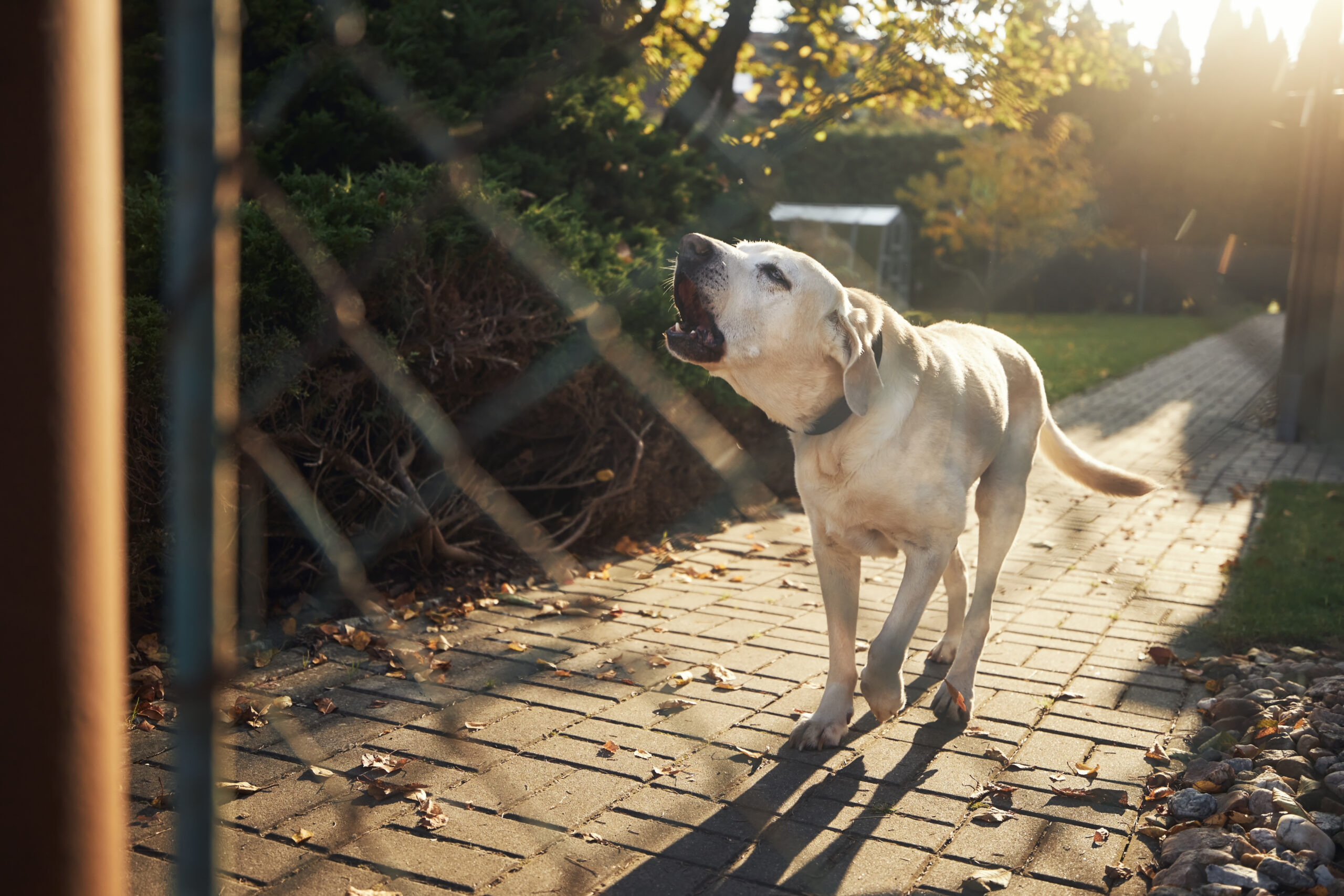
Why these three problems are actually one problem
A lot of dogs bark, pull and ignore recall cause they never get to finish a chase. That chase (stalk, chase, catch, win) is built into dogs, some breeds more than others. When it never gets satisfied, day after day, the dog just stays wound up, and it has to come out somewhere. For some dogs it’s barking, for some it’s pulling, and a lot of them do all three. Letting the dog finish all four steps, catch included, is the part people skip.
Regular exercise doesn’t really fix it. A walk can turn the chase urge on over and over and never let your dog finish, and fetch is mostly just the running and bringing it back. There’s no stalk, no real catch and no win in either one. The prey drive training guide goes into why the whole chase matters.
A structured flirt pole session is one of the few common tools that lets the dog run the whole chase with you in control of it. The dog stalks the lure, chases all out, catches it and wins, then learns to let go and reset.
What the AKC says
According to the AKC, predation is “an instinctive, natural behavior, and it’s found in all dogs to a certain extent.” The same article says that with high-prey-drive dogs, “many of the traditional methods for training recall aren’t enough,” and it covers a method built to channel prey drive into another outlet instead of just stopping the chase. It also says to keep these dogs on a leash or long line anywhere there’s a lot to chase. Teaching quiet by itself a lot of times isn’t enough when the barking comes from drive with nowhere to go, so I’d give the drive an outlet first.
Why standard fixes fall short for high-drive dogs
Most people have tried the usual advice. Here’s my take on why it doesn’t hold up for a lot of dogs with real drive.
| Problem | Standard fix | What it misses (my take) |
|---|---|---|
| Barking | “Teach quiet,” ignore it, close the blinds | It works on the noise, not on the wound-up dog making it. The dog just finds another way to let it out. |
| Leash pulling | Stop-and-wait, direction changes, front-clip harness, treat luring | All of it happens mid-walk. The dog already left the house with a full tank. |
| Poor recall | Treat-based recall, long line practice, “be more exciting” | For a lot of high-drive dogs a squirrel is a whole chase and a piece of cheese is just a snack. |
None of these are bad, they’re just missing a step: giving the drive an outlet first so the dog is calm enough to learn. A dog that’s all fired up isn’t gonna hear “quiet,” isn’t gonna pick a loose leash, and isn’t gonna pass up a chase for a cookie.
If your dog is reactive
If your dog is also reactive to other dogs or people on walks, the outlet still comes first, but you’ll also need careful work around triggers at a distance your dog can handle, and I’d do that with a qualified behavior pro. See reactive dog training and using a flirt pole with a reactive dog.
The 3-in-1 flirt pole protocol
It’s one session for all three. I’d run it up to 3 times a day at first, then once a day to keep it going, and each one only takes 5 to 8 minutes.
Phase 1: build focus (steps 1 and 2)
- 1. Warm-up, about 30 seconds. Drag the lure slowly in straight lines along the ground, no speed and no jerky moves, and reward eye contact with a quick tug so the dog learns calm attention starts the game. If your dog lunges right away, hold the lure still until it sits or looks at you, then release.
- 2. Chase bursts with impulse breaks, about 60 seconds. Move the lure around on the ground so the dog really goes after it, and about every 10 seconds stop it dead and wait for a sit or eye contact before you start again. That pause is the on/off switch: calming down is what gets the fun going again, and that’s the same thing you want on the leash and with barking. More in the overexcited dogs guide.
The impulse break. A Malinois holding a down and a doodle holding a sit until the release, with the lure right there.
Flirt pole training guidePhase 2: skill transfer (steps 3 to 5)
- 3. Recall drill, come means chase, about 60 seconds. Back up while you call your dog’s name and “come,” dragging the lure toward you, so the dog sprints to you cause you’re where the chase is now. Pay a fast return with a quick 2-second chase, then freeze, and do that 5 times. Coming back stops being about a cookie and starts being about the chase.
- 4. Leash simulation, yield to pressure, about 60 seconds. Hold the pole short so there’s some tension on the line, kind of like leash pressure. The dog has to give to it and look back to you to get the next chase, and you let the tension off the second it does. It’s the same thing you want on a leash, but practiced while the dog’s fired up, cause fired up is when pulling happens.
- 5. Bark interrupt, silence restarts the fun, about 30 seconds. When the dog is the most excited, drop the lure, turn your back and wait for 3 seconds of quiet, then start playing again right away. Barking stops everything and quiet gets it going again.
Phase 3: cool-down (step 6)
- 6. Cool-down, teach the off-switch, about 30 seconds. End with about 10 slow circles with the lure, each one slower than the last, then say “all done” and give a treat right where the dog is, and it has to hold still to get it. That teaches the dog how to come down. If yours struggles here, the hyper after walks guide covers the cool-down in more detail.
Key takeaway: none of these steps are just for fun. Warm-up? That’s focus. The chase bursts build the on/off switch, and the recall drill is your “come.” The short line is the leash, the bark interrupt is what pays the dog for being quiet, and the cool-down is where it learns to settle down.
Your weekly routine
This is a schedule you can start from. It comes out under 2 hours for the whole week.
| Day | Session | Time | Focus |
|---|---|---|---|
| Mon | Full 3-in-1 session | 5 to 8 min, up to 3x | All 6 steps, lean on the bark interrupt so quiet starts paying off right away |
| Tue | Pre-walk warm-up | 5 min before each walk | Pulling: chase bursts and the short line, then clip the leash on and walk right after the cool-down |
| Wed | Full 3-in-1 session | 5 to 8 min, up to 3x | Recall: all 6 steps with 10 reps of the recall drill |
| Thu | Rest | None | Just watch how your dog acts |
| Fri | Full 3-in-1 session | 5 to 8 min, up to 3x | Barking: go to step 5 the second your dog makes noise |
| Sat | Real-world check | 10 min, then a test walk | Longer session, then try recall and a loose leash somewhere with a few distractions |
| Sun | Rest | None | Adjust next week based on what you saw |
How long before you see a change?
Every dog is different, so I’m not gonna give you a date. Barking and the leash usually show changes first. Recall takes longer, cause you have to practice it around more and more distractions, so stick with it every day and keep making it a little harder.

Breed notes
Same 6 steps for all the high-drive breeds. What changes is what you lean on. This is my trainer’s take, and every dog is still its own dog.
| Breed group | Common pattern | What I’d adjust |
|---|---|---|
| Labs and Goldens | Boredom barking, pulling toward everything, recall lost to retrieving | Lean on the catch-and-win. Let them hold the lure longer during the tug. |
| Herding breeds | Alert barking, fixation pulling, selective recall | Shorter chase bursts with more impulse breaks. A lot of them wind up fast, so the off-switch matters more than the chase. |
| GSD and Malinois | Arousal barking, explosive pulling, recall that loses to drive | Full-speed chase is fine, but ask for a clean wait between every rep. They need to learn that full drive and control can happen together. |
| Terriers and bully breeds | Barking at prey, reactive pulling, recall that loses to the chase | Keep the lure on the ground every second, cause a lot of them jump. Lean on the bark interrupt. |
| Sporting breeds | Demand barking, excited pulling, “selective hearing” on recall | More recall reps, 8 to 10 instead of 5, cause coming back to the handler is a lot of what they were bred for. |
Safety and common mistakes
Lure stays on the ground. I don’t want the dog jumping, cause those big leaps and twisty landings beat up joints. Go wide with the arcs, not tight little circles, and do it on grass or dirt, never concrete or a hardwood floor. And always, always do the cool-down. Skip it and the dog takes all that excitement right into whatever’s next, and you can make the barking and pulling worse.
When to get help instead. Got a dog that goes after other dogs? Then no off-leash sessions, and get a qualified behavior pro involved. Can’t get a 3-second sit yet? Work on the basic impulse control stuff before you add the recall and bark interrupt. And if it’s real separation anxiety, or the barking showed up out of nowhere, that’s a vet or behavior pro call first.
Puppies under 6 months
Keep it small: 2 to 3 minutes with the lure on the ground the whole time, no sharp turns and no jumping, cause their growth plates are still developing. Ask your vet what’s ok. The impulse control and recall parts are still worth doing slow. If the barking comes with jumping or nipping, that’s a lot of times the same wound-up dog, see stop dog jumping and stop puppy biting.
The catch and the win. The part a walk or a ball never gives a dog: it gets the lure and gets to hold on to it.
Flirt pole buying guideGet the right tool
The Rugged XL is one 46-inch piece of reinforced fiberglass with no joints and an 800-lb Dyneema static line, for dogs 30 lbs and up. With the line and lure you get about 8 ft of reach, and the lures are replaceable. In my own use it holds up to a 120-lb power breed. For dogs under 30 lbs there’s the Standard, with a 450-lb Kevlar static line, and it does the same structured sessions. I bought the flirt poles I could find, handed them out to clients and watched what broke, then built my own and tested it on high-drive client dogs for years before I ever sold one.
Rugged XL + 3 Lures
- Dogs 30 lbs and up · 800-lb Dyneema line
- 3 lures to rotate · free US shipping
Rugged XL
- Same pole and line, 1 lure
- Dogs 30 lbs and up · free US shipping
Rugged XL Pro Kit
- The XL with 5 lures and a spare line
- For dogs that shred lures · free US shipping
The Standard
- Dogs under 30 lbs · 450-lb Kevlar line
- $20 flat US shipping, cause it goes in a longer box
Every order has a 30-day money-back guarantee, and you pay return shipping unless the pole failed.
Want more of this in your Google results? Add Whimsy Stick as a preferred source.
Barking, leash pulling and recall, FAQ
Can a flirt pole really stop my dog from barking?
It can help when the barking comes from frustration, boredom or just being wound up, cause with high-drive dogs a lot of extra barking comes from drive that has nowhere to go. A structured session before the times your dog usually goes off can take the edge off. I’d do it every day and keep track of whether the barking happens less. If it’s fear or separation barking, that’s a different problem.
How does a flirt pole help with leash pulling?
A lot of dogs pull cause they leave the house wound up, and then everything that moves on the sidewalk is something to chase. A 5 to 8 minute session before the walk lets them finish a chase first, and a dog that walks out the door after a session is a lot of times calmer than one that walks out cold. It doesn’t replace leash training, but it can make leash training a lot easier.
Why does my dog ignore recall when distracted?
For a lot of high-drive dogs a treat just can’t compete with the urge to chase. A squirrel is a whole chase and a piece of cheese is just a snack. The flirt pole session makes you the one with the chase, so when coming back gets them a chase, coming back starts to be worth more than what’s out there. Until it’s solid, keep the dog on a long line outside.
How long before I see results?
Every dog is different, so I’m not gonna give you a date. Barking and the leash usually show changes first. Recall takes longer, cause you have to practice it around more and more distractions, so stick with it every day and keep making it a little harder.
Will this work for my specific breed?
It’s made for high-drive dogs: herding breeds, working breeds, terriers, sporting breeds and bully breeds, cause those are the dogs where the usual advice falls short. Mellow dogs might do fine with something simpler, but if walks and fetch barely touch your dog, this is for it.
How long should each session be?
Five to eight minutes, up to three times a day at first. How you do it matters more than how long, and I’d take a focused 6 minutes with impulse breaks over 20 minutes of random chasing. Once things are going good, a lot of dogs do fine on one session a day.
Is this safe for puppies?
Young puppies should only do small sessions, 2 to 3 minutes tops, with the lure on the ground the whole time and no jumping or sharp turns, cause their growth plates are still developing. Ask your vet what’s ok for your pup. Sit, wait, release and short recalls are still worth working on slow.
What if my dog barks during the session?
That’s what the bark interrupt is for. Drop the lure, turn your back and wait for 3 seconds of quiet, then start playing again. The dog learns barking stops the fun and quiet starts it back up, so over time it gets in the habit of going quiet when it wants something.
Do I still need regular leash training?
Yes. The flirt pole session comes first, it doesn’t replace leash training. It just takes some of the pressure off that makes a dog pull, so leash training with a front-clip harness and changing direction can go a lot smoother when your dog isn’t starting the walk wound up.
Which Whimsy Stick should I get?
Dogs under 30 lbs get the Standard ($55.95). Dogs 30 lbs and up, or any power breed, get the Rugged XL ($74.95, free shipping in the US). In my own use the XL holds up to a 120-lb power breed.
Stop managing symptoms. Give the drive a job.
One short session a day, built on the whole chase. Pick the size that fits your dog. Both have replaceable lures and a 30-day money-back guarantee.
Add the Rugged XL + 3 Lures, $94.95Under 30 lbs? See the Standard, $55.95
Based on my own experience training dogs. Not veterinary or behavioral medical advice. Exercise disclaimer.


