
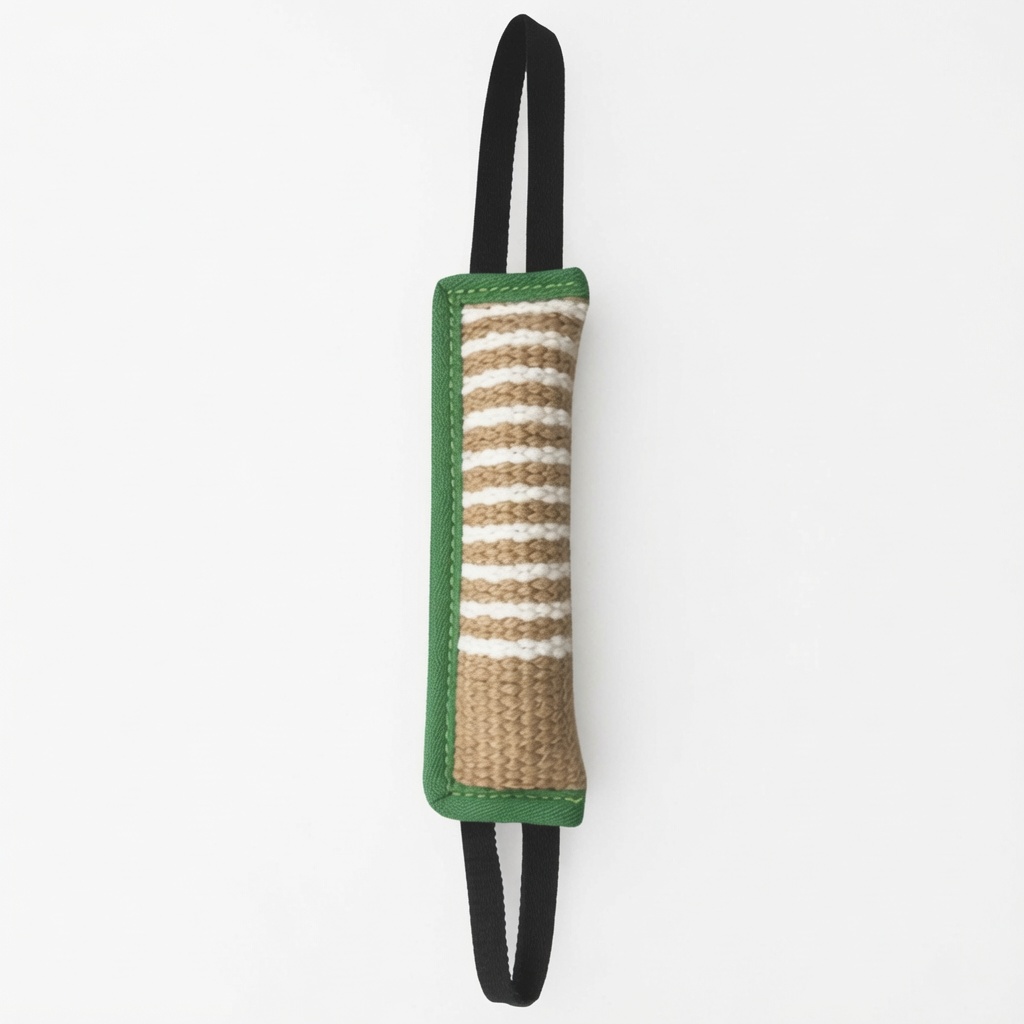
Whimsy Stick Tug Pad for real tug.
A jute bite-tug your dog can actually grip, fight, and win. Built to finish a flirt pole session: the dog catches something worth catching, then gives it back on cue.
Woven jute. Two handles. Something the dog can win.
The Tug Pad is a woven jute tug with a cotton stripe, bound and stitched edges, and two nylon handles, one at each end. It is the capture-and-win half of the chase. A flirt pole builds the stalk and the sprint, but the dog still needs to catch something, fight for it, and possess it, or the drive never resolves. This is that something. It grips like prey, holds up to a hard mouth, and because it has a handle on both ends you keep your hands well off the teeth. Pair it with the Standard flirt pole or the Rugged XL to run the full predatory motor pattern end to end.
For dogs who need to bite something on purpose.
Dogs bite. That is not the problem. The problem is when a dog has no legal thing to put its mouth on, so it grabs sleeves, ankles, and furniture instead. A tug pad gives that drive a target with rules, and once a dog learns it only bites when invited and lets go when asked, the random nipping tends to fall away on its own.
The dog that grabs everything
Puppies teething through their mouth, adolescents that bite when they get excited, and prey-driven adults who need a real outlet. The pad becomes the one thing they are allowed to bite, so you can redirect a mouth off skin and onto a target. If nipping is the issue, run the pad alongside the fix in how to stop puppy biting, and channel the rest with prey drive training.
The capture your session was missing
If you already run a flirt pole, you know the dog needs to win sometimes or it shuts down. A lure is small and easy to swallow-grab. The pad is a proper mouthful the dog can clamp, tug against, and carry, so the catch feels earned. Then you cue the out. That release under full arousal is the rep that builds the off switch, and it is the same skill drilled in the flirt pole impulse control drills and the training guide.
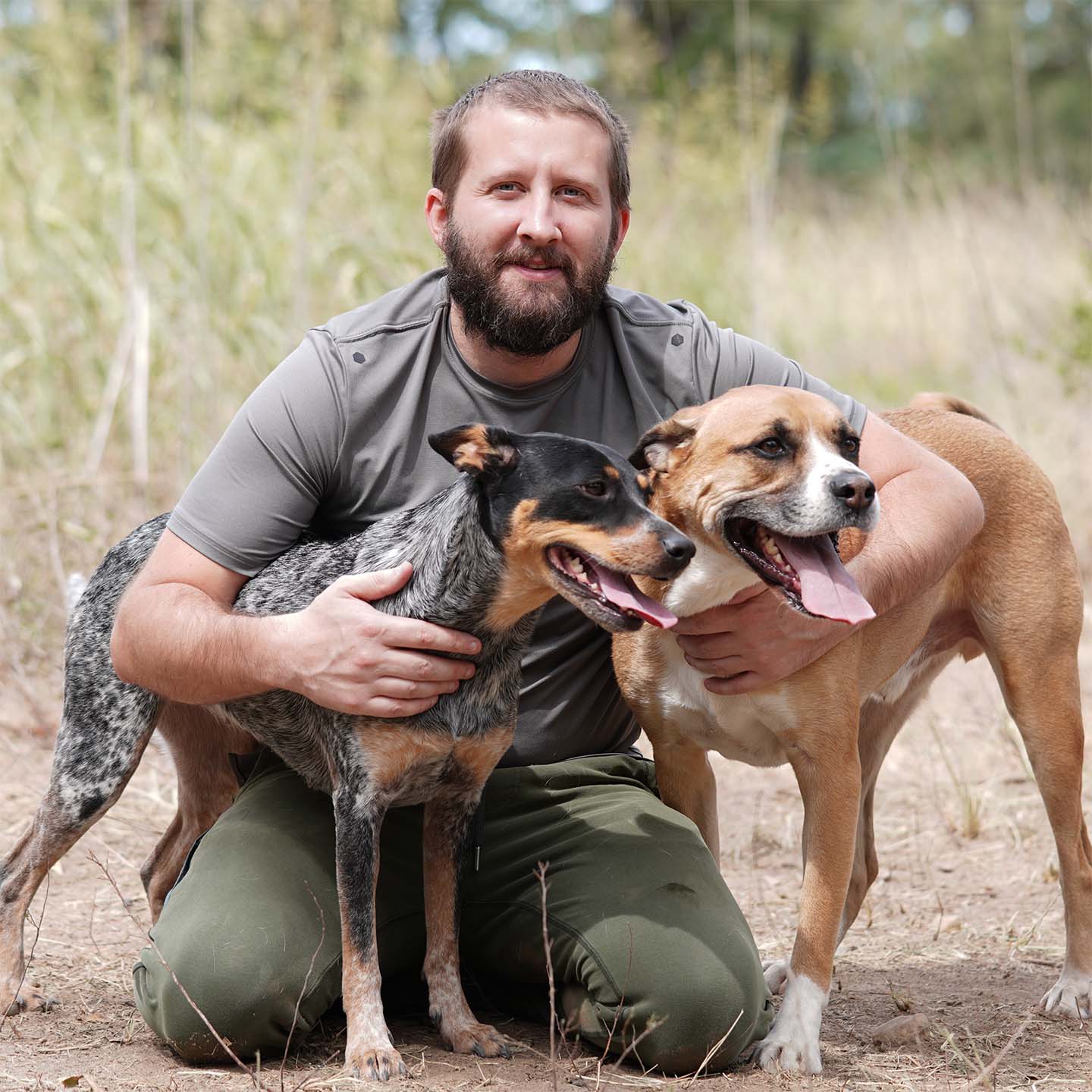
“Half my clients were building great drive on the flirt pole, then had nothing solid to let the dog win on. A ball is too small to tug. A knotted towel falls apart in a week. Rope toys hide a core the dog can crack a tooth on. So I made a jute pad the dog can grab, fight, and give back, with a handle on each end to keep your hands off the bite.”Christopher Lee Moran · 10 years, ~400 client dogs · my private training practice
Built to be bitten, not to survive one week.
A tug lives or dies on three things: the bite surface, the seam, and how you hold it. Most cheap tugs fail on at least one. Here is how the Tug Pad is put together, and why each choice matters once a real dog gets a grip on it.
Woven jute bite surface
Jute is the material working tugs and bite pillows are made from, because it takes a hard grip, gives the dog something to sink teeth into, and hides no plastic core to crack a tooth on. The cotton stripe adds texture the dog can feel and clamp.
Two nylon handles
A handle at each end, sewn from nylon webbing. You can tug two-handed for control, hand one end to a training partner, or hold the far handle so your fingers stay well away from the dog’s mouth during a hard bite.
Bound and stitched edges
The seam is where tugs blow out first. The pad’s edges are bound with a trim and stitched down, so the corners the dog works hardest are the reinforced part, not a raw hem waiting to unravel.
No metal near the mouth
There is no snap, ring, or clip on the bite surface. The handles are stitched straight into the pad. Nothing hard sits where the dog bites, so a full-power grip lands on jute, not on hardware.
Sized for a two-hand tug
Long enough to grip at both ends with room in the middle for the dog to bite, so you and the dog are pulling against opposite ends, not fighting over the same fistful. That geometry is what makes the tug a clean back-and-forth instead of a wrestle.
Made to pair, not replace
This is not a flirt pole and it is not meant to be. It is the catch object at the end of the chase. Run the pole for the stalk and sprint, then present the pad for the capture and the win. Together they close the full sequence a walk leaves open.
Present. Tug. Out. Reset. The whole rep.
Tug is not a free-for-all. It is a game with one hard rule: the dog releases on cue, every single time. Keep that rule and tug becomes the fastest way to teach an off switch under arousal. Break it and you just teach the dog to grab and hold. Here is the loop, and the same release skill carries over from the flirt pole introduction ramp.
Present
Bring the pad to life low and along the ground. Let the dog track it, then invite the bite with your cue. The dog only bites when you say so.
Tug
Once the dog commits, pull against it in low, side-to-side motion. Keep it below shoulder height so you protect the neck and spine. Ten to twenty seconds is plenty.
Out
Go still, cue the out, and wait. The moment the dog releases, mark it. That release under arousal is the whole point of the game, so reward it every time.
Reset
Ask for a quick sit or a wait, then present again and let the dog win the next round. End on a win, then all-done into a settle so the dog learns to come down.
A random tug toy vs. the Tug Pad.
Most people reach for whatever is around: an old towel, a knotted rope, a squeaky plush. They work for a day. Here is where they part ways from a tug that is actually built for the job.
New to structured play in general? Start with the flirt pole training guide, then add the pad as your capture object. If you want the case for why chase and catch beat another lap around the block, interactive play and the dog-owner bond covers it.
Why I put a tug pad next to the flirt pole.
The Tug Pad is a new release, so it does not have its own review wall yet. I would rather tell you straight what it is for than dress it up in quotes it has not earned. The flirt pole line it sits next to is carried by 304 verified reviews across 7 platforms, and the thinking behind this pad is the same thinking behind those.
Here is the honest pitch. A flirt pole is brilliant at the front of the predatory sequence, the stalk and the chase, but the dog still has to catch and win or the drive stays half-finished. For years I told clients to use whatever tug they had. It never held up, and half of them let the dog grab and hold with no out, which is exactly backwards. So I built the catch object I actually wanted them to use: jute the dog can grip, a handle at each end so nobody’s fingers are in the way, and a shape that forces a real tug instead of a wrestle.
Use it with the release rule and it does two jobs at once. It gives a mouthy dog something legal to bite, and it drills the out under arousal, which is the single most useful thing a tug can teach. That is why it lives next to the pole, not in place of it. Read the full story behind the tools if you want the background.
Questions owners ask before they buy.
What is a tug pad, and how is it different from a flirt pole?
A tug pad is a jute pad the dog grips in its mouth and tugs against. A flirt pole is a rod and line that drags a lure for the dog to chase. They do different jobs. The pole builds the stalk and the chase; the pad is the capture-and-win piece that closes the sequence. Most owners run the two together, and you can see where the pad fits in the flirt pole training guide.
Does tug make a dog aggressive?
No. Structured tug with a reliable out cue builds impulse control, not aggression. The rule that matters is that the dog releases on cue every time. When a dog learns it only bites when invited and always lets go when asked, tug becomes one of the quickest ways to teach an off switch under arousal. If mouthing is your concern, pair the pad with the puppy-biting fix.
What is it made of?
The bite surface is woven jute with a cotton stripe, the edges are bound and stitched, and the two handles are nylon webbing sewn straight into the pad. There is no metal near the dog’s mouth and no hard core inside the bite. Jute is the same material working bite tugs and pillows use, because it grips well and holds up to a hard mouth.
What size dog is it for?
It suits most dogs, from puppies learning to bite a target through adult dogs that already tug. Very large, hard-mouthed working breeds will bite it flat and love it, but they go through any tug faster, so treat the bite surface as the wear part. Keep sessions structured and end on a win, whatever the size of the dog.
How much is it, and how does shipping work?
The Whimsy Stick Tug Pad is $29.99 with a flat $5 US shipping fee. Orders ship in 1 to 3 business days. Direct purchases through whimsystick.com are covered by a 30-day money-back guarantee on product issues; normal bite wear on the jute is not covered, because the bite surface is meant to be used hard.
How do I teach the out so tug stays a game?
Go still, cue the out, and wait for the dog to let go on its own rather than pulling the pad away. The instant it releases, mark it and start the next round, so releasing becomes the thing that restarts the fun. Keep the tug low and side to side to protect the neck. The same release skill is drilled in the flirt pole impulse control drills.
Give the dog something worth winning.
Woven jute, two handles, and a clean out, for $29.99 plus a flat $5 US shipping fee. Every direct order is backed by a 30-day money-back guarantee. Built to sit next to your flirt pole, not gather dust in the toy bin.


