

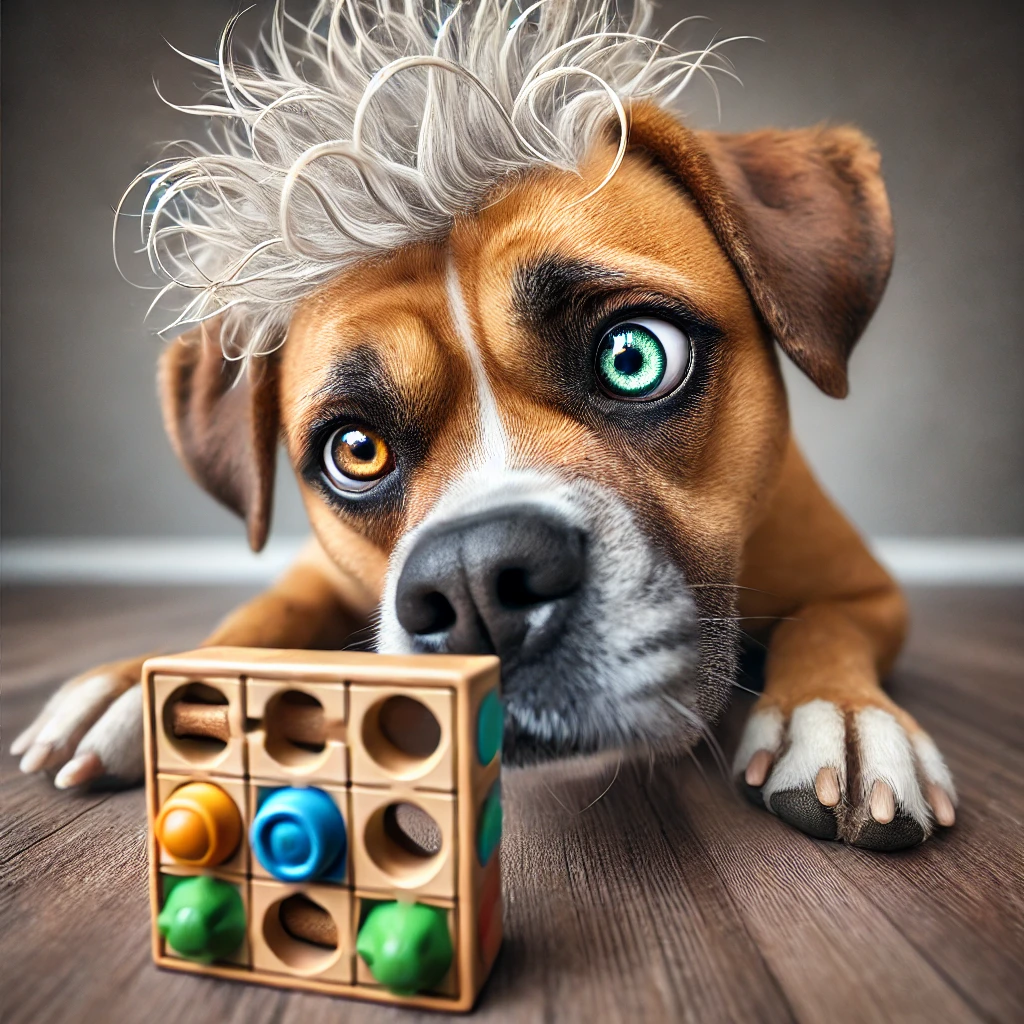
The best interactive dog toy is the one that requires your involvement to function. Every product in this category promises mental stimulation. Every single one promises to reduce boredom. Half of them promise to solve behavioral problems entirely. If those promises were true, shelters would be empty and my phone would stop ringing.
Why most interactive toys fail driven dogs
Most interactive dog toys address the symptoms of an under-exercised dog without touching the root cause. They occupy a dog for a few minutes. However, they do not train anything. In short, nothing in that category addresses the predatory motor pattern that drives most problem behaviors, and they do not teach the dog to control itself under arousal, which is the actual skill that makes a dog livable in a house. For the broader context, see the enrichment guide linked above.
Who This Guide Is For
- You are about to drop money on an interactive dog toy and want to spend it once
- You have a high-drive dog and the cheap “interactive” toys keep failing
- Your dog has a closet full of toys and is still destructive or restless
- You want a toy that doubles as a training tool, not just entertainment
- You need a clear framework for choosing instead of more marketing copy
Signs Your Dog Needs a Better Interactive Toy
- Destroys furniture, shoes, or baseboards within hours of a walk
- Cannot settle indoors even after 60+ minutes of exercise
- Reacts to every dog, bike, or squirrel on leash with zero off-switch
- Has a toy box full of untouched “interactive” toys that lost interest in under a week
- Barks, paces, or whines during your work hours despite enrichment toys left out
- Jumps, mouths, or zooms compulsively when you get home regardless of exercise given
What Actually Makes the Best Interactive Dog Toy Worth Buying
Before comparing categories, here is the framework I use to evaluate any toy. It answers in about 30 seconds whether something is worth the money or worth the shelf space.
Every Interactive Dog Toy Category, Honest Verdict
Six categories. Scored on the framework above. No manufacturer relationships and no affiliate income on any of these recommendations, just hands-on use with real dogs at real drive levels. According to AKC guidance on play-based training, structured play sessions build a stronger handler-dog bond than independent toy use. That distinction drives every ranking below.
Flirt Poles, best interactive dog toy overall
Handler-controlled lure on a pole and line. Specifically, it activates prey drive through chase, catch, and tug in a sequence you control. In short, the only category that checks all five criteria simultaneously. For the full structured session method, see the Flirt Pole Training Guide.
Tug Toys
Handler-controlled resistance play. In practice, builds oppositional drive and handler focus. Also excellent as a reward marker in other training contexts. However, less effective as a standalone exercise toy than a flirt pole. For the full professional reference, see the canine flirt pole.
Puzzle / Enrichment Feeders
Problem-solving toys that dispense food as reward. Generally, excellent mental enrichment on rest days. However, they do not address prey drive or physical exercise, so they should not be the primary tool for high-drive dogs.
Fetch Toys (Balls, Frisbees)
Classic retrieval toys. In particular, they work well with a clear send cue, wait before release, and return-and-release on command. However, unstructured fetch builds obsessive behavior in overexcited dogs without teaching any off-switch.
Chew Toys
Useful for jaw satisfaction, calming, and teething. However, they do not address prey drive or build handler relationship. In fact, they can be counterproductive if used to redirect destructive chewing without addressing the underlying drive.
Electronic / Automatic Toys
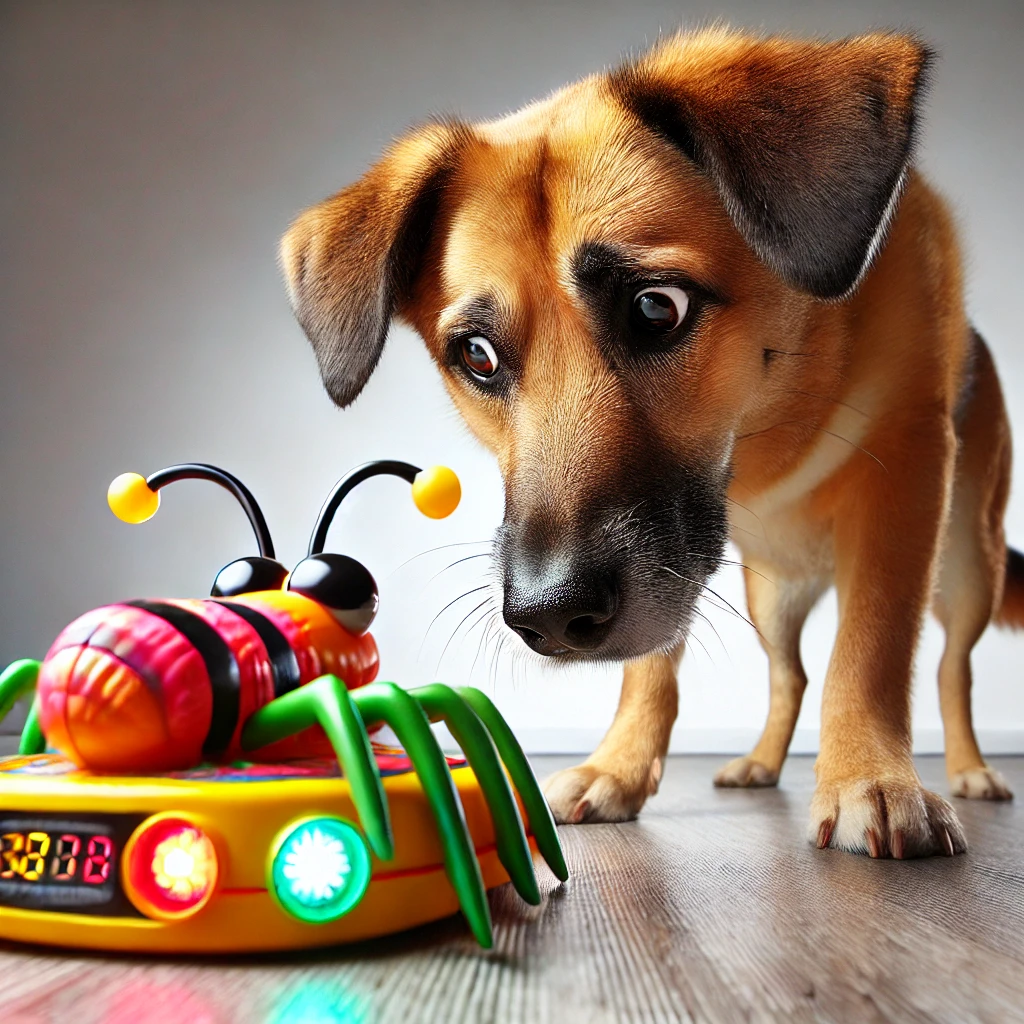
Self-operating toys that move or dispense treats. Generally, they provide stimulation when owners are unavailable. However, they train your dog to find satisfaction independently, the opposite of what builds training responsiveness and handler focus.
Sniff Mats / Foraging Mats
Textured fabric mats with kibble or treats hidden in folds. In practice, they engage the dog’s olfactory system and trigger the sniff-and-forage portion of the predatory motor pattern. Specifically, excellent as a 10–15 minute calm-down activity after high-drive sessions. However, no physical output, no prey drive, no handler relationship built.
Head-to-Head: Best Interactive Dog Toys Compared
The same six categories, scored directly across the metrics that matter for training outcomes:

Handler involvement is the non-negotiable variable. Every toy that removes you from the equation trains your dog to find satisfaction without you. That is the exact opposite of what builds responsiveness, recall reliability, and a dog that can settle when you need it to.
I have never seen a puzzle toy fix a reactive dog. I have never seen an automatic ball launcher build a reliable recall. You cannot solve a prey drive problem with a food puzzle. Match the tool to the root cause, not the symptom you can see from across the room.
Christopher Lee Moran · Working Dog TrainerChoosing the Best Interactive Dog Toy by Drive Level
The single biggest mistake people make when buying interactive dog toys is ignoring their dog’s drive level. For example, a puzzle toy that is perfect for a laid-back Basset Hound will do approximately nothing for a working-line Belgian Malinois. As a result, the wrong choice can actively reinforce problem behaviors rather than solving them. If you are unsure about how much exercise your dog actually needs, start there.
Working breeds, terriers, herding breeds
German Shepherds, Malinois, Border Collies, Huskies, Jack Russells, most rescue mixes. A flirt pole is the best interactive dog toy for this group, full stop. These dogs have strong prey drive that needs a direct outlet before anything else works. For the high-drive case, see flirt pole for high energy dogs.
Most Labs, Goldens, sporting breeds
These dogs respond well to all handler-controlled interactive dog toys. Flirt pole plus structured fetch is a solid combination. Puzzle feeders work well as enrichment supplements. Start with whichever one your dog shows the most enthusiasm for.
Seniors, low-energy breeds, anxious rescues
Start with puzzle feeders and short, slow lure-drag sessions. Build confidence through predictable wins before introducing high-arousal chase. Do not start with a flirt pole at full speed; work up to it gradually as engagement builds.
Best Interactive Dog Toys for Large and Power Breeds
Finding the best interactive dog toys for power breeds means ignoring standard options entirely. If you have a German Shepherd, Belgian Malinois, American Pit Bull Terrier, Rottweiler, or any large mixed breed with serious drive, “heavy duty” marketing language on cheap products means nothing. These dogs will destroy undersized equipment fast, and a snapped line or broken pole mid-session is a safety problem.
For power breeds, the primary factors are line strength and pole rigidity under tension. A standard flirt pole works fine for dogs 30 lbs and under. Above that, especially for working-line dogs, you need equipment engineered for that weight class and intensity. AVMA enrichment guidelines emphasize that structured predatory play needs handler control to be beneficial rather than overstimulating, which is exactly what fails when equipment cannot hold up to drive level.
If your dog cannot settle after exercise sessions, the issue is probably the type of exercise rather than the amount. See how to tire out a high energy dog for the intensity-over-volume approach.
Lightweight flexible rod, Kevlar-reinforced line, replaceable lures. Built for the structured sessions in this guide.
Heavy-duty construction engineered for working breeds. Reinforced elastic, 8-ft radius. Free US shipping included.
Everything in the Base plus 2 extra lures. Rotate lure styles to keep drive high across sessions. Free US shipping included.
Common Mistakes When Choosing Interactive Dog Toys
Buying variety instead of depth. Six different options used once each is worse than one good tool used daily with structure. Dogs benefit from routine and consistency with a primary tool, not a rotating novelty collection.
Treating all “interactive” labels as equivalent. For example, a self-spinning electronic toy and a handler-controlled flirt pole are both marketed as interactive dog toys. However, they are not the same thing. In particular, the difference is whether you are in the equation. As a result, you need to be in the equation for training to happen.
Using toys to manage behavior without addressing the cause. For instance, giving a destructive dog a chew toy does not solve the destructive behavior; it delays it. In fact, the dog still has unmet prey drive. Instead, it just found a slightly more acceptable target. Address the root need; do not redirect the symptom. If your dog is still wired after an hour of exercise, the problem is not the amount of exercise. It is the type.
Ignoring session structure. Specifically, the same toy used with no commands produces chaos. However, used with a consistent wait, release, chase, drop sequence, it produces genuine impulse control. In short, the toy is just the vehicle. Structure creates the training outcome. Session length matters less than session quality, 12 focused minutes beats 45 minutes of unstructured chase every time.
The owners who get the best results are not the ones with the most toys. They are the ones with one right tool, used the same way every day, with commands built into every session. Consistency and structure do more than variety ever will.
Christopher Lee Moran · Working Dog TrainerCase Study: What Happened When the Right Tool Replaced the Wrong Ones
The 5-Step Structured Session Protocol for Any Interactive Dog Toy
Structure is what separates a training tool from a toy. Run this sequence every session. It applies to a flirt pole, a tug, or structured fetch. The session earns impulse control because the dog has to perform to access the reward. Each step has a clear success marker, if you are not seeing that marker, stay on that step until you do.
The drop, the reset, and ending on drive
Why protocol beats equipment alone
Structure is the product. A flirt pole without a protocol is just a pole. Run this 5-step sequence daily for 30 days and you will have a different dog than you started with, same equipment, completely different outcome.
The Controlled Freedom method treats every play session as a negotiation: drive earns access, self-control earns drive. A dog that can wait, release on cue, win, drop on cue, and reset in under 10 seconds has built the foundational off-switch that makes every other part of life easier.
Never leave a flirt pole out unsupervised. The line, bungee cord, and lure are all ingestion hazards. A dog that chews through the line and swallows it is a veterinary emergency. Store the pole out of reach after every session. The same applies to any toy with cords, strings, or detachable parts. Durability during play is not the same as safety during unsupervised access.
Best Interactive Dog Toys: FAQ
What is the best interactive dog toy for high-energy dogs?
A flirt pole consistently outperforms every other category for high-energy dogs. These dogs have strong prey drives that need a direct physical and neurological outlet. A flirt pole activates that drive, provides explosive exercise, and when used with structure simultaneously builds impulse control. The Whimsy Stick Standard works for dogs 30 lbs and under; the Rugged XL is built for power breeds over 30 lbs. Both are in the product section above.
How do I know which type of interactive toy is right for my dog?
Match the toy to your dog’s primary drive. Dogs with strong prey drive (herding breeds, working breeds, terriers, and most high-energy dogs) need handler-controlled chase toys first. Dogs with high food motivation and moderate drive do well with puzzle feeders as a supplement. If your dog is destructive, reactive, or cannot settle after exercise, address prey drive first. That is almost always the root issue.
Puzzle, fetch, and tug compared
Are puzzle toys good enough for high-drive dogs?
Puzzle toys are good mental enrichment but they do not address prey drive. A dog who destroys furniture or reacts to everything outdoors has not been over-stimulated. They have had their intellect engaged but their drive left unsatisfied. Puzzle feeders are a useful supplement on rest days, but for high-drive dogs, a handler-controlled prey-drive tool always comes first.
What’s the difference between a flirt pole and a tug toy?
Both are strong choices for handler-focused training, but they activate different drives. A tug toy engages oppositional drive (the dog pulls against resistance). A flirt pole engages prey drive (the dog chases moving prey). Flirt poles are better for high-drive dogs who need a controlled chase outlet and for building impulse control through wait-release-chase-drop sequences. Many trainers use both, with the flirt pole as the primary tool and tug as a training reward.
Toy comparisons and edge cases
Do automatic ball launchers count as interactive dog toys?
Automatic launchers provide physical exercise but they remove the handler from the equation. The handler must be the source of the reward. A dog who learns to play with a machine practices self-sufficiency, the opposite of handler focus. Use launchers sparingly as a supplement, not as a replacement for direct handler-controlled sessions.
What should I look for when buying an interactive dog toy?
Five criteria: handler involvement required, addresses prey drive not just boredom, accommodates training commands, durability matched to your dog’s intensity, and replaceable components. Lures and wear parts should swap without replacing the whole toy. For a detailed breakdown by dog size, see the buying guide linked in the sidebar.
How many interactive toys does a dog actually need?
One primary tool and one or two supplements is plenty. More than that reduces the value of each through overexposure. Keep the primary tool stored out of sight when not in use. A toy that is always available loses its value quickly. It should be special, only appearing for structured sessions where it earns maximum drive and engagement.
Equipment, safety, and session timing
What is a sniff mat and is it a good interactive dog toy?
A sniff mat is a textured foraging mat that hides kibble or treats in fabric folds, engaging a dog’s olfactory system. It is excellent mental enrichment and works well as a calm-down activity after high-drive exercise sessions. It does not address prey drive or physical output, so treat it as a decompression supplement rather than a primary interactive toy. For high-drive dogs, sniff mat after flirt pole is a useful pairing.
Are interactive dog toys safe to leave with dogs unsupervised?
Handler-controlled tools like flirt poles must never be left out unsupervised. A line or lure ingested is a veterinary emergency. Durable chew toys and sniff mats are generally safer for solo time, but monitor any new toy for the first several sessions to assess chewing and ingestion risk at your dog’s specific intensity level.
How long should an interactive dog toy session last?
For flirt poles and handler-controlled chase, 10 to 15 minutes of structured play is usually sufficient. Quality of arousal matters more than duration. A 12-minute session with proper wait-release-chase-drop cycles produces better behavioral outcomes than 45 minutes of unstructured chase. End the session while drive is still high, not after the dog has already disengaged on their own.


