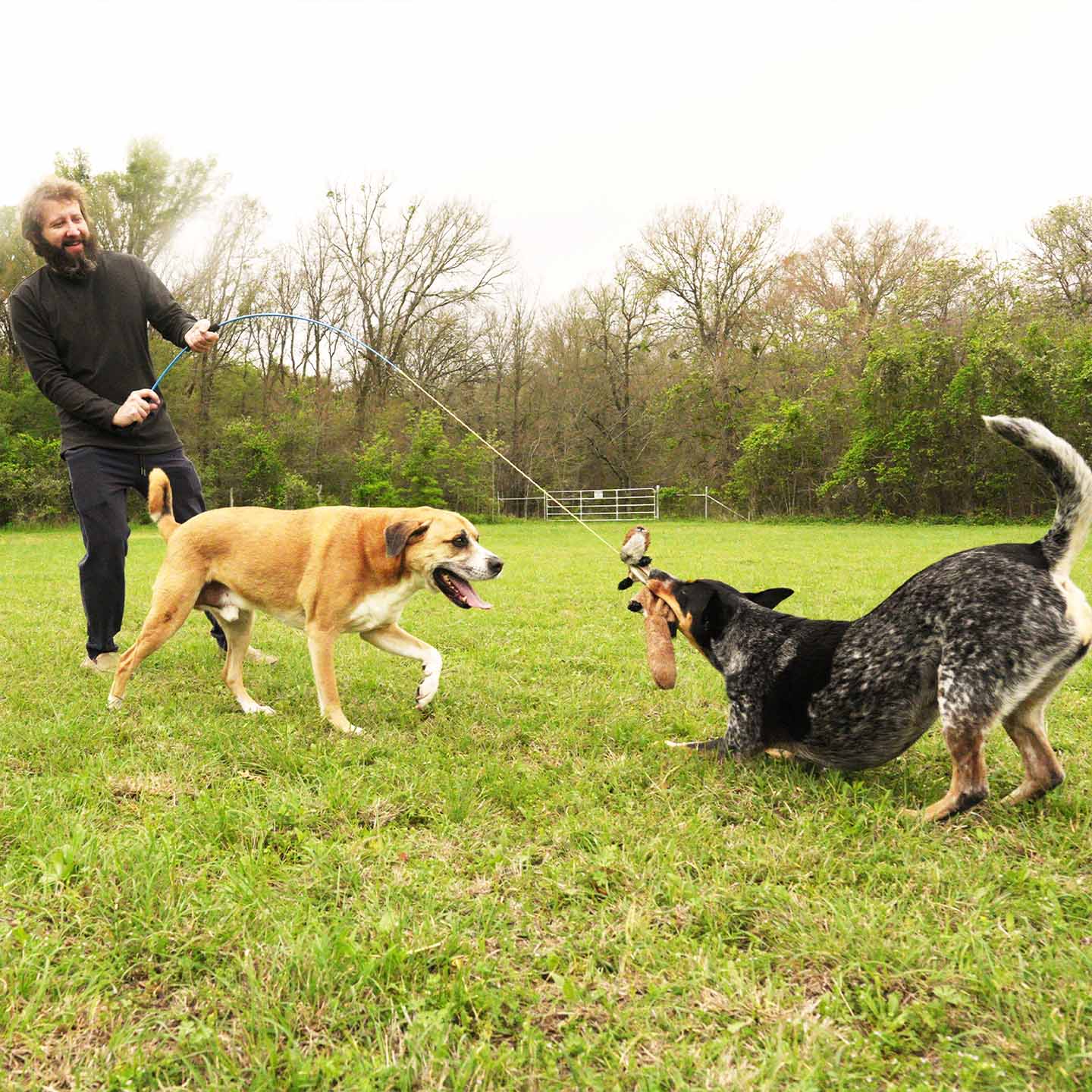
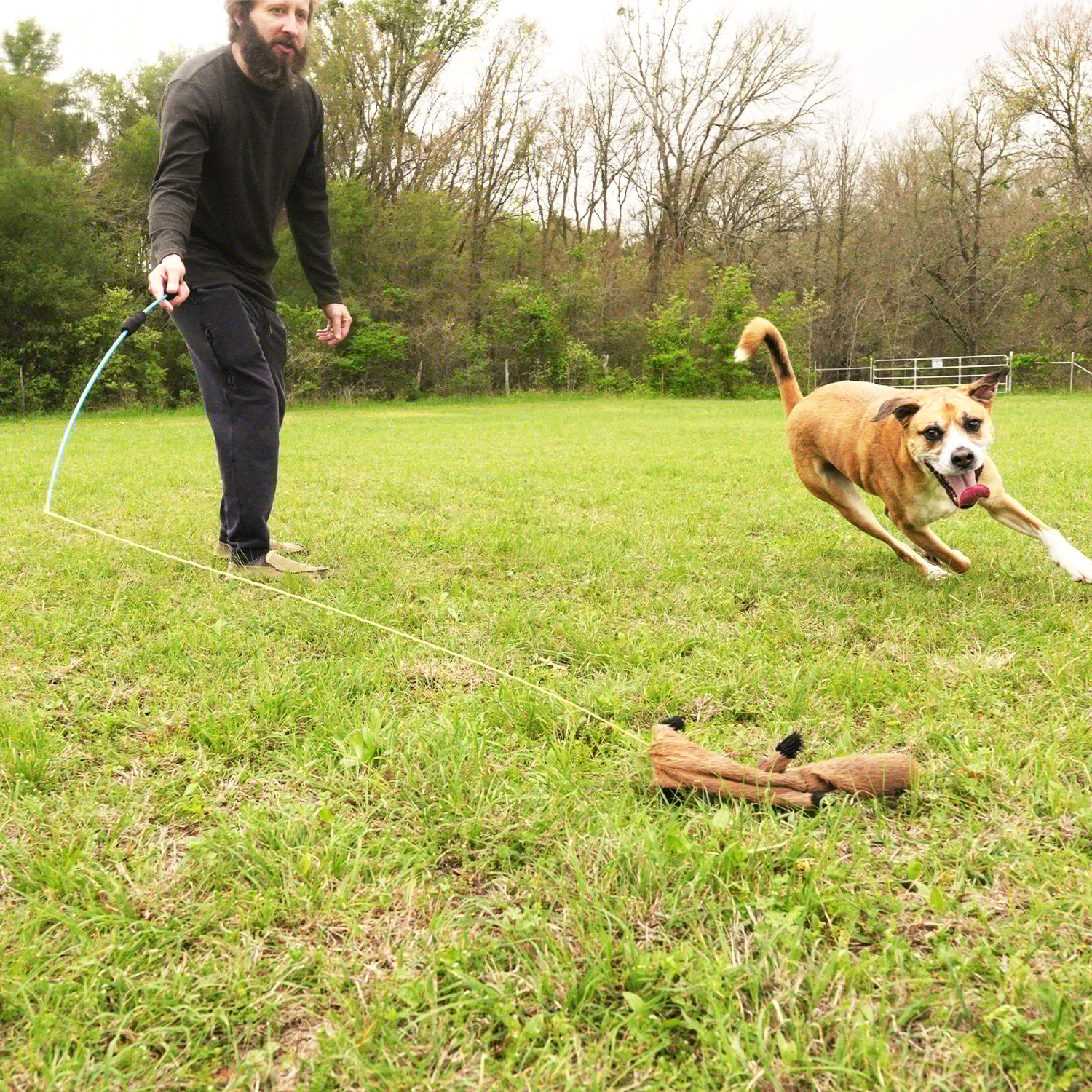
The short version
The Tug-E-Nuff Whip It is well-built casual chase gear with a bungee cord and a short pole. Meanwhile, whimsy Stick runs 450 to 500-lb static Dyneema line on a longer balanced pole engineered for structured impulse control training. For wait-and-release drills that transfer to real-world behavior, static line is the only tool that gives the dog consistent feedback every rep. Bungee cord is fine for chase. It fails precision training because elastic energy storage changes the release cue each time. Of these for the underlying mechanics, see why fiberglass wins.
Who This Comparison Is For
- Owners running structured training, not just casual play
- Reactivity, recall, and impulse control protocol users
- UK and EU owners weighing Tug-E-Nuff vs imported options
- Anyone who has run drills with bungee cord and noticed inconsistency
- Owners deciding between two well-built premium options
Signs Your Dog Needs This Upgrade
- Your dog stalls or blows through the wait-and-release phase inconsistently
- Sessions feel unpredictable-some reps the dog waits, others they launch early
- You are running daily drills but not seeing transfer to real-world situations
- Your current pole is too short and the dog keeps crashing into you mid-sprint
- The lure bounces vertically instead of sweeping along the ground
- You have a dog over 30 lbs with real prey drive and need a pole built for that load
The Four Specs Where These Two Diverge
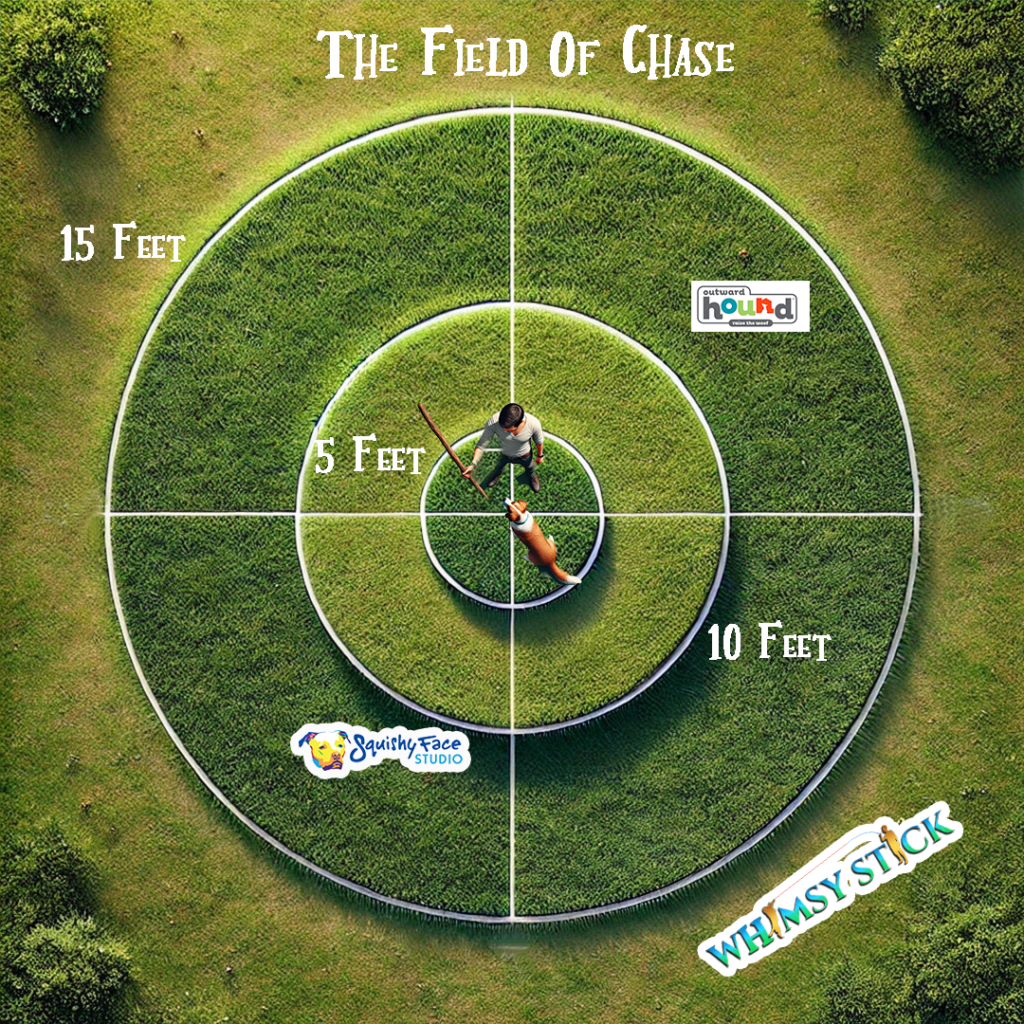
In practice, both poles pass the basic build-quality bar and come from trainer-respected brands. The interesting question is what each one is engineered for. Specifically, four specs determine where the Whip It and the Whimsy Stick diverge: line type, pole length, lure behavior, and design intent. The differences map directly to whether the tool fits casual chase or structured training. Particularly, for the underlying question of whether the category works at all, see do flirt poles really work.
Line Type
Tug-E-Nuff Whip It: Bungee-style elastic cord. Stretches under tension, snaps back when released. Indeed, adds energy to chase but introduces inconsistent feedback. Whimsy Stick: Static Kevlar line rated 500 lbs Standard, 500 lbs Rugged XL. Identical feedback every release.
Static line for precision drillsPole Length
Tug-E-Nuff Whip It: Short pole optimized for portability and lightweight handling. Field of chase collapses for medium and large dogs. Whimsy Stick: 4-ft balanced pole on the Standard, longer reach on the Rugged XL. Calibrated for working breed stride length.
Longer reach for full sprintsLure Design
Tug-E-Nuff Whip It: Reinforced lure with good durability. Generally, quality build. Bungee cord makes lure motion bouncier than ideal. Whimsy Stick: Reinforced fleece lure with replaceable hardware. Additionally, static line keeps the lure ground-level for sprint mechanics rather than vertical bouncing.
Ground-level sweep mechanicsDesign Intent
Tug-E-Nuff Whip It: Built for casual chase and play with most dogs. Quality casual gear. Whimsy Stick: Built for structured daily training and impulse control protocols. Meanwhile, every spec maps back to what the handler needs during the wait-and-release phase.
Engineered for training precisionI have worked with around 400 client dogs over 10 years. Owners running serious impulse control work hit a wall with bungee gear that they cannot diagnose. A dog stalls during the wait-and-release phase and the owner assumes it is a training problem. It is not. Of these line feedback changes every rep, and the dog cannot read the cue cleanly.
Christopher Lee Moran · Founder · 10 years training high-drive dogsWhere the Whip It Limits Structured Training
The Whip It is quality casual gear. Three limitations surface when owners run daily structured protocols with it, not brand problems, engineering trade-offs baked in for a different use case. The American Kennel Club’s prey-drive primer describes why consistent gear feedback drives impulse control transfer, and the AVMA enrichment guidelines emphasize structured handler-directed work for high-drive breeds.
Bungee cord makes the release cue inconsistent
In short, during the wait-and-release phase, the dog learns to read the line tension change as the release signal. Bungee stores variable elastic energy depending on how the dog pulled and how the handler held the pole. Particularly, the dog gets different feedback each rep even when the handler does the same thing. Static line eliminates this variable entirely.
Shorter pole collapses field of chase for medium+ dogs
A dog covering 8 to 10 feet per stride needs runway to commit to a full sprint. Indeed, shorter poles work fine for small dogs and casual play. Medium and large dogs running daily structured sessions hit the handler instead of cutting and running when the pole is too short. Field of chase is a function of pole length, not just total line length.
Lure motion bouncier than ground-sweep ideal
Bungee adds vertical bounce to the lure path. Dogs shift toward jumping mechanics instead of the sprint-and-cut chase that produces real fatigue. For casual play this is a wash. For structured sessions building behavioral transfer, ground-level sweep mechanics matter because they map to the predatory motor pattern the protocol is built on.
In contrast, static line versus bungee is not a preference. It is the difference between gear the dog can read and gear that gives different feedback each rep. For casual play it does not matter. Additionally, for structured impulse control work it is the entire game.
Christopher Lee Moran · Controlled Freedom Method · my private training practiceWhimsy Stick vs Tug-E-Nuff Whip It, Side by Side
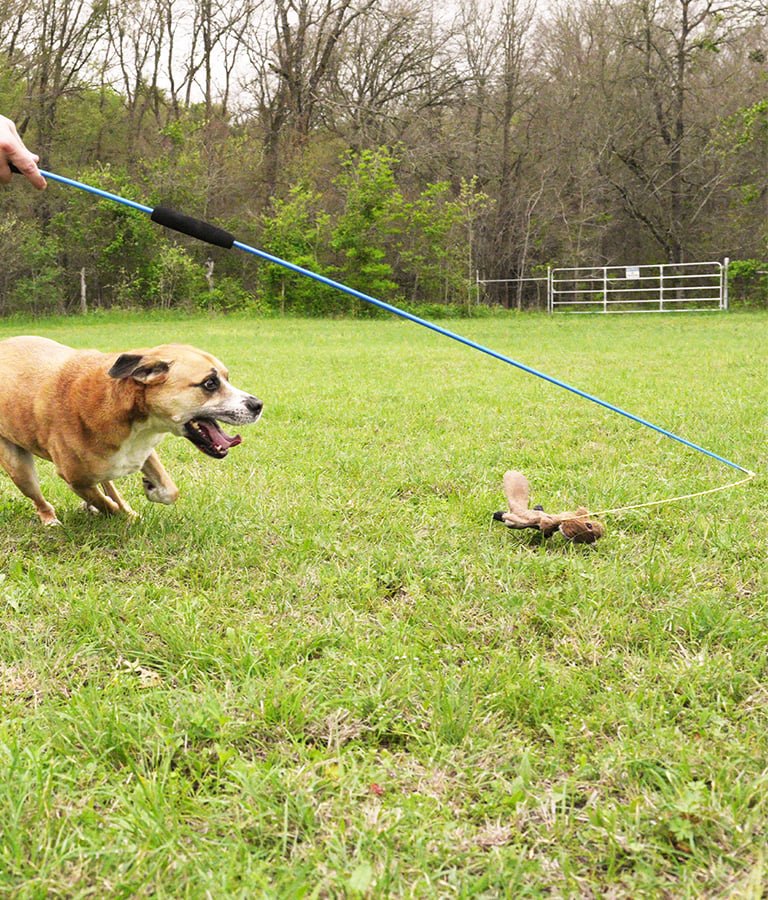
Both poles are quality builds, the comparison stays close on construction. The divergence is at line type, pole length, and design intent. Below is the spec-by-spec breakdown for owners deciding between casual chase gear and structured training gear. For the broader competitive landscape, see Whimsy Stick vs Squishy Face.
When Each One Actually Wins

Overall, the Whip It and the Whimsy Stick win in different scenarios. Indeed, each one is the right pick for a specific job. Four use cases below map directly to which tool fits.
Tug-E-Nuff wins for: casual chase, lightweight portability
If your dog is small to medium, you run sessions for fun rather than for behavioral change, and you value lightweight gear that packs easily for trips, the Whip It is well-suited. Tug-E-Nuff makes solid casual play gear and the Whip It fits that brief. The bungee cord is fine for chase, the build quality is real, and the price is fair.
Use Case 01Whimsy Stick wins for: structured impulse control training
If your goal is wait-and-release work that transfers to real-world impulse control-not jumping on guests, settling on cue, leaving the cat alone-static line is the foundation. Generally, the dog reads line tension as part of the release cue. Bungee adds inconsistent feedback; static line gives identical feedback every rep. Additionally, that consistency is how the dog learns to read the cue cleanly and generalize the behavior. For the broader buying framework, see the flirt pole buying guide.
Use Case 02Whimsy Stick wins for: reactivity protocols
Reactive dogs need lowered baseline drive load plus structured impulse control transfer. Static line gear gives the precision the protocol requires. The Whip It can supplement casual drive drain between structured sessions, but the bungee makes it a less reliable primary tool for reactivity work. For the broader category authority, see why we recommend the Whimsy Stick.
Use Case 03Whimsy Stick wins for: medium and large dogs daily training
In contrast, the Whip It is rated for medium dogs and works in casual use. For medium-to-large dogs running daily structured training where pole length, line precision, and grab-and-shake durability all matter, the Whimsy Stick Standard or Rugged XL is the better fit. Specifically, the Standard handles dogs up to 30 lbs. The Rugged XL handles dogs over 30 lbs and working breeds. Particularly, for the head-to-head with the heaviest-duty option, see Whimsy Stick vs DIBBATU.
Use Case 04Three Things to Take Away From This
Line type is the deciding factor
Bungee cord is the single reason structured impulse control work stalls with the Whip It. It is not a brand quality issue, it is a physics issue. Static line gives identical feedback every rep. Bungee does not. For precision drills, that difference is everything.
Static line for training precisionBoth tools have a legitimate use case
However, the Whip It is quality casual gear for small-to-medium dogs and owners who want play rather than behavioral change. The Whimsy Stick is structured training gear for owners running daily impulse control protocols. Choosing the wrong tool for the job produces frustration, not results.
Match the tool to the jobDog size determines which Whimsy Stick
Standard handles dogs 30 lbs and under. Rugged XL handles dogs over 30 lbs and working breeds. Both use static Dyneema line. The Rugged XL adds a heavier-duty pole and includes free US shipping. Size the tool correctly or the field of chase and line tension are both off.
30 lbs is the sizing cutoffWhat Happened When One Owner Switched from Bungee to Static
Zeus, Belgian Malinois Mix, 4 Years Old
- Starting point: Owner had run daily sessions with bungee-cord gear for 6 weeks. Meanwhile, zeus was averaging 31 early launches per week during the wait phase-blowing through the hold cue before the handler signaled release.
- Change made: Switched to Whimsy Stick Rugged XL (static 800-lb Dyneema line) in week 7. Training protocol stayed identical-same session length, same cue sequence, same handler.
- Week 9 result: Early launches dropped from 31 per week to 4. Of these zeus was reading the line-tension change as the release signal rather than guessing from lure movement.
- Week 12 result: Early launches down to 1 per week. Impulse control transferred to doorway greetings-Zeus held a sit-stay at the front door for the first time without a leash tether.
- Trainer note: The dog had not changed. Specifically, the gear feedback had. Static line gave Zeus a consistent cue to read, and he learned it in under 3 weeks.
The 5-Step Wait-and-Release Protocol
Run this in 5-to-8-minute sessions twice daily. Particularly, every step depends on the static line giving identical feedback-bungee collapses the precision at Steps 2 and 4.
Activate: Sweep the lure low and fast, two full laps
Notably keep the lure at ground level. Two full sweeps around the handler builds arousal and locks the dog’s focus on the lure. Do not let the dog catch it yet. Cue: “Ready”
Freeze: Stop the lure dead, hold line tension
Kill the lure movement completely. Hold the pole still. The dog must hold position, no fidgeting, no inching forward. Cue: “Wait”
Hold: Build duration in 2-second increments
Start at 2 seconds of stillness, then release. Add 2 seconds per session over the first two weeks. The dog learns that waiting always produces the release, and early launching never does. Duration: 2–20 sec
Release: Drop line tension, sweep the lure forward
In practice, release tension and immediately sweep the lure in a new direction. Generally, the instant slack in the static line is the release signal the dog reads. This is the moment bungee fails-it springs rather than going slack, blurring the cue. Cue: “Get it”
Win and reset: Let the dog catch and shake, then cue drop
Let the dog grab the lure and win the shake sequence. That predatory motor pattern completion, stalk, chase, capture, win, is the reinforcer that makes the wait worth doing. Cue “drop,” reset, and run the next rep. Keep sessions under 10 minutes and end while the dog still wants more. Cue: “Drop”
Warning: Two Mistakes That Kill This Protocol
- ✘ Releasing on the dog’s movement, not your cue: If the dog shifts and you release, you have trained the shift as the release signal. The dog learns to fidget. Of these always release on your cue, never the dog’s behavior.
- ✘ Running sessions longer than 10 minutes: Drive burns out. A dog in arousal collapse stops caring about the lure. Keep sessions under 10 minutes and end on a win. Specifically, short and sharp beats long and grinding every time.
If You Switch from Whip It, Pick the Right Whimsy Stick

Dog size determines the model. Under 30 lbs: Standard. Particularly, over 30 lbs: Rugged XL. Both ship with static Kevlar line and reinforced replaceable lures. Indeed, for the evidence that the category produces real behavioral change, see are flirt poles cruel.
4-ft balanced pole, 500-lb static Kevlar line, reinforced replaceable lure. The upgrade for owners who switched from casual chase gear to structured daily training and need static line precision.
500-lb static Dyneema line, one-piece reinforced fiberglass pole, 1 reinforced lure. Free US shipping included. Also available as the Rugged XL Bundle (3 lures) at $94.95. Built for owners running daily structured sessions with dogs over 30 lbs.