
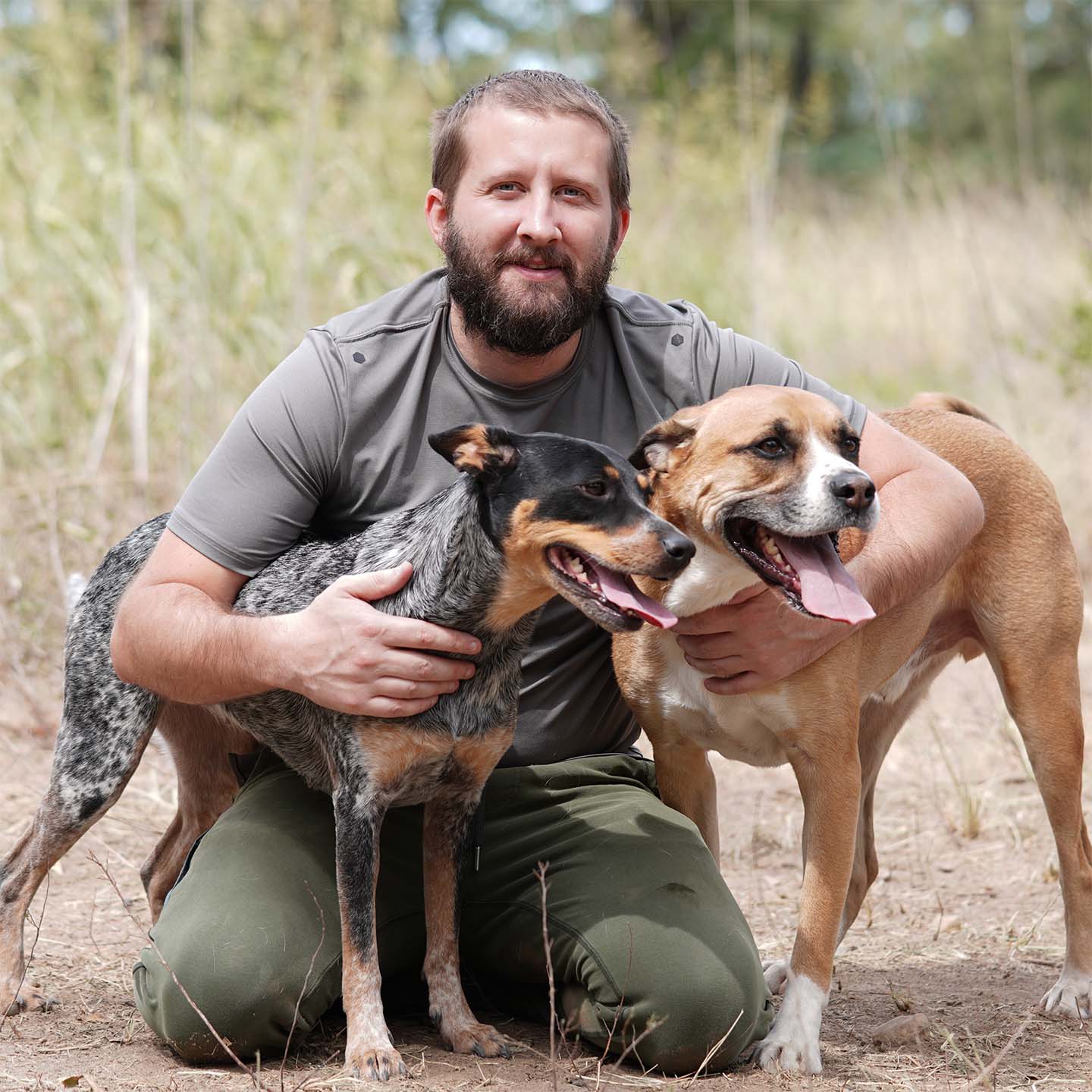
Neutrality Is the Goal
Your dog doesn’t need to love every dog. It doesn’t need to say hi to every person or be “friendly” everywhere it goes. What it needs is to be neutral.
Neutral means the dog sees it, knows it’s there, and moves on, cause its person has it handled.
That’s really the whole goal out in public around triggers. Not getting excited, not hiding and not going after it, just noticing it and then looking away on its own. A dog that can do that can go a lot of places, and a dog that can’t is a risk pretty much anywhere you take it.
A lot of reactive dogs aren’t really aggressive, they’re overwhelmed. They see a trigger, go over threshold, and stop thinking. The lunging and barking and snarling you see is a dog too worked up to learn anything. Once a dog is over threshold, corrections and treats and commands mostly don’t get through, cause it isn’t listening to you anymore, it’s dealing with what it thinks is a threat.
The idea is simple but it takes a whole lot of patience. You work under threshold, where the dog can still think, and slowly close the distance to triggers while it stays calm. If your dog has bitten or you can’t keep it safe around people or dogs, get a qualified behavior pro to work with you in person before you start this.
Understanding Threshold
Threshold is the line you can’t see between “I notice that thing” and “I’ve lost my mind about that thing.” Under it, your dog can look at a trigger and still take a treat, still answer to its name, still make choices. Over it, all of that’s gone cause the dog is reacting, not thinking.
How far your dog is from a trigger has a lot to do with where it lands. Far away it can watch calm. Closer, it gets more worked up. Too close and it’s over threshold and going off.
Every dog has a different distance for every kind of trigger. Yours might be fine with bikes at 20 feet but lose it at dogs from 80 feet off, or ignore joggers completely and blow up at skateboards. It’s not the same for every trigger or every place or every day, cause stress, being tired and not feeling good all change it.
Your job in this lesson is to find each of those distances and work just outside them, where the dog can watch without reacting, cause that’s where the learning happens.
You can’t train a dog that’s over threshold, you can only manage it till it comes back down. Training happens in the space between noticing and reacting, so find that space and stay in it till it gets smaller.
The Arousal Ladder
I like to picture it like a ladder. Each rung is your dog getting a little more wound up, and once you learn to read which rung it’s on you get to step in way before it’s up top losing its mind.
Rung 1: Awareness. The ears come up and the head turns cause it’s noticed something. Body’s still loose though, and it’ll still take a treat and turn when you say its name. This is under threshold and it’s where you want to be working.
Rung 2: Interest. Weight shifts forward, the body stiffens a little, the mouth closes and the breathing changes, so the dog is locked in on the trigger but you can still reach it. Treats still work but they need to be better ones, and commands still work but they need to be clear and right away, cause this is the edge of threshold.
Rung 3: Fixation. Eyes locked on the trigger and it won’t look away, and it ignores a treat right in front of its nose and ignores its name too, with the body stiff and the leash tight. The dog is at threshold, and one more rung and it’s gone, so if you’re here, get more distance right now.
Rung 4: Reaction. Barking, lunging, spinning, screaming, snapping. It’s over threshold and not thinking, and not much you do is gonna get through till it comes back down, so get distance, stop talking and wait it out. Once it settles, move to where the dog is back at Rung 1 or 2, cause that’s where the session picks back up.
The whole point of this lesson is to keep your dog at Rung 1-2 and reward the heck out of it, so Rung 1-2 turns into how it handles triggers instead of where it takes off from on the way to Rung 4.
Exercise: The Threshold Finder
Find Your Dog’s Reaction Distance
You can’t really work on reactivity till you know where your dog’s line is, so start here and go find it.
- Find a controlled observation point. Pick a spot where you get to decide how close stuff comes, like a park bench 100 feet or more off a walking path, the parking lot by a pet store door, or a quiet field next to a bike trail. You want the triggers coming by at a distance you chose instead of you walking your dog right into them.
- Bring high-value treats and settle in. Sit down with your dog and give it about 5 minutes to sniff around before you start writing anything down, cause if it hasn’t settled yet you’re not gonna get an honest read.
- When a trigger passes, watch your dog’s body language. Ears go forward, weight leans forward, body gets stiff and the eyes lock on. Once you see that you’re at Rung 2, so jot down how far off the trigger was. If the dog stays at Rung 1 (notices but stays relaxed), write that distance down too. If it hits Rung 3-4 (locked on or going off), write it down and back up farther for the next one.
Turn Observations Into Numbers
- Pace it off or just eyeball it. After 5-8 triggers you’ll have a decent feel for where your dog stays at Rung 1, where it tips into Rung 2 and where Rung 3 kicks in, and you write all of that down. The distance where it stays at Rung 1-2 every time is where you start, and you’re gonna work at that distance or farther for a good while.
- Map multiple trigger types. If your dog reacts to dogs and bikes both, it probably has a different distance for each, so test them one at a time. You might find dogs set it off at 60 feet and bikes don’t till 20. Every kind of trigger gets its own number and its own plan.
Other dogs: Rung 1 at 80 feet or more, Rung 2 at 50-80 feet, Rung 3 at 30-50 feet, and Rung 4 (going off) under 30 feet. Start working at 80 feet.
Bikes: Rung 1 at 40 feet or more, Rung 2 at 20-40 feet, and it hardly ever gets to Rung 3-4. Start working at 40 feet.
Skateboards: Rung 1 at 60 feet or more, then it jumps right from Rung 1 to Rung 4 at about 40 feet with almost no warning. Start working at 70 feet (extra room cause it goes off so fast).
Joggers: Barely notices them, it’s Rung 1 at any distance, so there’s no threshold work needed here.
For this dog, other dogs come first, starting at 80 feet.
Exercise: The Engage-Disengage Protocol
Reward the Look First, the Look-Away Second
This one has two parts and it builds a habit of going from “I see a trigger” to “I check in with my person.” Trainers use this kind of counterconditioning a lot with reactive and scared dogs. You’re not fighting the dog’s urge to look, you’re turning the look into the start of something new.
One thing before you start. This runs on a marker, the word “Yes” (or a click) that means “that exact thing gets a treat.” Load it up first in a quiet room by saying “Yes” and giving a treat about twenty times till the word by itself makes your dog look for the food. If you haven’t done that, the word is just noise.
- Phase 1: Engage (Sessions 1-5). Position yourself at your threshold distance. When your dog notices a trigger (Rung 1: ears perk, head turns), the instant they orient toward it, mark it. “Yes.” Treat. You’re telling the dog: noticing is fine. Looking at the thing is fine. Awareness is not the problem, escalation is. So you reward the awareness before escalation has a chance to happen.
Reward a lot. Every time the dog notices a trigger and doesn’t get worked up, you mark and treat. You’re building the connection that the trigger shows up, it looks, and good things happen, so the trigger starts meaning treats instead of danger.
Stay in Phase 1 till the dog notices triggers and looks right back to you for the treat pretty much every time. That’s the bridge, it’s tying the trigger to getting rewarded. You move on when the look-backs are steady, not on a schedule, so how many sessions it takes depends on your dog.
The Disengage Phase and the Check-In
- Phase 2: Disengage (once look-backs are consistent). Stop marking the initial look at the trigger. Just wait. The dog will look at the trigger and, since Phase 1 built the association, look back at you expecting the treat. Mark THAT moment. The voluntary look-away is the gold. That’s self-regulation. The dog is choosing to disengage from the trigger and orient toward you without a cue.
Timing matters here. You mark right when the dog’s eyes move off the trigger and onto you, not while it’s still looking at the trigger and not after it’s already turned all the way. Getting it right at that moment shows the dog what it’s getting paid for, choosing to look away.
- The automatic check-in (the goal). When your dog starts looking at triggers and then checking in with you right away, no pause, no getting worked up, no tension you can see, you’ve built the start of being neutral out in the real world. Now it goes trigger shows up → dog notices → dog looks at you → treat → dog goes back to what it was doing. The trigger means check in now, not react.
Pacing and Session Structure
- Decrease distance by 5 feet per week. ONLY when the dog is relaxed and checking in on its own at the distance you’re at for 3 or more sessions in a row, cause one good session could be luck and two is a good sign, but three in a row means it’s learning. Then come in 5 feet and let it settle there again. Rushing the distance is a big reason threshold work falls apart. The dog’s comfort sets the pace, not your patience or your schedule.
- Session structure: 10 minutes max a session, and 3-8 triggers going by is plenty, and I’d always end on a good one. If the dog went over threshold, back up, get one good look under threshold, mark it, treat it and quit there, cause you want the last thing it did to be the right thing.
What to Look For Over Eight Weeks
Week 1. Start where your dog notices other dogs but can still take a treat (80 feet is a common place to start), in the Engage phase. You’re looking for a dog that notices a trigger and looks at you before it stiffens up.
Week 2. Same distance, now in the Disengage phase. Look for your dog to glance at a trigger and turn back to you on its own without barking or lunging.
Around week 3, if the check-ins are steady, come in a little, say from 80 feet to 70. Look for it to bounce back quick if it stiffens up for a second.
Around week 4, look for a loose body, your dog sees the trigger, checks in with you and goes back to sniffing the ground. That’s neutral starting to show up.
Around week 6, if it’s still going well, look for your dog to pass dogs across the street with a glance and a check-in and no stiffening.
Around week 8, look for a relaxed parallel walk with a calm dog it knows. Every dog goes at its own speed, so let your dog’s body set the distance, not the calendar.
Breed-Specific Threshold Notes
Reactivity can look different from breed to breed cause the drives underneath are different, so what you watch for depends on what your dog was bred to do.
Herding Breeds
Border Collies, Aussies, Cattle Dogs. A lot of these lock on and stalk instead of barking and lunging, so watch for the freeze and stare. It can look “calm” cause it’s quiet, but that locked stare and crouch is Rung 3 even with no noise. Mark the head turning away, not just the lack of barking.
Terriers
Jack Russells, Bull Terriers, Westies. These can blow up fast, going from Rung 1 to Rung 4 with hardly any Rung 2-3 warning. Give extra distance and watch the little stuff, ears changing, the tail coming up, breathing speeding up. By the time you see obvious tension it’s probably already about to go.
Guardian Breeds
German Shepherds, Rottweilers, Dobermans, Mastiffs. With these it isn’t always about distance, it’s about something crossing a line they feel is theirs. They might be fine with a dog 30 feet off till that dog turns and walks toward them, so which way it’s coming can matter more than how far. Work on the idea of a zone, where your dog learns you handle anything that comes into it.
Bully Breeds
Pit Bulls, Staffies, American Bulldogs. A lot of times they’re fine with new stuff but can turn it on the handler or the leash when they get frustrated. Watch for leash biting, spinning and other little stress behaviors that come before a reaction. Some of these dogs also get pickier about other dogs as they grow up, and that can be temperament, not you failing at training.
The Parallel Walk
Once your dog can look away from triggers at 30-40 feet pretty consistently, you can start parallel walks. This is the bridge from “I can watch that dog from far off” to “I can walk near that dog without losing it.”
You need a helper with a calm, neutral dog. Not a reactive dog and not a hyper one, a dog that can walk and mind its own business, cause your dog’s gonna pick up on how calm it is. If the other dog is reactive too, they’ll just feed off each other and both get worse.
Parallel Walk Protocol
Start 40-50 feet apart. Both people walk the same way at the same pace with the dogs on the outside (dogs farthest apart), go about 100 yards, and if both dogs are calm, turn around and walk back and do it again.
Decrease distance by 5 feet per pass, but only if both dogs stay at Rung 1-2. If either one hits Rung 3, go wider on the next pass, and the two of you keep talking the whole time, “mine’s good” or “mine needs more room.”
Switch sides. After 3-4 passes, switch so the dogs are on the inside (closer together, people on the outside). That’s a lot harder cause now they can see each other better, so only do it if the outside passes were calm.
Eventually: same sidewalk, opposite sides. Both dogs on the same path with the people in between, about 6-8 feet apart. This is the advanced part, and it can take a number of sessions to get here from 40 feet. If your dog can walk calm past another dog at 6-8 feet with a person between them, your walks are in a whole different place.
Never allow face-to-face greetings during parallel walks. No nose to nose and no “let them say hi,” cause that’s not what this is for, the point is being around each other without reacting. Greetings add excitement and pressure and decisions your dog isn’t ready for yet, so parallel first and being neutral first, and greetings come a lot later, if they ever do. Honestly a lot of dogs are better off never doing face to face greetings with dogs they don’t know, and that’s just being realistic.
When This Doesn’t Work
“I can’t find a distance where my dog doesn’t react.” Some dogs have a really small window or go from Rung 1 to Rung 4 with nothing you can see in between. Try 200 feet or more. If your dog is still over threshold even that far away, it may need its overall anxiety brought down before threshold training can even start. The Place work from Lesson 05 builds self-control in general, and the crate gives it a place to come down. Talk to your vet about whether medication could help, and get a qualified behavior pro to look at your dog in person. That’s not you failing at training, some dogs just need more help.
“Progress was great and then my dog regressed.” That’s normal. Dogs slide back with stress, being sick, changes around them, a messed up schedule, or a bad run-in (like somebody’s off-leash dog charging yours). Don’t panic. Back up to the distance where the dog was last doing good every time and build again from there. Sliding back doesn’t wipe out what you built, it just makes the distance bigger for a while. Three steps forward and one back is pretty normal.
When the Context Is the Problem
“My dog is fine at the training location but reactive on regular walks.” That’s the place mattering. The dog learned to be calm where you trained but hasn’t carried it over yet. Take your Engage-Disengage work to a second spot, then a third. Every new spot means starting over a little farther back, but it usually goes quicker than the first time cause the dog already knows the pattern. A lot of dogs need a few different spots before it carries over to “everywhere.”
“My dog is fine on leash but reactive off leash.” Different situation, different rules. Off leash the dog isn’t held back, so it’s making different decisions. Don’t try off-leash work around triggers till on-leash Engage-Disengage is totally automatic in a bunch of different places. Lesson 09 covers self-control when a dog is fired up, and Lesson 10 gets into off-leash reliability and how to manage it.
“My dog reacted and I panicked and made it worse.” That’s gonna happen, you’re a person and you get stressed too. When it does, go back to what you learned in Lesson 04, and breathe first. Get distance without talking. Let both of you settle down, then move to where the dog can get it right and end on a good rep. One bad run-in doesn’t ruin anything. What does is quitting walks cause you’re scared of the next one. Get back out there, adjust your distance and keep working.
Progress Scorecard · Lesson 08
Threshold and Neutrality Tracker
Track each kind of trigger on its own. If your dog reacts to more than one kind, use a separate row or scorecard for each.
| Metric | Week 1 | Week 2 | Week 3 | Week 4 |
|---|---|---|---|---|
| Primary trigger type | ||||
| Working distance (feet) | ||||
| Triggers observed without reaction (per session) | ||||
| Voluntary disengagements (per session) | ||||
| Over-threshold incidents (per session) | ||||
| Current phase (Engage / Disengage) | ||||
| Automatic check-ins on regular walks? (Y/N) |
You’re ready for Lesson 09 when you’ve had 1 or fewer over-threshold moments a session for three sessions in a row at the distance you’re working.
Move to Lesson 09 When
Your dog voluntarily disengages from triggers at a distance at least 20 feet closer than where you started. If you started at 80 feet, you should be working at 60 or less.
Over-threshold incidents per session are at 1 or fewer at the distance you’re working for the last 3 sessions.
You see automatic check-ins happening on regular walks, not just during training. The dog notices a trigger on a normal walk and glances at you instead of locking on. When it shows up in real life like that, you know it’s carrying over.
You can identify your dog’s arousal rung in real time and decide on distance before the dog hits Rung 3. Being able to see that is what makes the rest of it work.
This Week’s Action Plan
Find the Threshold. Reward the Calm.
What Comes Next
Lesson 09 is where instinct and obedience come together. The Whimsy Stick impulse control sequence takes what your dog wants to do most (chase, grab, hang on to it) and puts commands right in the middle of it. You’ll work on recall with a lot going on, dropping it when it’s all fired up, and coming down from drive to calm when you ask. It’s also where we go over tools, what each one tells the dog, how to bring them in right and how to pick the right one for your dog.
The threshold work from this lesson and the impulse control in Lesson 09 go hand in hand. One teaches your dog to watch without reacting, and the other teaches it to listen even when it’s fired up. Put together, you’re working toward a dog you can count on out in the real world, not just in the living room on an easy day but out in the messy world you actually live in.


