
Puppy biting is normal. But when it carries on into the teenage stage, a lot of times it’s a training problem, not the breed or the dog’s personality. A lot of biting advice only deals with the biting itself and never the drive and excitement under it, so it works when things are calm and falls apart the second the puppy gets excited.
What I’d do: first, stop the puppy from getting to practice it. Then make teeth on skin end the fun every time. Use up some prey drive before the times they get most wound up, and build impulse control while they’re excited. That drive has to go somewhere, so give it a structured outlet and stick to the rules for everything else. For the bigger picture, see the behavior problems flirt pole fixes pillar.
Every puppy is different so I won’t give you a date. Keep at it every day and watch for softer bites first, then for your puppy to be gentle with the people they know. Giving the drive a structured outlet along with the bite work can help a lot.
Who This Guide Is For
- Your puppy nips, grabs, mouths and bites during play
- Your dog can’t settle after excitement and stays wound up long after play is over
- Your puppy bites harder when you redirect them, tell them no or pull away
- Your teenage or adult dog never learned a soft mouth
- Your puppy has drawn blood or bitten kids
- You’re ready for a real plan, not just quick tips
Biting that gets worse when you say no instead of stopping. Drawing blood or leaving bruises a lot. Grabbing clothes to keep you from moving. Nothing you say or do stops it once it starts. Biting kids or strangers hard. Biting along with growling, going stiff, or guarding stuff. If any of these fit, that’s past basic training and I’d get a qualified behavior pro to see your dog. If the biting comes with launching at people, see the stop dog jumping guide too.
Why Puppy Biting Happens, and Why Redirection Alone Falls Short
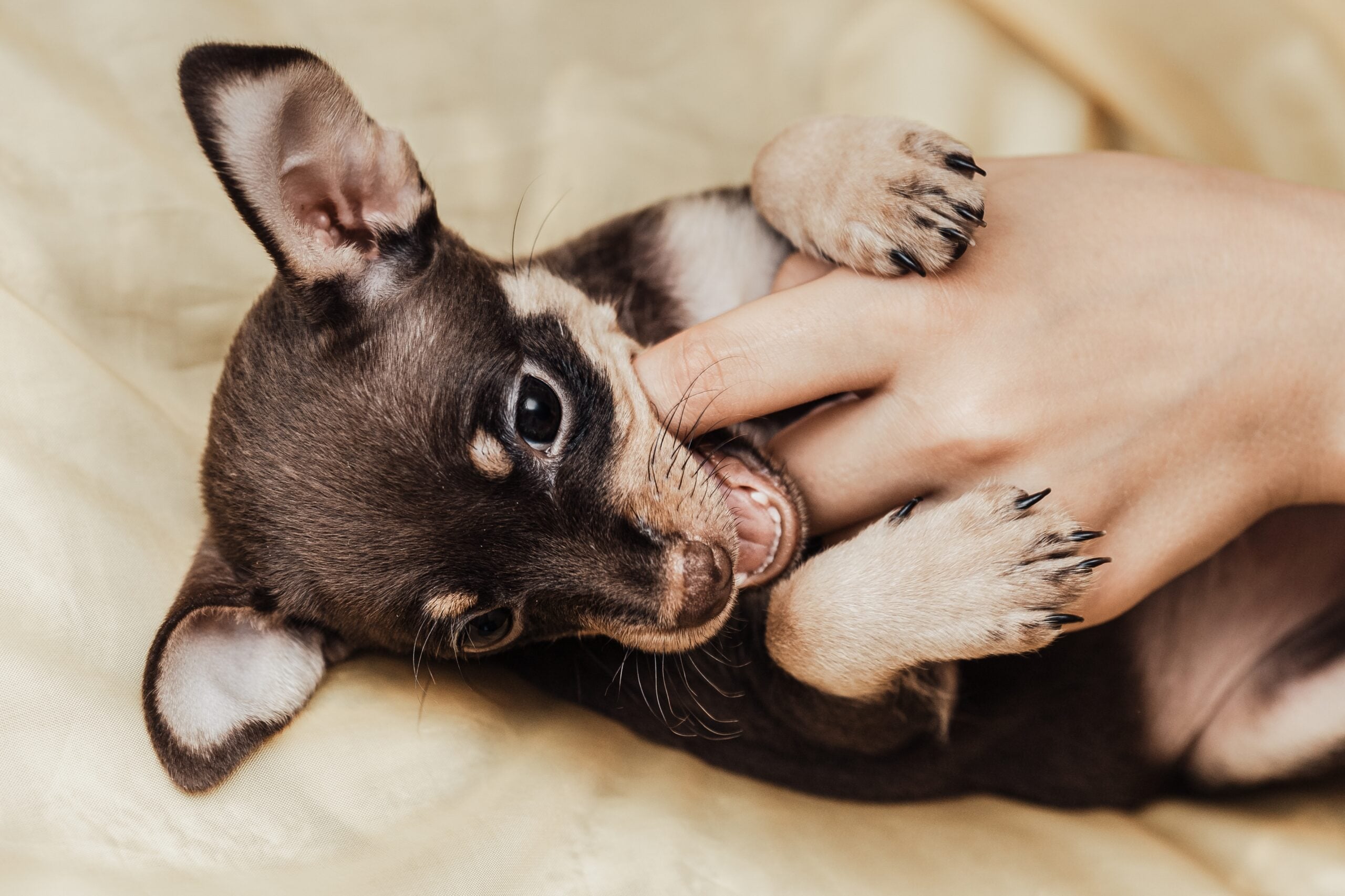
Your puppy isn’t biting to defy you. A lot of times it’s prey drive with no structure around it. Puppies are born wanting to stalk, chase, grab and bite, it’s left over from how wild canids hunt. When a puppy has no structured outlet, they practice on whatever’s closest, and that’s usually hands and ankles and clothes.
Why redirection alone fails
Handing over a toy works when the puppy is only a little excited. You give them the toy, they grab it, and they quit biting your skin. But once they’re really wound up, a toy usually can’t compete with all that drive. The puppy isn’t being stubborn, they’re just flooded, and a stuffed chew toy isn’t very interesting when they’re in full chase mode.
Steady bite inhibition training is a good place to start, and the AKC’s guide covers the basics. ASPCA guidance on mouthing and nipping backs this up: puppy mouthing is developmentally normal behavior. It needs structured redirection and a consistent consequence, not suppression. For ways to tire out a puppy safely, see how to tire out a puppy.
Your puppy isn’t bad. They’re a little predator with nowhere to put their prey instincts. Give that drive a good place to go and set clear rules about where it can’t go, and a lot of times the biting gets a whole lot better.
The Three Things Driving Puppy Biting
Three things are usually behind puppy biting, and a lot of advice skips all three.
First is prey drive with no outlet, so it comes out on whatever’s around. Second is a puppy so wound up they can’t hold back, cause when they’re that excited a soft mouth is really hard. And third is practice. The puppy has bitten and gotten a reaction, even a bad one, enough times that biting is just what they do when they get excited. Work on all three. If you only go after the biting, it tends to come back every time they get worked up.
Why prey drive is the starting point
The prey drive sequence goes stalk, chase, grab, bite, possess. A structured flirt pole session lets the puppy finish it on purpose, and when they finish it, a lot of puppies settle a lot easier. When they never get to finish it the drive just builds. If all your puppy gets is walks and play that start the chase and never finish it, that drive goes looking for somewhere to go, and whatever moves next is the prey. Usually that’s your hand, your ankle or your sleeve.
That’s why exercise by itself usually doesn’t stop puppy biting. More walks get the chase going without finishing it, so the puppy comes home tired but still wired for the grab and bite they never got to. If the biting is part of bigger teenage behavior stuff, see adolescent dog problems.
What most dog training for biting misses
- Handing over a toy works when they’re calm and falls apart when they’re wound up
- Yelping can set off the chase in high-drive puppies and make it worse
- More exercise without finishing the chase keeps the drive high
- Different rules from different people undo the progress
- With no outlet, the drive finds the closest target
- Shutting down the biting without dealing with the excitement leaves you with a flooded dog
Why instinct-based dog training for biting works
- Uses up some prey drive with structured sessions before the big moments
- Teeth on skin ends the fun every time, with everybody
- Builds impulse control while the puppy is excited, not just when they’re calm
- Calm is the only way to get attention and play
- Management stops the practice while the training catches up
- Works on the drive and the biting at the same time
Normal Puppy Biting vs. Concerning Biting
| What you see | Normal or concerning | What to do |
|---|---|---|
| Playful nipping, soft body, easy to stop | Normal puppy biting. Developmental. | Apply bite inhibition protocol every time. Start structured drive outlets. |
| Hard biting during play that draws blood | Normal in drive level. Needs a fast response. | End all interaction the instant teeth contact skin. Add pre-play drive sessions. |
| Biting escalates when told no | Arousal-driven. Dog is over threshold when biting fires. | Lower arousal before interaction. Add management. Structured drive outlet. |
| Stiffening, hard stare before or during bite | Concerning. May indicate conflict or resource guarding. | Stop interaction at once. Pro assessment before going on. |
| Growling during play biting | Context-dependent. Play growling normal. Conflict growling not. | Read the body language. Loose and bouncy is play. Stiff and still is warning. |
| Snapping without warning at people | Concerning. Warning signals may have been suppressed before. | Pro assessment. Do not attempt to train through this without help. |
The 5-Step Dog Training for Biting Protocol
Foundation steps
Every time your puppy bites down on skin and gets a reaction, the habit gets stronger, and that goes for bad reactions too. Management stops that while the training catches up. I’d keep a light house line on the puppy during the times they bite the most so you can calmly move them without chasing them around, end play before the puppy gets too wound up, and keep good chews within reach. Managing it doesn’t mean you failed at training, you need it before the training can work.
Before training startsThe rule goes for everybody in the house. When teeth touch skin, everything stops right then, not after a few more bites and not after a warning. Say something calm and flat like “too much” or “done” and walk away for 10 to 30 seconds, and only come back when the puppy is calm. Start by stopping play for hard bites, then over time raise the bar a little at a time till even soft mouthing ends the fun. Everybody doing it the same way is the biggest thing, cause one person letting the mouthing go can undo it for everyone else.
Every interaction, every personDrive and control phase
Puppy biting tends to get worse before walks, during play with kids, when people come over, and in the evening. In all of those the puppy shows up with a lot of prey drive and no outlet. A structured 5 to 7 minute flirt pole session before those times can use some of that up. Keep it slow and low for a puppy with no jumping and no hard turns, and ask your vet what’s OK for your pup’s age, then let them finish the chase and end with an all-done cool-down and a settle. A puppy that did that first a lot of times bites less, and softer. For the exact session protocol, see the flirt pole training guide. For more on the pole, see the canine flirt pole specifications.
Before the times biting gets worseThe wait before every flirt pole release is about the most direct biting work you can do, cause it builds the exact thing a biting puppy is missing, which is holding it together while they’re excited. The lure is moving and the puppy really wants it, and they have to hold a wait for a few seconds before you release them. I’d start short with a young puppy and build up from there. A puppy that can wait when they want something that bad and let go of it when you ask has a lot more self-control than one that’s only ever been handed toys when things were calm.
Every flirt pole session, every repEnforcement phase
This is where the off-switch gets built. The puppy doesn’t get attention or play or food or anything they want while they’re wired and biting, only when they’re calm. After a session, a biting fit or anything exciting, I’d cue a settle and wait it out before anything else happens. The puppy learns calm gets them everything and being wound up gets them nothing. Stick to it and everything else you’re doing works better.
Calm = access to everythingDo it in order, cause management stops the practice, then the follow-through teaches a soft mouth, then drive sessions take the edge off and the impulse control work builds the skill, and requiring calm for everything comes last. If you skip a step you’ll probably only get part of the way.
The right tool for the daily session
About 4 oz with a 450-lb Kevlar static line, no snap-back, so you can move the lure slow and smooth for a puppy. $55.95, for dogs under 30 lbs.
For big-breed puppies and teenage dogs 30 lbs and up. One-piece 46-inch reinforced fiberglass rod with an 800-lb Dyneema static line. $74.95, 1 lure. Free US shipping included.
Three lures in one kit. Lures are wear parts and high-drive dogs go through them, so having spares on hand helps. $94.95, 3 lures. Free US shipping included.
The Mistakes That Make Puppy Biting Worse
Hands and yelping mistakes
Any time teeth on hands is part of the game, the puppy learns hands are OK to bite. That goes for play, roughhousing, or letting them chew on your fingers while you’re busy. The puppy can’t tell the difference between hand biting you’re OK with and hand biting you’re not, so hands are never something to bite, not in play and not ever. One person letting it go undoes it for everybody.
Yelping comes from how littermates react to a hard bite, and it can work with softer puppies. But with a high-drive puppy a yelp or high-pitched sound can set off the chase and grab, and the biting gets worse right away. If your puppy bites harder after you yelp, I’d quit yelping and use a flat, calm “too much” and stop the play right then, cause what happens after matters more than the sound.
Consistency and timing mistakes
This is a big reason biting training stalls. The puppy gets mixed messages about teeth on skin, cause one person sticks to the rule and somebody else laughs it off cause the puppy is still little. So the puppy learns biting works some of the time, and that’s actually a harder habit to break than one that always works. Everybody in the house has to do the same thing every time or it won’t stick.
A lot of play biting happens after the puppy is already too wound up to hold back. So end the play before that and not after the biting starts, and watch for the signs it’s coming, like faster moving, bumping into you harder and not answering to their name, cause when you see those play is over. End it before the bite and they don’t get to practice it, end it after and they already did.
Expectation mistakes
Some puppies do get gentler as they grow up, but a lot of high-drive puppies don’t. Without training, a high-drive puppy turns into a high-drive teenager with a bigger jaw, more strength, and a whole lot more practice biting. The earlier you start the easier it is, but start now no matter how old your dog is.
People in the house doing it different ways is a really common reason biting training stalls, cause one person letting the mouthing go undoes everybody else’s work. Your puppy doesn’t need perfect technique from you. They need the same rule from every person in the house, every time, for as long as it takes.
When to seek pro help
If the biting draws blood a lot, comes with going stiff or growling, or gets worse when you correct it, get a qualified behavior pro to look at your dog. Same if it happens for no reason you can see, or it’s getting worse instead of better even though you’ve been steady with the training. That doesn’t mean you failed, some biting just needs somebody to see the dog in person to figure out what’s behind it. Guarding stuff, biting out of fear, and redirected biting all need different work than this.
Dog Training for Biting in Adolescent and Adult Dogs
All of this works for adult dogs that never learned a soft mouth as puppies. It’s the same plan, it just usually takes longer, cause an adult dog that’s been mouthing for a couple years has a lot more practice behind it than a little puppy. Plan on the management part going longer and the change coming slower. The flirt pole part can actually go better with adult dogs, since they can hold longer waits and handle more during a session.
For adult dogs that are overexcited all the time and bite as part of it, the session before is really important. A lot of these dogs have had years of prey drive with nowhere to go, and the biting is one way it comes out. Give the drive structured sessions every day and watch for less biting, and with any dog that has a real bite history I’d work with a qualified behavior pro.
If an adult dog bites as part of reactivity, like on leash near triggers or turning on you when they’re worked up, that needs the reactive dog training plan and a qualified behavior pro, not this one.
Stop Puppy Biting, FAQ
Core why-it-fails questions
Why won’t my puppy stop biting even when I redirect to toys?
Handing over a toy deals with the bite but not the excitement or drive behind it, and if the puppy is flooded, giving them a toy is like offering a snack to somebody in the middle of a sprint, they have to come down first. A toy works fine when they’re only a little excited, but past that I’d just end the play and wait for calm before you start again. Add a structured session before the times biting is worst and the toy trick starts working better, cause the puppy isn’t as wound up to begin with.
Why does my puppy bite harder when I pull away?
Cause movement sets off the chase and grab, and when you pull your hand back it’s the same thing that makes a dog chase a lure. The puppy isn’t being defiant, they’re just doing what they were born to do, so when teeth touch skin I’d go totally still and stop engaging and wait for calm before you move again. The less you move, the less you set them off.
Timeline questions
At what age do puppies stop biting?
There’s no set age. A lot of puppies ease up as they grow, especially with steady training started early, but puppies that never get the training a lot of times carry the biting into the teenage stage and past it, and then it’s harder to fix cause they’re bigger, their jaw is stronger and they’ve had a lot more practice. The earlier you start the better, but it’s never too late.
How long does dog training for biting take to work?
Every dog is different so I’m not gonna give you a date. With the full plan every day, watch for softer bites first and then for your dog to be gentle with the people they know, and adult dogs with an old biting habit usually take longer. A really common reason it stalls is people in the house doing it different ways, cause one person letting the mouthing go undoes it for everybody else.
My older dog still bites during play. Is it too late?
No, it just changes a little. An adult dog with an old biting habit needs a longer management stretch and more structured outlets for their drive before things really start to change, and the flirt pole part can actually go better with adults since they can hold longer waits and handle more. The rule’s the same though, teeth on skin ends the fun.
Method questions
Should I yelp to stop puppy biting?
Yelping works for some puppies and backfires with others, cause a lot of high-drive puppies take a yelp as the game getting better and bite harder. I’d use a calm, flat word and stop the play right away since that works for more kinds of puppies, and what happens after the word matters more than the word. Teeth on skin means all the fun stops right then, and no attention till the puppy is calm.
Can a flirt pole help stop puppy biting?
Yes, in two ways. A structured session before the times biting gets worse uses up some of the prey drive behind a lot of puppy biting, and the wait before every release and the drop-it after every catch build impulse control, which is exactly what a biting puppy is missing. Just keep it slow, low and short with a puppy and ask your vet what’s OK.
Safety questions
Is my puppy aggressive or just biting normally?
Normal puppy biting is playful and quick and easy to interrupt, and the puppy gets over it fast and goes right back to a soft, loose body, with no growling, no going stiff, no guarding stuff or spots, and it doesn’t get worse when you redirect them. It’s a different thing when the body goes stiff before or during the bite, there’s deep growling that isn’t play, snapping with no warning, or it gets worse when you say no, and if you see any of that I’d get a qualified behavior pro to see your dog before you try anything at home.
What should I do when my puppy bites a child?
Separate them fast and calm, with no yelling and no physical correction, and put the puppy somewhere quiet to break it up. I’d teach kids to go still and boring when the puppy comes at them with an open mouth, cause running, squealing or pushing the puppy away all set off the chase, and watch every time kids and the puppy are together and make sure the puppy is calm before it starts. If the bite was hard or there’s growling or stiffness, get a qualified behavior pro involved.


