

The short version
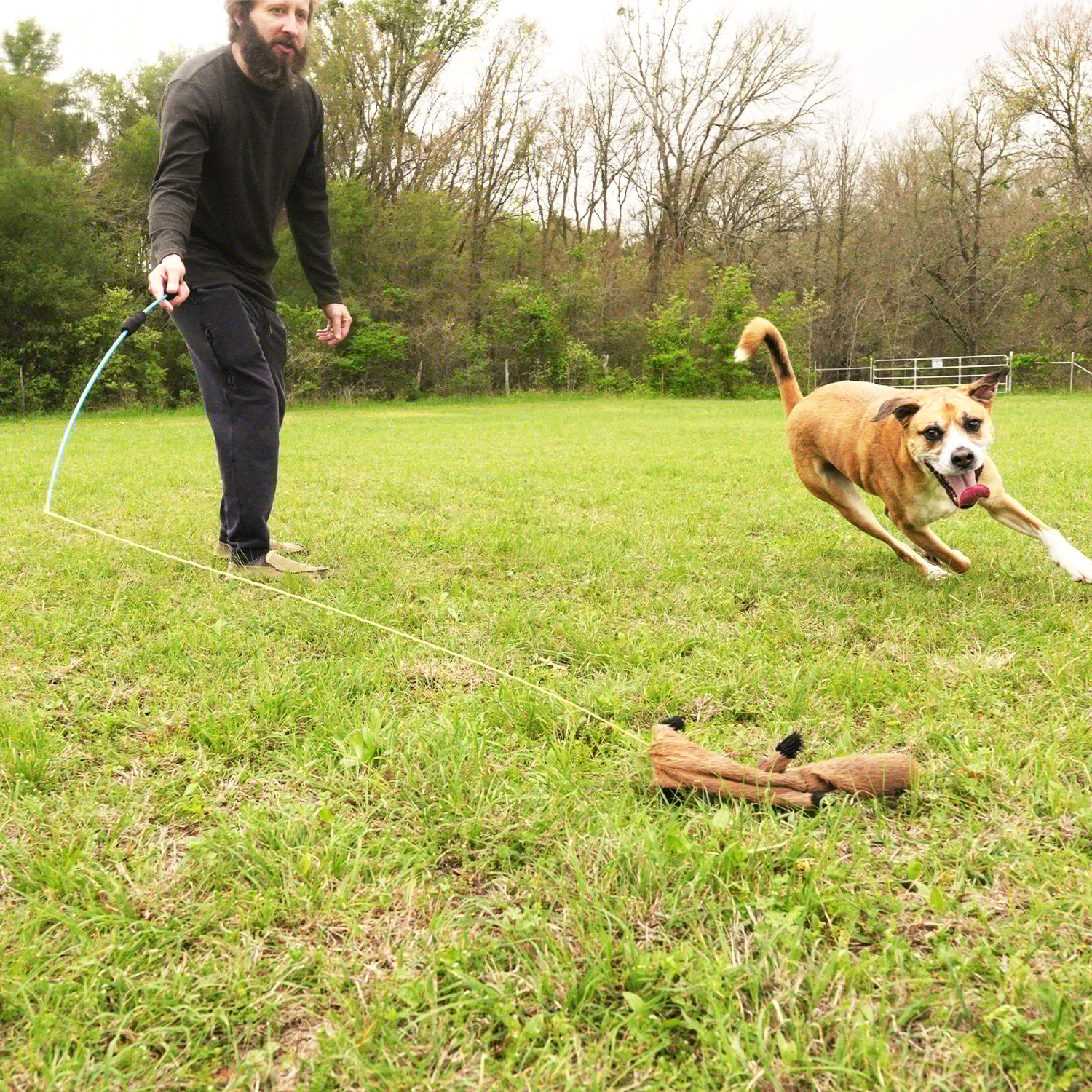
The Pupford Extendable and Whimsy Stick are not competing for the same job. Of these pupford is the travel pick. The Whimsy Stick is the daily training pick. Specifically, the structural tradeoff is collapsibility versus durability. Telescoping construction collapses but introduces joint failure points. One-piece fiberglass does not collapse but eliminates joint wear entirely. Pick the tool that matches the trip you actually take. Particularly, for the underlying mechanics, see why fiberglass wins.
Who This Comparison Is For
- Owners who hike, camp, or backpack with their dog
- RV and road-trip travelers who exercise their dog at stops
- Owners weighing portability vs daily training durability
- Apartment owners with limited storage space
- Anyone considering whether to buy one tool for both jobs or two specialized tools
The Four Specs Where These Two Diverge
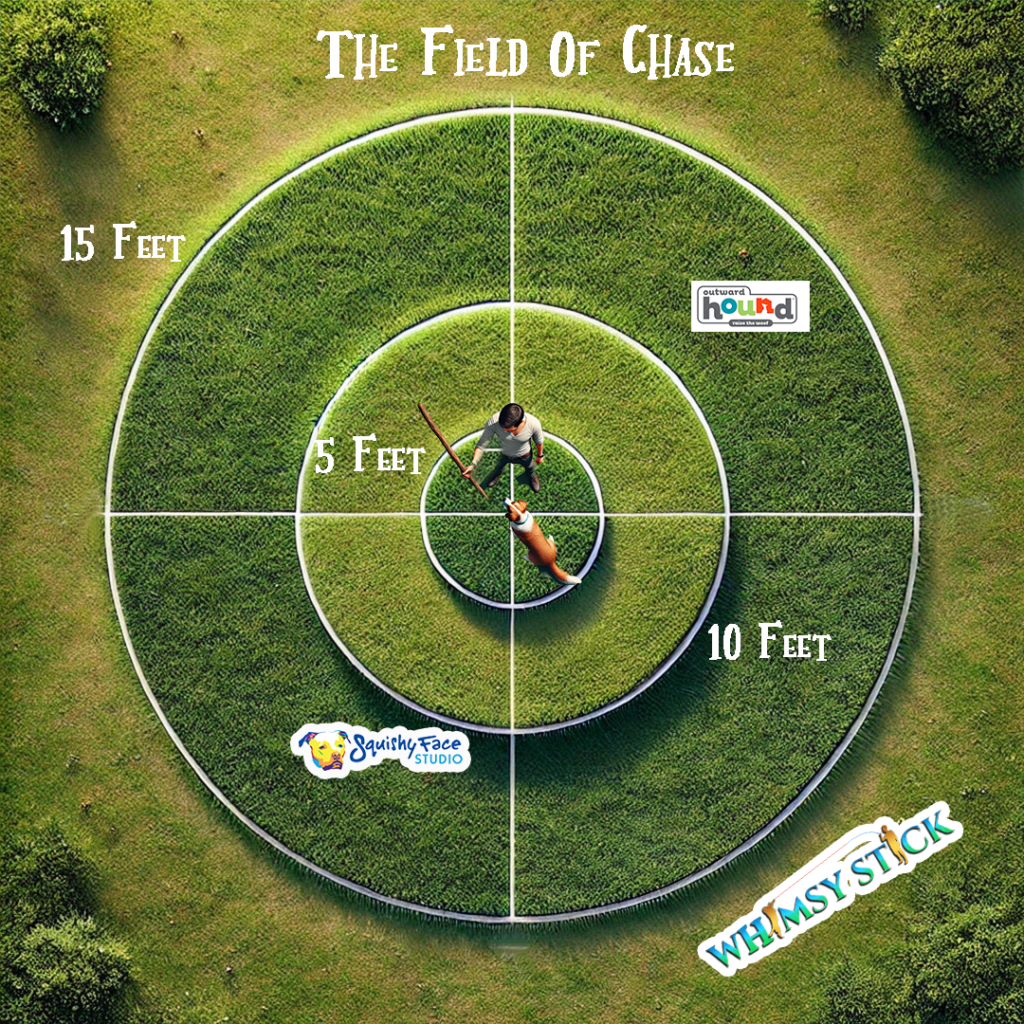
In practice, the Pupford Extendable and the Whimsy Stick are optimized for different design constraints. Pupford optimizes for collapsibility and pack volume. Indeed, whimsy Stick optimizes for full pole length and joint-free durability. Four specs surface the tradeoff: pole construction, pole length extended, lure attachment, and design priority. In fact, for the underlying question of whether the category works at all, see do flirt poles really work.
Pole Construction
Pupford Extendable: Multi-section telescoping pole that collapses for travel. Joints are the tradeoff. Whimsy Stick: One-piece reinforced fiberglass. Generally, does not collapse but has no joints to fail.
Collapsibility vs joint-free tradePole Length Extended
Pupford Extendable: Shorter extended length to keep collapsed size small. Reduces field of chase for medium and large dogs. Whimsy Stick: 4-ft balanced pole on Standard, longer on Rugged XL. Additionally, calibrated for working breed stride length without compromise.
Full length for proper chaseLure Attachment
Pupford Extendable: Standard fabric lure attachment. Functional, replaceable, ships with single lure. Whimsy Stick: Reinforced fleece lure with replaceable hardware. Meanwhile, rugged XL bundle ships with 3 reinforced lures for built-in rotation.
Reinforced lures with rotationDesign Priority
Pupford Extendable: Engineered around portability. Pack volume is the binding constraint, every other spec gets traded off. Whimsy Stick: Engineered around daily structured training. Of these field of chase, durability, and line precision are the binding constraints. Different jobs, different tools.
Travel vs training tradeoffI have worked with around 400 client dogs across 10 years. Specifically, owners who buy a collapsible flirt pole as their only tool usually come back wanting a full-length one for daily training. The reverse is also true. Particularly, two specialized tools beats one compromise tool, that is the honest answer for owners who travel frequently.
Christopher Lee Moran · Founder · 10 years training high-drive dogsWhere the Extendable Trades Off for Portability
The Pupford Extendable nails its job: collapsing small for travel. The tradeoffs are not flaws of the product, they are the cost of collapsibility itself. Three specific tradeoffs matter when comparing it to a full-length training pole. The American Kennel Club’s prey-drive primer describes why field of chase matters for working breeds, and the AVMA enrichment guidelines emphasize that structured handler-directed exercise requires gear suited to the dog.
Telescoping joints under daily heavy use
The collapsing mechanism causes joint loosening on every multi-piece pole. Each joint flexes under grab-and-shake force. Over months of daily use with medium and large dogs, the joints loosen and eventually shear. For travel and occasional use the joints see lower cycles. For daily training, joint failure is the dominant wear pattern.
Reduced extended length collapses field of chase
Collapsibility constrains extended pole length. A medium or large dog covering 8 to 10 feet per stride needs a longer pole than a small dog. The Pupford extended length works for small dogs and short casual sessions. With medium and large dogs in daily sessions, dogs crash into the handler instead of cutting and running.
Not the daily driver, by design
In short, pupford is not trying to be the daily training tool. Meanwhile, the product is built for the trip, not the protocol. For daily reactivity work, impulse control drills, or working a power breed, the Extendable is not the right fit and was never engineered to be. That is the tradeoff, not a flaw. The right complaint is buying the wrong tool, not the tool itself.
The honest math for owners who travel often: own one travel pole and one daily training pole. Each one does its job. Buying a single compromise tool to cover both jobs leaves you with mediocre performance at both. Specialized tools cost a little more and work much better.
Christopher Lee Moran · Controlled Freedom Method · my private training practiceWhimsy Stick vs Pupford Extendable, Side by Side
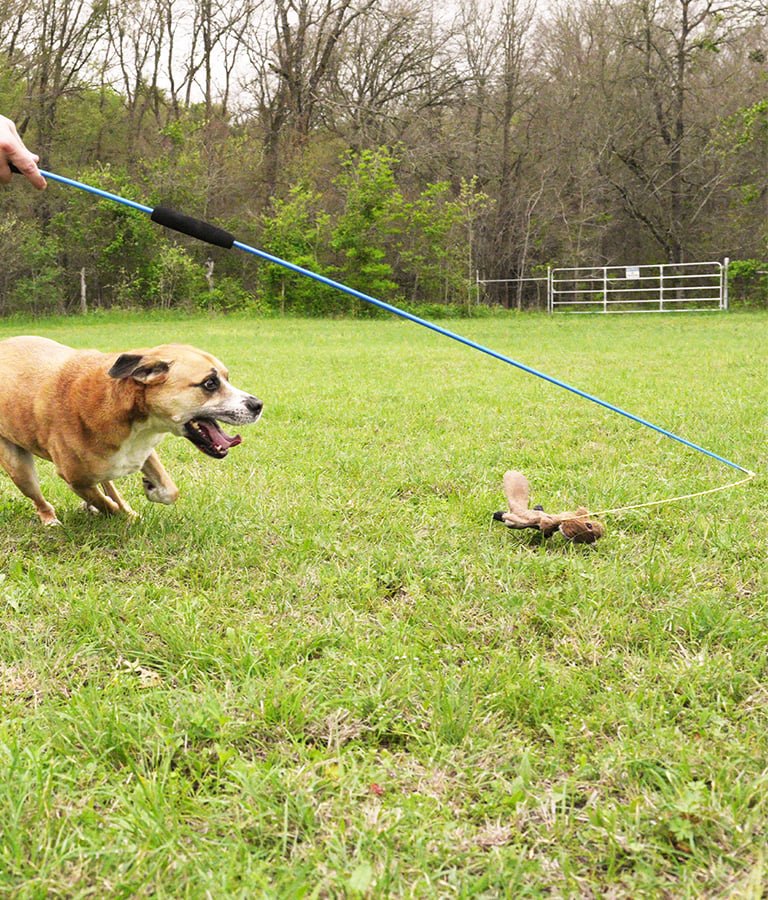
The table maps every spec where Pupford and the Whimsy Stick diverge. Pupford columns lead on portability. Whimsy Stick columns lead on training durability and field of chase. The right pick depends entirely on whether you train daily or travel often. For the broader competitive landscape, see Whimsy Stick vs Squishy Face.
When Each One Actually Wins

This comparison genuinely splits into two distinct use cases. Meanwhile, pupford and the Whimsy Stick are not competing for the same shopper. Below are four scenarios that map directly to the right tool for the job. Of these for owners weighing the broader category roundup, see best flirt pole for dogs 2026.
Pupford wins for: backpacking, hiking, ultralight travel
If you take your dog on backpacking trips, day hikes, or ultralight travel, the Pupford collapsing form factor is the right answer. The portability is its real value. Specifically, for trips where your only option is a small pack, Pupford fits. The training tradeoffs do not matter on a trip because you are not running structured protocols on the trail.
Use Case 01Whimsy Stick wins for: daily structured training at home
If your primary use is daily sessions at home or at a regular training spot, the Whimsy Stick is the daily driver. Particularly, full pole length gives proper field of chase. Static Kevlar line gives precision for impulse control drills. Indeed, one-piece fiberglass eliminates the joint failure mode that telescoping poles develop. Daily training is what the Whimsy Stick is engineered for. In fact, for the authority case, see why we recommend the Whimsy Stick.
Use Case 02Whimsy Stick wins for: medium and large dogs, any breed running daily sessions
Pupford is rated for small to medium dogs. Its shorter extended pole works in casual play but collapses field of chase for medium and large dogs. Under 30 lbs, the Whimsy Stick Standard handles daily sessions with full chase. Over 30 lbs, the Rugged XL is the right tool for any working breed. For the head-to-head with the heaviest-duty option, see Whimsy Stick vs DIBBATU.
Use Case 03The honest answer: own both if you travel often and train daily
For example, owners who travel several times a year and train daily at home get the best result from two specialized tools. A Pupford in the travel kit. A Whimsy Stick as the daily driver. Specialized gear at every step beats one compromise tool. Meanwhile, the total cost is reasonable, and each tool does its job without giving up performance on the other side.
Use Case 04For the Daily Driver, Pick by Dog Size

If the Whimsy Stick is going to be your daily driver, the model choice is by dog size. Under 30 lbs gets the Standard. Of these over 30 lbs gets the Rugged XL. Both ship with static Kevlar line and reinforced replaceable lures. Specifically, for owners weighing whether the broader category passes the ethical bar, see are flirt poles cruel.
4-ft balanced pole, 500-lb static Kevlar line, reinforced replaceable lure. The home daily driver for owners pairing with a travel-specific pole on the road. Particularly, fits standard luggage and car trunks at full length.
500-lb static Dyneema line, one-piece reinforced fiberglass pole, 3 reinforced lures in the bundle. The home daily driver for owners with larger dogs who also travel. Indeed, rugged XL Base $74.95 · Rugged XL Bundle $94.95. Free US shipping included.
Signs Your Dog Needs a Daily Training Pole, Not a Travel One
Watch for these before you buy
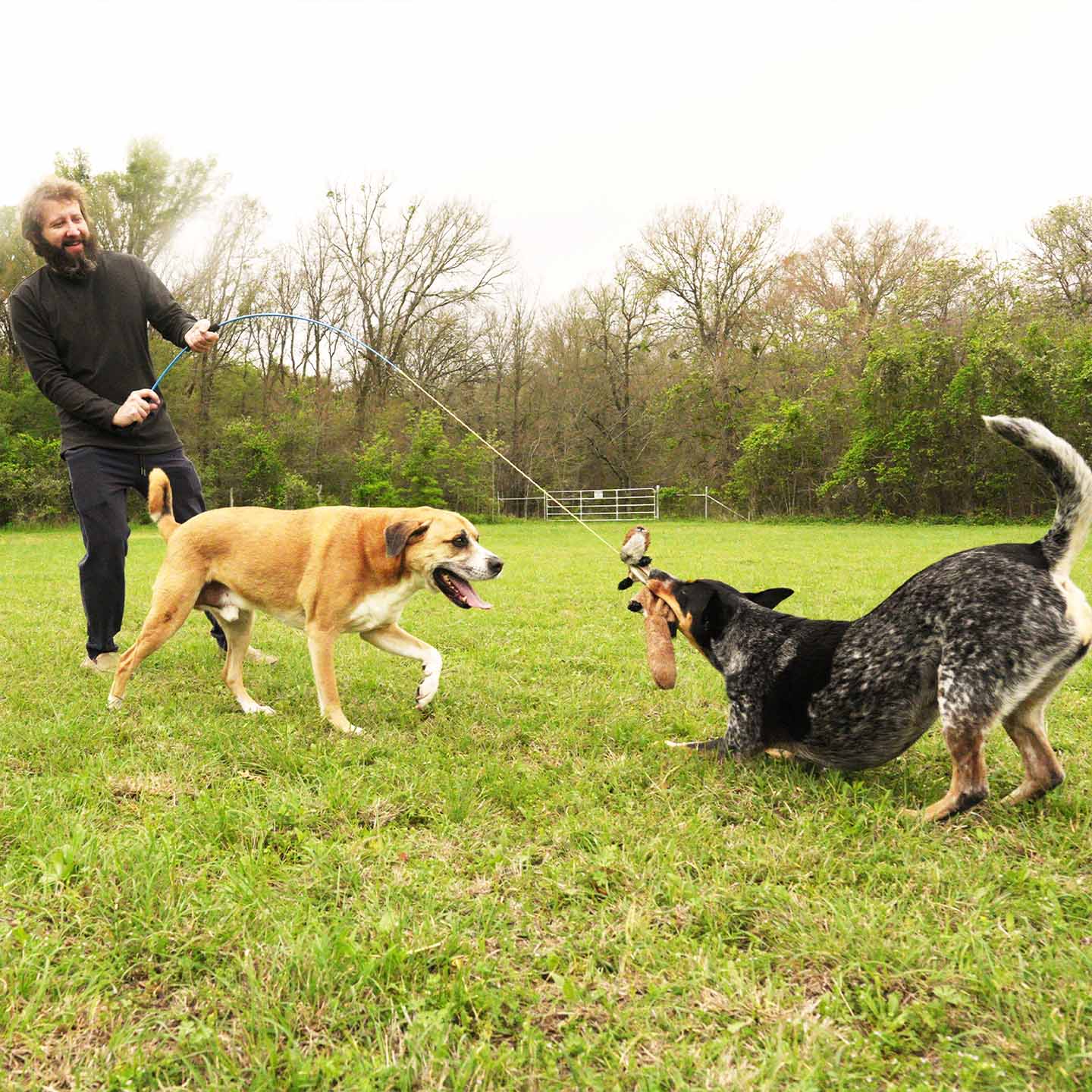
- Your dog crashes into you at the end of every chase, the pole is too short for their stride length
- Destructive incidents at home happen most on days without a structured outlet
- Your current pole joints have started loosening under grab-and-shake force
- You run sessions three or more times per week, a travel pole was not engineered for that cycle load
- Your dog weighs over 30 lbs and blows through chase runs before the lure can reset
- You have been using a travel pole as your daily driver and wondering why sessions feel flat
What Happens When You Switch From Travel Pole to Daily Driver
Ranger, 4-year-old Belgian Malinois, 65 lbs
Ranger’s owner had been running daily sessions with a telescoping travel pole for six months. In fact, the pole joints had loosened significantly and Ranger was crashing into the handler on every chase run, the extended pole length was 18 inches short of what a 65-lb Malinois stride requires. Destructive incidents at home were averaging 11 per week: furniture, baseboards, and two destroyed crates.
We switched to the Whimsy Stick Rugged XL. Generally, within 3 weeks of daily 8-minute sessions using the Controlled Freedom protocol, destructive incidents dropped from 11 per week to 1. Ranger stopped crashing into the handler entirely by session four, full pole length gave him room to commit to a complete chase arc and hit a real capture moment. At 8 weeks he was running 6-minute structured sessions with a 30-second wait at the start without a single reactivity spike on subsequent walks.
Three Things to Take Away From This Comparison
These two poles are not competitors. Pupford is a travel tool. Additionally, whimsy Stick is a daily training tool. The comparison only matters when you are trying to decide which job you actually need done.
Telescoping joints have a defined failure timeline. For occasional travel use, joints last. Meanwhile, for daily structured training with medium or large dogs, joint shear under grab-and-shake force is a matter of months, not years.
Pole length is not cosmetic, it drives behavior outcomes. A dog that cannot complete a full chase arc never hits a genuine capture moment. Without capture, the predatory motor pattern stays open and frustration stays elevated.
The 5-Step Daily Training Protocol With the Whimsy Stick
This is the Controlled Freedom protocol used across approximately 400 client dogs over 10 years. It works because it cycles through the full predatory motor pattern, stalk, chase, capture, win, then closes the loop with a controlled out. Of these run it daily for measurable results within 3 weeks.
The wait, build threshold before the lure moves
Hold the lure still. Dog must hold a sit or down for 10 full seconds before the lure activates. This is the impulse control phase. No movement from the handler, no cue, no lure twitch. Ten seconds of genuine stillness earns the chase.
Step 01, Threshold BuildThe stalk, activate slow movement before the sprint
Move the lure slowly in a wide arc at ground level. Let the dog enter the stalk phase, head low, weight forward, eyes locked. Full pole length is what creates the arc width that triggers genuine stalk behavior in larger dogs. A short pole produces a jog, not a stalk.
Step 02, Stalk PhaseThe chase, full speed, full field of chase
Release the lure into a full sprint. The dog should be running at maximum effort, not jogging alongside you. The Kevlar static line keeps the lure unpredictable without giving the dog an easy path to grab it mid-run. Three to five full chase circuits per session is the working target.
Step 03, Full ChaseThe capture, let the dog win
Overall, drop the lure to the ground and let the dog catch it. Hold still. Generally, let them shake it, bite down, and feel the win. This is the capture phase of the predatory motor pattern. Additionally, skipping this leaves the sequence open and frustration elevated. The capture is not a reward, it is a biological close.
Step 04, CaptureThe out, close the session cleanly
Cue “out” or “drop.” Dog releases the lure. Handler picks it up, puts it away out of sight. No next chase, session is closed. This is what trains the dog to disengage on cue during daily life. Run 5 to 8 minutes total. End before the dog is mentally done, not after.
Step 05, Clean CloseDo not use a travel pole as your primary daily training tool. The telescoping joint is not built for daily grab-and-shake cycles from a medium or large dog. Specifically, joint failure is not a warranty issue, it is a design consequence of using the wrong tool for the job.
Do not end sessions before the capture phase. Ending a session mid-chase or immediately after a sprint leaves the predatory motor pattern open. An open sequence produces a dog that is more activated after the session than before it. Let them win before you close.


